Introduction
Mainstream travel brochures often push you toward cookie-cutter hotel corridors, packed hill stations, and curated resort buffets that completely isolate you from the destination’s living heartbeat. In stark contrast, stepping into Bihar through a traditional family homestay offers an immediate, unfiltered plunge into India’s deepest civilizational roots.
Here, hospitality is not a commercial transaction governed by keycards; it is an organic, centuries-old philosophy rooted in Atithi Devo Bhava. From waking up to the gentle hum of morning earthen stoves in Mithila to sitting on a quiet verandah overlooking mustard fields in Nalanda, choosing a homestay transforms you from a detached sightseer into a welcomed household guest.
Why Bihar is a must-visit city
Bihar is the cradle where spiritual movements, ancient universities, and monumental empires transformed the history of the subcontinent. Far from an ordinary stopover, this land holds unmatched cultural gravity as the birthplace of Buddhism and Jainism, the ancient epicenter of the Mauryan and Gupta empires, and the fertile cradle of Madhubani art. Today, a quiet revolution of curated heritage homestays, village farm stays, and community-led stays makes it possible to experience this legacy directly alongside local families.
Accessing this legendary heartland has never been smoother for diverse traveler archetypes. Excellent four-lane national highways, major railway junctions connecting Patna, Gaya, and Darbhanga, and expanding airports across Patna, Gaya, and Darbhanga ensure seamless travel whether you are a solo backpacker or a traveling family.
The state’s travel circuit links the intellectual legacy of Nalanda, the spiritual stillness of Bodh Gaya, the artistic villages of Mithila, and the lush agricultural river-plains along the Ganges into one unforgettable route.
| Key Fact | Specification |
| Primary Cultural Circuits | Buddhist Circuit, Mithila Heritage Circuit, Sufi Circuit, Ganga Heritage Belt |
| Nearest Airports | Patna (PAT), Gaya (GAY), Darbhanga (DBR) |
| Best Travel Season | October to March (Crisp mornings, pleasant afternoons) |
| Signature Homestay Cuisines | Litti Chokha, Champaran Meat, Bihari Dal Pitha, Thekua, Makhana Kheer |
| Signature Craft Purchases | Madhubani Paintings, Sikki Grass Crafts, Bhagalpuri Tussar Silk, Stone Carvings |
| Standard Homestay Tariff | Budget: ₹900 – ₹1,800/night; Heritage/Boutique: ₹2,500 – ₹5,500/night |
Best Places or Experiences
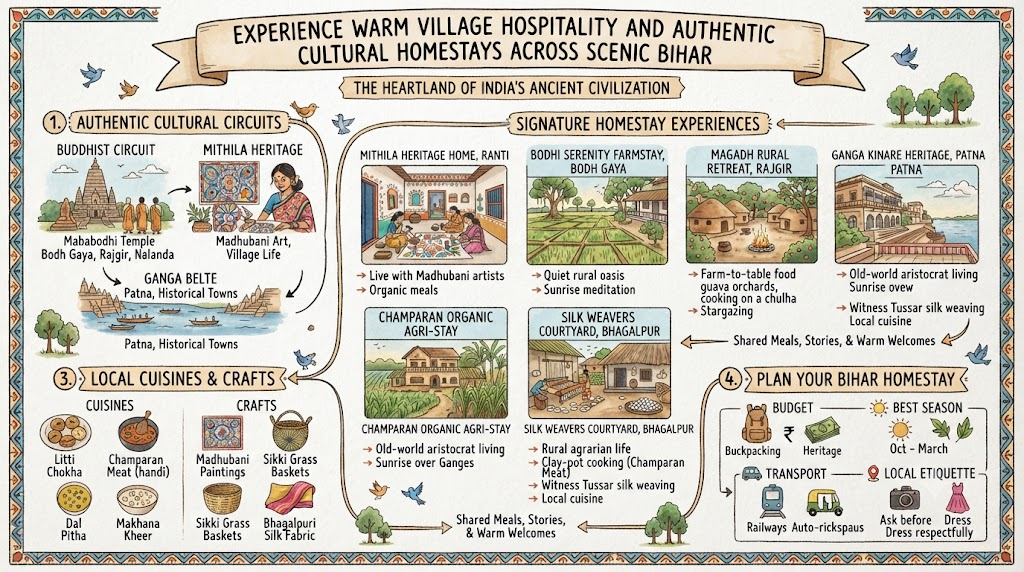
Mithila Heritage Homestay in Ranti Village, Madhubani
Tucked inside the serene village lanes of Ranti near Madhubani town, this immersive village homestay experience allows travelers to reside directly inside traditional courtyards where generational folk art breathes life into mud-plastered walls. Ranti is globally famous for its community of women artists who paint intricate mythological epics and nature murals directly onto house facades using bamboo twigs and organic plant pigments.
Staying here means sharing home-cooked meals of roasted makhana (foxnuts), freshly picked mustard greens, and aromatic local rice varieties while listening to folk songs sung during twilight courtyard gatherings. The unhurried pace of village life, punctuated by the clinking of brass tea glasses and the scent of damp clay, offers rare creative stillness.
- Location: Ranti Village, Madhubani District (approx. 165 km northeast of Patna via the Darbhanga highway).
- Why it is worth visiting: Unfiltered access to master Madhubani artists practicing indigenous painting styles within their ancestral homes.
- Best things to do: Attend a hands-on painting workshop using natural dyes, join a village walk through painted courtyards, and participate in evening Mithila Maithili folk storytelling sessions.
- Best time to visit: November to February for pleasant weather and open-air village craft workshops.
- Ideal for whom: Art lovers, solo travelers, cultural researchers, and slow travelers.
- Travel tip: Carry small cash denominations to buy paintings directly from women artisans, ensuring your money directly supports the village collective.
Bodhi Serenity Farmstay, Bodh Gaya
Located just beyond the bustling tourist core of Bodh Gaya, this rural homestay borders fertile paddy fields and quiet Buddhist monasteries, providing an intimate oasis of peace. The architecture utilizes local bricks, bamboo ceilings, and expansive open verandas where morning sunlight filters through sacred peepal trees.
Your host family prepares nourishing, sattvic vegetarian meals made with seasonal produce harvested right from the surrounding organic gardens. Evenings are spent on rooftop terraces listening to distant temple bells while learning about the region’s profound Buddhist and Hindu convergence over steaming cups of ginger-infused kulhad chai.
- Location: Bakraur Village/Bodh Gaya outskirts, Gaya District (approx. 115 km south of Patna).
- Why it is worth visiting: Quiet rural surroundings within walking distance of the Phalgu River and Sujata Kuti, away from crowded hotel avenues.
- Best things to do: Wake up for sunrise meditation along the Phalgu River sandbanks, take an evening bicycle ride through monastic enclaves, and learn how to make traditional Bihari dal pitha from the family kitchen.
- Best time to visit: October to March, particularly during early morning and late evening temple prayer hours.
- Ideal for whom: Spiritual seekers, wellness travelers, couples, and writers.
- Travel tip: Borrow a bicycle from your host instead of hiring auto-rickshaws; it is the most rewarding, peaceful way to explore Bodh Gaya’s monastery lanes.
Magadh Rural Retreat, Rajgir & Nalanda Outskirts
Nestled at the base of the rolling Rajgir hills and surrounded by lush guava and mango orchards, this rustic farm-stay brings the legendary history of the Magadh empire right to your doorstep. Built with sustainable earthen elements and airy courtyards, the homestay captures the timeless agrarian charm of rural southern Bihar.
The local host family takes immense pride in arranging authentic open-air cow-dung-cake chulha cooking sessions where you learn the secret of smoking whole brinjals and grinding roasted gram flour (sattu) for traditional Litti Chokha. Nights are blissfully cool and completely free from urban noise pollution, offering unmatched stargazing over the silhouettes of ancient hill ranges.
- Location: Silao-Rajgir rural belt, Nalanda District (approx. 95 km southeast of Patna).
- Why it is worth visiting: An idyllic farm escape perfectly positioned between the ruins of Nalanda University and the historic hills of Rajgir.
- Best things to do: Take an early morning hike up Gridhakuta (Vulture Peak), enjoy a tractor ride through regional farms, and sample fresh, hot Silao Khaja straight from roadside sweet-makers.
- Best time to visit: October to February, especially during harvest season when the surrounding mustard fields are in vibrant yellow bloom.
- Ideal for whom: Families with children, heritage buffs, and culinary travelers.
- Travel tip: Ask your host to arrange an early 6:00 AM visit to the ruins of ancient Nalanda to beat both tour bus crowds and the afternoon sun.
Ganga Kinare Heritage Home, Patna
Perched along the historic riverine edges of Patna near the older university quarters, this heritage residence offers travelers a rare peek into old-world Bihari aristocrat living. With high ceilings, vintage teakwood furniture, and an open terrace overlooking the sweeping waters of the holy Ganges, the home preserves the intellectual and literary atmosphere of early 20th-century Patna.
The resident hosts, often retired scholars or cultural preservationists, delight in engaging guests in deep conversations about Patna’s transformation from ancient Pataliputra to the modern capital. Breakfasts feature family-recipe kachoris, dry potato curry, and jalebis, enjoyed while watching morning river barges and migratory birds drift past.
- Location: Near Patna University / Ashok Rajpath river stretch, Patna Central.
- Why it is worth visiting: Unrivaled private sunrise views over the holy Ganges paired with refined intellectual hospitality.
- Best things to do: Watch fishermen cast nets at sunrise from the private rooftop, take an evening heritage walk through Patna College and historic ghats, and explore the nearby Bihar Museum.
- Best time to visit: October to March; early mornings between 5:30 AM and 7:30 AM offer unmatched photography light over the river.
- Ideal for whom: Solo backpackers, photographers, historians, and literary travelers.
- Travel tip: Use the newly built JP Ganga Path (Marine Drive) for fast, smooth transit into the property, completely avoiding central market bottlenecks.
Champaran Organic Agri-Stay, Bettiah Outskirts
Situated in the fertile northern plains where Mahatma Gandhi launched his historic Satyagraha movement, this sprawling agri-homestay is enveloped by sugarcane plantations, fragrant mango groves, and paddy fields. Built around an ancestral farmhouse, it allows guests to step into authentic agrarian life, including harvesting seasonal vegetables and learning sustainable composting techniques.
Food here is a celebrated art form. The host family slow-cooks regional staples inside traditional sealed earthen pots over wood embers, letting you taste the genuine smoky richness of slow-cooked mutton or clay-pot spiced vegetables. It is a deeply grounding retreat that offers pure air and boundless rural hospitality.
- Location: Bettiah rural periphery, West Champaran District (approx. 200 km northwest of Patna).
- Why it is worth visiting: Hands-on exposure to rustic North Bihar agrarian culture and the birthplace of authentic clay-pot Champaran cooking.
- Best things to do: Participate in seasonal sugarcane harvesting, take day excursions to the pristine sal forests of Valmiki Tiger Reserve, and join an outdoor clay-pot cooking masterclass.
- Best time to visit: November to February when evenings are pleasantly chilly and daytime farm work is comfortable.
- Ideal for whom: Adventure lovers, culinary enthusiasts, ecotourists, and offbeat road-trippers.
- Travel tip: Coordinate with your host to arrange a day safari into the nearby Valmiki National Park, as safari permits are easier to book through local village connections.
Silk Weavers Courtyard Homestay, Champanagar, Bhagalpur
Set in Champanagar on the historic outskirts of Bhagalpur—the world-renowned “Silk City” of India—this unique weaver-family homestay immerses guests in the rhythmic, ancient art of handloom weaving. From early morning, the rhythmic clatter of wooden pit looms fills the air as master craftsmen turn wild Tussar cocoons into lustrous silk textiles.
Staying with a weaver family allows you to witness the entire yarn-to-fabric process, from boiling wild silkworm cocoons to spinning fine thread and designing intricate motifs. Meals are homestyle, hearty, and distinctively eastern Bihari, spotlighting spicy mustard fish curries, roasted pumpkin mash, and winter tilkut sweets.
- Location: Champanagar, Bhagalpur District (approx. 235 km east of Patna).
- Why it is worth visiting: An incomparable opportunity to live directly alongside hereditary silk-weaving families and buy authentic Tussar silk at honest workshop prices.
- Best things to do: Try your hand at spinning yarn on a traditional spindle, take a boat ride on the Ganges to spot endangered Gangetic river dolphins, and explore the ancient brick ruins of Vikramshila University.
- Best time to visit: October to March, particularly during the morning weaving hours.
- Ideal for whom: Textile designers, craft aficionados, solo cultural travelers, and slow-fashion supporters.
- Travel tip: Ask your host to take you directly to local cocoon boiling and spinning cottages to witness raw tussar processing before finished yarn hits the loom.
Offbeat Exploration: Hidden Gems Tourists Miss
Sujata Garh & Phalgu River Sandbanks, Bakraur
While millions visit the grand stone towers of the Mahabodhi Temple, very few cross the wide, sandy riverbed of the Phalgu to visit Sujata Garh in Bakraur. This ancient brick stupa commemorates the maiden Sujata, who offered milk-rice to an emaciated Gautama, ending his severe austerities right before his enlightenment. Visiting at dawn lets you wander through mustard fields, interact with milk-selling villagers, and watch morning mist clear across the sandbanks without a single tour bus in sight.
Prehistoric Rock Art Shelters of Kaimur Plateau
Tucked away in the rugged hills of southwestern Bihar, the forested ridges of Kaimur conceal prehistoric rock shelters with ancient cave paintings depicting wildlife, hunting scenes, and ritual dances. Staying at a rustic village homestay near Nauhatta or Bhabua allows you to trek with local tribal guides to these unmarked, untamed caves, offering a raw archaeological adventure far removed from conventional tourist maps.
The Earthen Chhath Ghat Traditions Along Rural Riverbanks
If your homestay visit coincides with late October or November, look past commercial city celebrations and experience the ancient festival of Chhath Puja along rural riverbanks and village ponds. Participating alongside your host family—helping wash seasonal fruits, rolling thekua dough, and walking together down to misty waters at sunrise—is one of the most moving, authentic cultural rituals in the world.
Detailed Practical Guidance for Travelers
| Destination | Standard Entry Fee | General Timings | Best Local Food Options Nearby | Recommended Nearby Attractions |
| Mithila Heritage Homestay (Madhubani) | Free (Village area) | Open all day (Best 8:00 AM – 6:00 PM) | Machh Jhor (Mustard Fish), Roasted Makhana, Tilkor Pakoda | Saurath Sabha ground, Rajnagar Palace ruins |
| Bodhi Serenity Farmstay (Bodh Gaya) | Free (Farm area); Temple: Free | 5:00 AM – 9:00 PM (Temple hours) | Dal Pitha, Tibetan Butter Tea, Khaja | Mahabodhi Temple, Dungeshwari Cave Temples |
| Magadh Rural Retreat (Nalanda/Rajgir) | Free (Farm); Nalanda Ruins: ₹40 (Indians), ₹600 (Foreigners) | 9:00 AM – 5:00 PM (Ruins) | Traditional Litti Chokha, Silao Khaja | Nalanda Excavated Ruins, Rajgir Glass Bridge, Vulture Peak |
| Ganga Kinare Heritage Home (Patna) | Free (Residence); Bihar Museum: ₹100 | Open all day; Museum: 10:30 AM – 5:00 PM | Dehati Litti stalls near Dak Bungalow, Anarsa sweets | Bihar Museum, Golghar, Patna Sahib Gurudwara |
| Champaran Organic Agri-Stay (Bettiah) | Free (Farm); Valmiki Safari: ₹1,500 – ₹3,000 | Sunrise to Sunset (Farm activities) | Handi Champaran Mutton/Paneer, Sattu Sharbat | Valmiki National Park, Ashokan Pillar at Lauriya Nandangarh |
| Silk Weavers Courtyard (Bhagalpur) | Free (Workshops open for visitors) | 7:00 AM – 7:00 PM (Weaving shifts) | Chuda-Dahi with seasonal Gur, Katarni Poha | Vikramshila University Ruins, Dolphin Sanctuary |
Logistics & On-Ground Navigation
Local Transport Options
- Railways: The backbone of travel across Bihar. Express trains like the Vande Bharat and Jan Shatabdi seamlessly connect Patna with Gaya, Rajgir, and Bhagalpur in just a few comfortable hours.
- Auto-Rickshaws & E-Rickshaws: Universally available across every town and village. Battery-powered totas (e-rickshaws) are the best, quietest option for navigating narrow rural lanes and heritage towns like Bodh Gaya and Madhubani.
- Private Car Rentals: Hiring a dedicated vehicle with a driver from Patna or Gaya is the most flexible option for farm stays, photography excursions, and multi-district circuits.
- State & Private Buses: Frequent and affordable for intercity transit, though luggage space can be tight during festival seasons.
Budget Planning
- Backpacker / Budget Traveler:₹1,200 – ₹1,800 per day
- Village homestay or eco-hut: ₹700 – ₹1,000 per night (including home-cooked breakfast).
- Street meals and local snacks (Litti Chokha, seasonal fruit): ₹300 – ₹400 per day.
- Shared e-rickshaws and local trains: ₹200 – ₹400 per day.
- Mid-Range / Comfort Traveler:₹3,500 – ₹6,500 per day
- Private heritage room or farm villa: ₹2,500 – ₹4,500 per night with all meals.
- Private air-conditioned cab rental: ₹2,000 – ₹3,000 per day.
- Entry tickets, workshops, and artisan tips: ₹500 – ₹1,000 per day.
Safety and Inclusivity Tips
- For Families: Rural homestays are exceptionally welcoming to children, offering safe courtyards and fresh, home-cooked food made with pure dairy and organic grains. Keep your host informed of dietary needs or mild spice preferences beforehand.
- For Couples: Boutique homestays and heritage homes in Bodh Gaya, Rajgir, and Patna provide peaceful privacy. Always carry valid government photo IDs (Aadhaar or Passport) for smooth check-ins.
- General Safety: Rural roads can be dark after 8:00 PM; plan inter-district travel during daylight hours. Local hosts are your best guides—always ask them for recommended transit routes and trusted taxi contacts.
Strategic Travel Planning Guardrails
Travel Planning Tips for Bihar
- Time Your Visit for Winter: Plan between late October and mid-March when the weather is cool, dry, and ideal for long village walks.
- Always Keep Cash Handy: While UPI is widely used in cities, local artisans, village tea stalls, and rural rickshaw drivers rely on cash.
- Dress Modestly: When staying in family homes or visiting villages and shrines, wear clothing that covers shoulders and knees to respect local norms.
- Drink Filtered or Boiled Water: Drink RO-filtered water provided by your hosts or carry a reusable bottle with an integrated filter.
- Embrace Slow Village Timings: Village homestays wake up early (often around 5:30 AM) and wind down by 9:00 PM; align your schedule with this natural rhythm.
- Ask Before Taking Portraits: Always ask politely before taking photos of village residents, especially women working in courtyards or at their looms.
Common Mistakes to Avoid
- Do Not Rush Through Multiple Districts: Trying to cover Patna, Bodh Gaya, Madhubani, and Bhagalpur in three days will leave you exhausted from highway transit; pick one or two nearby regions instead.
- Do Not Rely Exclusively on Hotel Booking Portals: Authentic village homestays are often listed on eco-tourism platforms or booked directly through local hosts and cultural NGOs.
- Do Not Skip Family-Cooked Meals: Dining out at highway restaurants means missing out on the best regional dishes made using family recipes.
- Do Not Expect Western-Style Hotel Amenities: Embrace rustic living—solar water heating, Indian-style bedding, and farm-fresh simplicity are part of the charm.
- Do Not Insist on Stiff Haggling with Artisans: In places like Madhubani and Champanagar, fair prices directly support master artisan families and keep these crafts alive.
Suggested Itinerary Blueprints
1. Day Quick Dash (Patna & Nalanda Cultural Sprint)
Designed for business travelers or short-stay visitors who want an authentic cultural escape.
- Morning (07:00 AM – 11:30 AM): Depart Patna via the smooth Bakhtiyarpur-Rajgir highway. Arrive at a rural Nalanda farm stay for breakfast featuring piping-hot sattu parathas and fresh curd.
- Midday (12:00 PM – 03:00 PM): Explore the UNESCO World Heritage Nalanda University ruins and the Nalanda Archaeological Museum with a local guide.
- Late Afternoon (03:30 PM – 05:30 PM): Stop by Silao to watch sweet-makers fold Khaja pastry sheets, followed by evening tea at your farm stay before heading back to Patna.
2. Day Deep-Dive (Spiritual Magadh & Bodh Gaya Loop)
A balanced two-day itinerary blending agricultural living with world-class heritage.
- Day 1: Arrive at your Bodh Gaya farm stay by mid-morning. Enjoy a home-cooked lunch made with seasonal vegetables, then take an afternoon bicycle ride around the international Buddhist monasteries. At sunset, experience the evening prayers and serene chanting around the Mahabodhi Temple.
- Day 2: Wake up early for sunrise meditation along the Phalgu River sandbanks, followed by a walk to ancient Sujata Garh. After breakfast, head to the nearby Dungeshwari Cave Temples where Gautama meditated before enlightenment. Wrap up with a traditional dal pitha cooking lesson with your host family.
3. Complete Weekend Travel Plan (Mithila Art & Rural Heritage Circuit)
A three-day cultural immersion through the painted villages of North Bihar.
- Friday: Land at Darbhanga Airport and take a private cab to your village homestay in Ranti (Madhubani). Enjoy lunch under the courtyard trees, then take a relaxed walking tour to see house walls painted with traditional folk art.
- Saturday: Spend the morning in a masterclass with a state-awarded Madhubani artist, learning how to paint with bamboo twigs and natural dyes. In the afternoon, visit the historic Rajnagar Palace ruins, followed by an evening of Maithili folk music by the courtyard fire.
- Sunday: Wake up to an open-air village breakfast of poha, fresh curd, and jaggery. Visit the local craft markets to buy authentic paintings and Sikki grass baskets directly from artisan families before catching your evening flight from Darbhanga.
Common Tourist Mistakes to Avoid
Geographic Blunders
A frequent mistake travelers make is grouping Madhubani (in northern Bihar) and Bodh Gaya (in southern Bihar) into a single weekend. Crossing the Ganges during peak transit hours can eat up valuable daylight. Keep your itinerary focused on either the northern Mithila circuit or the southern Buddhist circuit for a much smoother, unhurried trip.
Commercial Traps
Avoid spending your evenings inside generic shopping malls in Patna or large tourist souvenir shops outside major monuments. These stores often stock mass-produced crafts at inflated prices. Instead, buy directly from the artisans in village courtyards where your money supports the artists and their communities.
Neglecting Modern/Alternative Zones
Many visitors focus entirely on ancient stone ruins and miss out on modern cultural institutions. Patna’s world-class Bihar Museum, with its thoughtfully curated ethnic art wings and outdoor sculptures, is an essential stop that beautifully contextualizes the living traditions you encounter in village homestays.
Transport Overpayment
When arriving at major railway stations like Patna or Gaya, skip unregulated auto drivers quoting arbitrary fares. Instead, use pre-paid taxi booths, book through app-based rides for city runs, or ask your homestay host to send a trusted local driver at a fixed rate.
Luxury Dining Bias
Sticking strictly to multi-cuisine hotel buffets deprives you of Bihar’s finest culinary treasures. Don’t miss out on street-corner Litti Chokha roasted over wood embers, seasonal Sattu Sharbat, or winter Tilkut from Gaya—these humble street foods hold the true soul and flavor of the region.
Frequently Asked Questions
1. Are rural homestays in Bihar safe for solo female travelers?
Yes, rural homestays in established cultural destinations like Bodh Gaya, Rajgir, and Madhubani are very safe for solo female travelers. You are staying directly with local families, meaning you are cared for like a personal household guest. Hosts often arrange reliable private transport and accompany you on village walks.
2. What traditional food can I expect at an authentic village homestay in Bihar?
You will enjoy wholesome, home-cooked food made with seasonal vegetables, pulses, and locally grown grains. Expect dishes like Litti Chokha, Dal Pitha, fresh mustard greens, Makai ki Roti, aromatic Katarni rice, and sweets like Makhana Kheer and Thekua, all prepared with pure mustard oil and hand-churned ghee.
3. What is the best season to book an eco-homestay or farmstay in Bihar?
The ideal time is from October to March when days are clear, sunny, and pleasant, with temperatures between 12°C and 25°C. Winters make morning farm walks delightful and allow you to enjoy evening bonfires and courtyard cultural performances without the intense summer heat.
4. How do I get to Madhubani painting village homestays from major Indian cities?
The quickest way is flying into Darbhanga Airport (DBR), which has direct flight connections to major cities like Delhi, Mumbai, and Bengaluru. From Darbhanga, the artisan villages of Ranti and Jitwarpur in Madhubani are just a 45-minute drive away via taxis or private cars arranged by your homestay.
5. Do village homestays in Bihar have high-speed Wi-Fi and modern amenities?
Most curated heritage homestays and boutique rural retreats offer reliable mobile network coverage (Jio and Airtel 4G/5G) and functional Wi-Fi suitable for remote work. Rooms generally feature clean attached western-style bathrooms, running hot water, and air conditioning, though power backups in remote areas may be basic.
6. Can I participate directly in Madhubani art and craft workshops during my stay?
Yes, this is one of the most rewarding parts of staying in Ranti or Jitwarpur. Your host family can organize private, hands-on workshops where master women artists teach you the five traditional styles (Bharni, Katchni, Tantrik, Godna, and Kohbar) using natural pigments and handmade paper.
7. Is English widely spoken by family hosts and guides at rural homestays?
Homestay hosts, especially those running curated heritage retreats, speak fluent Hindi and communicative English. While older family members and village neighbors primarily speak regional languages like Maithili, Magahi, or Bhojpuri, their warm gestures and hospitality easily bridge any language barrier.
8. How do payments work at offbeat homestays in Bihar?
Most homestay hosts happily accept UPI payments via apps like Google Pay and PhonePe, as well as direct bank transfers. However, you should always carry enough cash for buying village handicrafts, tipping drivers, and paying small tea and snack stalls where digital networks might be spotty.
9. Are cultural homestays in Bihar suitable for elderly travelers or young children?
Yes, homestays provide a gentle, ground-level pace without the rush of commercial tour groups. Hosts are happy to customize meals with milder spices, prepare soft khichdi for toddlers, and arrange ground-floor rooms with easy access for older guests who prefer to avoid stairs.
10. What unique handmade souvenirs can I buy directly during my homestay visits?
You can buy genuine Madhubani paintings on handmade paper or fabric, hand-woven Tussar and Matka silk sarees from Bhagalpur, golden Sikki grass baskets from Mithila, and carved black-stone statuettes from Gaya—all bought straight from the artisans at fair, honest prices.
11. Do I need any special permits to stay in rural or forest-fringe homestays in Bihar?
Indian citizens only need standard government identification like an Aadhaar Card or Voter ID. Foreign passport holders must present a valid passport and Indian visa, and hosts will assist in completing the standard Form C registration required for foreign guests staying in private homes.
12. How does staying in a homestay directly support the local economy in Bihar?
Choosing a homestay keeps your travel spending directly within the village ecosystem. It provides fair wages to host families, creates jobs for local youth who serve as guides, supports neighborhood farmers and dairy producers, and ensures craft sales directly benefit indigenous artisans without middlemen.
Conclusion
Trading a generic luxury resort for an authentic homestay in Bihar is more than just choosing a place to rest—it is a conscious choice to slow down, connect, and experience a rich living culture firsthand. As you share hot kulhad chai on a sunlit village veranda, watch ancient folk art take shape on earthen walls, and hear stories told by the glow of evening lamps, you quickly realize Bihar’s greatest treasure isn’t only its ancient monuments, but the open-hearted warmth of its people. By opening their homes to you, local families invite you to become part of a story that has been unfolding for thousands of years.
