Introduction
While conventional culinary tours funnel crowds into commercialized, butter-laden restaurant chains and repetitive urban food plazas, authentic Bihari gastronomy thrives on raw ancestral terroir, woodsmoke, and earthen pots. Here, food is not manufactured for aesthetic feeds; it is an intimate daily communion rooted in sun-ripened grains, mustard pungency, and ancient agrarian wisdom.
Tasting food in Bihar means stripping away culinary pretension and discovering pure, grounding flavors that have sustained empires, spiritual pilgrims, and riverine communities for millennia. Every bite connects your senses directly to fertile alluvial soils, ancestral slow-cooking techniques, and unapologetic rustic hospitality.
Why Bihar is a must-visit city
Bihar represents an essential, foundational chapter in Indian cultural history that mainstream travel narratives frequently overlook. Beyond housing the ancient universities of Nalanda and Vikramshila, the region cultivated an agrarian food culture shaped by the ebb and flow of the holy Ganges. Modern four-lane national highways, rapid Vande Bharat rail connections, and expanding regional airports make reaching this historic Heartland smoother than ever before for backpackers, food writers, and family vacationers alike.
A journey across Bihar’s culinary circuit weaves effortlessly through urban street-food hubs in Patna, ancient monastic centers in Nalanda and Gaya, and rural hearths in Champaran. It offers food lovers a rare chance to taste culinary traditions that have retained their distinct identity without succumbing to commercial dilution.
| Key Culinary Fact | Details |
|---|---|
| Primary Transit Hubs | Patna Airport (PAT), Gaya International Airport (GAY), Patna Junction |
| Pivotal Flavor Bases | Roasted Gram Flour (Sattu), Pungent Cold-Pressed Mustard Oil, Panch Phoron |
| Signature Cookery Style | Charcoal-roasting on cow dung cakes, sealed earthenware (Ahuna) cooking |
| Best Travel Months | October through March (Crisp weather, harvest festivals, peak Tilkut season) |
| Typical Daily Food Budget | ₹400 to ₹1,000 per person for an authentic street-to-table feast |
Rustic charcoal roasted Litti Chokha.
Best Places or Experiences
1. Traditional Litti Chokha at Maurya Lok & Boring Road
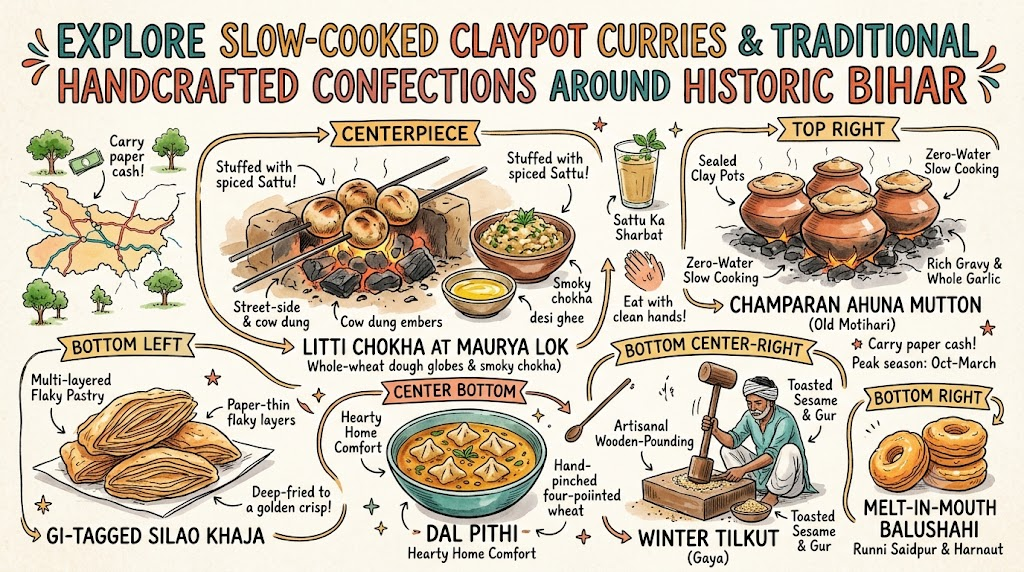
Litti Chokha is the undisputed gastronomic soul of Bihar, carrying a proud heritage that stretches back to ancient rural hearths and anti-colonial warrior camps. The dish centers on whole-wheat dough globes generously stuffed with spiced sattu (roasted gram flour blended with carom seeds, nigella seeds, crushed garlic, green chillies, and sharp mustard oil).
Bihar Tourism+ 1
Roasted slowly over smoldering cow dung cakes or glowing charcoal embers, the globes develop a blistered, charred exterior before getting cracked open by hand and submerged in fragrant desi ghee. They are served alongside smoky chokha—a rustic mash of charcoal-charred brinjals, wood-roasted tomatoes, boiled potatoes, pungent raw mustard oil, and fiery green chillies.
YouTube
- Location: Maurya Lok Complex & Boring Road Crossing, Patna District; central urban zone.
- Why it is worth visiting: The definitive place to experience authentic street-side roasting, where the crackle of ghee-dunked hot litti is an unforgettable daily spectacle.
- Best things to do: Watch the street cooks roast the wheat dough over open charcoal grids, ask for an extra pour of smoking mustard-oil chokha, and pair the meal with a chilled tumbler of salted mint sattu sharbat. YouTube
- Best time to visit: 5:00 PM to 9:30 PM for the freshest evening batches and lively street energy.
- Ideal for whom: Street food enthusiasts, backpackers, culinary storytellers, and comfort-food hunters.
- Travel tip: Always request your litti to be cracked open before the ghee bath so the melted butter seeps deep into the spiced sattu core.
2. Champaran Ahuna Mutton in Old Motihari & Patna Outskirts
Born in the rural sugar-growing belt of Champaran, Ahuna Mutton (also called Batlohi or Handi Meat) is an extraordinary masterclass in zero-water slow cooking. Marinated tender mutton chunks are tossed in cold-pressed mustard oil, whole garlic pods, crushed ginger, and aromatic cracked whole spices.
The meat is sealed inside raw earthenware pots (handis) using kneaded wheat dough, then slow-cooked over glowing charcoal beds. As the sealed pots are periodically shaken by hand, the meat cooks entirely in its own natural juices and rendered fat, yielding extraordinarily tender morsels drenched in an earthy, clay-infused gravy.
- Location: Old Motihari Town, East Champaran District; with prominent branches across Bailey Road, Patna.
- Why it is worth visiting: A unique, historical clay-pot cooking method that produces fork-tender meat without adding a single drop of water.
- Best things to do: Observe the charcoal pits where dozens of clay pots simmer simultaneously, request an intact whole roasted garlic bulb inside your bowl, and scoop the rich gravy with fresh Tawa rotis.
- Best time to visit: 12:30 PM to 3:00 PM for lunch, when fresh morning handis are unsealed at peak tenderness.
- Ideal for whom: Meat lovers, culinary historians, spice adventurers, and slow-cooking enthusiasts.
- Travel tip: Arrive early for lunch service; authentic vendors cook a fixed number of sealed clay pots daily, and the best batches sell out by mid-afternoon.
Clay pot Champaran Ahuna Mutton.
3. Geographical Indication (GI) Tagged Silao Khaja
Tracing its legendary lineage back to the era of the Buddha and the ancient kingdom of Magadha, Silao Khaja is a brilliant testament to heritage Indian confectionery. Located along the ancient royal highway between Nalanda and Rajgir, the village of Silao has produced these delicate pastries for generations.
Prepared from refined wheat flour, maida, and pure ghee, the dough is meticulously folded into dozens of microscopic layers before being crisply deep-fried and delicately coated in clear sugar syrup. The result is a golden, airy sweet that shatters into paper-thin wafers the moment it touches the tongue.
- Location: Silao Bazaar, Nalanda District; 15 km from Rajgir and 85 km southeast of Patna.
- Why it is worth visiting: An authentic GI-tagged ancient sweet made using local mineral-rich well water that craftsmen credit for its unmatched flakiness.
- Best things to do: Watch master halwais fold and slice multi-layered pastry ribbons, sample hot unsweetened khaja fresh from the kadhai, and pack export-grade gift boxes for travel.
- Best time to visit: 9:00 AM to 1:00 PM when morning frying is in full swing.
- Ideal for whom: Pastry aficionados, history lovers, sweet connoisseurs, and heritage explorers.
- Travel tip: Look for vendors certified under the Silao Khaja Audyogik Utpadan Sahyog Samiti to ensure you purchase authentic GI-standard craftsmanship.
Ancient GI tagged Silao Khaja.
4. Winter Tilkut at Ramna Road & Tekari Road, Gaya
Tilkut is an exquisite winter confection native to the ancient pilgrimage city of Gaya, celebrating sesame harvest traditions with remarkable artisanal skill. The sweet is crafted by boiling unrefined jaggery (gur) or cane sugar into a thick syrup, then incorporating roasted white sesame seeds (til).
Wikipedia
The real marvel is the laborious pounding process: skilled artisans rhythmically beat the warm, pliable mixture with heavy wooden mallets until it expands into paper-thin, snow-white or golden discs. Fresh Tilkut boasts a featherlight, brittle texture that melts instantly in your mouth, leaving a deep toasted nutty sweetness.
- Location: Ramna Road, GB Road, and Tekari Road, Gaya District; 110 km south of Patna.
- Why it is worth visiting: Witnessing the rhythmic, synchronized hammer-pounding technique that turns tough sesame paste into melt-in-the-mouth confection discs.
- Best things to do: Taste the smoky, earthy Gur-ka-Tilkut warm off the wooden pounding block, compare sugar versus jaggery varieties, and explore nearby sacred pitru-paksha shrines.
- Best time to visit: November through February; production peaks during the annual Makar Sankranti harvest festival.
- Ideal for whom: Winter food lovers, heritage seekers, cultural photographers, and sweet tooths.
- Travel tip: Opt for gur (jaggery) tilkut over white refined sugar tilkut for superior aromatic depth, authentic mineral richness, and lower glycemic load.
Artisanal pounded Gaya Tilkut.
5. Melt-in-Mouth Balushahi of Runni Saidpur & Harnaut
While Balushahi exists across North India, Bihar elevates this ghee-soaked confection into an art form celebrated for its contrasting textures. Towns like Runni Saidpur in Sitamarhi and Harnaut in Nalanda are famous for turning humble flour dough into flaky, golden pucks with a cratered center.
Slow-fried at strictly controlled low temperatures in pure desi ghee, the dough builds stratified micro-layers before taking a short dip in warm cardamom-spiced sugar syrup. The exterior stays pleasantly firm and crisp, while the moist, hollow core dissolves cleanly on the tongue without cloying heaviness.
- Location: Runni Saidpur (Sitamarhi District) and Harnaut Junction (Nalanda District) along major transit corridors.
- Why it is worth visiting: The peerless contrast between a crisp outer shell and a syrupy, crumbly interior unmatched by standard city sweetshops.
- Best things to do: Pair a warm Balushahi with unsweetened spiced curd (dahi), purchase freshly fried morning batches directly from roadside halwais, and watch the slow frying technique.
- Best time to visit: 8:00 AM to 11:00 AM for fresh-out-of-the-kadhai morning batches.
- Ideal for whom: Traditional dessert lovers, highway travelers, family groups, and road-trippers.
- Travel tip: Eat it warm; if consuming later, microwave the balushahi for 10 seconds to allow the set ghee layers to soften and release their cardamom notes.
6. Dal Pithi and Bihari Thali in Mithila & Patna
Dal Pithi represents quintessential Bihari home-cooked comfort, showcasing the region’s resourceful agrarian heart. Wheat flour dough is pinched, rolled, and shaped by hand into intricate four-pointed lotus petals or dumplings called pithi.
Wikipedia
These dumplings are simmered directly inside a spiced pot of yellow pigeon-pea dal infused with turmeric, ginger, garlic, and cumin-ghee tempering (chhonk). When served as part of an authentic Mithila or Bhojpuri thali, it sits alongside aloo bhujia, roasted papad, spicy green chilli pickle, and freshly pounded coriander chutney.
- Location: Traditional Bhojanalayas across Darbhanga, Madhubani, and specialty regional restaurants in Patna.
- Why it is worth visiting: A rare opportunity to experience soulful Bihari home cuisine that commercial dining establishments usually ignore.
- Best things to do: Slurp the piping-hot lentil dumplings smothered in pure cow ghee, pair the meal with roasted chokha, and enjoy the welcoming thali service. YouTube
- Best time to visit: 1:00 PM to 3:30 PM for traditional afternoon lunch service.
- Ideal for whom: Vegetarians, wellness-oriented travelers, cultural researchers, and slow-food advocates.
- Travel tip: Request a dollop of aged mango pickle masala stirred directly into your bowl of Dal Pithi for a tangy, sharp contrast.
Offbeat Exploration: Hidden Gems Tourists Miss
Chana Ghugni with Kachori at Patna City Ghats
Tucked inside the narrow, sensory alleys of Old Patna City (Patna Sahib), early mornings belong to boiling cauldrons of black chickpea ghugni. Simmered with roasted cumin, black pepper, and bay leaves, this savory curry is ladled over piping-hot, flaky lentil kachoris and topped with chopped red onions and green chillies. It provides a hearty breakfast for local boatmen and pilgrims visiting the historic Takht Sri Patna Sahib.
Bagiya of Mithilanchal
Deep inside rural Mithila, Bagiya is a seasonal steamed dumpling made from freshly harvested winter rice flour. The translucent, steamed rice envelopes are stuffed with either spiced boiled lentils or sweet grated jaggery and coconut. Completely oil-free and naturally gluten-free, Bagiya offers a clean, earthy flavor profile that highlights ancient river-basin steaming techniques.
Sattu Ka Sharbat at Dak Bungalow Crossing
While restaurants offer commercial beverages, street vendors around Patna’s bustling crossroads serve the state’s ultimate natural superdrink. Finely milled roasted gram flour is whipped with chilled water, roasted cumin powder, black salt, fresh mint paste, and a squeeze of tangy Kagzi lime. It serves as an instant cooling tonic against the midday sun.
Detailed Practical Guidance for Travelers
| Destination | Standard Entry Fee | General Timings | Best Local Food Options Nearby | Recommended Nearby Attractions |
|---|---|---|---|---|
| Maurya Lok Street Hub, Patna | Free | 4:00 PM – 10:30 PM | Charcoal Litti Chokha, Kulhad Chai, Chicken Litti | Bihar Museum, Buddha Smriti Park |
| Old Motihari Road, Champaran | Free | 12:00 PM – 9:00 PM | Ahuna Handi Mutton, Tawa Paratha, Sattu Roti | Kesaria Stupa, Gandhi Smarak |
| Silao Bazaar, Nalanda | Free | 7:00 AM – 8:00 PM | GI Tagged Meetha Khaja, Namkeen Khaja, Tea | Nalanda Ruins, Rajgir Hot Springs |
| Ramna & Tekari Road, Gaya | Free | 8:00 AM – 9:00 PM | Gur Tilkut, Anarsa, Khoya Lai | Vishnupad Temple, Mahabodhi Complex |
| Runni Saidpur Highway, Sitamarhi | Free | 6:00 AM – 9:30 PM | Fresh Ghee Balushahi, Spiced Dahi, Samosa | Janaki Mandir, Haleshwar Sthan |
| Patna City Ghat Alleys | Free | 6:30 AM – 11:30 AM | Chana Ghugni, Urad Kachori, Jalebi | Takht Sri Patna Sahib, Har Mandir Ghat |
Logistics & On-Ground Navigation
Local Transport Options
- Railways: Bihar possesses one of India’s densest railway grids; express trains link Patna, Gaya, Sitamarhi, and Motihari conveniently.
- Auto-Rickshaws & E-Rickshaws: Shared and private electric three-wheelers dominate intra-city commutes in Patna, Rajgir, and Gaya, making hopping between food spots effortless and cheap.
- Private Car Rentals: Hiring an air-conditioned car with an experienced local driver is the most comfortable and flexible option for cross-district culinary road trips.
Budget Planning
- Backpacker / Budget Foodie: ₹800 – ₹1,500 per day (Covers budget guesthouse stays, public e-rickshaws, and generous street-food meals).
- Mid-Range / Comfort Traveler: ₹3,000 – ₹5,500 per day (Includes heritage boutique hotels, private AC cab rentals, and sit-down thali feasts).
Safety and Inclusivity Tips
- Families: Most iconic food hubs feature clean, sit-down family annexes; always request lower green chilli levels for young children.
- Couples: Central food corridors and heritage towns like Bodh Gaya and Rajgir are relaxed and peaceful for couples exploring together.
- General Safety: Drink bottled water from reputable brands and pick food stalls with high customer turnover where items are cooked fresh to order over open flames.
Strategic Travel Planning Guardrails
Travel Planning Tips for Bihar
- Target the Winter Season: Visit between October and March to enjoy harvest delicacies like fresh Tilkut, green pea nimona, and warm gur sweets.
- Carry Paper Cash: While QR-code digital payments (UPI) work across urban hubs, remote roadside vendors and village halwais often rely on cash.
- Prioritize High-Turnover Vendors: Seek out bustling stalls crowded with locals to guarantee fresh oil, piping-hot food, and quick turnaround.
- Embrace Rustic Dining Etiquette: Eating litti or dal pithi with clean hands is the authentic regional way to enjoy these dishes.
- Pack Digestive Comforts: The prominent use of mustard oil and roasted gram flour can feel heavy for unaccustomed stomachs; pack carom seeds or antacids.
Common Mistakes to Avoid
- Overpacking Single-Day Routes: Do not try to eat Champaran meat in Motihari and Tilkut in Gaya on the same afternoon; give each region its own day.
- Skipping Mustard-Oil Specialties: Do not shy away from the sharpness of cold-pressed mustard oil; it is the defining aromatic backbone of genuine Bihari food. YouTube
- Assuming Street Food is Unhygienic: Boiling earthenware stews and deep-fired pastries are often fresher than frozen food reheated in upscale hotel kitchens.
- Arriving Late for Lunch: Iconic dishes like Ahuna mutton and fresh fried Balushahi sell out quickly, often running out by 2:30 PM.
- Ignoring Seasonal Specialties: Asking for Gaya Tilkut in the peak of July will leave you disappointed, as authentic shops operate strictly during winter.
Suggested Itinerary Blueprints
1. Day Quick Dash (Patna Epicurean Express)
Ideal for business travelers and short stopovers wanting an authentic taste of the capital’s culinary hallmarks.
- 08:30 AM – 10:00 AM: Kick off with piping-hot Chana Ghugni, crisp Kachoris, and sweet Jalebis in the lanes of Old Patna. Wikipedia
- 01:00 PM – 03:00 PM: Relish a traditional, slow-simmered earthen pot Ahuna Mutton lunch along Bailey Road.
- 05:30 PM – 07:30 PM: Enjoy an evening stroll at Maurya Lok for charcoal-grilled Litti Chokha drenched in pure cow ghee. YouTube
- 08:30 PM – 09:30 PM: Conclude the night with a warm glass of saffron-spiced milk and Motichoor Ladoo in historic Maner.
2. Day Deep-Dive (Heritage & Confectionery Trail)
A balanced two-day weekend journey spanning ancient universities and historic sweet-making towns.
- Day 1: Depart Patna for Nalanda; explore the ancient university ruins, then stop at Silao for fresh, multi-layered Khaja. Head to Rajgir for an evening meal of village-style Litti Chokha accompanied by local seasonal greens.
- Day 2: Drive to sacred Gaya; witness the mesmerizing wooden-mallet pounding of winter Tilkut at Ramna Road. Savor an authentic afternoon Dal Pithi and seasonal Bihari thali before heading back to Patna.
3. Complete Weekend Travel Plan (North-to-South Bihar Culinary Loop)
A three-day road trip connecting rustic northern slow-cooking hubs with ancient southern heritage centers.
- Friday: Arrive in Patna; drive northwest into Champaran to experience authentic wood-fired Ahuna clay-pot mutton straight from local masters.
- Saturday: Travel south through Vaishali to Patna; savor street delicacies around Boring Road and enjoy sweet Balushahi along the highway stops.
- Sunday: Drive down to Nalanda and Gaya; collect freshly boxed Silao Khaja and pounded Gaya Tilkut while exploring the Mahabodhi Temple complex.
Common Tourist Mistakes to Avoid
Geographic Blunders
Attempting to drive from Champaran in the far north to Gaya in the deep south in a single morning leaves you exhausted on highways instead of enjoying leisurely meals. Break the circuit into sensible northern and southern clusters.
Commercial Traps
Spending precious dining hours in modern shopping-mall food courts strips away the joy of regional travel. Step into historic bazaars where generational halwais prepare heritage recipes by hand.
Neglecting Modern/Alternative Zones
While historic streets hold immense charm, do not overlook modern residential extensions like Patna’s Kankarbagh and Patliputra, where creative eateries serve refined interpretations of regional classics.
Transport Overpayment
Always negotiate auto-rickshaw fares beforehand or rely on verified ride-hailing aggregators in Patna and Gaya to avoid paying marked-up tourist rates for short hops.
Luxury Dining Bias
High-end international hotel buffets cannot replicate the woodsmoke aroma of open-flame cooking. Skipping street-side litti stalls or small family bhojanalayas deprives you of the true culinary heart of the state.
Frequently Asked Questions
1. What makes authentic Bihari Litti completely different from Rajasthani Baati?
While both are roasted wheat dough balls, Litti is distinctively stuffed with spiced roasted gram flour (sattu) flavored with carom seeds, mustard oil, and pickle spices. Baati is typically unstuffed plain flour dough eaten with lentil dal, whereas litti is traditionally paired with smoky roasted vegetable mash (chokha).
2. Is it safe for travelers to eat Litti Chokha at roadside street stalls?
Yes, because traditional Litti is baked fresh over glowing charcoal right in front of you, and Chokha is made from thoroughly charred, peeled vegetables. Choose busy vendors with high customer turnover where food is served piping-hot and ghee is kept fresh.
3. What is the historical secret behind Champaran Ahuna Mutton’s distinct flavor?
The distinct flavor comes from zero-water slow cooking in unglazed earthenware pots sealed with wheat dough. The meat cooks in its own natural juices, cold-pressed mustard oil, and whole garlic bulbs over slow charcoal heat, absorbing the rich mineral aromas of the heated clay.
4. Where can tourists buy genuine GI-tagged Silao Khaja in Bihar?
The most authentic place is Silao Bazaar, nestled directly between the ancient sites of Nalanda and Rajgir. Local sweetmakers utilize regional mineral-rich well water that imparts the distinct crispness and multi-layered flaky texture that earned the treat its prestigious GI tag.
5. Why is Gaya Tilkut available predominantly during the winter months?
Tilkut production relies on freshly harvested sesame seeds and cold weather, which prevents the hot sugar or jaggery syrup from turning sticky during the pounding process. The dry winter air allows the sweet to achieve its legendary brittle, melt-in-the-mouth texture.
6. Is Bihari cuisine accommodating for strict vegetarians and vegans?
Bihari cooking features a wide variety of plant-based dishes. Delicacies like Dal Pithi, roasted Litti Chokha (without ghee), Sattu drinks, and seasonal vegetable curries (bhunjia) are naturally wholesome, protein-rich, and vegetarian-friendly.
7. What is Sattu and why is it considered a superfood in Bihar?
Sattu is stone-ground flour made from roasted Bengal gram chickpeas. Naturally packed with plant protein, fiber, and iron, it acts as a low-glycemic, deeply satisfying ingredient that keeps locals hydrated and energized throughout long workdays in the sun.
8. How spicy is authentic everyday food across Bihar?
Traditional Bihari dishes emphasize earthy pungency and balanced spice blends rather than overwhelming chilli burn. The signature kick comes from cold-pressed mustard oil, freshly cracked black pepper, and whole garlic cloves, delivering aromatic warmth rather than intense burning heat.
9. Can tourists bring packaged Bihari sweets home on domestic flights?
Yes, dry confections like Silao Khaja, Gaya Tilkut, and Balushahi have low moisture content and travel exceptionally well. Most shops provide sturdy cardboard gift packaging that keeps the delicate treats fresh for up to two weeks without refrigeration.
10. What is the customary beverage to pair with heavy Bihari meals?
Salted Sattu Sharbat infused with mint, black salt, and roasted cumin powder is the classic beverage choice. After meals, locals frequently enjoy sweet spiced buttermilk (chaas) or earthen cups of strong ginger-cardamom tea (kulhad chai).
11. How do you recognize high-quality Balushahi when purchasing from roadside halwais?
A top-grade Balushahi should feel light for its size, exhibiting visible flaky surface crevices with a slightly pale golden crust. It should never look soggy or overly saturated with thick sugar, and the interior should offer a crumbly, melt-in-mouth core.
12. What unique local fruit delicacies should food lovers look for in Bihar?
During the summer months, Bihar produces the famous GI-tagged Shahi Litchis of Muzaffarpur, prized for their rose scent and sweet pulp. In winter and early spring, travelers should look out for sweet local guavas and riverbed melons.
Conclusion
Setting out on a culinary journey across Bihar rewards you with an experience that no commercial resort or polished restaurant strip can match: the discovery of an unbroken, deeply grounded food culture built on genuine warmth and heritage. From the crackle of a ghee-drenched litti on a misty winter evening to the earthy perfume of a clay pot unsealed by the roadside, every meal in this historic state tells a story of survival, celebration, and generosity. Step away from predictable tourist trails, sit on a wooden bench beside a glowing hearth, and let the authentic flavors of Bihar welcome you home.
