Introduction
While metropolitan crowds squeeze into commercialized, concrete resorts that leave families drained, Bihar’s rural heartland offers a rejuvenating return to nature. Here, the morning begins not with blaring alarms, but with the call of the Asian koel, dew glistening across emerald mustard fields, and the earthy aroma of woodsmoke drifting from open-air clay hearths.
Stepping into an authentic agrarian retreat across the fertile Gangetic plains allows children and parents to unplug from digital overload and rediscover generational traditions. Choosing a farm stay in Bihar means immersing your family in authentic living culture, where fresh cow milk, wood-fired hearths, and warm regional hospitality replace the artificial veneer of mainstream tourism.
Why Bihar is a must-visit city
Bihar is the ancient cradle of Indian civilization, nourished by the sacred waters of the Ganges, Gandak, and Son rivers. Beyond its celebrated heritage monuments, the state possesses vast tracts of rich agricultural plains, forested sub-Himalayan valleys, and flourishing agro-tourism belts that sustain tranquil countryside lifestyles. Families traveling here gain rare direct exposure to traditional agrarian practices, organic farming methods, and folk craftsmanship rooted in ancient history.
With smooth four-lane national expressways, well-connected rail junctions across East Central Railway, and modern airports at Patna, Gaya, and Darbhanga, reaching rural retreats is easier than ever. Modern agro-tourism clusters blend rustic simplicity with safety and comfort, offering an enriching setting for family retreats.
| Key Agro-Tourism Fact | Details |
|---|---|
| Primary Gateways | Patna Airport, Gaya Airport, Darbhanga Airport |
| Best Travel Season | October to March (Pleasant winter sunshine, blooming mustard, and fresh harvests) |
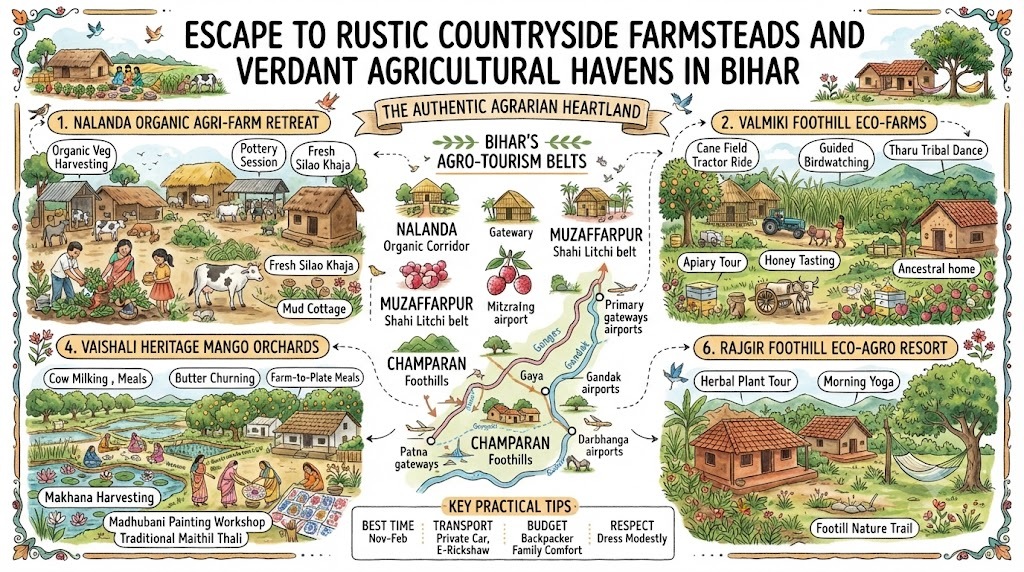
| Key Agricultural Belts | Nalanda Organic Corridor, Muzaffarpur Shahi Litchi belt, Champaran Foothills |
| Transport Connectivity | State Highways, local cab rentals, and rail links to regional hubs |
| Ideal Stay Duration | 2 to 4 Days for an immersive family agro-retreat |
Best Places or Experiences
1. Nalanda Organic Agri-Farm Retreat, Silao
Sprawling along the fertile fringe between Nalanda and Rajgir, this agro-tourism initiative introduces families to sustainable, zero-chemical farming practices. Children can pick seasonal vegetables straight from organic raised beds, feed indigenous cows at the dairy shed, and watch traditional drip-irrigation networks in action.
The property blends open-air mud-and-thatch cottages with modern amenities, creating a tranquil sanctuary beneath mango and guava groves. Evenings gather families around traditional clay chulhas where locals bake fragrant sattu-stuffed littis directly over cow-dung ember cakes.
- Location: Silao Valley, Nalanda District; approximately 85 km southeast of Patna.
- Why it is worth visiting: Combines world-class ancient archaeological heritage with hands-on organic farming education.
- Best things to do: Participate in morning organic vegetable harvesting, attend a hands-on pottery session with village artisans, and sample freshly made hot Silao Khaja straight from village ovens.
- Best time to visit: November to February when winter morning mist blankets the fields and daytime temperatures stay crisp.
- Ideal for whom: Multi-generational families, urban schoolchildren, and eco-conscious travelers.
- Travel tip: Book weekend farm-cottage stays at least two weeks ahead during winter peak season, as educational school excursions fill capacity quickly.
2. Valmiki Foothill Eco-Farms & Jungle Huts, West Champaran
Nestled right against the lush buffer zone of Valmiki Tiger Reserve in the sub-Himalayan Terai belt, this agrarian retreat is an untamed wilderness experience. The farm combines sugarcane, paddy, and mustard cultivation with deep forest canopy views, giving children a thrilling glimpse into wildlife coexistence.
The accommodations feature sustainable bamboo and timber huts managed in close partnership with local Tharu tribal communities. Families can wake up to mist rolling off the Gandak River basin, embark on tractor rides across cane fields, and listen to folk folklore around village evening bonfires.
- Location: Valmikinagar edge, West Champaran District; 280 km northwest of Patna.
- Why it is worth visiting: Rare blend of active sugarcane farming and pristine Sal forest wildlife safaris.
- Best things to do: Take an open-top tractor ride through seasonal cane fields, join a guided early morning birdwatching walk along the riverbanks, and enjoy traditional Tharu tribal folk dances.
- Best time to visit: October to March for pleasant safari conditions and blooming agricultural fields.
- Ideal for whom: Nature-loving families, birdwatchers, and adventurous teens.
- Travel tip: Carry insect repellent, binoculars, and warm woolens, as evening temperatures drop sharply near the forest perimeter.
Forest farm huts along the foothills.
3. Shahi Litchi & Honey Orchards, Muzaffarpur
Muzaffarpur’s celebrated GI-tagged Shahi Litchi belt features expansive agro-farms that welcome families into verdant shaded orchards. Walking beneath dense leafy canopies, children learn the fascinating symbiotic relationship between blooming fruit trees and apiculture honey boxes.
The farm stays here feature restored ancestral brick homes and open verandahs overlooking neat rows of fruit trees and mustard crops. Visiting families can learn honey-extraction techniques from local beekeepers and taste unfiltered floral honey paired with warm village flatbreads.
- Location: Bochahan-Kanti Road, Muzaffarpur District; 75 km north of Patna via the Ganga expressway bridge.
- Why it is worth visiting: Direct access to India’s most prized GI-tagged fruit belt with integrated apiary tours.
- Best things to do: Take an educational beekeeping and honey-tasting masterclass, ride traditional bullock carts through orchard trails, and gather fresh seasonal guavas and papayas.
- Best time to visit: May to June for litchi harvesting; December to February for mustard blooms and honey harvesting.
- Ideal for whom: Culinary travel enthusiasts, young children, and photography hobbyists.
- Travel tip: Wear full-sleeved cotton shirts and closed boots during apiculture tours to prevent occasional bee stings or orchard scrub scratches.
4. Vaishali Heritage Mango Orchards & Dairy Farm
Located near the historic birthplace of democracy, this countryside farm stay blends sprawling mango groves, organic vegetable plots, and a traditional dairy farm. Children can milk indigenous Gir and Sahiwal cows under expert supervision, churn fresh butter in clay urns, and watch solar-powered bio-gas plants operate.
The retreat emphasizes slow, grounded rural living, offering breezy bamboo machans where guests can read or birdwatch throughout the afternoon. The farm kitchen sources all meals entirely from its own perimeter, providing children with an authentic farm-to-plate dining experience.
- Location: Basarh / Vaishali rural circle; 55 km north of Patna.
- Why it is worth visiting: Authentic dairy-farming immersion situated minutes away from historic Ashokan monuments.
- Best things to do: Try hand-churning fresh Makhan (butter) using traditional wooden tools, climb wooden machans to view scenic water bodies, and cycle along peaceful village trails.
- Best time to visit: October to March for cool weather; mid-summer (June) if you wish to pick ripe Langra mangoes.
- Ideal for whom: Families with young children, urban couples, and history buffs.
- Travel tip: Coordinate with the farm manager to schedule early morning dairy tasks at 6:00 AM, when cows are milked and calves are fed.
5. Mithila Agro-Art Farmstead, Madhubani
Situated in the serene northern plains of Darbhanga and Madhubani, this cultural farm stay combines organic Makhana (fox nut) wetland farming with world-renowned Madhubani painting traditions. Families live on a spacious village farmstead surrounded by lotus ponds, bamboo groves, and mango orchards.
Visiting children can watch village harvesters collect and pop raw lotus seeds over wood fires to create crunchy makhana. In the afternoons, women artisans gather on the sunlit courtyard verandah to teach children how to paint natural pigments onto handmade paper using bamboo twigs.
- Location: Ranti-Madhubani rural corridor; 165 km northeast of Patna, 35 km from Darbhanga Airport.
- Why it is worth visiting: Unique confluence of wetland agriculture and centuries-old living folk art traditions.
- Best things to do: Watch live makhana harvesting and popping, take a beginner Madhubani painting workshop led by local women artists, and savor authentic Maithil Brahmin vegetarian thalis.
- Best time to visit: November to February when ponds are clear and outdoor workshops are pleasant under the winter sun.
- Ideal for whom: Culturally minded families, craft collectors, and young art enthusiasts.
- Travel tip: Buy hand-painted artworks directly from the resident artisan families on the farmstead to support local creators at fair prices.
Expansive agricultural valleys of Bihar.
6. Rajgir Foothill Eco-Agro Resort & Herbal Garden
Sprawling along the foothills near Pandu Pokhar and the Rajgir hills, this farm retreat specializes in indigenous medicinal herbs, seasonal pulses, and floriculture. Stone walkways meander between fragrant marigold plots, lemongrass beds, and organic vegetable patches watered by hill streams.
The resort’s rustic cottages are built using vernacular terracotta tiles, local stone, and treated bamboo, blending naturally into the rocky valley backdrop. Families can explore herbal gardens, relax in open hammocks beneath neem trees, and hike gentle nature trails directly behind the property.
- Location: Virayatan Road periphery, Rajgir; 100 km south of Patna.
- Why it is worth visiting: Peaceful agrarian atmosphere set against the dramatic backdrop of Rajgir’s historic hill ranges.
- Best things to do: Take an educational herbal plant identification tour, participate in morning yoga across open lawns, and hike the nearby foothills.
- Best time to visit: September to March for cool mountain breezes and lush valley greenery.
- Ideal for whom: Multi-generational families, wellness seekers, and active outdoor travelers.
- Travel tip: Take advantage of the retreat’s early morning silence by meditating or journaling before group tour schedules begin.
Offbeat Exploration: Hidden Gems Tourists Miss
Ghora Katora Rural Wetlands, Rajgir
Tucked into a tranquil valley bounded by forested ridges, Ghora Katora is an eco-reserve that strictly forbids motorized transport. Families can take a traditional horse cart ride through rural farmlands and mustard fields to reach this clear natural lake. Visiting at sunrise reveals mirrored water surfaces with almost no tourists in sight.
Bettiah Countryside Sugar Cane Fields, West Champaran
While leisure tourists bypass West Champaran’s interior farming villages, the rural paths around Bettiah offer an authentic look at traditional jaggery-making. Families can visit open-air crushing units, watch sugarcane juice boil in massive iron pans, and sample warm, unrefined gur straight from the vats.
Simaria Ganges Floodplain Melon Farms, Begusarai
During late winter and early spring, the vast sandy floodplains along the river Ganges transform into sprawling seasonal riverbed farms. Local farming families cultivate watermelons, cucumbers, and gourds directly in the rich river silt. Walking across these wide sands offers dramatic river horizon views and a fascinating look at unique floodplain farming.
Detailed Practical Guidance for Travelers
| Destination | Standard Entry Fee | General Timings | Best Local Food Options Nearby | Recommended Nearby Attractions |
|---|---|---|---|---|
| Nalanda Organic Farm, Silao | ₹300 – ₹500 (Day Visit) | 8:00 AM – 6:00 PM | Hot Silao Khaja, Dal Puri, Litti Chokha | Ancient Nalanda Ruins, Kundalpur Stupa |
| Valmiki Eco-Farms, Champaran | ₹100 – ₹200 (Permit) | 6:00 AM – 5:30 PM | Tharu Duck Curry, Steamed Taash, Rice Pitha | Gandak Barrage, Valmiki Tiger Safari |
| Muzaffarpur Litchi Orchards | Free (Prior Host Notice) | 7:00 AM – 5:00 PM | Fresh Litchi Juice, Sattu Sharbat, Chhena Jalebi | Garib Nath Temple, Sikandarpur Lake |
| Vaishali Heritage Mango Farm | ₹200 (Orchard Tour) | 8:00 AM – 5:30 PM | Sattu Paratha, Village Dahi, Kadhi Badi | Ashokan Lion Pillar, Buddha Relic Stupa |
| Mithila Agro-Art Farmstead | Free (Workshops ₹300) | 9:00 AM – 6:00 PM | Roasted Makhana Kheer, Oal Chutney, Maithil Thali | Saurath Sabha Village, Madhubani Bazar |
| Rajgir Foothill Agro-Resort | ₹200 – ₹400 (Day Pass) | 7:00 AM – 7:00 PM | Wood-fired Litti, Herbal Green Tea, Poha | Pandu Pokhar, Vishwa Shanti Stupa |
Logistics & On-Ground Navigation
Local Transport Options
- Private Car Rentals: Hiring an air-conditioned sedan or SUV from Patna or Gaya is the most flexible choice for families with luggage and young children.
- Railways: Express trains like the Vande Bharat and Jan Shatabdi cleanly connect major hubs like Patna, Gaya, Darbhanga, and Muzaffarpur.
- E-Rickshaws (Totos): The quietest, eco-friendly way to navigate narrow village roads between farmsteads and town markets.
- Pre-Arranged Farm Pickups: Most farm stays provide tractor or SUV transfers from the nearest railway station or highway junction upon request.
Budget Planning
- Backpacker / Budget Rural Tier: ₹1,200 – ₹2,000 per day (Simple village homestays, public transport, family-style shared thalis).
- Mid-Range / Comfort Family Tier: ₹4,000 – ₹7,500 per day (Dedicated farm cottages, private vehicle hire, hands-on workshops, and all farm-to-table meals).
Safety and Inclusivity Tips
- For Families: Ensure kids wear sturdy walking shoes during farm walks to guard against thorns and uneven terrain; pack standard first-aid basics.
- For Couples: Choose farmsteads with private garden-facing cottages to enjoy peaceful, uninterrupted countryside views.
- General Safety: Rural roads can be poorly lit at night; plan your drives to arrive at your farm stay well before dusk.
Strategic Travel Planning Guardrails
Travel Planning Tips for Bihar
- Target the Winter Window: Plan your farm visits between November and February to enjoy golden mustard blooms, clear blue skies, and comfortable daytime weather.
- Carry Paper Cash: Although rural digital payments via UPI are widely adopted, small farm-side shops, cart drivers, and remote artisans still prefer cash.
- Respect Village Sensibilities: Dress modestly when touring rural farming villages, and always ask permission before taking close-up portraits of working villagers.
- Pack Layers: Countryside mornings and nights can dip below 10°C in December and January; pack thermal vests, fleece jackets, and woolen beanies.
- Call Ahead for Seasonal Harvests: Confirm crop seasons directly with your host—makhana, litchis, mangoes, and mustard peak at very different times of the year.
Common Mistakes to Avoid
- Overpacking Your Daily Itinerary: Attempting to visit multiple far-flung districts on the same day ruins the slow, relaxed pace of farm living.
- Ignoring Bug and Sun Protection: Forgetting sun hats, sunscreen, and organic mosquito repellent makes outdoor orchard visits uncomfortable for children.
- Expecting Full Resort Amenities: Remember that genuine farm stays focus on authentic rural experiences, not marble floors or fast-food room service.
- Skipping Raw Rural Experiences: Don’t spend your stay indoors; encourage children to try harvesting vegetables, milking cows, and walking barefoot on clean garden paths.
- Relying Exclusively on Online Maps: Rural dirt roads are not always mapped accurately; always request detailed landmark directions directly from your host.
Suggested Itinerary Blueprints
1. Day Quick Dash (Vaishali & Ganga Plain Day Escape)
Designed for busy urban families looking for a fast, educational weekend retreat without changing hotels.
- 07:00 AM – 08:30 AM: Drive from Patna across the river bridge into the Vaishali rural farming belt.
- 09:00 AM – 11:30 AM: Morning tour of a heritage dairy farm; kids try cow milking, butter churning, and savor hot village parathas.
- 12:00 PM – 02:00 PM: Traditional lunch prepared on clay hearths, followed by relaxed hammock time under shady mango groves.
- 02:30 PM – 05:00 PM: Visit the ancient Ashokan Lion Pillar and Relic Stupa before a scenic sunset drive back to the capital.
2. Day Deep-Dive (Nalanda & Rajgir Heritage Agro-Circuit)
A balanced two-day immersion blending ancient history with organic farming and peaceful foothills.
- Day 1: Arrive at the Silao farm retreat; enjoy an organic vegetable harvesting session followed by a traditional earthen litti lunch. In the afternoon, explore the nearby ancient Nalanda University ruins before gathering around a village bonfire at night.
- Day 2: Early morning bicycle ride through rural mustard fields towards Rajgir foothills. Enjoy a hands-on pottery class with village artisans, visit Ghora Katora lake via eco-friendly horse carriage, and return home refreshed by evening.
3. Complete Weekend Travel Plan (Mithila Art & Makhana Wetland Trail)
A culturally immersive 3-day loop for families who appreciate art, wetlands, and traditional cuisine.
- Friday: Arrive in Darbhanga via morning flight or express train; drive to the Madhubani farmstead. Unpack in a rustic cottage and enjoy an evening stroll through serene village bamboo groves.
- Saturday: Spend the morning at local wetland ponds observing makhana harvesting and popping. In the afternoon, gather on the verandah for an interactive Madhubani painting workshop taught by master village artists.
- Sunday: Wake up to fresh village curd and jaggery; explore the nearby historical village of Saurath, purchase authentic artisan handicrafts directly from local families, and catch your evening return connection.
Common Tourist Mistakes to Avoid
Geographic Blunders
Trying to combine West Champaran’s forest belt and Madhubani’s art villages in a single weekend is a recipe for exhaustion. These regions sit hundreds of kilometers apart across regional highway networks. Focus on a single rural hub so your family can travel at a relaxing, restorative pace.
Commercial Traps
Spending precious vacation hours in highway chain restaurants or suburban malls keeps you from tasting genuine local culinary traditions. Take time to dine with host families, where seasonal greens, stone-ground chutneys, and unpolished native rices showcase authentic home cooking.
Neglecting Modern/Alternative Zones
Don’t overlook newly developed agro-tourism facilities, farm-schools, and cooperative enterprises. These hubs offer clean western-style restrooms, filtered drinking water, and safe play spaces tailored specifically for young families, proving that rustic living can be very comfortable.
Transport Overpayment
Negotiate long-distance taxi rentals as all-inclusive day packages with registered agencies rather than arranging piecemeal rides at rural intersections. This ensures clear, fixed pricing and prevents unexpected rate hikes during your family retreat.
Luxury Dining Bias
Avoiding village food stalls and small rural bakeries out of hesitation means missing out on legendary fresh specialties. Freshly made Silao Khaja, piping-hot litti chokha, and authentic earthen-pot curd are prepared with pure ingredients right before your eyes.
Frequently Asked Questions
1. What makes a farm stay in Bihar suitable for young children?
Farm stays in Bihar offer open, unpolluted natural environments where urban children can play freely and learn about nature. They offer hands-on experiences like milking cows, harvesting fresh organic vegetables, and watching pottery making, helping kids understand where their food comes from away from digital screens.
2. Is it safe for families to stay in rural farm properties across Bihar?
Yes, rural farm stays and agro-resorts across Bihar are safe, family-friendly destinations. Property owners and host families live on-site, providing attentive personal care, gated premises, and home-cooked meals prepared with clean water, ensuring a secure and welcoming environment.
3. What are the best months of the year to plan an agro-tourism trip to Bihar?
The best months to visit are from October through March. Winter brings pleasant daytime temperatures, crisp sunny skies, blooming mustard fields, and comfortable conditions for outdoor farm activities, harvest tours, and sightseeing without extreme summer heat.
4. Can children participate in farming activities at these stays?
Yes, interactive participation is a core feature of Bihar’s agro-tourism stays. Children can hand-pick seasonal vegetables, help feed dairy calves, plant saplings, learn honey-harvesting techniques, and make earthenware pots under the patient guidance of local village experts.
5. What kind of food is served to families at these rural farm stays?
Stays serve fresh, vegetarian farm-to-table meals prepared using ingredients grown directly on the property or in nearby village plots. Common dishes include wood-fired litti chokha, seasonal saag, fresh sattu rotis, rich homemade dairy products, and delicious local desserts like kheer and jalebis.
6. Are modern washroom and sanitation facilities available at farm stays?
Yes, established farm stays and agro-tourism cottages offer clean, private, western-style bathrooms with running hot water. While the living spaces reflect rustic vernacular architecture, they maintain rigorous hygiene standards to keep visiting families comfortable.
7. How accessible are these farm stays from major airports and railway hubs?
Major agro-tourism clusters in Nalanda, Vaishali, and Muzaffarpur sit within a convenient 1 to 2.5 hour drive from Patna Airport and key railway junctions. Roads are broad and well-paved, making direct transfers in private rental cars straightforward.
8. Can farm stays cater to special dietary needs or prepare baby food?
Yes, farm stay kitchens are flexible and happy to accommodate specific dietary requests. Hosts are accustomed to preparing simple, unspiced foods like khichdi, boiled farm vegetables, mashed bananas, and warm cow’s milk on short notice for infants and toddlers.
9. What should families pack for a rural farm holiday in Bihar?
Pack comfortable cotton clothing, sturdy closed-toe walking shoes, sun hats, and organic insect repellent. If visiting between December and January, bring warm woolens, thermals, and light jackets, as rural temperatures drop significantly after sunset.
10. Do farm stays in Bihar accept digital payments like UPI and cards?
Most established farm stays accept UPI payments like Google Pay and PhonePe, as well as bank transfers. However, card machines in rural areas can have spotty network connections, so keeping sufficient cash on hand for small purchases is smart.
11. Are there educational opportunities for school-age children during these trips?
Yes, farm stays provide exceptional learning experiences outside the classroom. Children learn about organic farming, renewable biogas, groundwater conservation, wetland ecosystems, and ancient folk crafts like Madhubani painting directly from working rural artisans and farmers.
12. How far in advance should families book their farm stay accommodations?
You should reserve your accommodations at least 2 to 3 weeks ahead for winter weekend trips. Because boutique farm stays prioritize personalized hospitality, they offer limited cottage numbers that fill quickly during harvest festivals and school holidays.
Conclusion
Choosing a family farm stay across Bihar offers an enriching experience that far surpasses any generic hotel vacation. In an era where childhood is increasingly dominated by smartphones and urban congestion, introducing your family to the rhythms of the countryside builds deep grounding and perspective. As your children run through golden mustard fields, taste warm flatbreads baked over wood embers, and watch twilight gather over peaceful river plains, you create memories rooted in authentic culture, timeless warmth, and the generous spirit of rural Bihar.
