Introduction
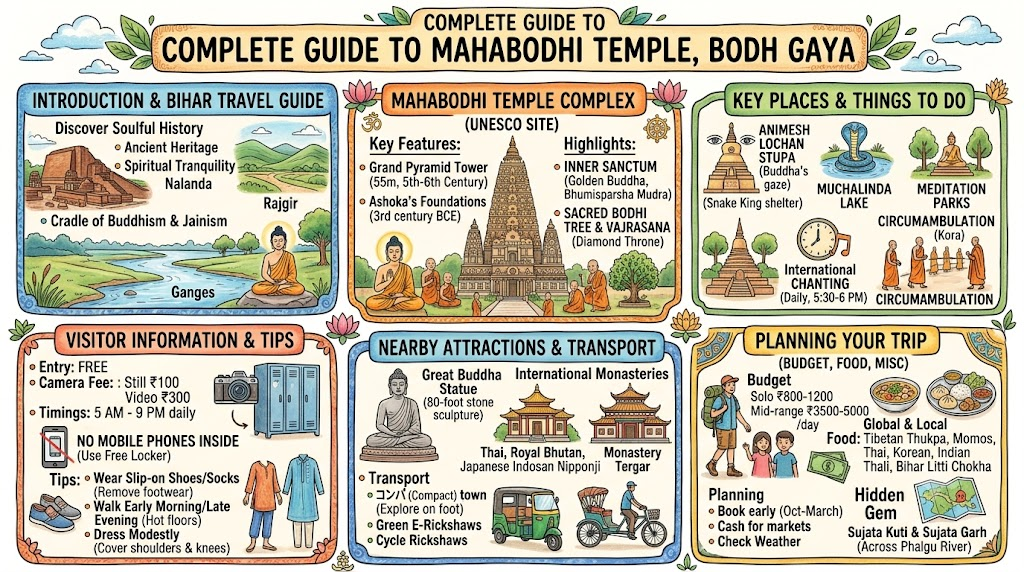
When most people think of a quick vacation, their minds instantly drift toward crowded coastal getaways, commercial hill stations, or chaotic urban landscapes. But true travel is about more than just checking off standard commercial boxes. It is about discovering places that touch your soul, reveal deep history, and offer an authentic sense of peace. If you are looking for a destination that seamlessly blends profound culture, ancient heritage, awe-inspiring nature, delicious regional food, and an unmatched sense of spiritual tranquility, it is time to look toward Bihar.
Far from the stereotypical narratives, Bihar is an absolute treasure trove for travelers who want to explore India in a smarter, deeper way. From the rolling green hills of Rajgir and the magnificent ruins of Nalanda University to the serene banks of the Ganges, this state is a vibrant tapestry of living history. At the absolute heart of this cultural wealth sits Bodh Gaya, a globally renowned destination where a prince sat under a fig tree more than 2,500 years ago, meditated, and transformed into the Buddha.
Whether you are a solo backpacker looking for self-reflection, a family wishing to introduce your children to world history, a couple seeking quiet paths to wander together, or a weekend traveler escaping the chaos of metro life, this complete guide to Mahabodhi Temple Bodh Gaya will provide everything you need to plan a flawless trip.
Why Bihar is a Must-Visit State
For any passionate traveler mapping out their next destination, a Bihar travel guide reveals an unexpected paradise of historical, cultural, and eco-tourism opportunities. Bihar is not just a place on a map; it is the cradle of two major world religions—Buddhism and Jainism—and home to some of the most profound ancient empires in human history.
Here is a practical look at why Bihar belongs at the very top of your travel bucket list:
- Unrivaled Heritage & Archaeology: You can walk through Nalanda, the world’s oldest residential university, or explore the ancient cyclopean walls of Rajgir. The state is filled with architectural wonders that predate many modern civilizations.
- A Sanctuary of Peace: If your daily life is loud and stressful, places like Bodh Gaya offer deep spiritual peace. Meditating alongside monks from Japan, Thailand, Sri Lanka, and Tibet is an experience you cannot find anywhere else in the world.
- The Diverse Landscapes: From the lush forests and tiger tracks of Valmiki National Park in North Bihar travel guide circuits to the majestic waterfalls of Kakolat and the scenic rocky hills in the South Bihar travel guide routes, the state boasts incredibly diverse terrain.
- Incredible Local Food: Bihar’s culinary scene goes far beyond the famous Litti Chokha. Travelers can feast on sweet Khaja from Silao, crispy Anarsa, savory Dal Puri, and an endless array of authentic, budget-friendly street food.
- Unmatched Affordability: Whether you are looking for premium resort stays or operating on a tight backpacker budget, Bihar offers exceptional value for money regarding local transport, accommodation, and food.
Complete Guide to Mahabodhi Temple Bodh Gaya
The Mahabodhi Temple Complex is a UNESCO World Heritage site and the primary spiritual anchor of Bodh Gaya. It marks the literal birthplace of Buddhism. The current grand temple structure dates back to the 5th and 6th centuries, built over the initial foundations laid down by Emperor Ashoka in the 3rd century BCE. Rising to an impressive height of 55 meters, the grand pyramidal tower of the temple dominates the landscape, radiating an atmosphere of deep reverence.
Best Places to Visit Within and Near the Complex
Inside the complex, your main focus will be the inner sanctum housing a magnificent, gold-gilded statue of Lord Buddha in the Bhumisparsha Mudra (earth-touching posture). Directly behind the main temple structure stands the sacred Bodhi Tree, a direct descendant of the original tree under which Siddhartha Gautama achieved supreme enlightenment. Right next to it is the Vajrasana (the Diamond Throne), the stone platform where the Buddha sat. Do not miss the Animesh Lochan Stupa, where the Buddha stood without blinking for an entire week in gratitude to the tree, and the beautiful Muchalinda Lake, where the Snake King protected Buddha from a fierce storm during his sixth week of meditation.
Things to Do
The absolute best thing to do here is to sit quietly along the stone parikrama paths and practice meditation. You can listen to the deeply calming international chanting sessions held daily between 5:30 AM and 6:00 PM. Alternatively, engage in a peaceful circumambulation (Kora) around the temple alongside monks wrapped in maroon and saffron robes.
Entry Fees and Timings
- Entry Fee: Admission to the Mahabodhi Temple Complex is completely Free for all domestic and international visitors.
- Camera Charges: While entry is free, if you wish to carry a still camera inside, there is a fee of ₹100. For a video camera, the charge is ₹300.
- Timings: The temple complex is open every single day from 5:00 AM to 9:00 PM.
- Important Electronic Restriction: Mobile phones are strictly prohibited inside the Mahabodhi Temple premises due to security protocols. You must store your phone safely at the free baggage and locker counters located right at the main entrance gate before joining the security line.
Travel Tips
Wear slip-on shoes or heavy socks, as you must remove your footwear before entering the inner stone courtyard. Because you will be walking on open stone floors that can get incredibly hot during midday, visiting in the early morning or late evening is highly recommended. Always dress modestly with covered shoulders and knees to show respect for the local monastic culture.
Nearby Attractions
Once you exit the main complex, you can easily explore the Great Buddha Statue, a breathtaking 80-foot-tall stone sculpture. The surrounding town features stunning international monasteries built by Buddhist communities from around the world, including the Thai Temple, the Royal Bhutan Monastery, the Japanese Indosan Nipponji Temple, and the Tergar Monastery.
Food Options
Bodh Gaya features a surprisingly global culinary footprint due to its international visitors. You can enjoy authentic Tibetan Thukpa and momos at local street stalls, traditional Thai and Korean meals at specialized cafes near the monasteries, or classic North Indian thalis and Bihari Litti Chokha at budget-friendly local eateries.
Budget Planning
Bodh Gaya is highly customizable for any pocket. A solo backpacker can easily manage on ₹800 to ₹1,200 per day utilizing budget guesthouses and local monkish eateries. Families and couples looking for mid-range comfort with private AC transport and boutique heritage hotels can expect to spend around ₹3,500 to ₹5,000 per day.
Safety Tips
The temple complex and town are highly secure, heavily guarded by local police, and very welcoming to travelers. However, always ensure you keep track of your footwear at the outer counters, avoid unverified guides who approach you aggressively on the street, and ensure your valuables are locked safely in your room before heading out for late-night meditations.
Local Transport Options
The town of Bodh Gaya is incredibly compact and best explored on foot. For slightly longer distances—such as traveling to the Great Buddha Statue or the archaeological museum—bright green e-rickshaws and cycle rickshaws are widely available and cost anywhere between ₹10 to ₹40 per ride.
Family-Friendly Suggestions
Families will love taking a peaceful evening walk through the beautifully manicured Meditation Park located inside the complex. The Archaeological Museum nearby is also fantastic for kids, displaying ancient stone railings, pillars, and centuries-old artifacts uncovered during regional excavations.
Couple-Friendly Suggestions
Couples seeking quiet moments should visit the Muchalinda Lake corner during sunset. The golden hour reflections on the water, combined with the gentle rustling of the sacred leaves, create an incredibly serene, romantic, and reflective environment away from the main prayer crowds.
Hidden or Less-Crowded Options
If you want to escape the main crowds entirely, take a short 3-kilometer e-rickshaw ride across the Phalgu River to visit the Sujata Kuti stupa and the peaceful Sujata Garh. This marks the historical spot where a local village woman named Sujata offered the starving Siddhartha a bowl of milk-rice (kheer), giving him the physical strength to complete his journey to ultimate enlightenment.
Best Places or Experiences
To make your Bihar trip planning smooth, let’s look closely at the core hubs of experience you cannot afford to miss during your visit to Bodh Gaya:
| Experience Hub | Why It Is Worth Visiting | Best Things to Do | Ideal For | Pro Travel Tip |
| The Sacred Bodhi Tree & Vajrasana | It is the literal epicentre of world peace and enlightenment; sitting under its canopy provides an incredible sense of perspective. | Meditate under the falling leaves, observe monks performing prostrations, and absorb the absolute quiet. | Solo travelers, peace seekers, and spiritual enthusiasts. | If a sacred leaf falls naturally from the tree near you, you can keep it as a beautiful, authentic souvenir. Do not pluck leaves from the tree. |
| International Monastery Hopping | It feels like a mini world tour; you can see distinct architectural styles of Japan, Thailand, Bhutan, and China within a 2-km radius. | Photograph the ornate golden architecture of the Thai Temple and sit in the zen meditation hall of the Japanese temple. | Families, architecture lovers, and casual photographers. | Rent a cycle for the day to hop easily between these monasteries at your own relaxed pace. |
| The 80-Foot Great Buddha Statue | An absolute engineering and artistic marvel built from red granite and sandstone, presenting an iconic image of Bodh Gaya. | Walk through the beautiful green garden base and view the detailed carvings of Buddha’s ten principal disciples. | Families, weekend travelers, and first-time visitors. | Visit around 4:30 PM to catch the beautiful soft lighting for magnificent photographs as the sun dips behind the statue. |
Travel Planning Tips for Bihar
When arranging your things to do in Bihar and outlining your journey, keeping a few practical, boots-on-the-ground tips in mind will guarantee a completely hassle-free, comfortable holiday:
- Book Stays Early During Peak Season: The prime traveling window for Bodh Gaya runs from October to March when the weather is delightfully cool. This is also when major international Buddhist festivals happen. Ensure you book your hotels months in advance if traveling during this window.
- Rent E-Rickshaws or Autos Safely: Always negotiate and fix the final fare with auto or e-rickshaw drivers before you sit inside to avoid any awkward conversations or overpaying at the end of your trip.
- Respect Sacred Spaces: Monasteries and temples are active houses of worship. Always remove your shoes where indicated, turn off your cameras when signs request it, and maintain a low, respectful speaking volume.
- Carry Cash for Local Markets: While digital payments like UPI are widely accepted in hotels and larger restaurants across Bihar, small street vendors, handicraft stalls, and e-rickshaw drivers still prefer cash. Keep a steady supply of small-denomination bills in your wallet.
- Check the Weather: Summers in southern Bihar (April to June) can get intensely hot, with temperatures easily passing 40°C. If you visit during these months, plan your outdoor sightseeing strictly for the early mornings and late evenings, and carry a reusable water bottle to stay hydrated.
- Keep the Environment Clean: Bodh Gaya is a spiritual sanctuary. Avoid littering, do not throw single-use plastics around the heritage structures, and utilize the designated waste bins placed across the town.
Common Mistakes to Avoid
To ensure you explore like an experienced traveler rather than an uninformed tourist, steer clear of these frequent travel blunders:
- Rushing Your Itinerary: Many tourists make the mistake of visiting Bodh Gaya on a rushed day-trip from Patna or Varanasi. They completely miss out on the magical, peaceful evening atmosphere when the temples light up. Give the town at least two dedicated days.
- Ignoring South Bihar: Do not just stop at Bodh Gaya. The entire South Bihar travel guide grid—including the historic caves of Barabar, the ancient ruins of Rajgir, and the breathtaking Vishnupad Temple in Gaya—is located just a short distance away and deserves your time.
- Overpaying for Souvenirs: The street markets surrounding the Mahabodhi Temple are filled with beautiful singing bowls, beads, and brass statues. However, prices are often marked up significantly for tourists. Don’t be afraid to engage in polite, friendly bargaining.
- Skipping the Local Delicacies: Relying solely on standard hotel food is a missed opportunity. Make it a point to sample real local dishes like Gaya Tilkut (a sweet sesame treat), Anarsa, and hot Litti Chokha from clean, highly rated local street shops.
- Not Researching Special Events: If His Holiness the Dalai Lama or major international delegations are visiting Bodh Gaya for teachings, the town becomes heavily crowded and security tightens significantly. Always check the official temple calendar before locking in your travel dates.
Suggested Bihar Itinerary Angle
To help you see how this destination fits perfectly into a larger holiday plan, here are three simple, highly practical ways to structure your Bihar itinerary:
1-Day Plan (The Spiritual Snapshot)
- Morning: Arrive early at the Mahabodhi Temple Complex around 6:00 AM to witness the morning prayers and sit beneath the Bodhi Tree.
- Midday: Explore the 80-Foot Great Buddha Statue and visit the beautiful Royal Bhutan Monastery and Thai Temple.
- Evening: Grab a traditional lunch, visit the Archaeological Museum, and view the reflection of the temple at Muchalinda Lake before departing.
2-Day Plan (The Deep Cultural Immersion)
- Day 1: Dedicate this entire day to Bodh Gaya. Explore the Mahabodhi Temple, visit the international monasteries, shop for local handicrafts, and enjoy a peaceful evening meditation session.
- Day 2: Take a short morning drive to Gaya city (12 km away) to explore the historic Vishnupad Temple and the sacred Mangla Gauri shrine. In the afternoon, head across the river to visit Sujata Kuti and the peaceful meditation centers nearby.
Weekend Travel Plan (The Ultimate Heritage Circuit)
- Friday: Arrive in Bodh Gaya, check into your hotel, and experience the stunning evening lighting and chanting at the Mahabodhi Temple.
- Saturday: Explore the Great Buddha Statue and the international monasteries in the morning. After lunch, take a scenic 2-hour drive to Rajgir to experience the aerial ropeway, the Vishwa Shanti Stupa, and the natural hot springs.
- Sunday: Drive from Rajgir to the magnificent UNESCO ruins of Nalanda University. Walk through the ancient classrooms and museum before heading to Patna for your evening flight or train back home.
FAQs
Q1: Where is the Mahabodhi Temple located? A: The Mahabodhi Temple is located in the historic town of Bodh Gaya, situated in the Gaya district of Bihar, India. It is approximately 12 kilometers from Gaya city and about 110 kilometers south of the state capital, Patna.
Q2: Is mobile phone use allowed inside the Mahabodhi Temple? A: No, mobile phones and smartwatches are strictly banned inside the main temple complex for security reasons. Visitors must safely store their phones at the free locker and cloakroom counters located near the main entrance gate before entry.
Q3: Are cameras allowed inside the temple complex? A: Yes, standalone digital cameras and video cameras are permitted inside the temple grounds. However, you must purchase a camera ticket at the entrance counter, which costs ₹100 for still cameras and ₹300 for video equipment.
Q4: What is the best time of year to visit Bodh Gaya? A: The ideal time to visit is during the cooler winter months, from October to March. The weather during this period is pleasant for walking around, and many international Buddhist festivals and monastic chanting sessions take place during these months.
Q5: How do I reach Bodh Gaya by train and air? A: The nearest railway station is Gaya Junction (GAYY), located about 13 km away and well-connected to major Indian cities. The nearest airport is Gaya International Airport, which operates select seasonal flights, while Patna’s Jay Prakash Narayan Airport (115 km away) offers robust, year-round domestic flight connections.
Q6: What should I wear when visiting the Mahabodhi Temple? A: Visitors are required to dress modestly out of respect for the sacred site. Both men and women should wear clothing that fully covers their shoulders and knees. Revealing tops, short skirts, and shorts are not permitted inside.
Q7: Is the entry to Mahabodhi Temple free? A: Yes, entry to the main Mahabodhi Temple Complex is completely free for all domestic and foreign visitors. There are no mandatory fees unless you are bringing in a camera or using the specialized meditation park.
Q8: Can we perform meditation inside the temple premises? A: Absolutely. There are designated quiet zones, lawns, and stone walkways surrounding the main shrine and the Bodhi Tree where visitors from all over the world sit to meditate quietly. You are welcome to sit and practice in these areas as long as you maintain silence.
Q9: Is Bodh Gaya safe for solo female travelers and backpackers? A: Yes, Bodh Gaya is highly safe and very welcoming to international and domestic solo travelers. The town is filled with police checkpoints, and the local community is incredibly respectful toward tourists. As a standard precaution, avoid walking on isolated dark roads late at night.
Q10: What are the main local dishes I should try in Bodh Gaya? A: You must try the classic Bihari Litti Chokha served with ghee, Gaya Tilkut (a sweet made of pounded sesame seeds and jaggery), Anarsa, and the delicious, flaky Silao Khaja. Due to the international crowd, you can also find excellent, authentic Tibetan momos and Thukpa.
Conclusion
A journey to the Mahabodhi Temple in Bodh Gaya is far more than a simple sightseeing trip; it is an opportunity to slow down, disconnect from the frantic pace of modern life, and walk through the historic paths of human enlightenment. Bihar is a state waiting to be discovered by mindful travelers who value deep culture, raw history, delicious regional food, and meaningful experiences over superficial commercial attractions.
When you are ready to map out your journey into this incredible land, let biharorbit.com serve as your ultimate travel companion. It provides highly practical, reliable, and deeply local insights to help you make smarter travel choices, discover incredible hidden destinations, and craft memories that will truly last a lifetime. Pack your bags, leave your worries behind, and come experience the profound peace of Bihar.
