Introduction
When people think of travel in India, their minds often wander to the crowded beaches of Goa, the royal palaces of Rajasthan, or the nightlife of metro cities. But true travel is about discovering places that transform you from the inside out. Bihar is a land that holds the very roots of human history, spirituality, and culture. Far from the typical commercialized tourist hubs, a Bihar travel guide reveals a world filled with ancient heritage, profound peace, deep-rooted local experiences, and delicious food. At the absolute heart of this cultural wealth sits Bodh Gaya—the place where Prince Siddhartha sat under a sacred fig tree, conquered the mind, and became the Buddha. Whether you are a solo traveler looking for silence, a backpacker exploring heritage on a budget, or a family traveling to show your kids the roots of ancient history, Bodh Gaya offers an experience unlike any other in the world.
Why Bihar is a Must-Visit State
Bihar is not just another destination on a map; it is a living museum of ancient empires and spiritual revolutions. Home to the world’s oldest residential university at Nalanda and the cradle of both Buddhism and Jainism, it offers an incredible mix of heritage, eco-tourism, and spiritual awakening.
For the modern traveler, a Bihar trip planning experience breaks all stereotypes. From the majestic ruins of ancient kingdoms in South Bihar to the lush wetlands and plains of North Bihar, the state balances chaotic local bazaars with pockets of absolute, unshakeable peace. It is highly affordable, culturally immersive, and packed with warm local hospitality.
Comprehensive Guide to Exploring Bodh Gaya
Best Places to Visit
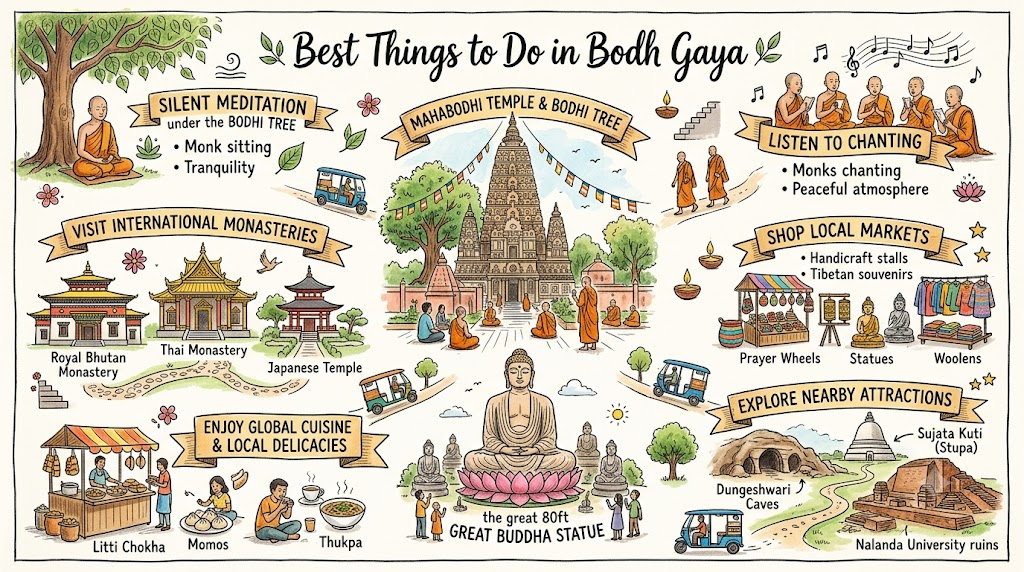
The spiritual landscape is dominated by the UNESCO World Heritage Site Mahabodhi Temple Complex, the towering Great Buddha Statue, and a spectacular array of international monasteries built by Buddhist nations from all over the globe, including Thailand, Japan, Bhutan, and Tibet.
Things to Do
- Sit in silent meditation under the sacred Bodhi Tree.
- Walk through the ornamental gardens of international monasteries to observe global architectural styles.
- Listen to the early morning or evening chanting sessions led by monks from across the world.
- Shop for authentic spiritual souvenirs and handmade winter wear at the local markets.
Entry Fees
The vast majority of the spiritual sites and monasteries in Bodh Gaya have no entry fee. Access to the Mahabodhi Temple and the Great Buddha Statue is completely free. However, if you wish to carry a camera into the Mahabodhi Temple complex, a nominal charge applies (approx. ₹100), while mobile phones must be deposited securely for free at the main entrance counter.
Travel Tips
Always wear easy-to-slip-off footwear, as you will need to remove your shoes before entering any temple or monastery premises. Dress modestly, covering your shoulders and knees out of respect for the local culture and spiritual environment.
Nearby Attractions
You can easily extend your itinerary to visit the Dungeshwari Cave Temples (Mahakala Caves), located about 12 km away, where Buddha practiced severe penance. The historical ruins of Nalanda University and the peaceful hills of Rajgir are also just a few hours’ drive from Bodh Gaya.
Food Options
Bodh Gaya features a surprisingly global culinary palette due to its international visitors. You can enjoy authentic Tibetan Momos and Thukpa near the Tibetan market, authentic Thai and Korean dishes at local cafes, and traditional Bihari delicacies like Litti Chokha at street corners.
Budget Planning
Bodh Gaya is an absolute paradise for backpackers and budget travelers. A comfortable budget trip can easily be managed for ₹1,000 to ₹1,500 per day. Monasteries and local guesthouses offer clean, basic rooms at incredibly low costs, and street food or monastery canteens keep dining expenses very low.
Safety Tips
Bodh Gaya is generally very safe for global travelers, families, and solo female tourists due to its peaceful monastic environment. However, ensure you return to your accommodation by 9:30 PM or 10:00 PM, as the town winds down early after evening prayers.
Local Transport Options
The town is highly walkable, as most core attractions are clustered around the Mahabodhi Temple. For slightly longer distances, you can easily hire e-rickshaws (autos) on a shared or private basis, or rent a bicycle for around ₹50 to ₹100 per day to explore at your own pace.
Family-Friendly Suggestions
Families will thoroughly enjoy the manicured, peaceful gardens around the Great Buddha Statue and the Muchalinda Lake (Lotus Pond), where children can see fish and learn about the legendary stories of Lord Buddha.
Couple-Friendly Suggestions
Couples looking for a meaningful, quiet getaway can spend their early mornings walking through the serene paths of the Thai or Bhutanese Monasteries, enjoying quiet cafes, and soaking in the tranquil sunset vibes near the Niranjana River.
Hidden or Less-Crowded Options
For a deeply tranquil experience away from the main tourist crowds, visit the Indosan Nippon Japanese Temple during its early morning meditation hours or take a short trip to the serene Sujata Kuti, located across the river in a peaceful rural setting.
Best Places or Experiences
1. The Sacred Mahabodhi Temple and Bodhi Tree
Location
Centrally located in the heart of Bodh Gaya town, Bihar.
- Why it is worth visiting: This is a UNESCO World Heritage Site and the literal epicenter of world Buddhism. The towering 170-foot pyramidical temple structure dates back centuries and houses a magnificent golden statue of Buddha in the “Earth Touching” (Bhumisparsha) mudra. Right behind the temple stands the holy Bodhi Tree, a direct descendant of the original tree under which Siddhartha Gautama attained supreme enlightenment.
- Best things to do: Sit quietly on the stone meditation platforms, listen to the rhythmic, hypnotic chanting of monks from different parts of the world, and look for fallen leaves from the Bodhi Tree, which are kept by pilgrims as sacred keepsakes.
- Best time to visit: Early morning (5:00 AM to 7:00 AM) to experience the crisp, misty dawn and the peaceful sunrise chants, or late evening when the temple is beautifully illuminated.
- Ideal for whom: Spiritual seekers, solo travelers, history buffs, and families.
- Travel tip: Electronic items like mobile phones, smartwatches, and laptops are strictly prohibited inside the main temple area. Leave them in your hotel room or use the free security lockers available at the main entrance.
2. Standing Before the Great Buddha Statue
Location
Situated along the Temple Road, about a 15-minute walk from the Mahabodhi Temple.
- Why it is worth visiting: Standing at an awe-inspiring height of 80 feet, this is one of the most iconic landmarks in Bihar. Unveiled by His Holiness the Dalai Lama in 1989, this magnificent structure features Lord Buddha meditating peacefully on a giant blooming lotus, beautifully carved out of red granite and sandstone.
- Best things to do: Walk around the base of the statue to admire the ten smaller, beautifully detailed sculptures of Buddha’s primary disciples that surround the main monument. Take photographs from the manicured lawns that frame this giant structure.
- Best time to visit: Late afternoon (4:00 PM to 6:00 PM) when the soft golden sunlight hits the face of the statue, making it look exceptionally ethereal.
- Ideal for whom: Photographers, families, backpackers, and weekend travelers.
- Travel tip: The open-air complex can get quite warm during the midday sun. Visit during the cooler hours of the day and bring a hat or sunglasses.
3. Exploring the Royal Bhutan Monastery
Location
Located within walking distance from the main temple complex, Bodh Gaya.
- Why it is worth visiting: It is widely considered one of the most visually stunning international monasteries in South Bihar. Built as a tribute by the King of Bhutan, the architecture features traditional, highly ornate Bhutanese designs, vibrant 3D clay reliefs on the inner walls depicting the life of Buddha, and a magnificent 7-foot tall internal Buddha statue.
- Best things to do: Spend time studying the incredibly intricate woodwork and colorful traditional paintings on the ceilings. Talk to the resident Bhutanese monks to understand their unique monastic lifestyle.
- Best time to visit: 8:00 AM to 12:00 PM or 2:00 PM to 5:00 PM.
- Ideal for whom: Architecture enthusiasts, couples, and cultural travelers.
- Travel tip: The monastery grounds also house a peaceful guest house. If you are seeking a deeply spiritual stay, check with the monastery management directly for room availability.
4. Witnessing the Grandeur of Wat Thai Buddhagaya (Thai Monastery)
Location
Near the Maya Sarovar area, Bodh Gaya.
- Why it is worth visiting: Established in 1956 to strengthen cultural ties between India and Thailand, this monastery is a spectacular representation of Bangkok’s iconic royal temple architecture. It boasts sweeping, multi-tiered sloping roofs adorned with brilliant golden tiles, manicured lawns, and a massive, gleaming bronze statue of Lord Buddha inside the main prayer hall.
- Best things to do: Sit in absolute silence inside the beautifully ventilated prayer hall to admire the stunning murals that depict Buddha’s life alongside modern environmental messages.
- Best time to visit: Mid-morning when the golden roof shines brightly against the clear blue sky.
- Ideal for whom: Backpackers, solo travelers, and culture seekers.
- Travel tip: Always maintain strict silence inside the prayer room, as local or visiting Thai monks frequently use this space for intensive daily meditation.
Travel Planning Tips for Bihar
- Book stays early during peak season: The peak travel season for Bodh Gaya runs from October to March, when the weather is beautifully pleasant. If you plan to visit during this time—or during the Dalai Lama’s annual winter teachings—make sure to book your guesthouses or hotels well in advance.
- Rent e-rickshaws with clear, upfront pricing: While there are no scooter rentals like coastal destinations, e-rickshaws are abundant. Always settle on a fixed price with the driver before stepping into the vehicle to ensure smooth travel.
- Respect temple safety and decorum: Most spiritual monuments require you to pass through basic security checks. Avoid carrying large bags or unnecessary metallic items to these sites to save time.
- Avoid isolated historical paths late at night: While Bodh Gaya town is highly peaceful and safe, it is wise to avoid dimly lit rural roads or isolated historical mounds on the outskirts after 9:00 PM.
- Carry sufficient cash for local markets: While digital UPI payments are widely accepted across India, smaller street vendors, handicraft stalls at the Tibetan Refugee Market, and local rickshaw drivers in Bihar still heavily prefer cash transactions.
- Check the weather before planning outdoor walks: Summers in Bihar (April to June) can be intensely hot, with temperatures soaring past 40°C. If traveling in summer, keep your outdoor exploration limited to early mornings and late evenings.
- Respect local culture and monastic environments: Remember that Bodh Gaya is an active place of worship and spiritual practice, not just a tourist checklist. Speak softly, do not use flash photography inside prayer halls, and respect the privacy of meditating monks.
- Keep the holy town clean: Avoid littering plastic bottles or wrappers around temple boundaries or historical sites. Carry a small trash bag in your backpack to maintain the sanctity of these spaces.
Common Mistakes to Avoid
- Treating Bodh Gaya like a rushed tourist checklist: The biggest mistake travelers make is trying to visit 10 different monasteries in a single afternoon. Bodh Gaya is meant for slowing down. Pick two or three spots a day, sit down, and soak in the stillness.
- Visiting only during the hot afternoon hours: Walking bare-feet on stone temple complexes at 1:00 PM will quickly drain your energy. Plan your main temple visits for dawn and dusk.
- Ignoring the rest of South Bihar: Many visitors fly into Gaya, visit Bodh Gaya, and leave. By doing this, you miss out on nearby wonders like the ancient rock-cut Barabar Caves, the historic town of Rajgir, and the majestic ruins of Nalanda University.
- Overpaying for transport due to lack of bargaining: Do not hesitate to politely negotiate with local cycle rickshaw and auto drivers. Asking your hotel front desk about standard local rates before stepping out is always smart.
- Skipping the authentic local cuisine: Don’t stick strictly to continental food at your hotel. Missing out on hot, smoky street-side Litti Chokha, Malpua, or Sattu-based local drinks means missing a huge part of Bihar’s rich cultural flavor.
Suggested Bihar Itinerary Angle
To get the absolute most out of your things to do in Bihar, here is how you can perfectly integrate Bodh Gaya into a practical, highly efficient travel plan:
1-Day Plan (The Spiritual Quick-Fix)
- Morning: Arrive early and head straight to the Mahabodhi Temple Complex. Spend 2-3 hours exploring the main shrine and sitting under the holy Bodhi Tree.
- Mid-day: Visit the towering 80-foot Great Buddha Statue and stop for a traditional lunch at a nearby Tibetan cafe.
- Afternoon/Evening: Explore the stunning Royal Bhutan Monastery and the Thai Monastery before witnessing the peaceful evening lamp-lighting rituals back at the Mahabodhi complex.
2-Day Plan (The Deep Cultural Immersion)
- Day 1: Dedicate the entire day to the spiritual core. Visit the Mahabodhi Temple at sunrise, explore the Great Buddha Statue, and spend your afternoon leisurely walking through the Japanese, Thai, and Tibetan Monasteries. Enjoy a local Bihari dinner.
- Day 2: Take an early morning excursion to the Dungeshwari Cave Temples to see where Buddha meditated before his enlightenment. Cross the Niranjana River in the afternoon to visit Sujata Kuti, a stupa dedicated to the village girl who offered Buddha milk-rice. End your evening shopping for authentic handicrafts at the Tibetan Refugee Market.
Weekend Travel Plan (The South Bihar Heritage Circuit)
- Friday: Arrive in Gaya, check into your Bodh Gaya stay, and catch the tranquil evening chanting prayers at the Mahabodhi Temple.
- Saturday: Complete your comprehensive Bodh Gaya exploration (Monasteries, Great Buddha Statue, and Sujata Kuti).
- Sunday: Take an early morning 2-hour drive to Rajgir to experience the Vishwa Shanti Stupa via the ropeway and explore the ancient Cyclopean Walls. On your way back, stop at the magnificent ruins of Nalanda University before catching your train or flight back home.
FAQs
1. What is the best time to visit Bodh Gaya?
The ideal time to plan a trip is between October and March. During these months, the weather is pleasantly cool, making it highly comfortable for walking tours, meditation, and exploring the open-air monastery complexes.
2. Is there an entry fee for the Mahabodhi Temple?
No, entry to the Mahabodhi Temple and the sacred Bodhi Tree is completely free for everyone. There is only a nominal charge if you wish to carry a professional camera inside.
3. Can I take my mobile phone inside the Mahabodhi Temple?
No, mobile phones, smartwatches, and other electronic devices are strictly banned inside the main temple premises. However, the temple management provides a very safe, organized, and completely free electronic counter at the entrance where you can securely deposit your devices.
4. How do I reach Bodh Gaya?
The nearest railway station is Gaya Junction (GYA), located about 15 km away, which is excellently connected to major Indian cities. The nearest airport is Gaya Airport, just 7 km away, while the international airport in Patna is roughly 115 km away and easily accessible by cabs or trains.
5. What are the top things to do in Bihar besides spiritual sightseeing?
Bihar offers an incredible array of travel experiences! You can explore the ancient ruins of Nalanda, trek the scenic hills of Rajgir, witness the rich wildlife at Valmiki National Park, view historic forts in Rohtas, and indulge in shopping for authentic Madhubani paintings.
6. Is Bodh Gaya safe for solo female travelers?
Yes, Bodh Gaya is considered one of the safest and most welcoming towns in India for solo travelers and international tourists. The local community is highly accustomed to global pilgrims. Just practice standard travel precautions and avoid wandering along unlit rural roads late at night.
7. What should I buy when shopping in Bodh Gaya?
The Tibetan Refugee Market and local handicraft stalls are fantastic for shopping. Top items to buy include traditional Buddhist prayer wheels, singing bowls, incense sticks, beautiful brass statues, winter woolens, and local Bihari handloom items.
8. What is the famous local food I must try here?
You must try Litti Chokha (baked wheat balls stuffed with spiced gram flour and dipped in pure ghee), Khaja (a crispy, layered sweet delicacy from nearby Silao), and authentic Tibetan dishes like Momos, Thukpa, and Thenthuk.
9. Can non-Buddhists visit the monasteries and meditate?
Absolutely! People of all nationalities, religions, and backgrounds are warmly welcomed into every single temple and monastery in Bodh Gaya. Anyone is free to sit quietly in the prayer halls or under the Bodhi Tree to meditate and enjoy the peace.
10. How many days are ideally required to explore Bodh Gaya properly?
A 2-day itinerary is perfect to cover all the primary spiritual attractions, international monasteries, and nearby historical sites like Dungeshwari Caves and Sujata Kuti without feeling rushed.
Conclusion
Bodh Gaya is far more than just a destination on a standard tourist map; it is an inner journey that invites you to slow down, disconnect from the modern digital chaos, and rediscover mental clarity. From the rustling leaves of the ancient Bodhi Tree to the magnificent global architecture of its international monasteries, this holy town teaches you that the ultimate luxury in travel is absolute peace.
When planning your next big adventure, look past the ordinary, over-commercialized holiday spots and dive deep into the rich, authentic heritage of Bihar. For more highly practical travel guides, detailed local itineraries, expert hidden-gem recommendations, and smart travel tips, make sure to browse through biharorbit.com—your ultimate online travel companion for exploring the true, unfiltered beauty of Bihar.
