Introduction
Mainstream vacation destinations are increasingly overrun by identical shopping boulevards, packed selfie points, and artificial entertainment plazas. Families often return from these crowded commercial hubs more exhausted than refreshed, having spent hours in tourist traps devoid of real meaning. Bihar cuts through this noise by offering an authentic encounter with humanity’s earliest chapters of intellectual thought, spiritual awakening, and rural warmth.
Traveling across Bihar with children and elders feels like stepping into a living, breathing history book where every ancient stone tells a profound tale. Here, genuine cultural hospitality thrives far away from mass tourism commercialization. Families discover quiet riverbanks, ancient monastic corridors, and tranquil forested hills that create deep, lifelong memories and meaningful shared conversations.
Why Bihar is a must-visit city
Bihar is the cradle of two major world religions, Buddhism and Jainism, and the imperial seat of the Mauryan and Gupta empires that once governed South Asia. Its fertile Gangetic plains fostered the world’s first residential international university at Nalanda, drawing scholars across continents centuries before medieval institutions rose elsewhere. This profound intellectual and spiritual legacy gives every landmark a sense of historical grandeur.
Modern infrastructure upgrades make traversing the state smoother and more comfortable for multi-generational families. Four-lane access-controlled expressways, high-speed rail lines like the Vande Bharat Express, and upgraded air gateways in Patna and Gaya now provide seamless connections. Family-friendly hotels, dependable private fleet rentals, and curated tourism corridors guarantee safety and ease across the entire circuit.
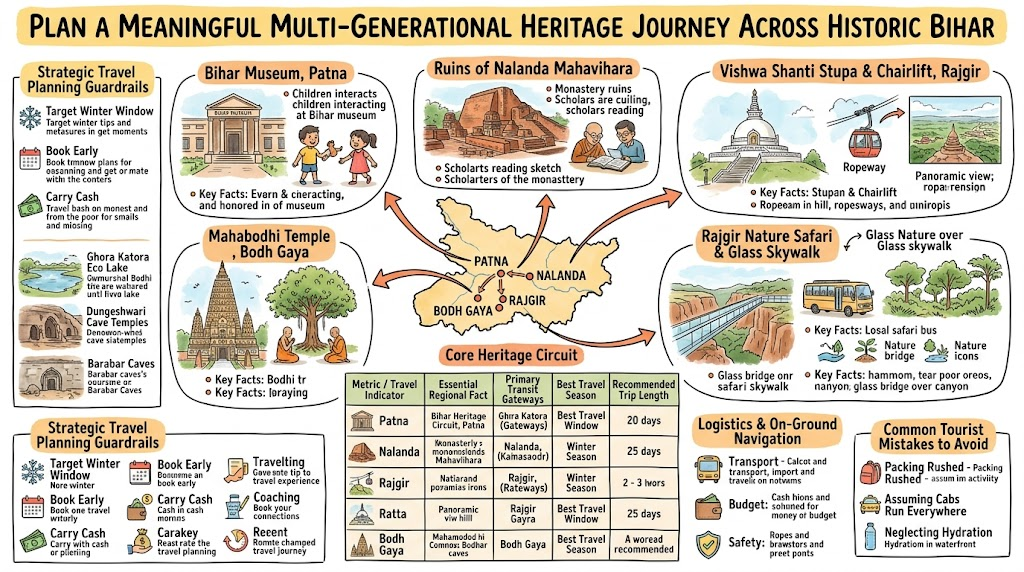
The premier family travel circuit flows logically from the modern riverfront capital of Patna down to the serene forested hills of Rajgir, the red-brick ruins of Nalanda, and the sacred Buddhist enclave of Bodh Gaya. This interconnected triangle balances world-class museums, outdoor adventures, peaceful meditation grounds, and rich culinary discoveries.
| Metric / Travel Indicator | Essential Regional Fact |
|---|---|
| Primary Transit Gateways | Patna Airport (Jay Prakash Narayan), Gaya International Airport |
| Best Travel Season | October to March (Crisp mornings, pleasant afternoons) |
| Core Heritage Circuit | Patna – Nalanda – Rajgir – Bodh Gaya |
| Intercity Connectivity | 4-Lane Expressways, Vande Bharat & Tejas Express, Chauffeured Cabs |
| Recommended Trip Length | 5 to 7 Days for comfortable family pacing |
Best Places or Experiences
Bihar Museum, Patna
The Bihar Museum is an architectural triumph sprawling over 13 acres in the state capital, designed to showcase ancient regional heritage through cutting-edge interactive curation. Its world-class galleries lead visitors through paleolithic artifacts, Mauryan polished stone masterpieces, and intricate bronze sculptures from the Pala period. Families will appreciate the dedicated Children’s Gallery, where interactive discovery rooms bring archaeology alive for younger travelers.
Walking through the sunlit open courtyards framed by weathered steel and stone reveals treasures like the famous 3rd-century BCE Didarganj Yakshi. The museum provides an unhurried, clean, and climate-controlled environment that introduces the family to the depth of Indian civilization before heading out to field monuments.
Contemporary galleries inside the Bihar Museum.
- Location: Bailey Road, Patna Central; 4 km from Patna Junction railway station.
- Why it is worth visiting: Ranked among Asia’s finest contemporary historical museums with immersive family exhibits.
- Best things to do: Explore the interactive tactile stations in the Children’s Gallery, admire the Didarganj Yakshi, and stroll through the landscaped open courtyards.
- Best time to visit: Weekday mornings between 10:30 AM and 1:00 PM to beat weekend family footfalls.
- Ideal for whom: Multi-generational families, school-age children, history enthusiasts, and senior citizens.
- Travel tip: Rent the official multimedia audio guide at the reception desk for a deeply engaging self-paced tour.
Ruins of Nalanda Mahavihara, Nalanda
Dating from the 5th century CE, Nalanda was the ancient world’s premier residential seat of learning, once housing over 10,000 scholars and 2,000 teachers. Walking across its expansive lawns, families encounter the striking red-brick remnants of multi-story monasteries, classroom quadrangles, meditation cells, and prayer shrines. The complex was excavated carefully to preserve the sophisticated drainage networks, wells, and granaries that sustained ancient academic life.
The soaring Temple No. 3 stands prominently against the horizon, its layered terraces and corner stupas decorated with exquisite stucco artwork. Exploring these excavated cloisters with an authorized guide brings alive inspiring stories of traveler Xuanzang and master scholars who shaped Asian philosophy.
Excavated red-brick monasteries at Nalanda.
- Location: Nalanda District; 85 km southeast of Patna, 15 km from Rajgir.
- Why it is worth visiting: A UNESCO World Heritage archaeological site showcasing ancient India’s greatest intellectual center.
- Best things to do: Climb the viewing pathways around Temple No. 3, inspect ancient monastic drainage systems, and visit the on-site Archaeological Museum.
- Best time to visit: 8:30 AM to 11:00 AM during winter months when the morning sun illuminates the red bricks.
- Ideal for whom: History lovers, curious students, architectural photographers, and extended family groups.
- Travel tip: Hire battery-operated golf carts at the main entrance gate to assist elderly family members across the wide campus.
Vishwa Shanti Stupa & Chairlift, Rajgir
Perched high on the crest of Ratnagiri Hill, the Vishwa Shanti Stupa is a brilliant white marble peace pagoda built under the guidance of Japanese Buddhist master Nichidatsu Fujii. The pagoda features four gleaming golden statues of Lord Buddha representing his birth, enlightenment, first sermon, and passing. The journey up the hill is an adventure in itself, using India’s oldest single-seat aerial ropeway or a modern cabin lift gliding over forested hilltops.
From the observation terraces at the peak, families take in panoramic 360-degree views of the historic Rajgir valley, framed by five surrounding hills mentioned in ancient epics. The sound of rhythmic drumming and chanting from the adjacent Nipponzan Myohoji temple creates an atmosphere of peaceful contemplation that enchants travelers of all ages.
Vishwa Shanti Stupa atop Ratnagiri Hill.
- Location: Ratnagiri Hill, Rajgir; 102 km south of Patna.
- Why it is worth visiting: A hilltop monument offering serene panoramic valley views and an exciting aerial chairlift ride.
- Best things to do: Ride the scenic ropeway over tree canopies, join the quiet morning drum chanting at the temple, and walk down to Griddhakuta Peak.
- Best time to visit: 8:00 AM to 10:30 AM for clear skies, cool breezes, and minimal line-ups at the chairlift ticket counter.
- Ideal for whom: Families with adventurous kids, peace-seekers, landscape photographers, and grandparents.
- Travel tip: Opt for the enclosed cabin ropeway if traveling with toddlers or elderly parents who find the single-seat chairlift intimidating.
Rajgir Nature Safari & Glass Skywalk
The Rajgir Nature Safari is an eco-adventure park nestled in the valley between the scenic Giriak and Vaibhargiri hills. Its crown jewel is the 85-foot-long transparent Glass Skywalk, suspended 250 feet above a dramatic forested canyon. Stepping onto the reinforced clear glass walkway delivers a thrilling view of tree canopies directly below, delighting teenagers and parents alike.
The surrounding forest reserve includes a well-managed zoo safari, botanical gardens, an aviary, and a butterfly park that highlight regional biodiversity. Clean electric buses transport families between attractions, making it a safe, modern, and accessible outdoor excursion for all fitness levels.
- Location: Jethian Road, Rajgir; 12 km from Rajgir town center.
- Why it is worth visiting: Eastern India’s first glass skywalk combined with a controlled wilderness safari experience.
- Best things to do: Walk across the glass observation bridge, take the closed-cage wildlife safari bus, and explore the sprawling butterfly park.
- Best time to visit: 9:00 AM morning slot to experience comfortable temperatures and lively animal activity.
- Ideal for whom: Thrill-seeking teens, nature lovers, active parents, and young families.
- Travel tip: Book entry tickets and the Glass Bridge time slot online at least three weeks in advance, as tickets sell out quickly during weekends.
Mahabodhi Temple Complex, Bodh Gaya
The UNESCO World Heritage Mahabodhi Temple marks the exact geographic spot where Prince Siddhartha Gautama attained supreme enlightenment under the Bodhi Tree in 531 BCE. The central 55-meter grand pyramidal spire, constructed from carved sandstone and ancient brickwork, is an architectural marvel dating back to the late Gupta period. Surrounding the main shrine are hundreds of carved stone votive stupas, peaceful reflection ponds, and sacred meditation lawns.
Stepping behind the main sanctum brings you to the sacred Bodhi Tree, where monks from Thailand, Sri Lanka, Tibet, and Japan chant prayers under fluttering colorful flags. The deep serenity, fragrant incense, and quiet devotion create a profound spiritual impact that resonates across religious and cultural boundaries.
The historic Mahabodhi Temple in Bodh Gaya.
- Location: Bodh Gaya, Gaya District; 115 km south of Patna, 14 km from Gaya Junction.
- Why it is worth visiting: One of the world’s most sacred heritage destinations, boasting exceptional ancient brick architecture.
- Best things to do: Sit beneath the sacred Bodhi Tree, observe international monastic chanting styles, and visit the nearby Great Buddha 80-foot statue.
- Best time to visit: 5:30 AM to 8:00 AM or 5:00 PM to 7:30 PM to experience illuminating temple butter lamps and evening chants.
- Ideal for whom: Spiritual pilgrims, multi-generational families, culture buffs, and architectural historians.
- Travel tip: Mobile phones and smartwatches are strictly prohibited inside; deposit them safely in secure locker counters outside the main gate.
Offbeat Exploration: Hidden Gems Tourists Miss
Ghora Katora Eco Lake, Rajgir
Tucked away inside a secluded valley surrounded by steep hills, Ghora Katora (Horse Bowl Lake) is an eco-sanctuary where fossil-fuel motor vehicles are completely banned. Families arrive via battery-operated e-rickshaws or traditional tongas along a scenic 5 km forest trail. At the center of the lake sits a 70-foot pink sandstone statue of Lord Buddha standing peacefully on a lotus pedestal. Families can rent pedal boats to glide across the clean waters against a backdrop of forested ridges.
Dungeshwari Cave Temples (Pragbodhi)
Perched on a rocky ridge 12 km northeast of Bodh Gaya, the Pragbodhi caves are where Siddhartha Gautama practiced rigorous austerities for six years before moving to Bodh Gaya. A small golden statue depicting the emaciated Buddha rests inside a natural rock shelter tended by local monks. The winding drive and gentle stone stairway up the hill offer magnificent panoramas across rural farming hamlets and the dry sand bed of the Falgu River.
Barabar Caves, Jehanabad
Located off the main highway between Patna and Gaya, Barabar features the oldest surviving rock-cut caves in India, carved during the Mauryan Empire in the 3rd century BCE. These polished granite sanctuaries, including Lomas Rishi Cave, feature mirror-like interior walls that produce acoustics. Showing children how even a soft whisper echoes multiple times inside these granite caverns makes for an unforgettable live physics and history lesson.
Detailed Practical Guidance for Travelers
| Destination | Standard Entry Fee | General Timings | Best Local Food Options Nearby | Recommended Nearby Attractions |
|---|---|---|---|---|
| Bihar Museum | ₹100 (Adults), ₹50 (Kids) | 10:30 AM – 5:00 PM (Closed Mondays) | Potbelly Cafe (Bihari cuisine inside museum) | Golghar, Patna Planetarium |
| Nalanda Ruins | ₹40 (Indians), ₹600 (Foreigners) | 9:00 AM – 5:00 PM (Daily) | Local Tilkut stalls, Heritage Dhaba thalis | Nalanda Multimedia Museum, Xuanzang Memorial |
| Vishwa Shanti Stupa | Free (Ropeway: ₹100–₹120) | 9:00 AM – 5:00 PM (Daily) | Fresh Rajgir Khaja at bus stand market | Griddhakuta Peak, Venuvana Bamboo Grove |
| Rajgir Nature Safari | ₹250 (Safari + Skywalk combo) | 9:00 AM – 4:00 PM (Closed Mondays) | Safari Cafeteria, Green Valley Resort | Ghora Katora Lake, Pandu Pokhar Park |
| Mahabodhi Temple | Free (Still Camera: ₹100) | 5:00 AM – 9:00 PM (Daily) | Be Happy Cafe, Fujiya Green Tibetan Kitchen | Giant Buddha Statue, Royal Bhutan Monastery |
Logistics & On-Ground Navigation
Local Transport Options
- Chauffeured Car Rentals: Booking a dedicated air-conditioned SUV or tempo traveler from Patna is the smoothest option for multi-generational families.
- Electric Rickshaws (Totos): In towns like Rajgir and Bodh Gaya, clean electric three-wheelers are the best way to navigate pedestrian-heavy heritage lanes comfortably.
- Intercity Trains: The high-speed Vande Bharat and Jan Shatabdi express trains connect Patna to Gaya and Rajgir reliably, making them great alternatives to highway driving.
- Traditional Horse Buggies (Tongas): Available in Rajgir for nostalgic, slow-paced rides between the thermal springs and Venuvana park.
Budget Planning
- Budget Family Tier: ₹2,500 – ₹4,000 per family per day (Staying in clean pilgrimage guesthouses, using e-rickshaws, and dining at popular local eateries).
- Comfort / Premium Tier: ₹7,500 – ₹14,000 per family per day (Staying in boutique 4-star hotels, hiring dedicated AC private vehicles, and eating at fine-dining venues).
Safety and Inclusivity Tips
- For Families with Elders: Most prominent sites like the Bihar Museum and Nalanda Ruins provide wheelchair access, golf carts, and flat walking promenades.
- For Families with Young Children: Carry electrolyte sachets and packaged snacks during heritage strolls; avoid scheduling excursions during midday summer heat.
- General Safety: Stick to pre-booked registered taxis, avoid unlit rural routes late at night, and always use bottled water from trusted brands.
Strategic Travel Planning Guardrails
Travel Planning Tips for Bihar
- Target the Winter Window: Plan your family holiday between November and February to enjoy crisp sunshine, clear blue skies, and daytime temperatures around 20°C.
- Book Heritage Accommodations Early: Quality family suites in Bodh Gaya and Rajgir fill up months in advance due to international pilgrim conferences.
- Carry Liquid Currency: While UPI and QR codes work across urban shops, cash remains handy for auto-rickshaws, boot polish stalls, and temple floral offerings.
- Pack Practical Slip-On Shoes: Visitors remove footwear before entering sanctums and stupa platforms; slip-on loafers or sandals save precious time and effort.
- Hire Approved ASI Guides: Engaging government-certified guides at Nalanda brings archaeological ruins to life with captivating historical stories.
Common Mistakes to Avoid
- Packing Rushed Road Legs: Do not attempt to drive from Patna to Bodh Gaya and complete temple visits on the same afternoon; maintain a relaxed pace for elders.
- Assuming Public Cabs Run Everywhere: Never rely on ride-hailing apps for early morning departures in smaller towns like Rajgir; pre-arrange hotel cabs.
- Missing Authentic Delicacies: Avoid eating only generic continental dishes at hotel restaurants; savor regional specialities like baked Litti Chokha and Silao Khaja.
- Overlooking Strict Digital Camera Rules: Forgetting that smartphones are barred inside the Mahabodhi Temple can disrupt entry plans; arrange secure locker deposits beforehand.
- Neglecting Hydration During Outdoor Walks: Even cool winter sun can cause dehydration during extended walking tours through large archaeological parks.
Suggested Itinerary Blueprints
1. Day Quick Dash (Patna Heritage Express)
Ideal for families on a brief transit or weekend layover, focusing on cultural and educational highlights within the state capital.
- 09:00 AM – 01:00 PM: Immersive family exploration of the Bihar Museum, with special focus on the interactive Children’s Discovery wing.
- 01:30 PM – 03:00 PM: Traditional lunch enjoying Bhojpuri and Maithili thalis at a trusted heritage restaurant along Fraser Road.
- 03:30 PM – 05:00 PM: Panoramic city views from the historic granary dome of Golghar, followed by a quiet walk through Gandhi Maidan.
- 05:30 PM – 07:30 PM: Evening stroll and boat ride along the newly developed Ganga Path (Patna Marine Drive) as the sun sets over the river.
2. Day Deep-Dive (Nalanda & Rajgir Valley Circuit)
A well-paced two-day journey through the heart of ancient learning and scenic natural hills.
- Day 1 (Patna to Rajgir): Drive early to Rajgir (2.5 hours). Ascend Ratnagiri Hill via the scenic aerial chairlift to visit Vishwa Shanti Stupa. After lunch, take an eco-friendly e-rickshaw to Ghora Katora Lake for family pedal boating surrounded by lush green hills. Overnight in Rajgir.
- Day 2 (Nalanda & Eco-Park): Spend the morning on a guided walking tour among the red-brick ruins of ancient Nalanda Mahavihara and the Xuanzang Memorial Hall. In the afternoon, explore the thrilling Glass Skywalk and Zoo Safari at the Rajgir Nature Safari before driving back to Patna.
3. Complete Weekend Travel Plan (Patna – Rajgir – Bodh Gaya Triangle)
A classic three-day family loop covering the best historical, spiritual, and adventure highlights of southern Bihar.
- Friday: Arrive in Patna. Tour the Bihar Museum before driving along the four-lane highway to Rajgir for an evening dip in the natural hot springs and dinner.
- Saturday: Explore the ancient Nalanda University ruins with a local historian. After lunch, visit the Vishwa Shanti Stupa on Ratnagiri Hill, then drive south to Bodh Gaya to check into your resort.
- Sunday: Experience peaceful morning chanting under the Bodhi Tree at the Mahabodhi Temple complex. Visit the serene Japanese, Thai, and Bhutanese monasteries, then stop by the 80-foot Giant Buddha before departing via Gaya Airport.
Common Tourist Mistakes to Avoid
Geographic Blunders
Many first-time visitors try to combine Sasaram’s Sher Shah Suri Tomb, Rajgir, and Bhagalpur into a single weekend run. Bihar is a vast state, and attempting to criss-cross distant corridors leads to highway fatigue rather than enjoyable vacation memories. Group your travel strictly by geographic clusters.
Commercial Traps
Spending precious vacation evenings wandering modern air-conditioned retail malls in central Patna isolates families from the region’s historic heartbeat. Dedicate your evenings instead to relaxing walks along the Ganges riverfront promenade, experiencing live cultural events, or exploring traditional handicraft bazaars.
Neglecting Modern/Alternative Zones
Tourists often overlook the beautifully restored green belts, cultural auditoriums, and open-air public parks of modern Bihar. Taking the family for an evening coffee along the riverfront at JP Ganga Path or spending an afternoon exploring contemporary art galleries provides a fresh, modern perspective on the state’s progress.
Transport Overpayment
Always steer clear of unauthorized, unmetered private taxi touts waiting outside airport arrivals and railway station gates. Rely on official prepaid taxi counters, licensed app-based cabs, or transport services booked directly through your verified hotel front desk to ensure fixed, honest pricing.
Luxury Dining Bias
Confining family meals exclusively to international menus in luxury hotel dining rooms misses out on the authentic culinary identity of the state. Take your family to respected traditional eateries to savor fragrant, wood-roasted Litti Chokha tossed in pure desi ghee, crispy multi-layered Silao Khaja, and mouth-watering Balushahi.
Frequently Asked Questions
1. Is Bihar safe for a family holiday with elderly members and toddlers?
Yes, Bihar is very welcoming for family travel. The key Buddhist and heritage circuits of Patna, Rajgir, and Bodh Gaya feature well-maintained roads, attentive hospitality, wheelchair accessibility, and visible tourist police support.
2. Which airport serves as the most convenient starting point for this trip?
Patna’s Jay Prakash Narayan Airport provides frequent domestic flight connections across India. For circuits focusing solely on Bodh Gaya and Rajgir, Gaya International Airport offers direct seasonal and domestic flight options.
3. What is the best season to experience this travel circuit comfortably?
The winter months from October to March offer pleasant daytime temperatures between 15°C and 25°C. This comfortable weather makes outdoor exploration of expansive archaeological sites, gardens, and nature parks delightful for all ages.
4. How can we secure confirmed tickets for the Rajgir Glass Skywalk?
Tickets for the Rajgir Glass Skywalk and Nature Safari should be booked online in advance via the official Bihar Forest Department booking portal, as entry slots are strictly regulated each day to ensure guest safety.
5. Are specialized battery-operated carts available inside the Nalanda ruins?
Yes, the Archaeological Survey of India provides battery-operated golf carts at the main entrance gate. These carts transport elderly visitors and young children across the extensive lawn pathways directly to key excavated monastery complexes.
6. What unique regional handicrafts should families shop for in Bihar?
Look for authentic hand-painted Madhubani artworks on handmade paper, handloom Tussar silk sarees from Bhagalpur, stone carvings from Gaya, and intricate decorative Sikki grass craft items sold at state emporiums.
7. Can we carry smartphones and cameras inside the Mahabodhi Temple?
Smartphones and smartwatches are strictly prohibited inside the inner complex to preserve tranquility. However, dedicated digital DSLR cameras are permitted upon purchasing an official camera permit at the entrance ticket counter.
8. What authentic Bihari dishes must families try during their visit?
Do not miss wood-fired Litti Chokha served with spicy brinjal mash, crispy layered Silao Khaja, sweet seasonal Tilkut made from sesame and jaggery, and delicate Dal Pitha dumplings prepared with steamed rice flour.
9. How many days are ideal for a complete, relaxed family tour of Bihar?
A 5-day, 4-night itinerary provides the ideal balance for families. This duration allows comfortable exploration of the Bihar Museum in Patna, historical walks through Nalanda and Rajgir, and peaceful spiritual visits in Bodh Gaya.
10. What clothes are recommended when visiting temples and monasteries?
Pack comfortable, modest cotton or light woolen clothing that covers shoulders and knees. Slip-on footwear is highly practical since shoes must be removed before stepping onto temple platforms and sacred monastic grounds.
11. Is pre-booking private transport necessary, or are on-spot taxis reliable?
Pre-booking a dedicated air-conditioned vehicle through a reputed tour operator or your hotel ensures stress-free early morning pickups, seamless intercity transfers, and dependable highway travel across all heritage sectors.
12. Are clean family-friendly public restroom facilities available along the highways?
Modern state highway corridors and toll plazas between Patna, Rajgir, and Bodh Gaya feature well-equipped tourist fuel plazas and clean roadside restaurants with hygienic family washrooms.
Conclusion
A family journey through Bihar is far more than a typical sightseeing trip—it is an inspiring pilgrimage across the intellectual and spiritual foundations of human history. Watching your children stand in awe before the ancient brick lecture halls of Nalanda, sharing quiet moments beneath the sacred Bodhi Tree, and taking in mountain vistas from the Vishwa Shanti Stupa builds a genuine cultural appreciation that stays with the family forever. Stepping away from artificial attractions to experience this timeless land rewards families with deep knowledge, grounded values, and heartwarming memories that will be treasured across generations.
