Introduction
While modern food trails often funnel curious travelers into crowded metropolitan food courts and sterile commercial restaurants, Bihar presents an earthy culinary sanctuary shaped by millennia of living traditions. Here, food is not assembled for superficial aesthetics; it is forged over open cow-dung embers, simmered slowly inside sealed clay handis, and pounded rhythmically in heavy iron mortars.
Every bite carries a direct, unbroken tether to ancient agrarian cycles and profound regional heritage. Exploring Bihar’s authentic regional food trail immerses your senses in sun-dried spices, cold-pressed mustard oil, wholesome roasted gram flour, and flaky layered confections that commercial menus simply cannot replicate.
Why Bihar is a must-visit city
Bihar holds an irreplaceable position on the historical and cultural map of the subcontinent, giving birth to transformative philosophical movements and imperial dynasties. This fertile Gangetic plain developed culinary techniques centered around nutrition, preservation, and pure unadulterated flavor profiles. Excellent connectivity makes traversing the culinary landscape straightforward, featuring high-speed Vande Bharat rail connections, smooth four-lane national highways, and well-connected flight terminals in Patna, Gaya, and Darbhanga.
The primary food circuit flows smoothly from the bustling riverfront eateries of Patna down to the spiritual sweet corridors of Gaya, the historic baking towns of Nalanda, and the rustic slow-cooking hubs of Champaran. Food lovers, culture enthusiasts, and adventurous backpackers can easily navigate this rich gastronomic terrain.
| Key Culinary Fact | Details |
|---|---|
| Primary Culinary Hubs | Patna, Gaya, Silao (Nalanda), Motihari (Champaran), Maner |
| Pivotal Regional Flavors | Sattu (roasted gram flour), Sarson tel (mustard oil), Panch Phoron, Jaggery |
| Peak Culinary Season | October to March (Harvest festivals, fresh Tilkut, and outdoor charcoal cooking) |
| Transport Connectivity | Direct express trains, well-paved NH-22/NH-31 corridors, app-cabs in cities |
| Average Meal Cost Range | ₹80 to ₹350 per person across iconic heritage eateries |
Best Places or Experiences
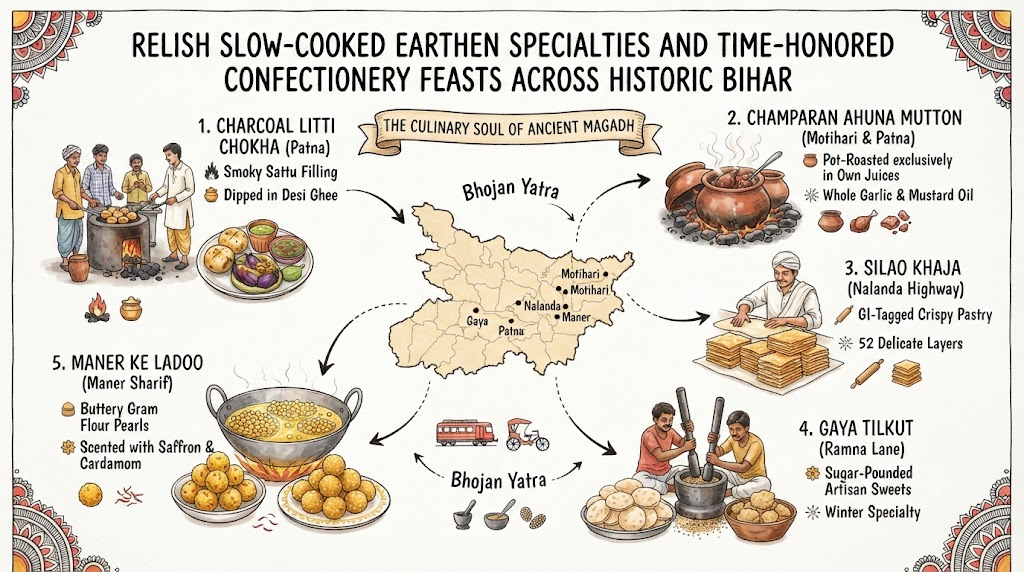
1. Traditional Charcoal Litti Chokha at Maurya Lok & Boring Road
Litti Chokha stands as the undisputed culinary emblem of the state, tracing its functional roots back centuries as portable sustenance for working agrarians and marching warriors. Round dough balls made from whole-wheat flour are packed tightly with seasoned sattu mixed with ajwain, kalonji, crushed garlic, and tangy mango pickle masala, then roasted over smoky dried cow-dung cakes or charcoal.
Once blistered to charred perfection, the crust is cracked by hand and completely submerged in fragrant desi ghee. It is paired with baingan-tamatar chokha (smoky mashed eggplant and tomatoes), spicy boiled potato mash, and a fiery green chili garlic chutney that cuts through the buttery richness.
- Location: Maurya Lok Complex & Boring Road Crossing, Patna; 3 km from Patna Junction.
- Why it is worth visiting: The definitive street-level experience of tasting authentic coal-roasted litti bathed in fresh clarified butter.
- Best things to do: Watch the street vendors roast littis on open embers, customize your spice level with raw mustard oil garnishes, and sample roasted green chilies on the side.
- Best time to visit: 1:00 PM to 4:00 PM for lunch, or 6:30 PM to 9:30 PM for warm dinner service.
- Ideal for whom: Street food aficionados, solo travelers, and regional culinary explorers.
- Travel tip: Request the vendor to crush your litti directly inside the ghee bowl for optimal internal moisture and flavor saturation.
2. Slow-Cooked Champaran Ahuna Mutton in Motihari & Patna
Originating in the rural homesteads of West Champaran, Ahuna (or Batlohi) mutton is an extraordinary achievement in rural slow-cooking techniques. Tender pieces of mutton are marinated in a pungent mixture of raw mustard oil, roughly sliced onions, ginger-garlic paste, whole peppercorns, and distinctive whole pods of unpeeled garlic.
The meat is packed into earthen clay pots, sealed tightly with wet wheat dough to trap all rising moisture, and set over a bed of low-burning charcoal embers. The pot is never stirred with a spoon; instead, skilled cooks periodically shake the hot vessel, allowing internal steam and melting fat to tenderize the meat into melt-in-the-mouth perfection.
- Location: Old Champaran Meat House outlets near Bailey Road and Motihari town center; 6 km from Patna Airport.
- Why it is worth visiting: Unparalleled smoky depth of meat braised exclusively in its natural juices within clay cookware.
- Best things to do: Savor the tender whole garlic cloves infused with bone marrow flavor, pair the rich curry with hot tawa rotis, and watch the dough seal get broken tableside.
- Best time to visit: 12:30 PM to 2:30 PM to secure the freshest first batch of the afternoon simmer.
- Ideal for whom: Dedicated non-vegetarian gourmands, meat lovers, and traditional culinary historians.
- Travel tip: Avoid late evening batches as the bottom layer in clay handis can dry out; always ask for the pot prepared closest to lunch opening.
Slow-cooked Champaran Ahuna handi mutton.
3. Crisp Multilayered Silao Khaja along the Nalanda-Rajgir Highway
Nestled along the ancient road connecting the ruins of Nalanda to the hills of Rajgir, the village of Silao holds a coveted Geographical Indication (GI) tag for its unique sweet pastry known as Khaja. Legends state that this delicate delicacy was relished by travelers and monks during the times of Lord Buddha and the Mauryan royal courts.
Crafted by repeatedly layering wheat flour, refined flour, and shortening into razor-thin sheets, the rolled dough is sliced and deep-fried in bubbling ghee until crisp. The golden pastries are then submerged briefly in a light sugar syrup, resulting in a sweet that boasts up to 52 crisp, airy, translucent layers that shatter delicately upon biting.
- Location: Silao Market, Nalanda District; 95 km southeast of Patna, halfway between Nalanda Ruins and Rajgir.
- Why it is worth visiting: Authentic GI-tagged confection handmade using traditional multi-layer folding methods unchanged for generations.
- Best things to do: Observe master halwais hand-stretching dozens of pastry folds in minutes, taste a piping hot batch fresh off the frying vat, and purchase sealed gift tins for travel.
- Best time to visit: 10:00 AM to 5:00 PM while driving between heritage excursions.
- Ideal for whom: Pastry enthusiasts, families, and road-tripping travelers.
- Travel tip: Opt for the traditional mitha (lightly sweetened) version rather than the excessively syrupy variants to taste the delicate flake texture properly.
Layered crispness of Silao Khaja.
4. Winter Sugar-Pounded Gaya Tilkut in Ramna Lane
As winter arrives across the Magadh region, the narrow lanes of Gaya resonate with the rhythmic metallic clinking of iron pestles pounding hot caramelized jaggery and sesame seeds. Gaya Tilkut is an artisanal masterpiece made by hand-pulling melted jaggery (gur) or refined sugar, layering it with roasted sesame seeds, and continuously hammering it until it reaches a wafer-thin, melt-in-your-mouth lightness.
Unlike hard sesame brittles found elsewhere, a true Gaya Tilkut is soft, light, and airy, dissolving instantly on the tongue without sticking to teeth. The craft requires incredible physical stamina and temperature sensitivity, making it a proud winter specialty celebrated across the state during Makar Sankranti.
- Location: Ramna Road & Tekari Road, Gaya; 105 km south of Patna, 3 km from Gaya Junction.
- Why it is worth visiting: Witnessing master artisans hammer steaming-hot caramelized sesame masses into featherlight discs.
- Best things to do: Sample both the deep caramel gur (jaggery) variety and the pristine white sugar variant, watch the manual pounding process, and buy fresh vacuum-packed batches.
- Best time to visit: December through February, ideally between 9:00 AM and 1:00 PM when morning production peaks.
- Ideal for whom: Sweet connoisseurs, winter foodies, and cultural photographers.
- Travel tip: Jaggery-based Tilkut is far superior in flavor, earthy complexity, and digestive warmth compared to standard white-sugar variants.
Hand-pounded Gaya Tilkut sweet discs.
5. Heritage Gram Flour Ghee Ladoos in Maner Sharif
Located just west of Patna along the old Grand Trunk route, the historic town of Maner Sharif is renowned both for its grand Sufi mausoleum and its iconic gram flour sweet, Maner ka Ladoo. Crafted from tiny gram-flour pearls (boondi) fried in pure cow ghee and soaked in sugar syrup infused with saffron and crushed cardamom, this confection is celebrated for its buttery, moist texture.
Local lore attributes the unmatched flavor and texture of these ladoos to the unique mineral composition of the historic Sone River basin waters originally used to mix the batter. Every bite releases rich notes of roasted besan and clarified butter, making it the premier ceremonial sweet across regional celebrations.
- Location: Maner Bazaar, Patna District; 30 km west of Patna city center along NH-922.
- Why it is worth visiting: Experiencing centuries-old confectionery craftsmanship located directly adjacent to magnificent Mughal architecture.
- Best things to do: Visit the 17th-century Chhoti Dargah monument, sample hot boondi ladoos right beside the copper cooking vats, and purchase mixed sweet boxes.
- Best time to visit: 11:00 AM to 4:00 PM during a day excursion out of Patna.
- Ideal for whom: History lovers, dessert travelers, and architecture buffs.
- Travel tip: Buy directly from heritage stalls located close to the Chhoti Dargah entrance gate rather than highway snack shops for true ghee-fried quality.
Offbeat Exploration: Hidden Gems Tourists Miss
Makhana Kheer & Spicy Roasted Foxnuts, Mithila
While tourists know Bihar for savory dishes, Northern Mithila is the global capital of organic Foxnuts (Makhana). Savoring a bowl of chilled Makhana Kheer—slow-cooked in reduced full-cream milk with cardamom, saffron, and toasted lotus seeds—reveals an exquisite dessert texture. Roadside stalls also serve these popped seeds roasted in mustard oil with salt and green chilies.
Chana Ghugni with Poha (Chuda Ghughni)
A quintessential morning ritual across regional households, Chuda Ghugni consists of whole black chickpeas simmered in a robust onion-tomato gravy flavored with roasted cumin. It is served atop a bed of raw or lightly toasted flattened rice (chuda), offering a magnificent textural interplay of soft, spicy legume stew and crunchy grain.
Sattu Ghol (Salted & Sweet Summer Cooler)
Often described as the indigenous energy drink of Bihar, Sattu Ghol is freshly whipped roasted gram flour mixed with chilled water, black salt, roasted cumin powder, fresh lemon juice, and finely chopped green chilies and onions. It is intensely cooling, nutrient-dense, and served on almost every busy street corner in handcrafted clay glasses.
Detailed Practical Guidance for Travelers
| Destination | Standard Entry Fee | General Timings | Best Local Food Options Nearby | Recommended Nearby Attractions |
|---|---|---|---|---|
| Maurya Lok, Patna | Free | 10:00 AM – 10:30 PM | Charcoal Litti Chokha, Khasta Kachori | Patna Museum, Bihar Museum |
| Boring Road, Patna | Free | 11:00 AM – 11:00 PM | Champaran Ahuna Mutton, Sattu Paratha | ISKCON Temple, Eco Park |
| Silao Highway Market | Free | 8:00 AM – 8:00 PM | Multilayered Silao Khaja, Kulhad Chai | Nalanda Ruins, Hiuen Tsang Memorial |
| Ramna Road, Gaya | Free | 7:00 AM – 9:00 PM | Gaya Tilkut, Anarsa, Khurchan | Vishnupad Temple, Falgu River Ghats |
| Maner Bazaar | Free | 8:30 AM – 7:30 PM | Ghee Boondi Ladoo, Motichoor Ladoo | Chhoti Dargah, Badi Dargah |
Logistics & On-Ground Navigation
Local Transport Options
- Railways: Excellent inter-district connectivity connecting Patna, Gaya, Bihar Sharif (for Nalanda), and Motihari with rapid superfast links.
- Auto-Rickshaws & E-Rickshaws: Inexpensive and plentiful for navigating congested old-town food markets like Ramna Road in Gaya or Kadamkuan in Patna.
- Private Car Rentals: The most convenient approach for covering highway-based food spots like Silao and Maner Sharif in comfort.
Budget Planning
- Backpacker / Budget Food Trail: ₹800 – ₹1,200 per day (Covers authentic street-side litti plates, local dhabas, e-rickshaw hops, and market sweets).
- Mid-Range / Comfort Food Trail: ₹2,500 – ₹4,500 per day (Covers air-conditioned car rentals, sit-down clay pot meat houses, packaged sweet gift boxes, and comfortable hotel dining).
Safety and Inclusivity Tips
- Families: Most traditional sweets shops and sit-down family restaurants welcome multi-generational travelers; carry sealed mineral water while browsing street markets.
- Couples: Central Patna food zones and heritage restaurant establishments offer comfortable, welcoming seating areas.
- General Safety: Food stalls with high daily customer turnover guarantee maximum freshness; ensure dairy and water items come from sealed or boiling preparations.
Strategic Travel Planning Guardrails
Travel Planning Tips for Bihar
- Align Sweets with Seasons: Winter (November to February) is strictly mandatory for fresh Tilkut, whereas summer is prime for mango varieties like Digha Malda.
- Rely on Cash for Rural Stalls: Keep smaller currency notes (₹10, ₹20, ₹50) handy for roadside litti stalls and highway fruit vendors.
- Embrace Mustard Oil Profiles: Authentic Bihari curries rely on pure, pungent cold-pressed mustard oil; understand this pungent flavor profile beforehand.
- Pace Heavy Meals: Dishes like Ahuna Mutton and Ghee Litti are calorie-dense; schedule walking intervals or light green tea afterward.
- Confirm Meat Days: Certain traditional eateries serve vegetarian meals or closed kitchens on specific religious weekdays (Tuesdays or Thursdays).
Common Mistakes to Avoid
- Judging Spots by Exterior Decor: Do not skip unassuming highway shacks; the most authentic flavors come from rustic kitchens, not luxury hotels.
- Ordering Litti from Continental Menus: Generic multi-cuisine hotels usually bake littis in convection ovens, completely ruining the essential charcoal smokiness.
- Assuming All Sweets Are Sickly Syrupy: Missing out on low-sugar options like Tilkut and dry roasted snacks limits your palate appreciation.
- Overestimating Transit Speeds: Account for market congestion when visiting old bazaar food districts during evening rush hours.
- Drinking Unfiltered Tap Water: Always stick to packaged mineral water or boiled piping-hot chai when on street food crawls.
Suggested Itinerary Blueprints
1. Day Quick Dash (Patna Street & Heritage Trail)
Designed for foodies passing through the capital with limited hours.
- 08:30 AM – 10:00 AM: Breakfast of hot Dal Puri with spicy aloo dum and jalebi at a heritage stall near Gandhi Maidan.
- 11:00 AM – 01:30 PM: Cultural exploration of Bihar Museum followed by refreshing Sattu Ghol on Bailey Road.
- 02:00 PM – 03:30 PM: Lunch feast of slow-cooked Champaran Ahuna Mutton with hot tawa rotis.
- 06:30 PM – 09:00 PM: Evening food walk across Maurya Lok sampling piping-hot charcoal Litti Chokha and sweet gulab jamuns.
2. Day Deep-Dive (Magadh Confectionery Circuit)
A two-day culinary loop covering Patna, Nalanda, and Gaya.
- Day 1: Morning drive to Maner Sharif for hot Ghee Ladoos. Continue past Nalanda to stop at Silao for fresh multi-layered Khaja. Evening arrival in Rajgir for local thali dining.
- Day 2: Early morning departure to Gaya; breakfast of Kachori-Jalebi in Ramna Lane. Watch master halwais pound fresh Tilkut and sample winter Anarsa before returning to Patna.
3. Complete Weekend Travel Plan (Full Flavors of Bihar Loop)
A comprehensive three-day gastronomic expedition across urban and rural cooking traditions.
- Friday: Arrive in Patna; evening riverfront walk at Marine Drive sipping Kulhad Chai and tasting roasted spiced bhutta.
- Saturday: Day journey south covering Silao Khaja sampling, local farm-fresh lunch in Rajgir, and an evening sweet tour of Gaya’s heritage bazaars.
- Sunday: Return to Patna for an elaborate Champaran meat lunch, shopping for packaged Tilkut and dry sattu packets, and concluding with a lavish evening Litti feast.
Common Tourist Mistakes to Avoid
Geographic Blunders
Attempting to drive from Patna to Motihari for mutton and then racing down to Gaya for Tilkut on the same day leads to exhaustion. Group your culinary map strictly into North-Gangetic and South-Gangetic loops.
Commercial Traps
Wasting meal opportunities inside modern shopping mall chains in central Patna deprives your palate of centuries of culinary heritage. Step into old neighborhood bazaars instead.
Neglecting Modern/Alternative Zones
Skipping Patna’s modern cafes means missing out on creative culinary crossovers, where young chefs incorporate Makhana and Sattu into contemporary artisanal beverages and healthy baking.
Transport Overpayment
Always utilize ride-hailing applications in Patna or negotiate set fares with auto drivers beforehand to avoid arbitrary price surges during evening peak hours.
Luxury Dining Bias
High-end international hotel dining rooms rarely capture the earthy smoke of dung-fired littis or clay-pot mutton. Authentic soul food in Bihar thrives at street vendors and traditional dhabas.
Frequently Asked Questions
1. What makes authentic Bihari Litti Chokha different from Rajasthani Baati?
While both are roasted whole-wheat balls, Litti is packed with a spiced filling of roasted gram flour (sattu) mixed with mustard oil, herbs, and pickle spices. Baati is usually plain dough baked hard, crushed, and soaked in dal. Furthermore, Litti is eaten with roasted eggplant-tomato chokha rather than lentil curry.
2. Is Bihar street food suitable for strictly vegetarian travelers?
Bihar offers an extraordinarily diverse vegetarian culinary landscape. The majority of traditional daily foods—including Litti Chokha, Dal Puri, Chuda Ghugni, Kadhi Badi, and all historic sweets like Khaja and Tilkut—are completely vegetarian. Pure vegetarian restaurants and dhabas are ubiquitous across every town, district, and pilgrimage hub.
3. What is Champaran Ahuna mutton and why is it cooked in earthen pots?
Ahuna mutton is a traditional stewing method from Champaran where seasoned meat, raw mustard oil, onions, and whole garlic pods are sealed inside unglazed clay pots with wheat dough. Simmered over low charcoal, the porous clay retains gentle heat and minerals while sealing in natural moisture, yielding supremely tender meat.
4. Can I safely purchase Silao Khaja and Gaya Tilkut to carry home on flights?
Both Silao Khaja and Gaya Tilkut have an exceptionally long shelf life if stored in airtight containers away from humidity. Tilkut easily stays crisp for two to three weeks, while Khaja lasts for ten to fifteen days. Reputable heritage shops provide sturdy corrugated boxes and sealed plastic wraps suitable for air baggage.
5. Which season is best to experience the widest variety of local dishes?
The winter months from November to February represent the absolute peak culinary season in Bihar. During this period, sweet shops actively pound fresh winter Tilkut and Anarsa, outdoor coal fires for Litti roasting are delightfully cozy, and local green vegetables like tender bathua and sarson saag are in abundance.
6. Is Sattu safe to consume raw in drinks and street snacks?
Sattu is completely safe and easily digestible because it is made from Bengal gram that has already been thoroughly roasted in hot sand before being ground into fine flour. When whisked into cooling summer drinks or packed inside littis, it acts as a wholesome, protein-rich, and gut-friendly ingredient.
7. Where can I find the most authentic Champaran meat in Patna?
Patna houses several authentic outlets, particularly clustered around Bailey Road, Boring Canal Road, and near the High Court area under the banner of Old Champaran Meat House. Look for establishments displaying genuine clay handis simmering over outdoor charcoal pits where whole garlic cloves are clearly visible inside the rich gravy.
8. Are food prices expensive across heritage and street food locations?
Dining across Bihar remains exceptionally affordable and budget-friendly. A hearty plate of two ghee-dipped Littis with Chokha costs around ₹60 to ₹100, while a personal handi of slow-cooked Ahuna Mutton ranges between ₹250 and ₹350. Traditional sweets like Tilkut and Khaja sell at standard market rates per kilogram.
9. What makes Maner ke Ladoo distinct from regular Motichoor Ladoo?
Maner ke Ladoo is prepared from extremely tiny gram flour droplets fried exclusively in pure desi ghee and sweetened with sugar syrup delicately infused with saffron and cardamom. Local halwais attribute its melt-in-mouth softness to traditional manual stirring and the unique mineral content historically present in the local water source.
10. How spicy is everyday local food in Bihar for travelers with mild palates?
Traditional Bihari cuisine relies on deep aromatic spices, roasted cumin, and pungent mustard oil rather than excessive burning red chili heat. While gravies and chutneys possess vibrant flavors, they are not overwhelmingly fiery. Travelers can easily request lower spice levels or ask vendors to skip raw green chilies.
11. What is Chokha and how is it traditionally prepared?
Chokha is a rustic, flavorful mash made by fire-roasting whole eggplants, ripe tomatoes, or boiled potatoes directly over open embers until the skin chars. The charred peels are removed, and the warm flesh is mashed with finely chopped raw onions, green chilies, coriander, salt, and a dash of raw mustard oil.
12. Can travelers visit the actual workshops where Tilkut is pounded?
Visitors can easily witness the manual pounding of Tilkut firsthand by walking through the historic sweet-making lanes of Ramna Road and Tekari Road in Gaya during winter. The open-front workshops welcome respectful travelers to observe artisans stretch caramelized jaggery and hammer it into light, airy sesame discs.
Conclusion
Embarking on a food expedition across Bihar offers a rare and moving encounter with unfiltered, honest culinary traditions. From the smoky crunch of coal-roasted littis on urban riverbanks to the tender earthen aromas of handi meat and the sweet crunch of layered pastries, this journey feeds the soul as much as the palate. Leave commercial food courts behind, follow the aroma of mustard oil and roasted cumin, and discover the true cultural heart of this ancient land.
