Introduction
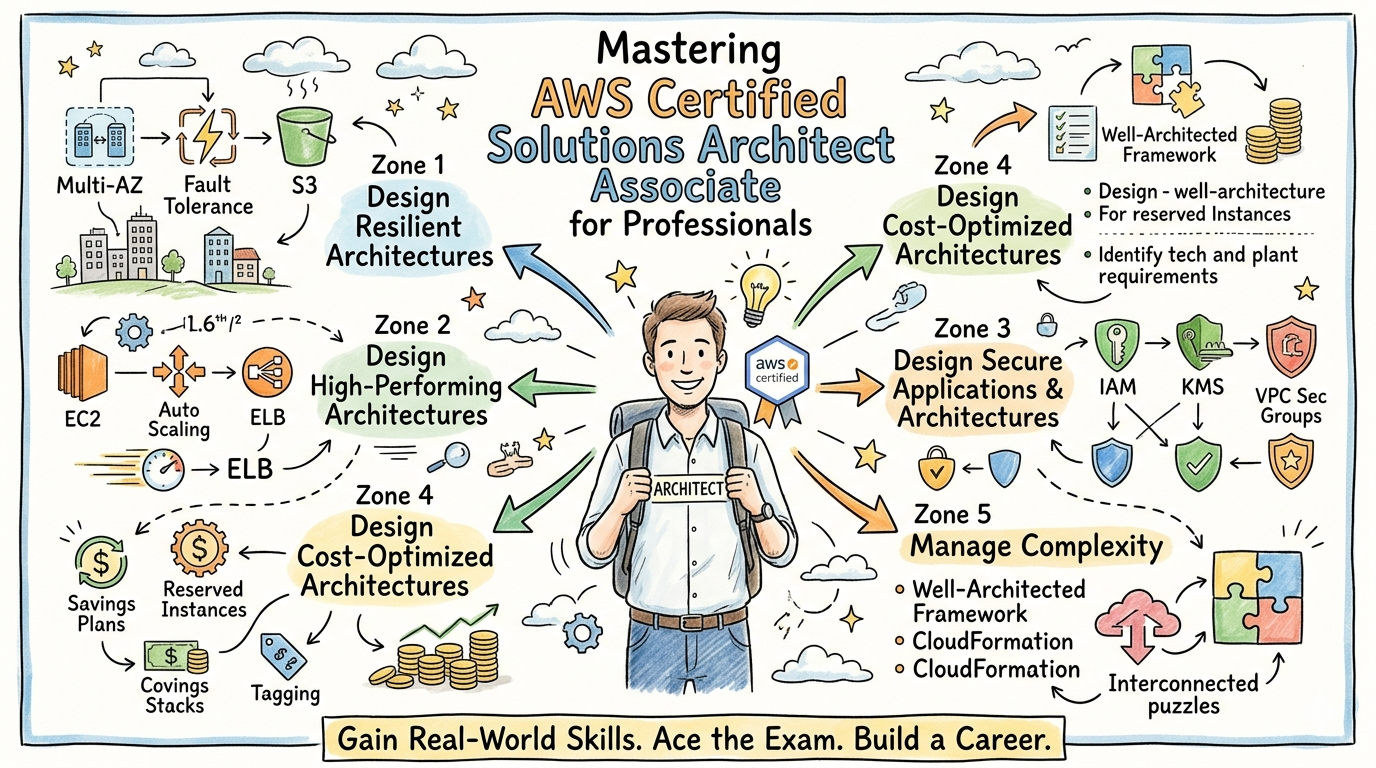
Choosing to become an AWS Certified Solutions Architect – Associate is a major step for any IT professional. This guide is built for engineers and managers who want to understand how to design systems that are strong, fast, and cost-effective. In the world of DevOps and platform engineering, knowing the cloud is no longer just an extra skill; it is a core requirement. This article helps you see the bigger picture of how this certification fits into your career and how it can help you make better choices for your professional growth. Whether you are working in a startup or a large enterprise, understanding these architectural patterns is essential. You can also explore advanced automation and AI-driven operations through resources at aiopsschool to complement your cloud journey.
What is the AWS Certified Solutions Architect – Associate?
The AWS Certified Solutions Architect – Associate is a professional credential that proves you know how to build systems on the Amazon Web Services platform. It is not just about memorizing names of tools, but about understanding how those tools work together to solve business problems. This certification focuses on real-world scenarios where you must decide which database to use or how to make a website stay online during high traffic. It aligns perfectly with modern enterprise practices because it teaches you to think about security, cost, and reliability from the very first day of a project. Instead of just learning theory, you learn how to handle production-grade infrastructure that follows industry standards.
Who Should Pursue AWS Certified Solutions Architect – Associate?
This path is ideal for software engineers, systems administrators, and those working in SRE or cloud engineering roles. If you are responsible for making sure an application runs smoothly, this certification will give you the framework you need to do your job better. It is also very helpful for security and data professionals who need to understand how their specific tasks fit into the wider cloud environment. Beginners can use it to build a strong foundation, while experienced engineers can use it to validate their skills and learn new best practices. In markets like India and across the globe, this is one of the most recognized credentials for anyone looking to lead technical projects.
Why AWS Certified Solutions Architect – Associate
The demand for cloud experts continues to grow as more companies move away from traditional data centers. This certification has incredible longevity because the core principles of architecture do not change even when specific tools get updated. It helps you stay relevant because it teaches you how to think like an architect rather than just a tool operator. By investing your time in this, you gain a high return on investment because it opens doors to senior roles and higher-paying positions. It shows employers that you can handle the responsibility of managing their cloud spend and protecting their data, which are two of the biggest concerns for any modern business.
AWS Certified Solutions Architect – Associate Certification Overview
The program is delivered via the official training portal and is hosted on devopsschool. This certification is an associate-level credential, which sits between the basic practitioner level and the expert professional level. The assessment focuses on your ability to design resilient, high-performing, and secure architectures. It covers a wide range of services including compute, storage, networking, and security. The exam is structured to test your practical decision-making skills rather than just your ability to recall facts. Owning this certification means you have been vetted by industry standards as someone who can be trusted with cloud-native designs.
AWS Certified Solutions Architect – Associate Certification Tracks & Levels
The AWS ecosystem offers several levels of certification to help you progress in your career. It starts with the Foundational level for those new to the cloud, followed by the Associate level which focuses on core implementation. For those who want to reach the top of their field, the Professional level demands deep expertise in complex migrations and multi-account strategies. There are also specialization tracks for those moving into DevOps, SRE, or even FinOps. These levels align with your career as you move from being a junior engineer to a senior architect or a technical lead. Each step forward builds on the last, ensuring you have a steady path for professional development.
Complete AWS Certified Solutions Architect – Associate Certification Table
| Track | Level | Who it’s for | Prerequisites | Skills Covered | Recommended Order |
| Cloud Architecture | Foundational | Beginners and non-technical staff | Basic IT knowledge | Cloud basics, billing, and security | First |
| Cloud Architecture | Associate | Engineers and SysAdmins | Foundational knowledge | VPC, EC2, S3, RDS, IAM, Lambda | Second |
| Cloud Architecture | Professional | Senior Architects and Leads | Associate certification | Complex designs, cost optimization | Third |
| Specialized | Specialty | Security and Data Engineers | Associate level skills | Advanced networking, security, data | Optional |
Detailed Guide for Each AWS Certified Solutions Architect – Associate Certification
AWS Certified Solutions Architect – Associate – Associate Level
What it is
This certification validates your ability to design and deploy functional applications on the AWS platform. It proves you understand the well-architected framework and can apply it to real business needs.
Who should take it
It is best for individuals with at least some experience in IT who want to transition into cloud roles. It is also perfect for developers who want to understand the infrastructure their code runs on.
Skills you’ll gain
- Designing resilient and highly available architectures.
- Selecting the right AWS services based on data, compute, or database requirements.
- Implementing secure applications using IAM and encryption.
- Optimizing costs by choosing the right pricing models.
Real-world projects you should be able to do
- Building a multi-tier web application that can scale automatically.
- Setting up a secure virtual private cloud with public and private subnets.
- Configuring automated backups and disaster recovery plans for databases.
- Migrating a small on-premises workload to the cloud.
Preparation plan
- 7-14 Days: Focus on learning the core services like EC2, S3, and VPC through official documentation.
- 30 Days: Start taking practice exams and performing hands-on labs to see how services interact.
- 60 Days: Review the well-architected framework and focus on deep-dive topics like advanced networking and cost management.
Common mistakes
- Focusing only on theory and not spending enough time in the AWS console.
- Ignoring the details of pricing and how different services impact the monthly bill.
- Underestimating the importance of security and identity management.
Best next certification after this
- Same-track option: AWS Certified Solutions Architect – Professional.
- Cross-track option: AWS Certified DevOps Engineer – Professional.
- Leadership option: AWS Certified Cloud Practitioner for a broad business view.
Choose Your Learning Path
DevOps Path
The DevOps path focuses on automation and moving code from development to production as fast as possible. You will learn how to use cloud services to build continuous integration and delivery pipelines. This path is essential for teams that want to release updates frequently without breaking the system. You will spend a lot of time learning about containers and serverless technologies. It is a highly practical path that connects software development with cloud operations.
DevSecOps Path
In this path, security is not an afterthought but a core part of the development process. You will learn how to automate security checks and ensure that every piece of infrastructure is compliant with company rules. This involves deep knowledge of encryption, firewall management, and identity controls. It is a critical path for industries like finance and healthcare where data protection is a legal requirement. You will learn how to build “security as code” to protect the entire cloud environment.
SRE Path
The Site Reliability Engineering path is all about making sure systems are reliable and can handle large amounts of traffic. You will focus on monitoring, alerting, and creating self-healing systems. This path teaches you how to balance the need for new features with the need for system stability. You will use architectural knowledge to design systems that can survive failures without the user ever noticing. It is a technical path that requires a strong understanding of both code and infrastructure.
AIOps Path
This path focuses on using artificial intelligence to manage IT operations. You will learn how to use machine learning models to analyze logs and predict when a system might fail. This reduces the manual work for engineers and helps in fixing problems faster. You will work with data lakes and streaming data services to feed information into AI tools. It is a modern path that is becoming very popular as systems become too big for humans to monitor alone.
MLOps Path
The MLOps path is for those who want to manage the lifecycle of machine learning models in the cloud. You will learn how to build pipelines that train, test, and deploy models automatically. This involves understanding how to manage large datasets and high-performance computing resources. It bridges the gap between data science and IT operations. This path is vital for companies that rely on AI to drive their business decisions and customer experiences.
DataOps Path
DataOps is about managing the flow of data across an organization to ensure it is accurate and available. You will learn how to build data pipelines that can handle massive amounts of information in real-time. This path involves using cloud databases, warehouses, and analytics tools to provide insights to the business. You will focus on data quality and making sure that data is stored securely. It is an essential path for any company that wants to become data-driven.
FinOps Path
The FinOps path is a newer field that focuses on managing the costs of the cloud. You will learn how to track spending and make sure the company is getting the best value for its money. This involves analyzing usage patterns and recommending ways to reduce waste. You will work closely with both engineering and finance teams to create a culture of cost-responsibility. It is a great path for those who enjoy both technical architecture and business strategy.
Role → Recommended AWS Certified Solutions Architect – Associate Certifications
| Role | Recommended Certifications |
| DevOps Engineer | Associate Architect + DevOps Professional |
| SRE | Associate Architect + SysOps Administrator |
| Platform Engineer | Associate Architect + Advanced Networking |
| Cloud Engineer | Associate Architect + Security Specialty |
| Security Engineer | Associate Architect + Security Specialty |
| Data Engineer | Associate Architect + Data Analytics Specialty |
| FinOps Practitioner | Associate Architect + Cloud Practitioner |
| Engineering Manager | Associate Architect + Cloud Practitioner |
Next Certifications to Take After AWS Certified Solutions Architect – Associate
Same Track Progression
Once you have the Associate level, the natural next step is the Professional level. This will test your ability to design for thousands of users across multiple regions. It goes much deeper into complex topics like hybrid cloud setups and large-scale data migrations. Staying on this track makes you a true specialist in cloud architecture. It is the best way to prove you can handle the most difficult technical challenges an enterprise might face.
Cross-Track Expansion
If you want to broaden your skills, you can look into the Developer or SysOps Administrator certifications. These will give you a different perspective on how to build and maintain applications. You might also consider moving into specialties like Security or Machine Learning. This makes you a more versatile professional who can contribute to different parts of a project. It is a great way to avoid getting stuck in just one type of work.
Leadership & Management Track
For those who want to move into management, focusing on the business side of the cloud is key. You can look at certifications that cover cloud economics and team leadership. Understanding how the cloud affects a company’s bottom line is essential for any technical leader. This track helps you move from doing the work to directing the work and making high-level decisions. It is perfect for those who want to lead large teams or departments.
Training & Certification Support Providers for AWS Certified Solutions Architect – Associate
DevOpsSchool
This provider offers a wide range of technical training programs that focus on practical skills. They are known for their hands-on labs and expert-led sessions that help students understand complex cloud concepts. Their curriculum is designed to align with current industry needs, making sure that learners are ready for real-world jobs. Many professionals choose this platform because of its strong reputation in the DevOps community. The training is delivered in a way that is easy to follow for both beginners and experienced engineers who want to upgrade their skills quickly and effectively.
Cotocus
This organization focuses on providing high-quality training in cloud and automation technologies. They have a team of experienced instructors who bring their real-world knowledge into the classroom. Their courses are structured to help students pass certification exams while also gaining the skills needed for daily work. They offer flexible learning options that fit into the busy schedules of working professionals. By focusing on the latest tools and best practices, they ensure that their students stay ahead in the competitive job market. Their commitment to student success makes them a popular choice for technical training.
Scmgalaxy
This is a well-known platform for resources and training related to software configuration management and DevOps. They provide a wealth of information, including tutorials, blogs, and community forums that help professionals stay updated. Their training programs are practical and focus on the tools that are used in modern software development. They aim to bridge the gap between academic learning and industry requirements. Many engineers use this site as a go-to resource for solving technical problems and learning new skills. It is a community-driven platform that supports continuous learning for IT professionals at all levels.
BestDevOps
This provider specializes in delivering focused training for DevOps and cloud roles. They pride themselves on their ability to simplify complex topics and make them accessible to everyone. Their courses include many practical exercises that allow students to practice what they learn in a safe environment. They focus on the most in-demand skills, ensuring that their graduates are highly employable. The instructors are experts in their fields and provide valuable insights into the challenges of working in a modern IT environment. It is a great place for anyone looking to start or advance their career in DevOps.
devsecopsschool
This institution focuses specifically on the integration of security into the DevOps process. They offer specialized training that teaches engineers how to build secure systems from the ground up. Their courses cover a wide range of security tools and practices that are essential for protecting cloud infrastructure. They believe that security is everyone’s responsibility and aim to give engineers the skills to implement it effectively. By focusing on this niche area, they provide a level of expertise that is hard to find elsewhere. It is the perfect choice for those who want to become leaders in the field of DevSecOps.
sreschool
This platform is dedicated to the field of Site Reliability Engineering and system stability. They provide training that focuses on the principles of SRE, such as monitoring, incident response, and automation. Their courses are designed to help engineers build systems that are both fast and reliable. They use real-world examples to show how to handle large-scale system failures and keep services running smoothly. This training is essential for anyone working in operations or platform engineering. Their focus on reliability makes them a unique and valuable resource for technical professionals.
aiopsschool
This provider is at the forefront of the shift toward AI-driven IT operations. They offer training that teaches professionals how to use machine learning and data science to improve their IT processes. Their courses cover the latest AI tools and how they can be applied to monitoring, logging, and automation. They aim to help engineers stay relevant in a world where AI is becoming a part of every technical role. By focusing on the future of operations, they provide their students with a significant advantage in the job market. It is a forward-thinking platform for those who want to lead the way in AI.
dataopsschool
This organization focuses on the management and flow of data in the enterprise. They provide training that covers everything from data engineering to analytics and security. Their courses are designed to help professionals build efficient data pipelines that support business decision-making. They emphasize the importance of data quality and speed in a modern organization. Their instructors are experts in data technologies and provide practical guidance on how to manage large-scale data environments. It is an essential resource for anyone looking to specialize in the growing field of DataOps.
finopsschool
This platform focuses on the financial management of the cloud, helping companies control their spending. They offer training that teaches professionals how to track, analyze, and optimize cloud costs. Their courses are designed for both engineers and finance professionals who need to work together to manage the cloud budget. They provide practical tools and frameworks that can be used to reduce waste and improve the value of cloud investments. As cloud costs continue to rise, the skills taught here are becoming increasingly important for businesses of all sizes. It is a great place to learn how to bridge the gap between technology and finance.
Frequently Asked Questions (General)
- How difficult is it to pass the associate-level exam?
The exam is moderately difficult and requires a good understanding of core services. It is not something you can pass just by reading a book; you need to spend time practicing in the actual cloud environment. - How much time should I dedicate to studying each day?
Most people find that one to two hours of focused study per day is enough to prepare over a two-month period. It is better to study a little bit every day than to try and cram everything in at the last minute. - Are there any prerequisites for taking this certification?
There are no formal prerequisites, but it is highly recommended that you have a basic understanding of IT concepts and at least some experience with the AWS platform. - What is the return on investment for this certification?
The ROI is very high as it is one of the most respected credentials in the industry. It often leads to immediate salary increases and opens doors to more senior roles. - In what order should I take the certifications?
It is usually best to start with the foundational level if you are a complete beginner. Otherwise, start with the associate level and then move to the professional or specialty levels based on your career goals. - Does the certification expire?
Yes, most cloud certifications are valid for three years. After that, you will need to retake the exam or move up to a higher-level certification to stay active. - Is this certification recognized globally?
Yes, it is recognized by companies all over the world, including in India and the United States. It is a standard benchmark for cloud expertise in the global job market. - Can I take the exam online?
Yes, you have the option to take the exam at a physical testing center or from the comfort of your own home with an online proctor. - What kind of jobs can I get with this credential?
You can apply for roles like Cloud Architect, DevOps Engineer, Systems Administrator, and Cloud Consultant. It is a very versatile certification that fits many different career paths. - Do I need to be a developer to pass?
No, you do not need to be a professional programmer. While knowing some basic scripting is helpful, the focus is on architecture and infrastructure rather than writing application code. - How much does the exam cost?
The standard price for an associate-level exam is around 150 USD, though prices may vary slightly depending on your location and any available discounts. - Are there practice exams available?
Yes, there are many practice exams available through training providers that can help you get a feel for the types of questions you will face on the real test.
FAQs on AWS Certified Solutions Architect – Associate
- Which AWS services are the most important for this exam?
You should focus heavily on VPC, EC2, S3, RDS, and IAM. These are the core building blocks of almost every architecture you will be asked about in the test. - How much hands-on experience do I really need?
While you can learn the theory quickly, having at least six months of hands-on experience will make the exam much easier to understand and pass. - Does this certification cover multi-cloud strategies?
The primary focus is on AWS services, but the architectural principles you learn can often be applied to other cloud platforms as well. - Is serverless technology a big part of the exam?
Yes, you will need to understand services like AWS Lambda and how they fit into a modern, scalable architecture. - How does this differ from the Developer Associate exam?
The Architect exam focuses on the “how” and “why” of the entire infrastructure, while the Developer exam focuses more on how to use specific services within your code. - Are there many coding questions?
There are very few coding questions. The focus is more on configuration, security settings, and choosing the right service for a specific task. - Should I learn about on-premises migration?
Yes, understanding how to move data and applications from a traditional data center to the cloud is a key part of the exam content. - Is the well-architected framework important?
It is extremely important. Many of the questions are designed to see if you can apply the five pillars of the framework to a real-world problem.
Final Thoughts: Is AWS Certified Solutions Architect – Associate Worth It?
If you are looking to build a long-term career in the cloud, this certification is absolutely worth the effort. It provides a structured way to learn the most important concepts of modern architecture. Instead of just learning by trial and error, you gain a professional framework that helps you avoid common mistakes. It is an honest investment in your own future that pays off through better job opportunities and the confidence to lead complex projects. For any engineer or manager, this is a practical and valuable step forward in a technical career. Focus on the learning process, spend time in the console, and you will see the benefits in your daily work and your professional growth.
