Introduction
Mainstream holiday circuits often funnel travelers toward manicured resort strips and overcrowded hill stations wrapped in tourist traps. In contrast, stepping into Bihar delivers an unvarnished encounter with the living roots of Indian civilization and homegrown culinary brilliance. The sensory thrill here lies in authentic street kitchens, steaming earthenware, and culinary secrets preserved across centuries.
Dal Pitha stands as the crowning jewel of this heritage cuisine—a steamed rice-flour dumpling packed with seasoned, roasted Bengal gram lentils, fresh ginger, green chillies, and roasted cumin. Eating this comfort delicacy fresh off the wood-fire steamer connects you directly with the agricultural rhythms of the Gangetic plains.
Steamed Bihari Dal Pitha. Source: Soumen Tarafder / Getty Images
Why Bihar is a must-visit city
Bihar forms the epic center of ancient Indian political, philosophical, and spiritual thought. Long before global travel became an industry, scholars traversed vast continents along the Silk Route to reach the intellectual powerhouses of Magadha and the monastic halls of Nalanda. Today, modern four-lane expressways, upgraded rail terminals, and regional airport connectivity at Patna, Gaya, and Darbhanga allow travelers to traverse millennia of history within hours.
The state’s key travel circuit spans the spiritual heartland of Magadha, the vibrant cultural sphere of Mithila, and the storied colonial corridors along the Ganga. Whether you are a solo backpacker navigating local passenger trains or a family opting for private road journeys, the hospitality of roadside dhabas and rural bazaars remains warm, respectful, and generous.
| Key Feature | Detail |
|---|---|
| Primary Circuit | Patna – Nalanda – Rajgir – Bodh Gaya – Darbhanga |
| Culinary Identity | Dal Pitha, Litti Chokha, Khaja, Makhana Kheer |
| Top Cultural Assets | UNESCO World Heritage Sites, Mauryan Pillars, Mithila Art |
| Best Travel Season | October through March |
| Entry Hubs | Jay Prakash Narayan Airport (Patna), Gaya International Airport |
Best Places or Experiences
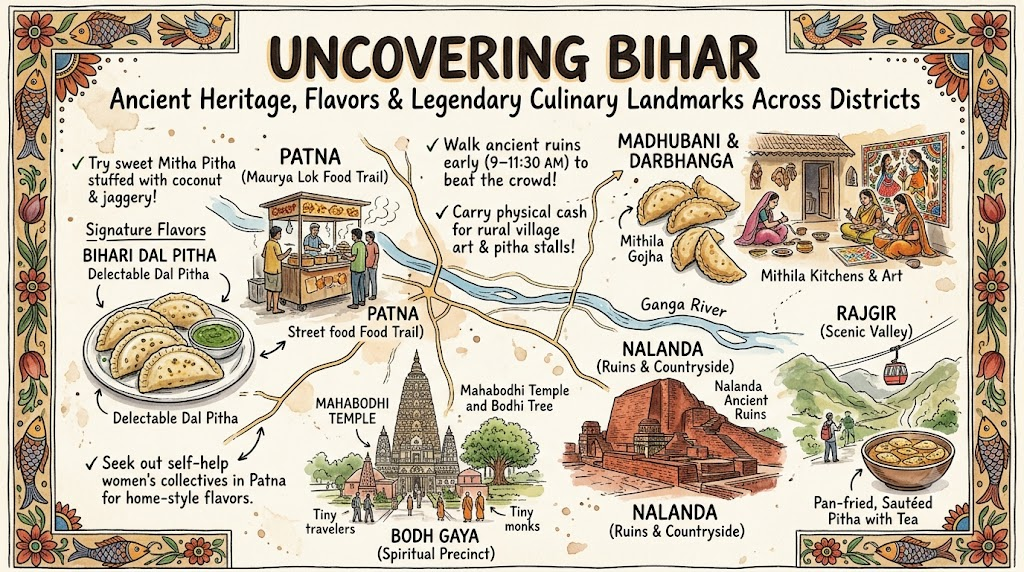
Patna Urban Food Trail and Maurya Lok
Patna’s culinary map weaves deep history with thriving community eating hubs where ancient home recipes find commercial street life. The wide promenades of Maurya Lok Complex and the historic food quarters of Fraser Road host some of the finest authentic snack points serving fresh, piping-hot Dal Pitha paired with spicy coriander chutney and roasted tomato chokha.
The preparation here highlights contrasting textures: the smooth, chewy steamed rice exterior yields to a spiced, savory chana dal filling infused with pungent mustard oil and hing. Visiting these bustling stalls late in the afternoon allows you to witness local home cooks turn simple pulses and rice flour into wholesome street food without artificial additives.
- Location: Central Patna, 3 km from Patna Junction railway station.
- Why it is worth visiting: It offers an accessible urban introduction to traditional regional snacks prepared live in hygienic, bustling open-air setups.
- Best things to do: Sample traditional savory Dal Pitha fresh from the pot, try the sweet jaggery-stuffed variant, and observe the hand-shaping technique using clay moulds.
- Best time to visit: Late evening between 4:30 PM and 7:30 PM when fresh evening batches hit the steam racks.
- Ideal for whom: Street food enthusiasts, family travelers, and solo city explorers.
- Travel tip: Head directly to stalls operated by state-supported women’s self-help collectives near Dak Bungalow crossing for authentic home-style flavors.
Bodh Gaya Spiritual Precinct and Monastic Lanes
Bodh Gaya is a tranquil oasis anchored by the towering Mahabodhi Temple, where Siddhartha Gautama attained enlightenment beneath the sacred Bodhi Tree. Beyond its meditative brick architecture, the town’s outer village lanes house rustic bhojanalyas that serve pure, sattvic Magadhi recipes refined over countless pilgrimage generations.
Steamed Dal Pitha prepared along these peaceful temple fringes relies on minimalist seasoning—cumin, roasted coriander, crushed rock salt, and light green chillies—making it exceptionally light and easy to digest. Sharing a plate while listening to monastery bells creates a serene sensory experience far removed from ordinary tourist cafes.
Mahabodhi Temple in Bodh Gaya.
- Location: Gaya District, approximately 115 km south of Patna.
- Why it is worth visiting: A global UNESCO World Heritage Site paired with pristine monastic-style local cuisine.
- Best things to do: Meditate beneath the sacred Bodhi Tree enclosure, walk the outer monastic trail, and taste temple-town pitha at the local community kitchens.
- Best time to visit: Early morning at 6:00 AM for uncrowded temple ambiances and fresh breakfast steam batches.
- Ideal for whom: Spiritual seekers, international backpackers, and cultural photographers.
- Travel tip: Mobile phones and large electronic bags are barred inside the inner sanctum; use the designated locker counters before entering.
Nalanda Ruins and Bada Gaon Countryside
The excavated brick foundations of Nalanda Mahavihara represent the zenith of ancient residential scholarship, having once welcomed over 10,000 monks and students across Asia. Walking across its expansive quadrangles, monastic cells, and votive stupas gives travelers a profound sense of antiquity and architectural brilliance.
In the adjacent village of Bada Gaon, rural kitchens cook Dal Pitha using traditional wood stoves and earthen pots, infusing the rice dumplings with a faint, smoky rustic aroma. The pitha here is notably dense, satisfying, and served alongside thick roasted aubergine mash (baingan chokha).
Nalanda Ancient University Ruins.
- Location: Nalanda District, 85 km southeast of Patna.
- Why it is worth visiting: The cradle of Buddhist logic and international ancient learning surrounded by idyllic rural hamlets.
- Best things to do: Walk the length of Monastery Site No. 1, inspect the archaeological museum collections, and taste wood-fired pitha in Bada Gaon.
- Best time to visit: Mid-morning between 9:00 AM and 11:30 AM before the sun peaks across the open courtyards.
- Ideal for whom: History buffs, architecture students, and experiential food researchers.
- Travel tip: Hire an authorized ASI (Archaeological Survey of India) guide at the main ticket gate to avoid unreliable self-styled guides outside.
Rajgir Valley and Venuvana Heritage Zone
Cradled within seven verdant hills, Rajgir was the original capital of the Magadhan empire and a favorite seasonal retreat for both Gautama Buddha and Lord Mahavira. Its unique landscape blends thermal sulfur springs, rugged stone ramparts, and sacred hilltops crowned by the Japanese Peace Pagoda (Vishwa Shanti Stupa).
The food joints skirting the hot springs and town bazaar serve winter-special Dal Pitha pan-sautéed lightly in mustard oil with curry leaves and mustard seeds after steaming. This crisped variation pairs wonderfully with hot sweet chai after an early morning trek up Gridhrakuta Hill.
- Location: Nalanda District, 15 km south of Nalanda ruins.
- Why it is worth visiting: Natural hot water springs, ancient cyclopean stone walls, and high-energy sacred topography.
- Best things to do: Ride the aerial ropeway chairlift to the Vishwa Shanti Stupa, explore the ancient Bimbisara Jail site, and sample tempered fried Dal Pitha near Chhotu Chulha stalls.
- Best time to visit: October to February; ideal early mornings for the hill climbs.
- Ideal for whom: Trekkers, wellness travelers, couples, and multi-generational families.
- Travel tip: Avoid carrying exposed food packets near the ropeway base station as resident macaque monkeys are adept at snatching loose items.
Madhubani Cultural Belt and Traditional Mithila Kitchens
The Mithila region, centered around Madhubani and Darbhanga, boasts a vibrant heritage of ritual wall paintings, sacred step-ponds, and refined home cooking. Here, culinary practices are closely entwined with regional festivals and agro-biodiversity, utilizing native fragrant rice varieties like Marcha and Katarni.
Mithila Dal Pitha, locally known as Bhakosa or Gojha, is formed into elegant crescent shapes with fluted edges resembling miniature works of art. Filled with coarsely crushed split black gram or chana dal spiced with freshly ground cloves and carom seeds, it is served alongside tangy raw mango or wood apple (bel) preserves.
Intricate Mithila Folk Art.
- Location: Madhubani District, approximately 160 km northeast of Patna via the Ganga Setu corridor.
- Why it is worth visiting: The global epicenter of UNESCO-recognized Mithila art, village workshops, and artisanal culinary preparations.
- Best things to do: Visit Jitwarpur and Ranti artisan villages, watch master women painters work on handmade paper, and enjoy a home-cooked Maithil thali featuring steamed gojha.
- Best time to visit: November to February during regional cultural fairs and village craft workshops.
- Ideal for whom: Art lovers, textile collectors, cultural ethnographers, and slow travelers.
- Travel tip: Purchase paintings directly from artists inside village homes to ensure fair pay and authentic signatures rather than commercial souvenir shops.
Offbeat Exploration: Hidden Gems Tourists Miss
Rohtasgarh Fort and the Kaimur Escarpments
Perched atop a rugged plateau in the Kaimur mountain range, Rohtasgarh is one of the most formidable, untamed hill fortresses in North India. Constructed during ancient times and later expanded by Sher Shah Suri, its vast gate complexes, royal palaces, and sheer cliff-drop overlooks receive only a fraction of mainstream tourist footfall.
Barabar Caves in Jehanabad
Carved into monolithic granite boulders during the Mauryan Empire in the 3rd century BCE, the Barabar Caves are India’s oldest surviving rock-cut chambers. Their signature “Mauryan polish” renders the interior stone surfaces as smooth as glass, creating echo acoustics that linger for several seconds after a whisper.
Bhimbandh Wildlife Sanctuary Thermal Streams
Tucked inside the dense sal forests of the Kharagpur hills in Munger district, Bhimbandh features naturally warm freshwater pools and untouched forested trails. Local village stalls near the forest gates prepare hot rice-flour pithas stuffed with seasonal wild greens and crushed lentils for morning travelers.
Detailed Practical Guidance for Travelers
| Destination | Standard Entry Fee | General Timings | Best Local Food Options Nearby | Recommended Nearby Attractions |
|---|---|---|---|---|
| Patna Maurya Lok | Free | 10:00 AM – 10:00 PM | Steamed Dal Pitha, Litti Chokha at Maurya kiosks | Golghar, Bihar Museum |
| Bodh Gaya Mahabodhi Complex | Free (₹100 for camera) | 5:00 AM – 9:00 PM | Sattvic lentil dumplings, Tibetan butter tea | Great Buddha Statue, Dungeshwari Cave |
| Nalanda Ruins Complex | ₹50 (Indians), ₹600 (Foreigners) | 9:00 AM – 5:00 PM | Rural Bada Gaon Dal Pitha, Chana Ghugni | Nalanda Archaeological Museum, Hieun Tsang Memorial |
| Rajgir Shanti Stupa | Free (Ropeway: ₹100) | 8:00 AM – 5:00 PM | Pan-fried spiced Dal Pitha, Silao Khaja | Venuvana, Cyclopean Walls, Ghora Katora Lake |
| Madhubani Artisan Villages | Free | Sunrise to Sunset | Mithila Gojha, Makhan Pitha, Fish Curry | Rajnagar Fort ruins, Saurath Sabha |
Logistics & On-Ground Navigation
Local Transport Options
- Intercity Rail Network: Fast, frequent express trains (including Vande Bharat and Jan Shatabdi) link Patna directly to Gaya, Rajgir, and Darbhanga.
- Auto-Rickshaws and E-Rickshaws: Plentiful in all urban zones; ideal for quick point-to-point transit between stations, bazaar centers, and monuments.
- Private Car Rentals: The most reliable option for covering rural circuits like Nalanda–Rajgir–Bodh Gaya at your own pace along State Highways.
- App-Based Taxis: Ola and Uber operate reliably inside Patna and near Gaya airport, offering upfront fares for early flights.
Budget Planning
- Backpacker Tier (₹1,000 – ₹1,800 / day): Clean railway retiring rooms or budget guesthouses (₹600–₹1,000), local bus/passenger train transit (₹150), and street-side Dal Pitha and thalis (₹300–₹400).
- Comfort & Mid-Range Tier (₹3,500 – ₹6,500 / day): Heritage boutique hotels or branded city stays (₹2,500–₹4,200), dedicated air-conditioned private taxi (₹1,500–₹2,000 split), and experiential thalis at established dining halls (₹800–₹1,200).
Safety and Inclusivity Tips
- For Families: Plan intercity highway drives during daylight hours to account for rural road work; keep bottled water handy for child travelers.
- For Couples: Stick to registered hotel properties and respect local attire norms around monastic complexes and traditional village communities.
- General Security: Keep cash stowed securely; major tourist spots are well-patrolled by dedicated Bihar Tourist Police personnel.
Strategic Travel Planning Guardrails
Travel Planning Tips for Bihar
- Book Winter Windows Early: Secure train berths and hotels between November and February when sunny skies keep daytime walks comfortable.
- Carry Cash for Rural Hubs: While UPI digital payments are common in towns, remote stalls selling Dal Pitha and village art rely heavily on cash.
- Embrace Early Mornings: Ancient sites like Nalanda and Bodh Gaya open at dawn, offering quiet, mist-covered ruins before crowds arrive.
- Wear Slip-Off Shoes: Monasteries and active sanctums require frequent shoe removal; breathable slip-ons save time.
- Dress Conservatively: Shoulder-and-knee-covering modest clothing ensures respectful interactions throughout interior villages and sacred monuments.
Common Mistakes to Avoid
- Rushing Through Patna: Treating the state capital as merely a transit point misses the world-class Bihar Museum and riverside promenades.
- Ignoring Winter Fog Warnings: Late December and January often bring dense Gangetic fog, occasionally delaying morning trains and domestic flights.
- Skipping Side Street Dhabas: High-end hotel dining rarely captures the smoky magic of handmade Dal Pitha or wood-baked litti.
- Overpaying Without Asking Meters: Always confirm auto fares before stepping in when meters or ride apps are unavailable.
- Packing Heavy Luggage: Rural station footbridges and uneven heritage paths make compact backpacks or wheeled carry-ons far more practical.
Suggested Itinerary Blueprints
1. Day Quick Dash (Patna Heritage & Flavor Loop)
Designed for business transit travelers and short weekend explorers based in Patna.
- Morning: Tour the Bihar Museum’s contemporary historical galleries, followed by an architectural look at Golghar along the Ganga riverbanks.
- Afternoon: Head to Maurya Lok and Fraser Road food hubs for freshly steamed Dal Pitha, chokha, and sattu coolers.
- Evening: Take a sunset stroll along the newly developed Ganga Marine Drive promenade to wrap up the city circuit.
2. Day Deep-Dive (The Classical Magadha Circuit)
- Day 1 (Nalanda & Rajgir): Drive early from Patna to the excavated Nalanda ruins; explore the monastic cells. Continue to Rajgir, board the ropeway to Vishwa Shanti Stupa, and sample tempered evening pitha in the main bazaar.
- Day 2 (Bodh Gaya Sacred Enclave): Drive south to Bodh Gaya. Spend the morning beneath the Bodhi Tree inside the Mahabodhi complex, explore Japanese and Thai monastic compounds, and savor light Buddhist-style lentil pithas.
3. Complete Weekend Travel Plan (Grand Cultural Loop)
- Friday: Arrive in Patna, explore historic city markets, and dine on fresh regional specialties along Dak Bungalow Road.
- Saturday: Journey through Nalanda’s ancient university site, continue to the hot springs and scenic hills of Rajgir, and stay overnight near Bodh Gaya.
- Sunday: Enjoy dawn meditation at Mahabodhi Temple, tour the Great Buddha statue, collect Mithila handicrafts, and return to Patna or Gaya airport for outbound transit.
Common Tourist Mistakes to Avoid
- Geographic Blunders: Combining North Bihar (Madhubani/Darbhanga) with South Bihar (Bodh Gaya/Rajgir) on the same day causes long transit delays due to trans-Ganga truck corridors.
- Commercial Traps: Spending afternoon hours inside air-conditioned city shopping malls rather than exploring open-air bazaars and historical heritage compounds.
- Neglecting Modern/Alternative Zones: Skipping the Bihar Museum, the Patliputra art galleries, and the lively riverfront promenades in favor of standard circuit checklists.
- Transport Overpayment: Boarding unmetered auto-rickshaws outside railway gates without pre-agreeing on fares or checking ride-hailing apps for benchmark rates.
- Luxury Dining Bias: Eating only inside luxury hotels, which deprives travelers of wood-fired earthen cooking, freshly steamed pithas, and roadside hospitality.
Frequently Asked Questions
1. Is Dal Pitha naturally vegan and gluten-free?
Yes, traditional Bihari Dal Pitha is naturally gluten-free and plant-based, prepared entirely from plain rice flour dough stuffed with spiced lentils and steamed without oil or dairy.
2. What is the key difference between Dal Pitha and Tibetan momos?
Dal Pitha uses a thicker rice-flour casing and is filled with seasoned Bengal gram (chana dal) paste, whereas momos use refined wheat flour (maida) casings stuffed with minced vegetables or meats.
3. What dipping sauces or sides are traditionally served with Dal Pitha?
It is traditionally served with spicy green coriander-mint chutney, roasted tomato and garlic chokha, tangy baingan chokha, or a bowl of spiced vegetable curry (aloo-tamatar jhor).
4. Can Dal Pitha be pan-fried instead of eaten plain steamed?
Yes, locals often slice leftover steamed pithas and lightly shallow-fry them in mustard oil with black mustard seeds, curry leaves, and green chillies for a crisp exterior.
5. Which winter months are best for eating hot Dal Pitha across Bihar?
November through February is the peak season, coinciding with the fresh post-monsoon rice harvest when freshly milled rice flour gives the dish a naturally sweet, aromatic quality.
6. Are credit cards and mobile wallets widely accepted at street food stalls?
Mobile UPI QR codes (PhonePe, Google Pay, Paytm) are widely accepted even by modest roadside vendors, though keeping small cash notes is helpful for rural village stalls.
7. Is Dal Pitha spicy for foreign travelers or those with lower spice tolerance?
The standard lentil filling has a mild, earthy warmth from ginger and roasted cumin, but street vendors can easily adjust raw green chillies upon request.
8. What is the sweet variation of Dal Pitha called?
The sweet version is known as Mitha Pitha, typically stuffed with grated coconut, jaggery, crushed cardamom, and reduced milk solids (khoya) before steaming.
9. How do I safely reach Nalanda and Rajgir from Patna?
You can take early daily intercity express trains directly to Rajgir station, or book an air-conditioned private taxi via NH 20 and NH 31 for a comfortable three-hour drive.
10. What local beverages pair best with hot Dal Pitha?
A clay glass (kulhad) of unsweetened spiced sattu ghol in daytime, or a piping-hot cup of milky ginger chai during cool evenings, makes for the ideal local pairing.
11. Is it safe for solo female travelers to take street food tours in Bihar?
Yes, especially during daytime and early evening hours in well-trafficked markets like Maurya Lok in Patna; booking guided heritage walks provides added comfort.
12. Where can travelers buy authentic Mithila paintings along this food circuit?
Visit the registered artisan co-operatives in Jitwarpur near Madhubani, or explore the verified state handicraft counters inside Patna’s Upendra Maharathi Shilp Anusandhan Sansthan.
Conclusion
Choosing Bihar over heavily commercialized travel circuits is a deliberate journey into living antiquity, unhurried human warmth, and grounding ancestral cooking. From silent dawn walks around the Mahabodhi Temple to the rich comfort of freshly steamed Dal Pitha along roadside stalls, this heritage state rewards travelers willing to explore beyond tourist cliches.
