Introduction
Most mainstream travel corridors funnel travelers into overcrowded, commercialized circuits lined with identical souvenir stalls and westernized cafe menus. Bihar, however, bypasses that polished facade completely, pulling you headfirst into an unfiltered world of living history, fertile Gangetic plains, and centuries-old culinary heritage. Here, travel is an intimate encounter with antiquity where grand monastic ruins stand beside vibrant village bazaars.
Tasting roasted gram flour folded into griddle-toasted flatbreads is not merely a meal; it is an edible lineage dating back through empires and wandering monks. Finding the golden crust of a sattu paratha sizzling on a street-side iron skillet reveals a culinary sophistication rooted entirely in regional soil, pungent cold-pressed mustard oil, and fiery homemade pickles.
Golden sattu paratha with pickle.
Why Bihar is a must-visit city
Bihar forms the spiritual and intellectual cradle of ancient India, anchoring the mighty kingdoms of Magadha, the birth of Buddhism and Jainism, and the world’s oldest residential university systems. Flanked by the perennial flow of the holy Ganga, its geographical terrain moves effortlessly from rich agricultural floodplains in the north to the rugged Rajgir hills and Chota Nagpur foothills in the south. In recent years, massive highway expansions, electrified railway corridors, and modern airport terminals at Patna, Gaya, and Darbhanga have transformed on-ground connectivity, making journeys comfortable for cultural explorers, road-trippers, and solo heritage seekers alike.
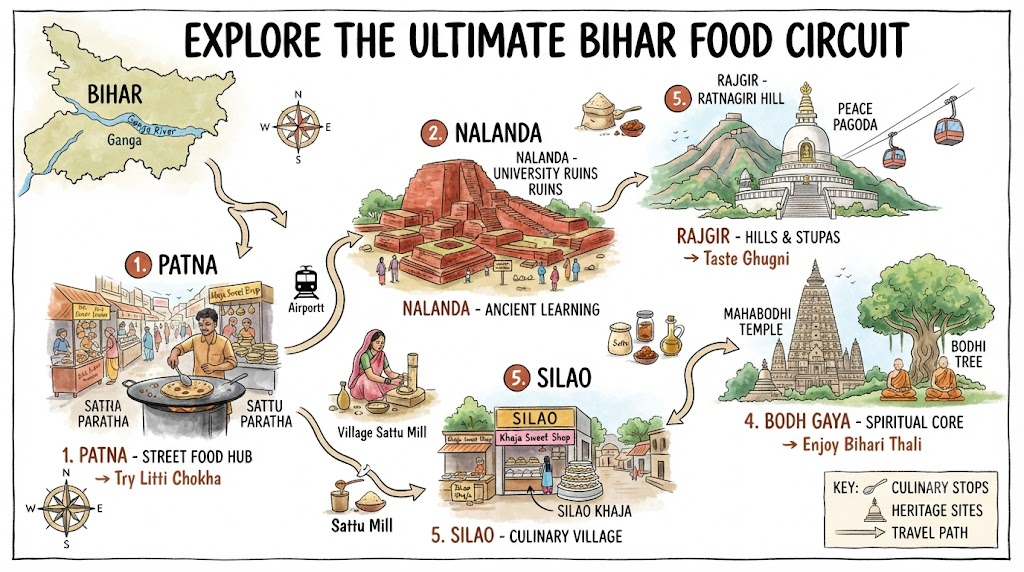
The primary travel circuit connects the historic riverfront capital of Patna southwards to the monastic ruins of Nalanda, the rolling hills of Rajgir, and the sacred bodhi grounds of Bodh Gaya. Traveling this trail allows you to pair deep spiritual exploration with iconic street gastronomy, transitioning seamlessly from vibrant urban food alleys to serene ancient sanctums.
| Metric / Dimension | Regional Specification |
|---|---|
| Primary Transit Hubs | Jay Prakash Narayan Airport (Patna), Gaya International Airport (Gaya) |
| Core Rail Arteries | Patna Junction, Rajgir Railway Station, Gaya Junction (ECR Zone) |
| Peak Season Window | October to March (Crisp winters, pleasant afternoon sun) |
| Signature Staples | Sattu Paratha, Litti Chokha, Khaja of Silao, Tilkut of Gaya |
| Terrain Profile | Central Gangetic Plains flanked by southern quartzite ridges |
Best Places or Experiences
Bhojpur Dhaba and Heritage Street Kitchens, Patna
Situated along the vibrant arteries of Patna, this bustling food enclave represents the undisputed capital of artisanal flatbread preparation. Skilful cooks knead whole-wheat dough before stuffing it generously with spiced roasted chickpea flour laced with carom seeds (ajwain), black seed (mangrail), and pungent stuffed red chili pickle oil.
The parathas are shallow-fried over thick cast-iron tawas until flaky and amber, emitting a nutty aroma that draws morning crowds from blocks away. Every serving comes balanced with creamy curd, charred tomato chokha, and crunchy sliced onions sprinkled with rock salt.
Bustling street stalls in Patna.
- Location: Frazer Road / Maurya Lok Complex, Patna Central (0 km from city center).
- Why it is worth visiting: Unmatched epicenter for tasting authentic street-style stuffed parathas crisped with pure clarified butter.
- Best things to do: Watch the live dough-stuffing technique, sample their raw garlic dip, and wash it down with fresh mattha (spiced buttermilk).
- Best time to visit: 8:00 AM to 11:00 AM for fresh breakfast batches straight off the griddle.
- Ideal for whom: Culinary explorers, solo backpackers, and food photographers.
- Travel tip: Ask the vendor for an extra spoon of spicy mango pickle brine drizzled directly into your paratha pocket.
The Ruins of Nalanda Mahavihara, Nalanda
Nalanda stands as a monumental testament to ancient intellectual dominance, flourishing as a premier Buddhist monastic university from the 5th century CE to 1200 CE. Walking through its sprawling red-brick corridors, ancient classrooms, and meditative prayer halls evokes the presence of the thousands of scholars—including Xuanzang—who once resided here.
The architectural layout reveals sophisticated drainage systems, multi-tiered stupas, and thick thermal walls engineered to beat the scorching plains heat. Surrounding the archaeological park are rustic countryside shacks where local women prepare traditional sattu flatbreads using grain ground fresh in village stone mills.
Ancient brick ruins of Nalanda.
- Location: Nalanda District, approximately 85 km southeast of Patna.
- Why it is worth visiting: UNESCO World Heritage Site preserving the physical skeleton of the world’s first residential global university.
- Best things to do: Photograph Temple No. 3 at low angle, explore the on-site ASI Archaeological Museum, and inspect ancient brick cooling channels.
- Best time to visit: Early morning (9:00 AM) to beat midday glare and avoid large bus crowds.
- Ideal for whom: History enthusiasts, architectural purists, and heritage travelers.
- Travel tip: Hire a government-certified guide at the main gate to decipher the complex architectural layers of successive rebuilding phases.
Vulture’s Peak and Cyclopean Wall, Rajgir
Nestled inside an amphitheater of green hills, Rajgir was the historic first capital of the Magadhan Empire and a favored monsoon retreat for the Buddha. Grid-like fortifications known as the Cyclopean Wall snake across the ridges, built using massive unmortared stones reminiscent of ancient Mycenaean engineering.
Climbing or taking the single-chair ropeway up to Ratnagiri Hill leads to the pristine white Peace Pagoda (Vishwa Shanti Stupa). Down along the main highway turnoffs, local roadhouse eateries serve dense sattu-filled breads alongside steaming bowls of spiced ghugni (black chickpea curry).
- Location: Nalanda District, 102 km south of Patna.
- Why it is worth visiting: A rare combination of raw Jain, Buddhist, and Hindu sacred geography framed by pristine forested ridges.
- Best things to do: Ride the historic aerial chairlift, inspect the Chariot Wheel Marks engraved in stone, and soak in the sacred tapovan hot springs.
- Best time to visit: October to February; late afternoons offer stunning golden-hour illumination across Gridhakuta Peak.
- Ideal for whom: Active trekkers, spiritual seekers, and families.
- Travel tip: Wear slip-resistant footwear for the rocky steps around Bimbisara’s Jail and the steep ascent to Vulture’s Peak.
Mahabodhi Temple Complex, Bodh Gaya
Marking the exact epicenter of spiritual enlightenment where Siddhartha Gautama attained Buddhahood, the Mahabodhi Temple radiates an undeniable aura of stillness. The towering 50-meter pyramidal temple spire dates from the late Gupta period, standing tall beside the sacred descendant of the original Bodhi Tree.
Pilgrims from Sri Lanka, Tibet, Thailand, and Japan chant along paved stone circumambulation paths draped in butter lamps and saffron flags. After serene meditation sessions, visitors venture into the monastery-lined lanes to enjoy hearty, nutritious sattu flatbreads paired with wholesome lentil stews.
Mahabodhi Temple spiritual sanctum.
- Location: Gaya District, 115 km south of Patna.
- Why it is worth visiting: The holiest pilgrimage center in Buddhism and an architectural triumph of ancient brickwork.
- Best things to do: Sit beneath the sacred Bodhi Tree during morning prayers, admire the 80-foot Great Buddha statue, and wander the Thai monastery gardens.
- Best time to visit: 5:30 AM to 7:00 AM for morning chants or post-sunset when thousands of oil lamps illuminate the complex.
- Ideal for whom: Solo spiritual wanderers, peace seekers, and cultural documentary makers.
- Travel tip: Mobile phones and large camera bags must be deposited in secured lockers at the outer gate before entering the sanctum.
Silao Culinary Village and Heritage Sweet Hub
Located on the transit highway between Nalanda and Rajgir, the small township of Silao provides a deeply authentic detour into Bihar’s traditional culinary craftsmanship. The village is universally renowned for its production of GI-tagged Silao Khaja, a multi-layered pastry rolled thin, crimped, and fried to delicate, crisp perfection.
Alongside sweet shops, roadside family-run bhojanalayas serve traditional wood-fired tawa parathas stuffed with sattu, wild coriander, and crushed ginger. Here, the dining experience is communal, rustic, and anchored in generations-old culinary habits.
- Location: Nalanda District (midway along the Rajgir-Nalanda highway route, 95 km from Patna).
- Why it is worth visiting: Preserves artisanal hand-kneading and layering traditions unchanged for centuries.
- Best things to do: Observe the master sweet-makers folding wafer-thin sheets of dough, sample fresh unsweetened sattu roasteries, and taste hot khaja right off the pan.
- Best time to visit: 12:00 PM to 3:00 PM for lunch stops during the transit from Nalanda to Rajgir.
- Ideal for whom: Food historians, epicurean travelers, and road-trip enthusiasts.
- Travel tip: Purchase freshly sealed boxes of khaja directly from traditional family-run shops rather than pre-packed supermarket racks.
Offbeat Exploration: Hidden Gems Tourists Miss
The Rock-Cut Barabar Caves, Jehanabad
Carved into granite monoliths dating back to the Mauryan Empire under Emperor Ashoka, these 3rd-century BCE chambers feature astounding acoustic resonance and mirror-like stone polish. Very few tour buses make the short detour from the Patna-Gaya highway, leaving these historic caves quiet and contemplative.
Ghora Katora Lake, Rajgir
A secluded natural lake ringed by hills on three sides, accessible only via eco-friendly battery rickshaws, horse carriages, or a peaceful 5 km forest hike. The site holds a massive pink sandstone statue of Lord Buddha standing peacefully in the center of the water.
Telhar Kund and Kaimur Plateau Waterfalls
Tucked away in the rugged southwestern frontier of Bihar, this dramatic plunge waterfall drops into deep forested valleys. It remains an untouched sanctuary for nature lovers seeking clean air, jungle trails, and wild, uncommercialized riverbanks.
Detailed Practical Guidance for Travelers
| Destination | Standard Entry Fee | General Timings | Best Local Food Options Nearby | Recommended Nearby Attractions |
|---|---|---|---|---|
| Bhojpur Dhaba (Patna) | Free access (Meals ₹120-₹200) | 7:00 AM – 11:00 PM | Sattu Paratha, Champaran Meat, Litti Chokha | Golghar, Patna Museum, Nit Ghat |
| Nalanda University Ruins | ₹45 (Indians), ₹300 (Foreigners) | 9:00 AM – 5:00 PM | Local highway dhabas, Sattu roti with chokha | Xuanzang Memorial Hall, Kundalpur |
| Rajgir Historic Sites | ₹25 (Heritage gate), ₹100 (Ropeway) | 6:00 AM – 6:00 PM | Silao Khaja stalls, Roadside Sattu thali | Venuvana Bamboo Garden, Cyclopean Wall |
| Mahabodhi Temple (Bodh Gaya) | Free entry (Camera charges extra) | 5:00 AM – 9:00 PM | Tibetan momos, Bihari Sattu thali, herbal tea | Giant Buddha Statue, Royal Bhutan Monasteries |
| Barabar Caves (Jehanabad) | ₹25 (ASI ticket) | Sunrise to Sunset | Simple village tea shacks, roasted gram mix | Siddheshwar Nath Temple, Nagarjuni Hills |
Logistics & On-Ground Navigation
Local Transport Options
- Railways: The backbone of intra-state transit. Express trains connect Patna, Rajgir, and Gaya multiple times daily with clean, affordable air-conditioned coaches.
- App-Based Cabs & Private Car Hire: Readily accessible in Patna and Gaya via Uber and Ola. For the Nalanda-Rajgir day circuit, hire a dedicated private car with a local driver (approx. ₹3,000–₹4,200 per day including fuel).
- Auto-Rickshaws & E-Rickshaws: Ideal for inner-city navigation. E-rickshaws dominate Gaya and Rajgir, providing quiet, zero-emission hops between temples for nominal shared fares (₹10–₹30 per seat).
Budget Planning
- Backpacker / Budget Tier (₹1,000 – ₹1,800 per day): Dormitory beds in pilgrim guesthouses or monasteries, dining on wholesome street-side sattu paratha meals (₹50–₹100 a plate), and transit via shared passenger trains and local state buses.
- Mid-Range / Comfort Tier (₹3,500 – ₹6,500 per day): Air-conditioned boutique hotel rooms, private taxi rentals for rural circuits, dining at reputed regional family restaurants, and hiring certified ASI heritage tour guides.
Safety and Inclusivity Tips
- For Families: Stick to well-maintained circuit hotels around Patna’s Exhibition Road and Bodh Gaya’s main temple boulevard. Keep bottled mineral water handy during dry afternoon temple explorations.
- For Couples: Bodh Gaya and Nalanda offer progressive, relaxed, and welcoming public environments. Dress modestly in line with regional monastery and temple decorum (covered shoulders and knees).
- General Safety: Avoid traversing rural country roads late at night. Complete inter-district road travel between sunset and 9:00 PM. Keep emergency numbers and offline digital maps downloaded on your smartphone.
Strategic Travel Planning Guardrails
Travel Planning Tips for Bihar
- Book Rail Tickets Weeks in Advance: Trunk rail routes connecting Patna, Rajgir, and Gaya fill quickly with pilgrims, students, and holiday travelers.
- Carry Paper Currency: While UPI and digital payment QR codes work across urban shops, remote highway dhaba stalls and heritage monument ticket counters often demand cash.
- Respect Religious Footwear Mandates: Carry a drawstring bag for your shoes, as you must walk barefoot across massive open courtyards at Mahabodhi and various monastic shrines.
- Pack Cotton Layers and Sun Protection: Gangetic heat can be intense between March and October; prioritize breathable fabrics, a broad-brimmed hat, and UV sunglasses.
- Embrace Slow Transit Timetables: State highways run through bustling town markets where livestock and wedding processions occasionally slow vehicular progress. Factor in 30-minute buffers.
Common Mistakes to Avoid
- Ignoring Train Schedules: Relying exclusively on state buses when prompt express intercity trains provide twice the speed and comfort.
- Rushing Bodh Gaya in an Afternoon: Treating this serene international monastic town as a checklist stop instead of staying overnight to absorb dawn chants.
- Underestimating Archaeological Scales: Nalanda requires at least two to three hours of walking on foot; do not plan it during the blistering midday sun.
- Sticking Strictly to Continental Hotel Buffets: Missing regional food stalls robs you of authentic recipes cooked over coal braziers.
- Skipping Cold-Weather Delicacies: Missing the winter-exclusive gud-tilkut and hot makhaana kheer during chilly December mornings.
Suggested Itinerary Blueprints
Day Quick Dash (Patna Urban Heritage & Food Trail)
Target Audience: Business travelers, transit stopovers, or quick weekend visitors. Start at dawn with riverfront walking and tea at Nit Ghat. Head to historic Golghar and the Patna Museum before mid-morning. Grab an early lunch of piping hot sattu parathas and spiced chokha at Maurya Lok Complex. Spend the afternoon taking in the architectural splendor of Takht Sri Patna Sahib in the old city, wrapping up with evening street snacks along Bailey Road.
Day Deep-Dive (Ancient Nalanda & Rajgir Valley Circuit)
Target Audience: Heritage seekers and cultural road-trippers.
- Day 1: Drive from Patna to Nalanda (2 hours via the 4-lane expressway). Dedicate the entire morning to the Nalanda University ruins and the Xuanzang Memorial Hall. Stop in Silao for lunch and freshly prepared warm khaja. Drive 25 minutes into Rajgir for sunset from the Peace Pagoda atop Ratnagiri Hill. Overnight in Rajgir.
- Day 2: Begin with an early morning visit to the historic Venuvana Bamboo Grove and Bimbisara’s Jail. Take an eco-rickshaw loop out to Ghora Katora Lake for mid-morning boating. Enjoy an authentic roadside lunch of roasted sattu flatbreads before returning to Patna by late evening.
Day Complete Weekend Travel Plan (Grand Golden Circuit Loop)
Target Audience: Immersive travelers seeking a complete cross-regional cultural immersion.
- Friday: Arrive in Patna, check into your hotel, and spend the afternoon taking in the bronze galleries at Bihar Museum. Savor a late afternoon feast of stuffed flatbreads and litti at local street markets.
- Saturday: Early departure to Nalanda for a comprehensive ruins tour. Continue through Rajgir for a quick chairlift ride and visit to the Cyclopean Wall. Head south toward Bodh Gaya by evening. Check into a monastery guesthouse and watch the illuminated night ceremonies at Mahabodhi Temple.
- Sunday: Wake before sunrise for meditation under the sacred Bodhi Tree. Tour the Thai, Japanese, and Bhutanese monasteries before indulging in a hearty brunch of regional flatbreads and curd. Depart via Gaya Junction or Gaya Airport.
Common Tourist Mistakes to Avoid
- Geographic Blunders: Trying to cram Muzaffarpur or Bhagalpur into the same travel day as the Nalanda-Bodh Gaya heritage corridor. Always stick to a singular cluster per weekend.
- Commercial Traps: Spending afternoon hours browsing suburban shopping malls in newly developed city zones instead of exploring the historic artisanal lanes of Old Patna (Patna City) or traditional village bazaars.
- Neglecting Modern/Alternative Zones: Forgetting to explore the state-of-the-art Bihar Museum, an internationally praised cultural institution that redefines public exhibition curation in South Asia.
- Transport Overpayment: Agreeing to unmetered auto-rickshaw rides outside railway platforms without cross-referencing prevailing prices on ride-hailing apps or asking a local shopkeeper for standard fare estimates.
- Luxury Dining Bias: Spending every meal inside predictable multi-cuisine hotel restaurants. Bihar’s culinary brilliance lives on street corners, inside modest family dhabas, and around highway iron-griddle stalls where ingredients are farm-fresh.
Local Travel Pro-Tip: When dining at traditional family eateries, always request your parathas made-to-order (taaza) rather than accepting pre-cooked stacks. Real Bihari sattu flatbread is meant to be eaten steaming hot, straight from the pan.
Frequently Asked Questions
1. What makes authentic Bihari sattu paratha different from typical North Indian stuffed parathas?
The difference lies entirely in the filling and its seasoning. While typical North Indian parathas rely on boiled mashed potatoes or raw grated paneer, Bihari stuffing features dry-roasted Bengal gram flour mixed with pungent raw mustard oil, carom seeds (ajwain), nigella seeds (mangrail), grated fresh ginger, raw garlic, and spiced brine scooped straight out of aged mango or stuffed red chili pickle jars. This produces an earthy, tangy, and deeply savory profile with far greater protein density.
2. Which months provide the most comfortable weather for traveling through Bihar?
The ideal window spans from late October through early March. During these winter months, daytime temperatures hover comfortably between 18°C and 25°C, providing clear skies and cool breezes ideal for long walking tours across sprawling open archaeological grounds like Nalanda and Rajgir. Avoid the peak summer months of May and June, when temperatures regularly surge past 42°C.
3. Is English and Hindi widely spoken across tourist areas in Bihar?
Standard Hindi is universally understood and spoken throughout every corner of the state alongside regional mother tongues such as Magahi, Bhojpuri, and Maithili. In major tourist corridors—particularly Bodh Gaya, central Patna, and the Nalanda heritage complexes—hospitality workers, auto drivers, and registered heritage guides speak and understand English comfortably.
4. Can vegetarian and vegan travelers easily navigate traditional dining in Bihar?
Traditional Bihari cuisine is predominantly vegetarian and deeply plant-forward. Staples like sattu flatbreads, litti, roasted tomato-eggplant chokha, and spiced black-chickpea stews (ghugni) are inherently vegan when cooked in mustard oil rather than clarified butter. Just ask the cook to prepare your meal with mustard oil (sarson tel) instead of ghee.
5. How far in advance should I arrange transport for the Patna-Rajgir-Bodh Gaya triangle?
If traveling during the peak pilgrimage season from November through January, reserve intercity express train tickets at least two to four weeks ahead. For private vehicle hire, booking two to three days in advance through reputable tour desks or verified city travel agencies is usually sufficient.
6. Are camera setups and professional recording rigs permitted inside historical monuments?
Standard digital cameras, smartphones, and mirrorless bodies for personal photography are widely permitted across ASI monuments like Nalanda and Barabar for nominal camera ticket fees (typically ₹25–₹50). However, tripods, boom microphones, and commercial filming rigs require prior written clearances from the Archaeological Survey of India. Mobile devices are strictly barred inside the inner sanctum of the Mahabodhi Temple in Bodh Gaya.
7. Is it safe for solo travelers to navigate the state using public transit?
Solo travel throughout the primary Buddhist and cultural circuit is safe and straightforward during daylight hours. Stick to express passenger trains and verified daytime shared transit, reserve rooms at well-reviewed central accommodations, and avoid wandering poorly illuminated village bypass roads after 9:00 PM.
8. What authentic culinary souvenirs should I bring back from a trip across Bihar?
Pick up packaged, fresh-sealed boxes of Silao Khaja from Nalanda, artisanal sesame-jaggery Tilkut from the traditional confectioner alleys of Gaya (especially during winter), organic roasted chana sattu powder from local milling shops, and decorative hand-painted Madhubani art textiles directly from local artisan cooperatives.
9. Are automated banking machines and digital QR transactions reliable across the region?
ATMs from major public and private banks are plentiful in cities like Patna, Rajgir, and Gaya. Digital UPI QR payments are widely accepted at convenience stores and urban restaurants. However, cash remains necessary when paying rural rickshaw pullers, small temple donation counters, and roadside village snack vendors.
10. What is the dress code when visiting active temples and monasteries in Bodh Gaya and Rajgir?
Modest, respectful attire is mandatory across all active pilgrimage sites. Both men and women should wear clothing that covers shoulders, upper arms, and knees. Loose, breathable linen or cotton trousers and tunic tops are ideal. Wear footwear that slips off easily, as shoes must be left outside temple enclosures.
11. How do travelers reach Nalanda directly from Patna on a day trip?
You can hire an air-conditioned private taxi from central Patna to cover the 85 km journey in approximately two hours via the modern four-lane national highway corridor. Alternatively, board an early morning intercity train from Patna Junction to Nalanda Station, and hop onto an electric rickshaw right outside the station gates for the final 3 km ride to the ruins.
12. Is tap water safe to drink in roadside food stalls?
Travelers should avoid unsealed tap water. Always drink packaged mineral water from sealed bottles, or carry a reusable insulated flask equipped with an internal purification filter. When sampling street-side sattu parathas, pair your meal with hot spiced tea served in traditional clay cups (kulhads) or freshly poured bottled beverages.
Conclusion
Traveling through Bihar strips away superficial travel trends to reveal the grounding warmth of India’s historic heartland. It is a journey where ancient brick stupas whisper millennia of philosophical debate, where fertile plains feed generous culinary customs, and where every shared meal reflects hard work, genuine kindness, and rich tradition. By stepping off the predictable tourist trail and breaking golden, freshly griddled sattu parathas with locals, you gain more than photographs—you find a lasting, deeply soulful connection to the cradle of Indian civilization.
