Introduction
Forget the crowded hill stations and over-commercialized beach resorts where vacations feel like a routine checklist. Stepping into Bihar on a family road trip offers something far richer—a deep dive into the heartland of Indian civilization, where ancient empires, spiritual philosophies, and verdant landscapes converge. Driving through this region reveals a serene, authentic connection to history that few other destinations in Asia can match.
As you navigate smooth four-lane expressways and tree-lined regional highways, the fast-paced modern world recedes. In its place, your family encounters ancient ruined universities, misty forested waterfalls, and tranquil stupas where time seems to stand still. This journey is an invitation to swap tourist traps for genuine cultural storytelling, hearty local cuisine, and memorable bonding on the open road.
Why Bihar is a must-visit destination
Bihar represents one of the most culturally significant chapters in human history. It is the birthplace of Buddhism and Jainism, the cradle of the mighty Magadha and Maurya Empires, and home to the world’s first residential university. Geographically, the state spans fertile Gangetic plains, rolling Vindhyan hills, and dense Himalayan Terai forests, providing surprising ecological variety for road trippers. Modern infrastructure updates—including the Patna-Bakhtiyarpur four-lane highway, the Purvanchal connector, and refurbished state highways—make navigating these historic routes comfortable and safe for family cars.
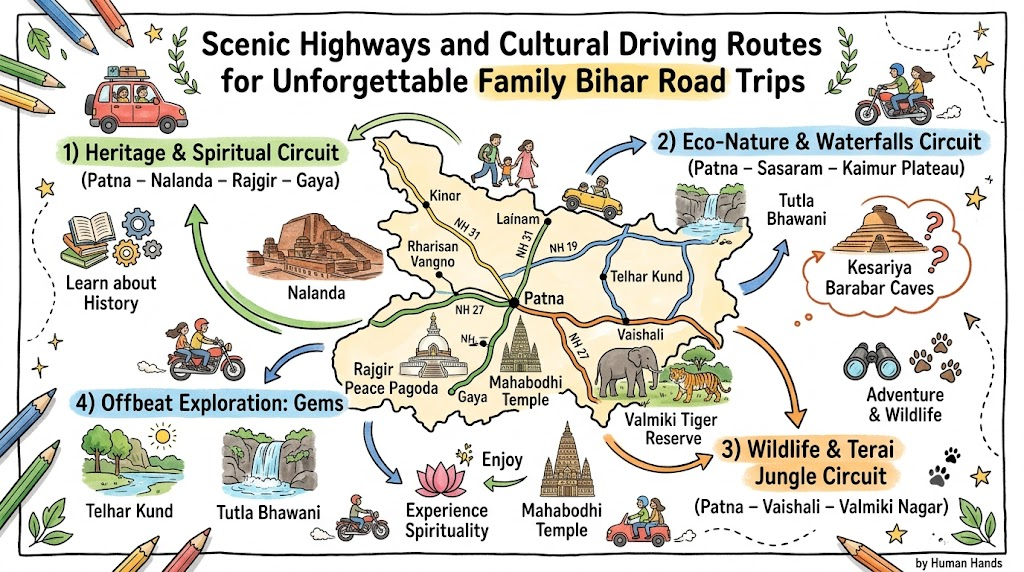
The primary travel circuits seamlessly connect ancient heritage with natural sanctuaries. The famous Buddhist and Jain circuit links Patna, Vaishali, Nalanda, Rajgir, and Bodh Gaya. Meanwhile, the Eco-Tourism circuit sweeps through the dramatic Kaimur waterfalls and the wild corridors of Valmiki Tiger Reserve. Whether traveling with energetic kids or senior parents, the state offers diverse landscapes, accessible monuments, and genuine hospitality at every stop.
| Circuit / Region | Primary Highways | Ideal Duration | Key Target Archetypes |
| Heritage & Spiritual Circuit | NH 31 / NH 120 (Patna – Nalanda – Rajgir – Gaya) | 3 to 4 Days | History enthusiasts, multigenerational families, spiritual seekers |
| Eco-Nature & Waterfalls Circuit | NH 19 / SH 81 (Patna – Sasaram – Kaimur Plateau) | 2 to 3 Days | Nature lovers, road trip enthusiasts, adventure families |
| Wildlife & Terai Jungle Circuit | NH 27 / SH 64 (Patna – Vaishali – Valmiki Nagar) | 3 Days | Wildlife lovers, photography enthusiasts, kids |
Best Places or Experiences
1. Nalanda Archaeological Ruins
The ancient Mahavihara of Nalanda stands as a monumental testament to global learning and architectural genius. Operating between the 5th and 12th centuries CE, this red-brick monastic university once accommodated over 10,000 students and 2,000 teachers from across Asia. Walking through its massive excavated grounds with your family reveals well-planned classrooms, multi-tiered stupas, communal kitchens, and sophisticated drainage systems that showcase ancient engineering ahead of its time.
As you stroll past the iconic Temple No. 3, the red-clay bricks glow warmly under the afternoon sun. Visiting the adjacent Archaeological Museum helps children visualize the bronze statues, sealings, and coins unearthed from this UNESCO World Heritage Site. It is an educational stop that sparks curiosity about India’s golden age of scholarship.
- Location: Nalanda District; approximately 85 km southeast of Patna.
- Why it is worth visiting: UNESCO World Heritage status showcasing the world’s earliest organized residential university.
- Best things to do: Explore Stupa No. 3, visit the Nalanda Archaeological Museum, and inspect ancient monks’ quarters.
- Best time to visit: October to March, preferably early morning around 9:00 AM.
- Ideal for whom: Families with school-aged children, history buffs, and photography enthusiasts.
- Travel tip: Hire an official government-licensed guide at the gate to bring the historical context alive for children.
2. Rajgir Peace Pagoda and Cable Car
Nestled in a lush green valley surrounded by seven rocky hills, Rajgir holds immense spiritual significance for both Buddhists and Jains. The highlight for visiting families is taking the aerial ropeway up Gridhakuta Hill (Vulture’s Peak) to reach the magnificent Vishwa Shanti Stupa. Perched high above the valley, this shimmering white marble monument features four gilded statues of Lord Buddha reflecting key phases of his life.
Beyond the tranquil stupa, the surrounding hills offer unique adventures. Families can ride the modern glass cabin ropeway or try the thrilling chairlift, explore the ancient Cyclopean Wall built of massive unmortared stones, or relax at the nearby Rajgir Nature Safari and Glass Canopy Walk.
- Location: Nalanda District; 105 km from Patna via NH 120.
- Why it is worth visiting: A scenic hill station blend of aerial ropeway thrill, ancient masonry, and spiritual serenity.
- Best things to do: Ride the cable car to Ratnagiri Hill, walk around Vishwa Shanti Stupa, and visit Venu Vanam bamboo grove.
- Best time to visit: October to February; ride the ropeway by 8:30 AM to beat peak weekend crowds.
- Ideal for whom: Multigenerational families, kids, and nature photography lovers.
- Travel tip: Purchase tickets for the Nature Safari and Glass Skywalk online in advance, as spot entry tickets sell out quickly.
3. Mahabodhi Temple Complex at Bodh Gaya
Bodh Gaya is the spiritual heart of the Buddhist world. It is here, beneath the sacred Bodhi Tree, that Siddhartha Gautama attained supreme enlightenment over 2,500 years ago. The towering 55-meter grand pyramidal temple, built during the Gupta and late historical periods, dominates the landscape with intricate stone carvings and peaceful surrounding gardens.
Walking softly around the circumambulatory path alongside orange-robed monks from across the world creates a serene atmosphere. Families can explore surrounding international monasteries built by Bhutan, Thailand, Japan, and Tibet, each reflecting unique traditional architectural styles.
- Location: Gaya District; approximately 110 km south of Patna via the Patna-Gaya Highway.
- Why it is worth visiting: UNESCO World Heritage Site and the world’s foremost Buddhist pilgrimage destination.
- Best things to do: Meditate near the sacred Bodhi Tree, admire the Great Buddha Statue, and tour international monasteries.
- Best time to visit: November to February; evening hours during lamp-lighting are deeply peaceful.
- Ideal for whom: Couples, senior citizens, and families seeking quiet reflection.
- Travel tip: Mobile phones are strictly prohibited inside the inner complex; deposit them at free secure lockers at the entrance.
4. Valmiki Tiger Reserve in West Champaran
Located along the Indo-Nepal border, Valmiki Tiger Reserve offers a dense expanse of Himalayan Terai forest where the Gandak River enters the plains. As Bihar’s premier tiger reserve, it is home to Bengal tigers, Indian leopards, Asian elephants, wild gaur, and over 250 bird species. Driving up from Patna toward Valmiki Nagar takes your family from agrarian plains into lush green canopy roads.
The eco-tourism complex at Valmiki Nagar offers comfortable wooden cottages along the riverbank. Families can embark on organized open-top jeep safaris through the jungle trails, take boat rides on the Gandak River, and enjoy canopy walks among ancient trees.
- Location: West Champaran District; approximately 290 km northwest of Patna.
- Why it is worth visiting: The state’s flagship wilderness sanctuary, combining wildlife viewing with pristine river eco-tourism.
- Best things to do: Take an early morning jungle jeep safari, enjoy a boat cruise on the Gandak River, and stay at Valmiki Vihar eco-resort.
- Best time to visit: November to April (note that jungle safaris remain closed during monsoon from July to September).
- Ideal for whom: Adventure-loving families, birdwatchers, and nature enthusiasts.
- Travel tip: Book state forest department eco-cottages at least three weeks in advance during winter weekends.
5. Rohtasgarh Fort and Tutla Bhawani Waterfalls
For families who enjoy history combined with pristine nature, a road trip toward Sasaram and the Kaimur hills is ideal. Perched high on a plateau overlooking the Sone River, Rohtasgarh Fort is one of India’s largest hill forts, featuring ancient royal palaces, temples, and defensive gates. The drive up the Vindhyan winding roads offers stunning panoramic views of the river valley.
Nearby lies the breathtaking Tutla Bhawani Waterfall, where a mountain stream drops through a green gorge into a clear pool. A sturdy suspension bridge stretches across the canyon, giving families safe views of the gushing falls and the shrine tucked beneath the canyon walls.
- Location: Rohtas District; roughly 150 km southwest of Patna via NH 19.
- Why it is worth visiting: A scenic combination of massive medieval hill fortress architecture and pristine gorge waterfalls.
- Best things to do: Walk across the Tutla Bhawani suspension bridge, explore the palaces of Rohtasgarh Fort, and visit the tomb of Sher Shah Suri in Sasaram.
- Best time to visit: August to February (monsoon and post-monsoon bring out spectacular green landscapes).
- Ideal for whom: Active families, photography enthusiasts, and road trip lovers.
- Travel tip: Wear comfortable footwear with good grip for walking around the wet rock surfaces near the waterfalls.
Offbeat Exploration: Hidden Gems Tourists Miss
Telhar Kund Waterfall in Kaimur
Tucked deep within the forest corridors of the Kaimur hill range, Telhar Kund is one of the region’s most dramatic natural plunge waterfalls. Water cascades down a sheer 80-meter cliff into a emerald pool surrounded by rock walls. The state eco-tourism department has built secure viewing platforms along the cliff edge, allowing families to safely enjoy the dramatic views and cool mountain breeze.
Barabar Caves in Jehanabad
Located on a short detour off the Patna-Gaya highway, the Barabar Caves are the oldest surviving rock-cut caves in India, dating back to the Mauryan Empire in the 3rd century BCE. Carved directly out of granite boulders, these caves feature mirror-like interior polished walls and unique acoustic resonance. Demonstrating the echo inside the Karan Chaupar cave is a memorable moment for children.
Kesariya Stupa in East Champaran
Rising gracefully above green agricultural fields, Kesariya Stupa is recognized as one of the largest ancient Buddhist stupas in the world. Standing over 104 feet tall, this multi-tiered brick terrace structure was visited by Lord Buddha during his final journey. Because it sees fewer crowds than Bodh Gaya, families can enjoy a peaceful historical walk along its historic terraces.
Detailed Practical Guidance for Travelers
| Destination | Standard Entry Fee | General Timings | Best Local Food Options Nearby | Recommended Nearby Attractions |
| Nalanda Ruins | ₹25 (Indians), ₹300 (Foreigners) | 9:00 AM – 5:00 PM | Fresh Silao Khaja from authentic highway sweetshops | Hiuen Tsang Memorial Hall, Kundalpur |
| Rajgir Ropeway & Stupa | ₹100 (Ropeway round-trip) | 8:00 AM – 5:00 PM | Puri-Sabzi and local Sattu Parathas near Kund area | Venu Vanam, Ghora Katora Lake, Glass Bridge |
| Mahabodhi Temple | Free entry (Camera fees apply) | 5:00 AM – 9:00 PM | Tibetan Momos, Bhutanese thalis, local Litti Chokha | Great Buddha Statue, Royal Thai Monastery |
| Valmiki Tiger Reserve | ₹150 (Safari & Park permit) | 6:00 AM – 4:00 PM | Simple authentic Bihari thali at forest eco-lodges | Gandak Barrage, Triveni Sangam |
| Tutla Bhawani & Sasaram | ₹20 (Bridge entry fee) | 7:00 AM – 5:00 PM | Dehri-style mutton/paneer curries and warm Chana Ghugni | Sher Shah Suri Tomb, Telhar Kund |
Logistics & On-Ground Navigation
Local Transport Options
- Self-Drive / Car Rental: Renting an SUV or sedan from Patna is the most flexible choice for families. Major highways like NH 31 and NH 19 are well-paved, with reliable fuel stations every 15-20 kilometers.
- Intercity Passenger Trains: High-speed trains run frequently between Patna, Gaya, Rajgir, and Bettiah. Train travel is comfortable for senior family members, with auto-rickshaws available at major stations.
- E-Rickshaws & Auto-Rickshaws: Inside heritage towns like Rajgir, Bodh Gaya, and Vaishali, battery-operated e-rickshaws offer an affordable, quiet way to move between monuments without parking hassles.
Budget Planning
- Budget / Backpacking Tier (₹1,500 – ₹2,500 per day per person):Includes stays at government tourist bungalows or clean family guesthouses, meals at authentic local basas, and travel via public transport or shared cabs.
- Mid-Range / Comfort Tier (₹4,000 – ₹7,500 per day for a family of 4):Includes stays at 3-star resort properties, private AC car hire with dedicated driver, guided monument tours, and dining at modern family restaurants.
Safety and Inclusivity Tips
Traveler Advisory: Highways across the major travel circuits are safe for family road trips. Plan to finish long highway drives by 8:00 PM to ensure a smooth journey.
- For Families with Children: Keep bottled water and light snacks like makhana (fox nuts) handy during highway drives.
- For Senior Citizens: Monolithic sites like Nalanda involve walking across flat dirt pathways; golf carts are available at the entrance for visitors with limited mobility.
- General Safety & Conduct: Respect local customs at active temples by dressing modestly and removing shoes at designated entry points.
Strategic Travel Planning Guardrails
Travel Planning Tips for Bihar
- Optimal Booking Window: Plan winter trips (November to February) at least 4 to 6 weeks early, especially for eco-lodges in Valmiki Reserve.
- Digital vs. Cash Payments: While UPI digital payments are accepted across most fuel stations, restaurants, and hotels, carry ₹2,000–₹3,000 in cash for small rural tolls, local guides, and roadside fruit vendors.
- Physical Preparation: Comfortable walking shoes are essential, as exploring places like Nalanda and Rohtasgarh Fort involves walking.
- Layered Clothing: Winter mornings and evenings in northern India can be chilly (8°C to 12°C), while afternoons are pleasant (22°C). Dress in light layers.
- Local Culinary Etiquette: Always try authentic highway dhabas for fresh Litti Chokha cooked over wood fires—it is hot, hygienic, and delicious.
Common Mistakes to Avoid
- Overpacking the Itinerary: Avoid trying to cover Valmiki Nagar in the far north and Kaimur in the south on the same weekend.
- Rushing Monument Visits: Allocate at least 2.5 hours for Nalanda and 3 hours for Bodh Gaya to experience them fully.
- Skipping Local Specialties: Don’t limit meals to hotel buffets; try regional delicacies like Silao Khaja, Sattu Drink, and Gaya Tilkut.
- Unverified Transport Rates: Agree on fixed fares with auto-rickshaw drivers before starting long local trips.
- Ignoring Sunset Timings: Natural sites like waterfalls and forests close entry around 4:30 PM, so start early.
Suggested Itinerary Blueprints
1. Day Quick Dash (Patna – Vaishali Heritage Run)
- Target Audience: Short weekend trips or quick day-excursions.
- Route: Patna $\rightarrow$ Mahatma Gandhi Setu $\rightarrow$ Vaishali Stupa & Ashokan Pillar $\rightarrow$ Patna.
- Itinerary: Depart Patna at 7:30 AM over the Ganges river bridge. Explore the ancient Relic Stupa and the polished sandstone Ashokan Pillar at Kolhua. Enjoy a traditional Bihari lunch at a local highway hub before returning to Patna by 5:00 PM.
2. Day Deep-Dive (Classical Heritage Circuit)
- Target Audience: Families seeking a comprehensive cultural weekend getaway.
- Route: Patna $\rightarrow$ Nalanda $\rightarrow$ Rajgir $\rightarrow$ Bodh Gaya $\rightarrow$ Patna.
- Day 1: Drive from Patna to Nalanda (2 hours). Explore the university ruins and sample hot Silao Khaja. Drive to Rajgir, ride the ropeway to Vishwa Shanti Stupa, and stay overnight at a resort in Rajgir.
- Day 2: Early morning visit to Venu Vanam, then drive to Bodh Gaya (2 hours). Spend the afternoon visiting the Mahabodhi Temple and international monasteries. Return to Patna in the evening.
3. Complete Weekend Travel Plan (Kaimur Wilderness & Fort Trail)
- Target Audience: Nature lovers, photo enthusiasts, and road trip drivers.
- Route: Patna $\rightarrow$ Sasaram $\rightarrow$ Tutla Bhawani $\rightarrow$ Telhar Kund $\rightarrow$ Patna.
- Friday Evening: Drive from Patna to Sasaram via NH 19; check into hotel.
- Saturday: Visit the sandstone mausoleum of Sher Shah Suri in the morning. Drive into the green hills to explore Tutla Bhawani Waterfall and cross the suspension bridge. Stay overnight near Sasaram or Bhabua.
- Sunday: Drive through forest roads to Telhar Kund plunge waterfall. Enjoy a picnic lunch overlooking the canyon before driving back to Patna by evening.
Common Tourist Mistakes to Avoid
- Geographic Blunders: Attempting to combine geographically distant regions—such as Valmiki Tiger Reserve in the far north and Bodh Gaya in the south—in a single day leads to unnecessary driving fatigue. Group your sights by geographical clusters instead.
- Commercial Traps: Spending afternoon hours in modern urban shopping malls instead of exploring atmospheric heritage bazaars deprives your family of genuine local interactions.
- Neglecting Modern/Alternative Zones: Missing out on peaceful modern additions like Patna’s Buddha Smriti Park, the Eco Park, or the Rajgir Glass Skywalk means missing modern leisure spots designed specifically for families.
- Transport Overpayment: Failing to cross-reference taxi prices or auto fares with local ride-hailing apps can lead to overpaying. Always confirm rates beforehand or use official tourist cabs.
- Luxury Dining Bias: Sticking exclusively to hotel dining rooms means missing out on freshly made street delicacies like Litti Chokha, Malpua, and seasonal Tilkut— authentic culinary highlights of the region.
Frequently Asked Questions
1. Is a family road trip across Bihar safe for elderly parents and young children?
Yes, road trips across the major travel circuits are safe and comfortable for multigenerational families. Primary highways are well-maintained four-lane roads with frequent fuel stations and roadside dhabas. Major monuments also provide electric cart services and paved walking paths for senior citizens.
2. What is the best season to plan a road trip in Bihar?
The ideal time for a road trip is from October to March. During these winter months, temperatures range between 10°C and 25°C, making outdoor sightseeing across ruins, nature parks, and temples pleasant.
3. Which dishes should every visiting family try on the road?
You must try hot Litti Chokha served with desi ghee, fresh Silao Khaja near Nalanda, Sattu Parathas, Chana Ghugni, and seasonal Gaya Tilkut during winter months.
4. How many days are needed to cover the main heritage road trip circuit?
A 3-to-4-day itinerary is ideal to comfortably explore the primary circuit covering Patna, Vaishali, Nalanda, Rajgir, and Bodh Gaya without feeling rushed.
5. Are luxury hotels and comfortable family resorts available along these routes?
Yes, major destinations like Bodh Gaya, Rajgir, Patna, and Valmiki Nagar offer comfortable 3-star and 4-star hotels, eco-resorts, and state-run tourist bungalows.
6. Do we need special permits to visit Valmiki Tiger Reserve?
Standard entry permits and safari vehicle passes can be booked directly at the park entry gate or online via the official Bihar State Forest Department portal.
7. Can we hire local guides at heritage sites like Nalanda and Rajgir?
Yes, government-authorized tourist guides are available at the entrance gates of major heritage monuments. Hiring them is recommended to gain rich historical context.
8. Are credit cards and UPI digital payments accepted on highway routes?
UPI payments are accepted at almost all petrol pumps, hotels, and restaurants. However, carrying some cash is helpful for small rural tolls and local village markets.
9. What are the road conditions like between Patna, Rajgir, and Bodh Gaya?
The roads connecting Patna, Rajgir, Nalanda, and Bodh Gaya consist of smooth four-lane and two-lane national highways, offering a pleasant driving experience.
10. What dress code should families follow when visiting temples and stupas?
Visitors should dress modestly at active spiritual sites. Shoulders and knees should be covered, and shoes must be removed before stepping onto sacred circumambulatory platforms.
11. Is it easy to find pure vegetarian food options on this trip?
Yes, pure vegetarian dining options are widely available throughout Bihar, particularly near religious centers like Rajgir, Bodh Gaya, and Vaishali.
12. Can we drive our own personal car or rented SUV from neighboring states?
Yes, many travelers drive into Bihar from neighboring states via smooth national highways like NH 19 and NH 27. State border checkposts are straightforward for private passenger vehicles.
Conclusion
Choosing a family road trip through Bihar offers an enriching alternative to conventional, crowded tourist hubs. As you travel along open expressways toward ancient university ruins, peaceful stupas, and misty forest waterfalls, you gain a deeper connection to India’s living history. It is a journey that fills your family’s travel diary with authentic stories, shared discoveries, and unforgettable memories on the open road.
