Introduction
When travelers plan quick weekend breaks across Eastern India, mainstream itineraries routinely funnel crowds toward overdeveloped hill stations and commercially saturated tea estates. Yet, tucked away along the ancient Gangetic plains, mist-shrouded Kaimur plateaus, and dense Terai foothills lies a dramatically untouched natural realm. Bihar’s wilderness remains delightfully free from artificial tourist traps, offering pure ecological authenticity paired with thousands of years of rooted regional history.
Stepping into these pristine green sanctuaries means replacing bumper-to-bumper traffic with roaring multi-tiered waterfalls, quiet riverine dolphin sightings, and thick teak forests. Whether taking a cool dip in emerald plunge pools or listening to the calls of migratory birds across wetland reservoirs, short trips across Bihar reconnect you directly with nature’s raw heart.
Why Bihar is a Must-Visit Nature Destination
Beyond its world-famous spiritual landmarks and heritage ruins, Bihar houses one of India’s most underrated ecological circuits. Geographically, the state transitions from the moist deciduous forests along the Nepal border to the rugged sandstone gorges and basalt cliffs of the Chota Nagpur plateau extensions. This diverse topography fosters an incredible variety of wildlife, hot geothermal springs, and dramatic canyon waterfalls that surge during and after the monsoon season.
Practical accessibility adds to the region’s appeal for road trips and short weekend escapes. High-speed expressways, smooth national highways, and a dense railway network seamlessly connect major hubs like Patna, Gaya, and Bhagalpur directly to key nature gateways. Local hospitality retains an unpretentious warmth, ensuring travelers enjoy authentic regional interactions without commercial markup.
| Region Circuit | Primary Natural Terrain | Accessibility Hub | Top Eco Highlights |
| Western Terai Circuit | Sal forests, riverine grasslands | Bettiah / Gorakhpur | Tiger safaris, canopy walks, river rafting |
| Kaimur Plateau Circuit | Sandstone gorges, waterfalls, caves | Sasaram / Bhabua | Plunge pools, canyon treks, ancient fossils |
| Eastern Wetland Circuit | Gangetic river stretch, bird sanctuaries | Bhagalpur / Munger | River dolphin sightings, geothermal springs |
Best Places or Experiences
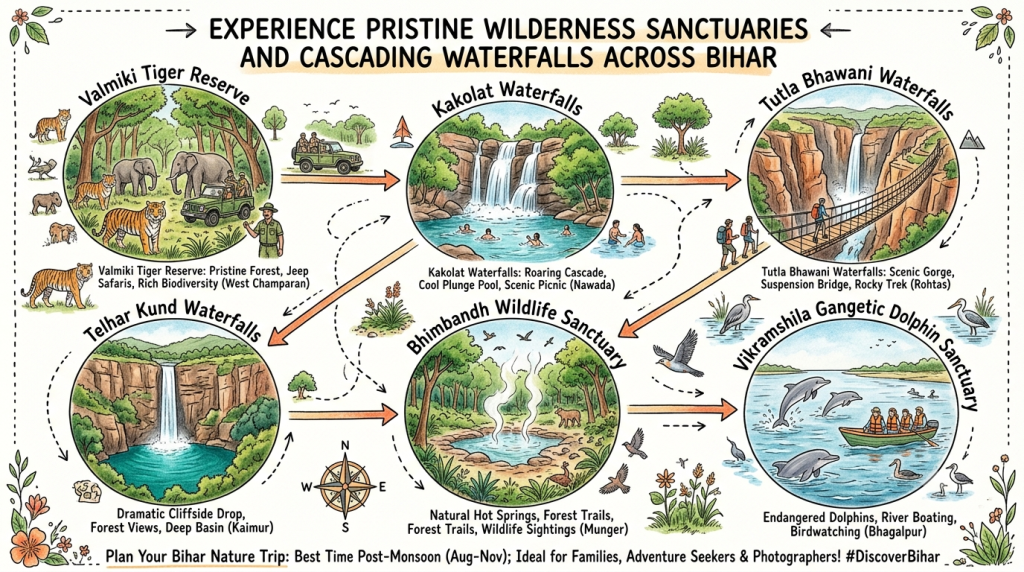
1. Valmiki Tiger Reserve and National Park
Nestled right along the Indo-Nepal border, Valmiki Tiger Reserve represents Bihar’s ultimate wilderness jewel. Spread across dense moist deciduous Sal forests and riverine grasslands carved by the Gandak River, this national park offers an uncrowded safari experience compared to India’s commercial tiger parks. The forest canopy remains dense, harboring royal Bengal tigers, Indian leopards, sloth bears, wild bison, and over 250 species of resident and migratory birds.
The landscape transitions dynamically from river valleys to rolling Shiwalik mountain ranges. Driving through the green corridors early in the morning, mist hovers above the Gandak River, creating atmospheric scenes for wildlife photographers and eco-enthusiasts seeking quiet solitude.
- Location: West Champaran district, approximately 290 km northwest of Patna.
- Why it is worth visiting: It is Bihar’s premier tiger reserve, offering pristine forest cover and undisturbed biodiversity.
- Best things to do: Take an early morning jungle jeep safari, enjoy river boating along the Gandak, and embark on guided canopy nature walks.
- Best time to visit: November to March for comfortable safari weather and pleasant mornings.
- Ideal for whom: Wildlife enthusiasts, eco-tourists, wildlife photographers, and adventure families.
- Travel tip: Book state forest department eco-huts at Valmikinagar well in advance, as forest permits are limited daily.
2. Kakolat Waterfalls
Plunging from a staggering height of nearly 160 feet into a deep, cool natural reservoir, Kakolat Waterfall is one of Eastern India’s most famous natural waterfalls. Tucked against the forested hills of Nawada district, local legends trace its refreshing waters back to ancient mythologies. The waterfall maintains a roaring flow, creating a misty spray that cools the entire valley even during warm months.
The surrounding hillscape is cloaked in lush green foliage, making the approach trek scenic and invigorating. Recent infrastructure upgrades have added clean pathways, stepped access points, and dedicated viewing decks, ensuring visitors can safely admire the cascading water.
- Location: Govindpur block, Nawada district, roughly 140 km southeast of Patna.
- Why it is worth visiting: A iconic 160-foot cascading waterfall forming a crystal-clear natural plunge pool.
- Best things to do: Swim in the designated natural pool areas, photograph the cascading mist, and enjoy a family picnic along the rocky banks.
- Best time to visit: October to February for pleasant weather, or August to October right after monsoons for peak water volume.
- Ideal for whom: Families, friend groups, weekend road-trippers, and outdoor photography enthusiasts.
- Travel tip: Wear sturdy non-slip footwear as the rocks near the splash zone remain wet and slippery year-round.
3. Tutla Bhawani Waterfalls
Hidden within a dramatic rocky canyon where two mountain ranges converge, Tutla Bhawani Waterfall offers a picturesque natural retreat. Located near Sasaram, the waterfall cascades down from a cliff height of nearly 200 meters into the Kachuar River valley. A newly constructed suspension bridge stretches across the green gorge, giving visitors panoramic views of the water rushing beneath their feet.
The site seamlessly blends natural beauty with local heritage, as a revered historical shrine sits nestled right against the cliff wall near the fall’s base. Monsoonal rains transform this valley into an emerald canyon with vibrant greenery covering the red sandstone cliffs.
- Location: Rohtas district, approximately 30 km from Sasaram and 160 km from Patna.
- Why it is worth visiting: A canyon waterfall complete with a suspension bridge spanning a green river gorge.
- Best things to do: Walk across the suspension bridge, trek along the Kachuar River bed, and photograph the canyon views.
- Best time to visit: July to November when monsoon rains revitalize the cascading falls and valley greenery.
- Ideal for whom: Adventure lovers, trekkers, photographers, and culture-seeking weekend travelers.
- Travel tip: Start your journey early in the morning from Sasaram to avoid afternoon crowd surges near the bridge walk.
4. Telhar Kund Waterfalls
Located deep within the forested tablelands of the Kaimur range, Telhar Kund is arguably Bihar’s most dramatic cliffside waterfall. Water rushes off a plateau edge and drops down a sheer vertical rock face into a deep, turquoise plunge pool framed by towering sandstone cliffs. The raw depth of the canyon makes for breathtaking viewing from the upper plateau decks.
Unlike commercialized waterfalls, Telhar Kund retains a wilderness feel. The forest air is fresh, populated by vocal bird species, while the surrounding tablelands offer sweeping views of the Kaimur Wildlife Sanctuary forest cover.
- Location: Kaimur district, approximately 32 km from Bhabua and 180 km from Patna.
- Why it is worth visiting: A vertical waterfall plunging off cliff edges into a forest pool.
- Best things to do: Capture panoramic canyon photography, enjoy cliffside viewpoints, and spot forest birds.
- Best time to visit: August to December when post-monsoon water volumes remain at peak beauty.
- Ideal for whom: Nature lovers, solitude seekers, landscape photographers, and road-trip enthusiasts.
- Travel tip: Swimming in the plunge pool is strictly restricted due to underwater currents; enjoy the views safely from designated railings.
5. Bhimbandh Wildlife Sanctuary
Spanning over 680 square kilometers across the Kharagpur hills, Bhimbandh Wildlife Sanctuary is famous for its dense forest cover and natural geothermal hot springs. Legend links the region to the Mahabharata era, but today it serves as an ecological sanctuary housing sloth bears, leopards, wild boars, and chital deer.
The primary natural highlight is the network of geothermal springs where mineral-rich water emerges warm year-round. Surrounded by rolling hillocks and sal forests, a winter bath in these hot springs offers a rejuvenating experience in nature.
- Location: Munger district, approximately 56 km from Munger city and 175 km from Patna.
- Why it is worth visiting: Natural thermal hot springs nestled inside a wildlife forest sanctuary.
- Best things to do: Bathe in natural geothermal springs, hike along forest trails, and observe woodland bird species.
- Best time to visit: October to March when chilly winter air makes the hot spring dip invigorating.
- Ideal for whom: Wellness travelers, nature trekkers, history lovers, and family day-trippers.
- Travel tip: Carry your own towel and spare clothing change, as changing facilities near forest springs are rudimentary.
6. Vikramshila Gangetic Dolphin Sanctuary
Extending across a 50-kilometer protected stretch of the Ganges River from Sultanganj to Kahalgaon, this sanctuary is India’s premier conservation reserve for the endangered Gangetic River Dolphin. Known locally as Soons, these blind freshwater mammals navigate the deep river currents using echolocation.
Boating along the wide river waters early in the morning allows visitors to spot dolphins surfacing for air alongside smooth-coated otters, freshwater turtles, and migratory waterfowl. The peaceful river setting offers a distinct contrast to forest safaris.
- Location: Bhagalpur district, stretching along the Ganges River, 230 km east of Patna.
- Why it is worth visiting: India’s exclusive riverine sanctuary created for freshwater Gangetic dolphin conservation.
- Best things to do: Take a morning boat cruise from Kahalgaon or Barari Ghat, spot surfacing dolphins, and visit nearby river islands.
- Best time to visit: October to June when river currents are calm and boat operations run smoothly.
- Ideal for whom: Marine life lovers, birdwatchers, serene boaters, and conservation-minded travelers.
- Travel tip: Hire registered local eco-tour boats from official ghats and ensure life jackets are worn before embarking.
Offbeat Exploration: Hidden Gems Tourists Miss
Karkat Waterfall and Crocodile Conservation Reserve
Located near the Kaimur hill range along the Karmanasa River, Karkat Waterfall is a wide, multi-tiered cascade surrounded by basalt formations. Historically praised by Mughal and British travelers for its scenic beauty, the site now serves as an eco-tourism park and natural crocodile conservation habitat. Watching wild freshwater crocodiles bask on river sandbars from safe elevated decks makes for a unique adventure.
Dhua Kund and Manjhar Kund Waterfalls
Situated on the plateau above Sasaram city, these twin waterfalls generate massive hydraulic energy and mist clouds during the monsoon. Every year after the rainy season, local communities gather here for traditional fairs. The rocky river bed leading to Dhua Kund offers natural wading pools and scenic picnic ledges framed by open wilderness.
Detailed Practical Guidance for Travelers
| Destination | Standard Entry Fee | General Timings | Best Local Food Options Nearby | Recommended Nearby Attractions |
| Valmiki National Park | ₹100 entry; Safari charges extra | 06:00 AM – 05:00 PM | Fish curry, Dehat-style mutton, Litti-Chokha | Triveni Ghat, Someshwar Fort |
| Kakolat Waterfalls | ₹20 – ₹50 per person | 08:00 AM – 05:00 PM | Local Sattu Paratha, Tilkut from Nawada | Rajgir Hills, Pawapuri Water Temple |
| Tutla Bhawani Waterfalls | ₹30 per person | 07:00 AM – 05:00 PM | Sasaram Litti-Chokha, Chana Ghugni | Sher Shah Suri Tomb, Rohtasgarh Fort |
| Telhar Kund Waterfalls | Free entry (Park fee ₹20) | 08:00 AM – 04:30 PM | Bhabua Dhabas, Puri Sabzi, Malpua | Mundeshwari Temple, Karkat Waterfall |
| Bhimbandh Sanctuary | ₹30 per person | 06:00 AM – 05:00 PM | Munger Dehati Chicken, Sattu Drinks | Rishi Kund, Munger Fort |
| Vikramshila Dolphin Reserve | Free river view; Boat charges extra | 07:00 AM – 05:00 PM | Bhagalpur Katarni Rice Thali, Khaja | Vikramshila University Ruins, Bateshwarsthan |
Logistics & On-Ground Navigation
Local Transport Options
- Railways: Express trains directly connect Patna Junction, Gaya Junction, Sasaram, and Bhagalpur to major Indian cities.
- Car Rentals & Taxis: Private cabs booked from Patna or district hubs provide the most reliable way to reach interior forest zones and waterfall trails.
- Auto-Rickshaws & E-Rickshaws: Ideal for short last-mile commutes from town rail stations to nearby entry points.
Budget Planning
- Backpacker Tier (₹1,200 – ₹2,000 / day): Clean local homestays or budget lodges, public bus transport, and local dhaba meals.
- Comfort Tier (₹3,500 – ₹6,000 / day): Mid-range hotels or forest eco-resorts, private vehicle hire with driver, and dining at established regional restaurants.
Safety and Inclusivity Tips
- Family Safety: Stick to official forest paths and avoid letting children climb slippery wet rocks near waterfall edges.
- Couples & Solo Travelers: Complete outdoor excursions before dusk; forest sanctuary gates close strictly around 5:00 PM.
- General Comfort: Carry sufficient drinking water, eco-friendly trash bags, and personal medicines when heading into deep plateau locations.
Strategic Travel Planning Guardrails
Travel Planning Tips for Bihar
- Monsoon Timing: Visit waterfall locations right after monsoons (August to November) to witness full water cascades.
- Payment Preferences: Keep adequate cash handy; while digital UPI works in towns, forest interior zones often lack cellular network coverage.
- Local Etiquette: Respect local customs near shrines integrated into natural sites, such as Tutla Bhawani.
- Physical Prep: Expect moderate walking and short stair climbs at most canyon waterfall viewpoints.
- Eco Responsibility: Avoid plastic littering in sanctuaries; carry all personal waste back to hotel disposal bins.
Common Mistakes to Avoid
- Over-packing Itineraries: Don’t attempt to cover Valmiki in the north and Kaimur in the south during a single 2-day trip.
- Ignoring Sunlight Windows: Entering deep forest waterfalls past 3:30 PM reduces daylight inside narrow canyons.
- Assuming Taxi Availability: Relying on street taxis inside remote wildlife sanctuaries without pre-arranging round-trip transport.
- Skipping Regional Cuisine: Missing out on local village dhabas serving fresh Litti-Chokha and seasonal delicacies.
- Ignoring Safety Signage: Bathing in marked restricted deep-water plunge zones.
Suggested Itinerary Blueprints
1-Day Quick Dash (Sasaram Waterfall Circuit)
- Target Audience: Short weekenders seeking maximum nature exposure in 24 hours.
- Morning: Arrive at Sasaram station; drive directly to Tutla Bhawani Waterfall for canyon views and suspension bridge walk.
- Afternoon: Head to Dhua Kund for a riverside lunch picnic.
- Evening: Visit Sher Shah Suri Tomb in Sasaram before evening departure.
2-Day Deep-Dive (Kaimur Plateau Wilderness Exploration)
- Day 1: Start from Bhabua; explore Telhar Kund Waterfall and enjoy cliff views. Proceed to Karkat Waterfall and Crocodile Park. Overnight stay in Bhabua or Sasaram.
- Day 2: Visit Mundeshwari Temple hill for sunrise. Drive to Tutla Bhawani canyon for trek and return by evening.
Complete Weekend Travel Plan (North Bihar Valmiki Jungle Escape)
- Friday: Drive or take train to Valmikinagar; check into eco-forest huts. Relax along Gandak river banks.
- Saturday: Early morning jungle jeep safari into core Valmiki Tiger Reserve. Afternoon river boat ride and canopy walk.
- Sunday: Visit Triveni Sangam point near Nepal border; buy local organic honey and start return journey home.
Common Tourist Mistakes to Avoid
- Geographic Blunders: Trying to combine geographically opposed zones like Valmiki National Park (North) and Kaimur Wildlife Sanctuary (South) on the exact same day leads to exhaustion and wasted travel time.
- Commercial Traps: Spending excessive vacation hours inside modernized city malls in Patna instead of heading out early to authentic, atmospheric natural trails.
- Neglecting Modern/Alternative Zones: Forgetting to explore peaceful eco-parks, riverside promenades, and quiet café setups in developing regional hubs.
- Transport Overpayment: Always cross-reference private taxi rates with standard per-kilometer distance benchmarks or ride-hailing applications before confirming private drivers.
- Luxury Dining Bias: Sticking exclusively to generic hotel buffets deprives you of tasting authentic, freshly cooked Litti-Chokha and Sattu preparations from clean roadside vendors.
Frequently Asked Questions
1. Is Bihar safe for solo travelers and families planning short nature trips?
Yes, nature destinations across Bihar are safe and welcoming for both families and solo travelers. Forest departments and local tourism police maintain a steady presence across popular sites like Valmiki Reserve and Kakolat. To ensure a hassle-free trip, complete your outdoor excursions before sunset and use registered transport options.
2. What is the absolute best season to witness waterfalls in Bihar at full volume?
The post-monsoon window from August to November is the ideal time to visit Bihar’s waterfalls. Rainwater fills the plateau rivers during these months, turning sites like Telhar Kund and Tutla Bhawani into spectacular, roaring cascades surrounded by lush greenery.
3. How do I book safari permits for Valmiki Tiger Reserve?
Safari permits and eco-cottage stays at Valmiki Tiger Reserve can be booked through the official Bihar Forest Department online tourism portal or at the forestry booking office in Valmikinagar. Booking 2 to 3 weeks in advance is recommended during peak winter weekends.
4. Can visitors swim safely in Kakolat Waterfall?
Yes, designated shallow pool zones near Kakolat Waterfall allow visitors to safely swim and splash around. However, always follow safety instructions from local security staff and avoid jumping into deeper, slippery rock crevices.
5. Are there good accommodation options near Kaimur Wildlife Sanctuary?
Comfortable hotels and government guest houses are available in nearby cities like Sasaram and Bhabua. These hubs serve as ideal bases for day trips into Telhar Kund and Karkat Waterfall.
6. Is public transport readily available to reach remote natural spots in Bihar?
While public buses and local auto-rickshaws connect major towns, hiring a private vehicle or booking a cab from hubs like Patna or Gaya is recommended for direct access to interior nature sanctuaries.
7. What local dishes should travelers try during road trips across Bihar?
Make sure to try traditional Litti-Chokha served with desi ghee, refreshing Sattu Sharbat, Chana Ghugni, and regional sweets like Khaja from Rajgir or Tilkut from Gaya.
8. Are digital payments widely accepted in forest and nature areas?
Digital UPI payments work smoothly across major towns and highway restaurants. However, carrying cash is essential when visiting interior forest locations like Bhimbandh or Telhar Kund, where cellular network signals can be spotty.
9. Are these nature destinations suitable for senior citizens?
Most major natural spots feature accessible viewing decks requiring minimal walking. Locations like Tutla Bhawani involve short, easy trails, though uneven rock steps near deep gorges should be navigated carefully.
10. Do I need special permits to visit Vikramshila Dolphin Sanctuary?
No special permits are required to view the Gangetic Dolphin Sanctuary. You can hire authorized motorboats directly from official river ghats in Kahalgaon or Bhagalpur.
11. What clothes should I pack for a nature trip in Bihar?
Pack light cotton clothing, comfortable walking shoes, sunglasses, and hats for summer trips. For winter visits (November to February), warm layers are recommended for early morning safaris and evening strolls.
12. How many days are sufficient for a short nature vacation in Bihar?
A 2 to 3-day itinerary is perfect for exploring a single regional nature circuit, such as the Kaimur waterfalls or Valmiki National Park, without feeling rushed.
Conclusion
Choosing a nature escape across Bihar offers more than just a break from routine; it reclaims the pure, unhurried joy of raw exploration. As you stand before roaring canyon waterfalls, walk across suspended green river gorges, or watch wild Gangetic dolphins surface on misty morning waters, you discover a side of India that remains beautifully untouched and deeply authentic. Swap overcrowded tourist hubs for these serene green sanctuaries, and let Bihar’s wild heart surprise you.
