Introduction
Modern enterprise networks generate millions of rapid signals every hour. Artificial Intelligence for IT Operations empowers technology personnel by diagnosing complex infrastructure behaviors automatically. Connected applications stream health records and telemetry every second of the business day. Human operators cannot review this massive wave of information during severe outages. Analytical software agents step forward to discover critical operational bottlenecks early. Resources at TheAIOps.com showcase practical learning paths for mastering these automated workflows. In this handbook, you will explore the fundamentals of smart IT utilities and error remediation.
What Is AIOps?
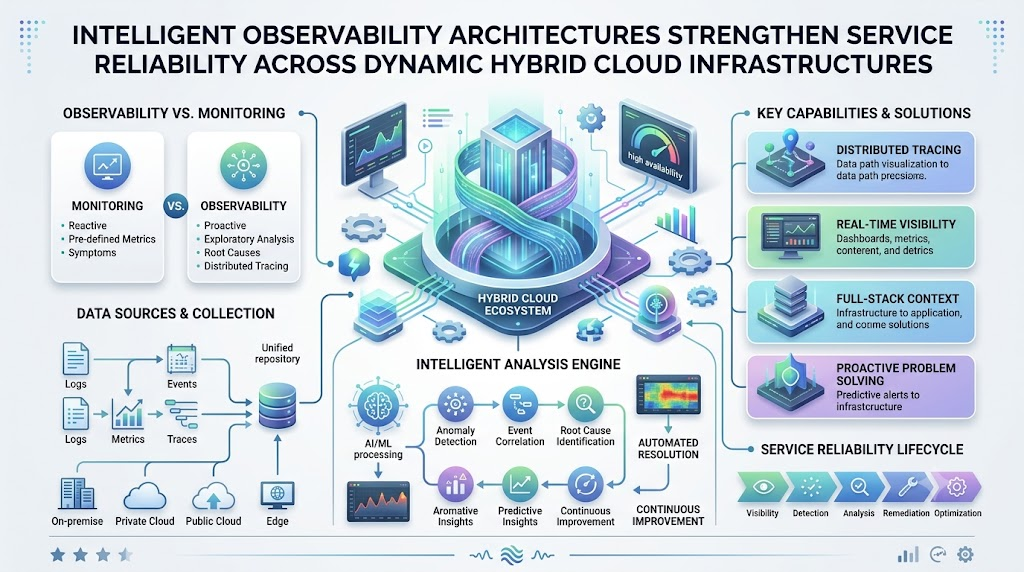
AIOps uses machine intelligence to assist engineering personnel with complicated computing tasks. Artificial intelligence allows software to analyze incidents like an experienced engineer. Machine learning gives software models the ability to identify historical patterns in previous server failures. Technology groups use monitoring frameworks to observe physical servers, network switches, and custom applications continuously. Systems generate metrics, which show numerical values like processor load or memory consumption. Applications also record logs, which serve as detailed diaries of every internal event. Whenever a notable event happens, the system files a fresh timestamped entry. Next, the tool performs alert analysis to parse mountains of flashing warning messages. It clusters matching notices together so engineers see only genuine incidents. Then, root-cause analysis identifies the first hardware or software component that failed. Finally, automation runs predefined remediation scripts to correct routine problems without manual human input.
Why Do IT Teams Need AIOps?
Corporate environments operate vast networks across dozens of public cloud providers. These expansive setups produce excessive alert volumes during every single shift. On-call staff develop alert fatigue because warning sirens ring constantly. Technicians waste critical hours reviewing repeated incidents that provide no new diagnostic insight. Slow manual investigations extend customer outages and damage business reputations. A microscopic configuration typo can hide inside gigabytes of text files. Smart algorithmic utilities scan these massive diagnostic pipelines in fractions of a second. They catch odd performance dips early and guide personnel straight to the core failure. Even so, smart programs do not magically fix every broken server on earth. Human engineers still design core system architecture and authorize major changes. The software simply clears away the noisy clutter so technicians can make clear decisions.
AIOps Tasks and Benefits
| AIOps Task | Simple Meaning | Possible Benefit |
| Log Reading | Inspecting computer diary entries | Uncovers software flaws faster |
| Noise Reduction | Silencing duplicate warning sirens | Keeps workers calm and productive |
| Anomaly Catching | Spotting unusual data spikes | Flags problems before outages begin |
| Event Linking | Connecting related alerts together | Highlights the primary failure |
| Root Cause Search | Finding the first broken part | Eliminates blind manual guesswork |
| Self-Healing | Running safe automated fixes | Resolves minor software bugs instantly |
What Does TheAIOps.com Offer?
TheAIOps.com delivers educational materials about Artificial Intelligence for IT Operations for learners worldwide. Individuals can join structured AIOps Training to build practical skills with big data pipelines. The website features a comprehensive AIOps Course covering infrastructure architecture and modern incident resolution. When you want to confirm your professional expertise, you can prepare for an AIOps Certification. Enterprise teams can evaluate each leading AIOps Platform to select the right software package. The portal also provides practical insights into AIOps Consulting and specialized AIOps Services. These services assist organizations with system readiness assessments and safe automation deployments. Every aspiring AIOps Engineer can use these open resources to advance their career.
AIOps Training and AIOps Course
A practical AIOps Course instructs students in managing production telemetry step by step. First, attendees review core concepts to understand how smart algorithms supervise business networks. Next, courses cover data collection, showing learners how to aggregate metrics, traces, and diary records. Participants then explore alert management to turn chaotic notification storms into useful incident tickets. Anomaly detection exercises train you to catch strange surges in server processor consumption. Students also practice root-cause analysis to trace a sudden crash back to a buggy code update. Finally, learners create automation routines to reboot unresponsive microservices safely. Practical laboratory practice delivers the greatest benefit because live production environments break unpredictably. Reading manuals provides general theory, but repairing broken lab systems develops lasting confidence.
AIOps Learning Areas
| Learning Area | What Learners Should Practice |
| Data Ingestion | Pulling logs and telemetry numbers into a single repository |
| Noise Filtering | Condensing repeated alarms into a single actionable ticket |
| Pattern Matching | Identifying past outages that look like live system issues |
| Smart Alerting | Sending notifications only when key business workflows degrade |
| Root Analysis | Tracing application trees to find the earliest point of failure |
| Auto-Fix Rules | Writing safe scripts that restart crashed background services |
| Model Tracking | Auditing machine learning behavior so outputs stay accurate |
| Team Dashboards | Creating clean visual graphs that display overall infrastructure health |
AIOps Certification and AIOps Engineer Skills
An AIOps Certification demonstrates your mastery of telemetry pipelines, predictive rules, and automated remediation. It indicates to hiring teams that you take modern system operations seriously. Nevertheless, passing a multiple-choice exam will not transform you into a senior engineer overnight. Every capable AIOps Engineer needs solid monitoring abilities and sharp troubleshooting instincts. You must interpret diagnostic charts rapidly and trace unexpected latency spikes. Furthermore, scripting skills help you build reliable automation routines for routine maintenance tasks. You also need basic statistical knowledge to see how machine learning models detect anomalies. Clear verbal communication matters equally because you must explain technical incidents to colleagues. Constructing real sandbox projects prepares you far better than memorizing test answers.
AIOps Tools and AIOps Platform
An enterprise AIOps Platform centralizes disparate monitoring streams inside one operational dashboard. It gathers monitoring tools that track physical hardware and observability tools that trace application pathways. It also connects log tools that store system notes and incident tools that notify on-call engineers. Predictive analytics engines then process this unified dataset across shared operational timelines. However, technology leaders must assess their options carefully before buying expensive commercial licenses. First, identify your most urgent operational bottlenecks and business goals clearly. Verify whether the software integrates cleanly with your current public cloud providers. In addition, review total subscription costs, compliance rules, and your staff’s current technical knowledge. A good tool must scale seamlessly as your company launches more services and acquires more users.
AIOps Implementation: How Does It Work?
Teams should start an AIOps Implementation by targeting a single troublesome service. Never attempt to modernize your entire infrastructure environment on the first day. First, gather clean telemetry from the service that creates the highest volume of incident calls. Feed those records into your analytics platform so the model can observe operational baselines. Next, configure strict filtering rules to silence harmless warning messages. Enable anomaly detection algorithms so the platform learns standard seasonal traffic patterns over time. Then, monitor how the tool correlates matching alerts during busy business hours. After confirming the system’s analytical accuracy, activate simple automated workflows like clearing temporary file caches. Always maintain human approval checkpoints for sensitive tasks like database schema migrations. Evaluate your operational improvements monthly, refine alert definitions, and expand the platform to other teams slowly.
AIOps Consulting and AIOps Services
Organizations often rely on AIOps Consulting to speed up their operational maturity programs. Professional AIOps Services help companies audit existing infrastructure, software dependencies, and internal team workflows. These consultants suggest suitable tools and build a clear implementation roadmap. They also help technicians link disparate cloud resources and write custom event correlation logic. Furthermore, external mentors train in-house engineers to interpret predictive machine learning charts accurately. Even so, leadership must establish tangible business objectives before hiring outside agencies. Determine whether you want fewer nighttime wake-up alerts, faster mean time to repair, or smaller hosting bills. Concrete objectives guarantee that your business achieves tangible returns on consulting investments.
Real-Life Scenarios / Experiences
- An online retail portal experienced severe checkout latency during a holiday sales promotion. The analytical platform grouped five hundred alerts into one urgent notification. It revealed that an identity verification server had exhausted its connection pool. The operations team repaired that specific container in two minutes.
- A regional bank faced annoying false alarms during weekly database maintenance every Sunday evening. The smart software learned this recurring maintenance window over a three-week period. It muted those safe, predictable load spikes so on-call engineers could rest peacefully.
- A streaming entertainment provider released a software update that broke background transcoding services. The automated monitoring system detected the immediate drop in active streaming sessions. It rolled back the release package safely before subscribers started filing support complaints.
How TheAIOps.com Can Help
TheAIOps.com curates educational resources for technology professionals and enterprise IT leaders. The website breaks down advanced machine learning topics into straightforward learning modules. Readers can compare leading commercial tools without encountering aggressive sales promotions. Beginners can study structured career guidance and core operational best practices. Furthermore, companies can discover impartial advice on service planning and tool implementations. This open learning repository equips you with practical knowledge for lasting career success.
A Practical Implementation Approach
Direct your first project phase toward a single fragile application that repeatedly disrupts on-call personnel. Extract clean performance metrics and diagnostic traces from that targeted system. Route those streams directly into your operational analytics pipeline. Next, create baseline filtering rules that suppress temporary network blinks and redundant notices. Let the statistical engine observe baseline performance patterns for several weeks. Verify suspicious notifications against actual system behavior to ensure the tool behaves reliably. Afterward, create basic automated scripts to handle low-risk maintenance chores. Require an engineer to authorize sensitive adjustments that touch customer databases. Track recovery timeframes closely to verify whether operational numbers improve over time. Once the team builds deep confidence in the tooling, onboard additional services gradually.
Common Mistakes to Avoid
- Automating sensitive infrastructure tasks without maintaining human approval controls.
- Feeding incomplete, corrupted, or noisy log feeds into the algorithmic platform.
- Expanding the software across the entire enterprise before achieving one clear victory.
- Purchasing an expensive enterprise tool without identifying clear operational needs first.
- Neglecting internal team development by skipping essential technical training courses.
- Expecting machine learning software to fix poorly designed, buggy application code.
- Leaving default alert thresholds active, which floods inboxes with pointless notification clutter.
- Failing to update statistical models when developers launch major software modifications.
Frequently Asked Questions
1. What does AIOps mean in simple terms?
Clever software inspects operating networks to keep digital business environments healthy. The tool collects telemetry from applications, bare servers, and cloud resources continuously. It suppresses harmless warning noise and flags genuine software defects. Then, the tool guides engineers toward the exact equipment that needs attention.
2. Can AIOps replace human IT workers?
Real engineers keep their jobs because smart software merely assists their daily work. The program handles repetitive tasks like filtering duplicate warning messages. Humans continue making vital architectural decisions, fixing complicated software logic, and securing sensitive data. The analytical tool acts like an attentive assistant.
3. How does machine learning help IT teams?
Historical operational records instruct algorithms to recognize normal baseline behavior. When server statistics jump or fall unexpectedly, the model detects the variation instantly. It flags these deviations as anomalies before regular computer users suffer sluggish response times.
4. What is the difference between monitoring and AIOps?
Traditional monitoring tools merely ring an alarm whenever a server threshold breaks. That older approach often unleashes hundreds of conflicting sirens for a single root failure. Intelligent operations platforms ingest all those alerts together. They correlate related signals and expose the true underlying snag.
5. Do small companies need smart operations tools?
Early-stage startups running a couple of simple servers do not require complex operational software. Basic open-source monitors handle simple workloads adequately. However, when an enterprise scales into hundreds of interconnected cloud instances, algorithmic platforms become necessary to manage the heavy data deluge.
6. What skills does an AIOps Engineer need most?
Candidates need solid foundations in operating systems and cloud monitoring concepts. You must know how to inspect system diaries and follow network traces. Basic scripting abilities allow you to code dependable recovery automations. Strong communication skills also help you explain complex defects to colleagues.
7. Why do implementations sometimes fail?
Overly ambitious teams frequently fail because they try to connect too many services at once. Other organizations feed incomplete, inaccurate telemetry into their fresh platforms. Incomplete data leads to mistaken algorithmic conclusions. Teams must start modestly, cleanse incoming data, and train staff thoroughly.
8. What is alert noise in computer systems?
Failing infrastructure often fires thousands of repetitive warning messages into engineer inboxes. Most of these frantic alarms stem from one shared hardware glitch. Staff members grow exhausted and miss genuine emergencies. Smart platforms suppress duplicate notices so staff can focus on critical work.
9. How does root-cause analysis work?
The software follows data dependencies across servers, applications, and networks during an incident. It identifies which digital asset malfunctioned first along the timeline. Instead of investigating dozens of machines, specialists inspect the primary culprit immediately. This focused tracing saves hours of investigation.
10. Is an expensive platform always required?
Enterprises do not always need to purchase costly software packages immediately. Many engineering groups connect accessible tools to analyze system logs effectively. You should consider a commercial suite only when your infrastructure expands beyond basic capabilities and demands advanced event correlation.
11. How does automation help IT operations?
Pre-built code routines execute vital recovery steps without requiring a person to type commands manually. For instance, scripts can reboot a crashed service in two seconds. They can also delete bloated cache folders automatically. This immediate response preserves uptime during peak holiday shopping traffic.
12. Where can beginners learn about smart operations?
Aspiring specialists can read open technical guides, review product documentation, and construct test home labs. Portals like TheAIOps.com provide helpful learning paths, software overviews, and certification advice. Working with test logs and monitoring setups builds dependable skills for modern engineering careers.
Conclusion
Distributed cloud architectures grow larger and more intricate with every software release. Modern tech workers need dependable tools to filter warning sirens and catch critical service disruptions early. Mastering data ingestion, root-cause diagnostics, and safe automation helps you maintain resilient digital platforms. Never attempt to automate your entire application stack at once. Begin with a single problematic service, verify your system telemetry, and test recovery scripts carefully. Platforms like TheAIOps.com offer valuable educational materials for your learning path. With consistent effort, clean data practices, and hands-on experimentation, any dedicated engineer can thrive in modern IT operations.
