Introduction
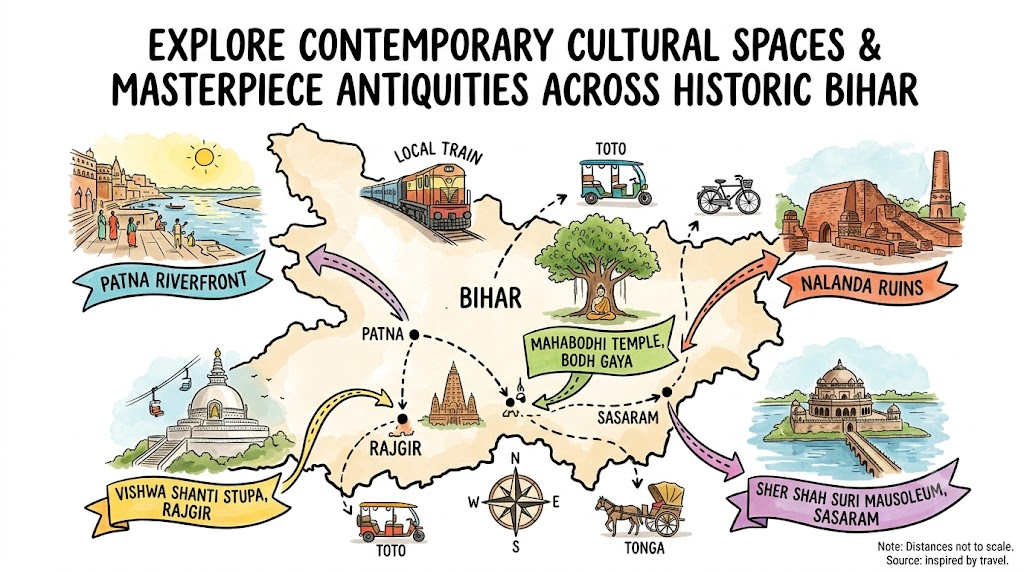
While conventional travel platforms channel tourists into overhyped, manicured destinations with identical tourist traps, Bihar offers an unfiltered encounter with India’s most authentic historical core. Here, travel is not a superficial tour; it is a ground-level exploration where modern commuter routes run parallel to ancient pilgrim paths tread by thinkers, kings, and monks for millennia.
Riding a local train through the fertile Gangetic plains or negotiating a shared electric rickshaw through busy bazaar lanes connects you directly with the region’s rhythm. Mastering local transport in Bihar unlocks an unvarnished travel experience, allowing independent travelers to bypass inflated agency packages and navigate ancient heritage with confidence.
Why Bihar is a must-visit city
Bihar is the civilizational cradle of northern India, anchored by the ancient Mauryan and Gupta empires and the founding histories of Buddhism and Jainism. Beyond its dense spiritual and archaeological legacy, the state has undergone an extensive infrastructure overhaul. High-speed four-lane national highways, rapid suburban electrification, Vande Bharat train corridors, and modern transit junctions link its capital, Patna, to prominent regional heritage belts.
The transit circuit effortlessly ties together riverside river walks, quiet forested valleys, and monumental monastic ruins. Travelers can easily combine long-distance intercity rail connections with affordable on-ground mobility, including battery-powered e-rickshaws, city buses, and shared taxis.
| Key Travel Fact | Transit Details |
|---|---|
| Major Air Hubs | Jay Prakash Narayan International Airport (Patna), Gaya Airport |
| Primary Rail Junctions | Patna Junction, Gaya Junction, Rajgir, Danapur |
| Intra-State Highways | NH 22, NH 31, NH 19 (Grand Trunk Corridor) |
| Urban Transit Types | E-Rickshaws (Totos), CNG Autos, App-Cabs (Ola/Uber in Patna) |
| Peak Transit Season | October to March (Temperate weather, minimal road delays) |
Ancient brick ruins of Nalanda.
Best Places or Experiences
1. Patna Urban Riverfront and Heritage Core
Patna, the ancient imperial capital of Pataliputra, is home to a dynamic public transit matrix that spans modern express corridors and old city lanes. Along the northern rim runs the Loknayak Ganga Path—popularly dubbed the Patna Marine Drive—which connects the modern core to historic ghats like Kali Ghat and Gandhi Ghat.
Navigating this urban artery reveals both civic progress and traditional river culture. E-rickshaws and shared auto-rickshaws provide an efficient way to cross the city from Patna Junction toward the Bihar Museum and the riverfront, offering an effortless glimpse into modern Bihari civic life.
- Location: Patna District; central capital belt, 2 to 5 km from Patna Junction.
- Why it is worth visiting: Seamless urban transit linking modern design with sacred Gangetic heritage.
- Best things to do: Take an e-rickshaw ride down JP Ganga Path, explore the Bihar Museum’s stone galleries, and catch the evening Ganga Aarti from Gandhi Ghat.
- Best time to visit: 5:30 PM to 8:00 PM for cool river breezes and evening city lighting.
- Ideal for whom: Solo explorers, urban heritage buffs, and street culture documentarians.
- Travel tip: Use app-based cabs for fixed-price trips across central Patna, avoiding off-meter auto quotes during peak rush hours.
2. Vishwa Shanti Stupa, Rajgir
Resting atop Ratnagiri Hill, the brilliant white dome of the Vishwa Shanti Stupa watches over the rugged, green Rajgir Valley. Established as a symbol of universal peace, the monument requires travelers to transition from low-valley roads into elevated transit, choosing between a steep stone staircase and an open single-chair ropeway.
The chairlift ride itself is a central highlight of the journey, lifting visitors quietly over dense forest canopies. Below the hill, shared green e-rickshaws link the stupa base to ancient sites like the Cyclopean Wall and the hot water springs of Brahmakund.
- Location: Rajgir, Nalanda District; 100 km south of Patna.
- Why it is worth visiting: An exhilarating hilltop ropeway transit experience paired with sweeping panoramic views of the hills.
- Best things to do: Glide across the valley on the open chairlift ropeway, photograph the golden Buddha niches of the white stupa, and walk down to Griddhakuta Peak.
- Best time to visit: 8:30 AM to 11:00 AM before ticket queues for the chairlift ropeway lengthen.
- Ideal for whom: Pilgrims, landscape photographers, and adventurous families.
- Travel tip: Secure an early ropeway ticket at the base counter to avoid mid-day waiting times on weekends and holiday periods.
Vishwa Shanti Stupa atop Ratnagiri Hill.
3. Mahabodhi Temple Precinct, Bodh Gaya
Bodh Gaya is globally recognized as the sacred cradle where Prince Siddhartha attained supreme enlightenment beneath the revered Bodhi Tree. The surrounding township operates with a pedestrian-first and electric-mobility layout, restricting noisy combustion engines to safeguard the spiritual atmosphere.
Pilgrims and visitors navigate the town predominantly on foot or via battery-operated e-rickshaws that glide between monasteries representing global Buddhist nations. The transition from Gaya Junction via local highway autos directly into the serene, traffic-calmed core of Bodh Gaya is an unforgettable transit shift.
- Location: Gaya District; 115 km south of Patna, 15 km from Gaya Junction.
- Why it is worth visiting: A masterclass in spiritual peace supported by accessible, low-impact local transit.
- Best things to do: Take an e-rickshaw temple circuit tour, meditate in the outer sanctum under the Bodhi Tree, and explore neighboring Bhutanese and Thai temples.
- Best time to visit: 5:00 AM for early morning chants or 6:00 PM for cool evening prayer gatherings.
- Ideal for whom: Spiritual travelers, historians, and solo backpackers.
- Travel tip: Deposit your smartphone at the official entrance locker before security, as mobile phones are strictly barred from the inner sanctum.
Mahabodhi Temple towering over Bodh Gaya.
4. Archaeological Ruins of Nalanda
Nalanda was the ancient world’s premier residential university, accommodating over 10,000 scholars within its monumental red-brick compounds. Today, the expansive excavated ruins stand amidst neat rural farmland, linked to Rajgir and Bihar Sharif by smooth secondary highways and local passenger trains.
Upon arrival at the complex entrance, navigation shifts strictly to manicured walking trails that wind through ancient classrooms, meditation cells, and towering stupas. Outside the security gates, horse-drawn carts (tongas) and electric three-wheelers wait to ferry passengers toward the nearby Nalanda Archaeological Museum and Kundalpur.
- Location: Nalanda District; 85 km southeast of Patna, 15 km north of Rajgir.
- Why it is worth visiting: Ancient architectural genius experienced on foot across exceptionally preserved monastic corridors.
- Best things to do: Walk along the excavated monastery dormitories, inspect the intricate stone reliefs of Temple 3, and take a local tonga ride to the roadside markets.
- Best time to visit: 9:00 AM to 12:00 PM for bright overhead daylight on the carved brickwork.
- Ideal for whom: Archaeology enthusiasts, students, and architecture photographers.
- Travel tip: Hire an official government-approved guide at the ASI ticket desk to help decode the functional engineering and drain layouts of the ruins.
5. Mausoleum of Sher Shah Suri, Sasaram
Rising dramatically from the center of a wide square artificial lake, this sandstone mausoleum stands as a triumph of Afghan architectural balance. The tomb sits directly on the historic Grand Trunk Road corridor, making it one of the most accessible heritage destinations via National Highway 19 and the Eastern Railway main line.
The approach from Sasaram railway station by cycle-rickshaw drops visitors right before an arched stone causeway that crosses the water. The surrounding causeway serves as a quiet footpath, allowing travelers to circle the entire floating island and admire its proportions from every compass point.
- Location: Sasaram, Rohtas District; 150 km southwest of Patna.
- Why it is worth visiting: An architectural marvel surrounded by water, reachable directly from the historic Grand Trunk transit route.
- Best things to do: Cross the scenic stone causeway, photograph the massive octagonal sandstone dome, and observe the water-gate architecture.
- Best time to visit: 3:30 PM to 5:30 PM to capture warm golden-hour light reflecting across the lake surface.
- Ideal for whom: History buffs, road-trippers, and structural photographers.
- Travel tip: Walk the perimeter terrace slowly to catch the symmetry of the domed pavilions against the open water.
Offbeat Exploration: Hidden Gems Tourists Miss
Ghora Katora Eco-Transit Reserve, Rajgir
Hidden between steep rocky ridges near Rajgir, Ghora Katora is an environmentally protected lake that completely prohibits motorized passenger vehicles. Travelers must reach the water’s edge via a scenic five-kilometer route, utilizing either rented bicycles, government-operated golf carts, or traditional horse carriages (tongas). This vehicle ban keeps the air clean and the water surface mirror-flat, preserving the tranquil atmosphere around the pink-granite Buddha statue rising from the lake center.
Barabar Caves Transit Loop, Jehanabad
The ancient rock-cut Barabar Caves, constructed during the reign of Emperor Ashoka, feature mirror-polished granite interiors carved directly into massive boulders. Reaching this remote ridge requires taking a local passenger train to Bela railway station, followed by an auto-rickshaw through rural hamlets. The final ascent requires a short, rewarding hike up hand-hewn granite stairs, rewarding travelers with dramatic acoustics and unbroken rural vistas.
Rohtasgarh Fort Mountain Approach
Perched on a high limestone plateau overlooking the Son River valley, Rohtasgarh Fort represents one of India’s most expansive defensive strongholds. Accessing this remote citadel involves taking a country bus from Dehri-on-Sone to the base village of Akbarpur, followed by an authentic four-hour uphill trek along rocky mountain paths. The absence of commercial vehicle roads maintains an untouched historical atmosphere across its abandoned palaces and ramparts.
Detailed Practical Guidance for Travelers
| Destination | Standard Entry Fee | General Timings | Best Local Food Options Nearby | Recommended Nearby Attractions |
|---|---|---|---|---|
| Patna Urban Riverfront | Free | Open 24 Hours | Litti Chokha near Gandhi Maidan, Kulhad Chai along Ganga Path | Bihar Museum, Golghar, Patna Planetarium |
| Vishwa Shanti Stupa | Free (Ropeway: ₹100–₹120) | 9:00 AM – 5:00 PM | Fresh sugar-cane juice, roadside Rajgir Khaja | Griddhakuta Peak, Venuvana Bamboo Grove |
| Mahabodhi Temple | Free (Camera Permit: ₹100) | 5:00 AM – 9:00 PM | Tibetan steamed momos, Monks Cafe vegetarian dishes | Great Buddha Statue, Thai Monastery, Sujata Kuti |
| Nalanda Ruins | ₹40 (Domestic), ₹600 (Foreign) | 9:00 AM – 5:00 PM | Traditional Dal-Bhat-Tarkari, local Silao Khaja | Nalanda Archaeological Museum, Hiuen Tsang Memorial |
| Sher Shah Suri Tomb | ₹20–₹25 (Domestic), ₹300 (Foreign) | 10:00 AM – 5:00 PM | Sattu Paratha, warm Chena Murki sweets | Rohtasgarh Fort, Tomb of Hasan Khan Suri |
Logistics & On-Ground Navigation
Local Transport Options
- Intercity Trains: The backbone of travel throughout Bihar, linking Patna, Gaya, Sasaram, and Nalanda with reliable daily express and superfast trains.
- Shared and Private Auto-Rickshaws: Abundant at every railway station and bus stand; shared routes run fixed corridors, while private hiring (reserve) allows custom door-to-door trips.
- Battery E-Rickshaws (Totos): The quietest, most economical choice for short 2 to 5-kilometer rides within towns like Bodh Gaya, Rajgir, and inner Patna.
- Private Car Rentals: Ideal for multi-stop day trips covering rural heritage sites; easily arranged via hotel travel desks or regional rental agencies in Patna.
Budget Planning
- Backpacker / Independent Tier: ₹1,000 to ₹1,600 per day covers clean dormitories or budget guesthouses, travel via shared trains and e-rickshaws, and street-side local dining.
- Mid-Range / Comfort Tier: ₹3,200 to ₹5,500 per day covers comfortable air-conditioned hotels, dedicated car hires for intercity transfers, entry fees, and heritage dining.
Safety and Inclusivity Tips
- For Families: Stick to pre-booked full-day taxis when traveling between distant towns with children to avoid crowded transit interchanges.
- For Couples: Bodh Gaya and Rajgir are welcoming and relaxed; maintain modest dress codes when visiting temples and active monastic complexes.
- General Safety: Confirm agreed fares with auto-rickshaw drivers before departure, and avoid traveling along rural backroads after 10:00 PM.
Strategic Travel Planning Guardrails
Travel Planning Tips for Bihar
- Plan for Winter Travel: Schedule trips between November and February to enjoy cool weather and comfortable midday walks around open archaeological sites.
- Keep Cash on Hand: While digital UPI payments work reliably across urban retail counters, small village rickshaw operators and food stalls rely heavily on cash.
- Utilize Official Rail Portals: Book train tickets between major hubs like Patna and Gaya weeks in advance to secure confirmed reserved seating.
- Pack Modest, Layered Clothing: Bring light jackets for chilly morning transit, and wear modest attire suitable for religious sites.
- Download Offline Navigation Maps: Mobile coverage can drop occasionally in remote forest reserves like Rohtas and Barabar; offline maps prevent navigation hiccups.
Common Mistakes to Avoid
- Overpacking the Itinerary: Attempting to combine Patna, Nalanda, and Sasaram into a single calendar day leads to exhaustion and highway fatigue.
- Ignoring Shared Auto Routes: Hiring private autos for long runs when established shared corridors cost a fraction of the price inflates travel expenses unnecessarily.
- Skipping Regional Cuisine: Eating only generic hotel fare causes visitors to miss local specialties like Litti Chokha, Ghugni, and sweet Khaja.
- Assuming Trains Run on Highway Time: Failing to monitor live rail running statuses can disrupt tight intercity schedules.
- Bypassing Morning Transit Windows: Starting explorations after 10:00 AM wastes the day’s coolest, least crowded travel hours.
Suggested Itinerary Blueprints
1. Day Quick Dash (Patna Urban Transit Circuit)
Designed for business travelers or transit visitors with just 24 hours in the capital city.
- 08:00 AM – 11:30 AM: Morning exploration of the modern galleries and antiquities inside the world-class Bihar Museum using an app-cab.
- 12:00 PM – 01:30 PM: Authentic lunch featuring roasted ghee-dipped Litti Chokha near Fraser Road.
- 02:30 PM – 05:00 PM: E-rickshaw journey through Old Patna, stopping to view the historic grain granary at Golghar.
- 05:30 PM – 07:30 PM: Sunset drive down Loknayak Ganga Path followed by hot kulhad tea beside the riverbank.
2. Day Deep-Dive (Nalanda & Rajgir Heritage Corridor)
An immersive 48-hour journey linking the core heritage centers of south-central Bihar.
- Day 1: Board an early morning express train from Patna Junction to Rajgir. Take an e-rickshaw to Ratnagiri Hill, ride the chairlift ropeway to Vishwa Shanti Stupa, and spend the afternoon hiking to Griddhakuta Peak. Travelsetu.com
- Day 2: Take a 20-minute local bus or shared auto north to Nalanda. Spend three hours walking through the excavated monastic ruins, visit the local museum, sample freshly made Silao Khaja, and return by train to Patna by evening.
3. Complete Weekend Travel Plan (Enlightenment & Grand Trunk Loop)
A Friday-to-Sunday circuit taking in spiritual centers, riverways, and imperial architecture.
- Friday: Arrive in Patna, spend the afternoon exploring the riverfront promenade, and take an evening express train to Gaya Junction.
- Saturday: Check into your Bodh Gaya guesthouse, navigate the town by e-rickshaw, spend the morning at Mahabodhi Temple, and explore international monasteries in the afternoon. Club Mahindra
- Sunday: Take an early morning train from Gaya west along the Grand Trunk rail line to Sasaram. Tour the floating sandstone tomb of Sher Shah Suri, enjoy an afternoon Sattu meal, and catch an evening return train to Patna.
Common Tourist Mistakes to Avoid
Geographic Blunders
Attempting to connect distant points like Valmiki National Park in the northwest and Sasaram in the southwest on the same day is impractical. Group trips logically into Central-South (Patna, Nalanda, Gaya) or Western circuits to maintain smooth travel.
Commercial Traps
Spending valuable downtime inside modern suburban shopping malls deprives you of experiencing authentic regional artisan markets, historic bazaars, and traditional weaving centers.
Neglecting Modern/Alternative Zones
Skipping contemporary urban spaces like Patna’s beautifully landscaped river promenades and open-air cultural arenas in favor of older sights leaves you with an incomplete view of the state’s dynamic present.
Transport Overpayment
Always determine whether an auto-rickshaw operates on a shared per-seat basis or a private charter rate before stepping aboard. Confirming pricing up front avoids uncomfortable negotiations at your destination.
Luxury Dining Bias
Confining your meals to hotel restaurants separates you from the authentic culinary traditions of the state. Freshly prepared, high-turnover street food stands serve the freshest local breakfast dishes and regional sweets at modest prices.
Frequently Asked Questions
1. Is it easy to find electric rickshaws at railway stations across Bihar?
Yes, battery-powered electric rickshaws (locally called totos) are parked outside almost every railway station and bus terminal. They offer inexpensive transit for short distances, typically charging between ₹10 and ₹20 for standard shared local runs, or ₹100 to ₹150 for private direct hire across town.
2. Are app-based cab services like Uber and Ola available everywhere in Bihar?
App-based ride-hailing services operate reliably throughout Patna and parts of Gaya. However, they are generally unavailable in smaller heritage centers like Rajgir, Nalanda, and Sasaram. In these smaller towns, travelers rely on traditional auto-rickshaws, e-rickshaws, and pre-arranged private taxis from hotel desks.
3. What is the most convenient way to travel between Patna and Bodh Gaya?
The fastest and most reliable route is taking a morning express train from Patna Junction to Gaya Junction, which takes roughly two hours. From Gaya Junction, numerous electric rickshaws and autos provide the short 15-kilometer transfer directly into Bodh Gaya along a smooth four-lane road.
4. How do shared auto-rickshaws work for independent travelers in Bihar?
Shared autos run along fixed routes connecting key market squares, transport hubs, and landmark intersections. You simply hail an auto moving in your direction, confirm the destination stop with the driver, hop in with fellow passengers, and pay a fixed nominal coin fare upon stepping out.
5. Is self-driving a car recommended for first-time visitors in Bihar?
Self-driving can be challenging due to dense market traffic, cattle movements, and varied driving customs on rural roads. Renting a private car with an experienced local driver is far more practical, cost-effective, and relaxing, leaving you free to enjoy the scenery.
6. Can I easily visit both Nalanda and Rajgir in a single day using local transit?
Yes, Nalanda and Rajgir are located just 15 kilometers apart along a shared highway. You can base yourself in Rajgir, take a morning shared auto or bus to the Nalanda ruins for a few hours, and return to Rajgir by early afternoon to tour its monuments.
Club Mahindra
7. Are train journeys across Bihar safe for solo travelers and small groups?
Daytime train travel on major express and Vande Bharat trains across Bihar is safe, comfortable, and widely utilized by families and solo visitors alike. For overnight travel, book reserved air-conditioned sleeper coaches (2A or 3A) and keep luggage secured with standard chain locks.
8. What is the standard cost for hiring a private day taxi in Patna or Gaya?
Hiring an air-conditioned compact sedan for a full day (8 hours or 80 kilometers) generally costs between ₹2,000 and ₹2,800. For outstation day trips, such as traveling from Patna to Rajgir and Nalanda and returning the same evening, expect fares between ₹3,500 and ₹4,500.
9. How do travelers reach the remote Barabar Caves using public transit?
Take a local passenger train from Gaya or Patna and disembark at Bela railway station. From Bela, hire a private three-wheeled auto-rickshaw to cover the remaining rural stretch to the base of the hills, arranging for the driver to wait for your return leg.
10. What local transport etiquette should visitors keep in mind when traveling in Bihar?
Always carry small-denomination currency notes for auto and rickshaw drivers, as changing large bills can be difficult. Greet drivers politely, clarify your destination landmark clearly before boarding, and step aside promptly when disembarking along busy bazaar streets.
11. Are passenger boats available for cruising along the Ganges in Patna?
Yes, the Bihar State Tourism Development Corporation operates regulated motorboats and river cruise vessels departing from Gandhi Ghat and NIT Ghat. Additionally, traditional wooden country boats are available for short, scenic morning and evening river rides along the waterfront.
12. How does the open chairlift ropeway at Rajgir operate for visitors?
The Rajgir ropeway consists of continuously moving single-chair lifts that transport visitors up Ratnagiri Hill. Attendants assist you onto the chair at the base station, and the scenic eight-minute ascent carries you safely over the treetop canopy to the Peace Pagoda.
Conclusion
Navigating Bihar via its local transit networks delivers an experience far richer than standard package tours can provide. Trading isolated tour buses for open-air e-rickshaws, historic train rides, and riverside walks connects you directly with the pulse of this storied state. Pack an open mind, step aboard a local train, and let the historical roads of Bihar guide you through an unforgettable travel adventure.
