Introduction
When travelers plan their escape into India’s historical heartlands, their minds often drift toward the heavily commercialized, crowded circuits of Rajasthan or the over-photographed ghats of Varanasi. Yet, tucked away along the sweeping bends of the perennial Ganges River lies a destination that offers something far more visceral: raw, untamed authenticity. Patna City, anchored by the spiritual gravity of Takht Sri Harmandir Ji Patna Sahib, serves as a portal to ancient empires, forgotten battlegrounds, and sacred thresholds where faiths were born and transformed. If you are tired of curated, superficial tourist bubbles and crave a travel chapter packed with deep spiritual roots, epic regional storytelling, and architectural wonders that predate modern memory, the historical circuits radiating from Patna Sahib are calling your name.
Why Patna Sahib is a Must Visit City
The geographic and cultural matrix surrounding Patna Sahib is not merely a collection of tourist spots; it is the foundational cradle of Indian civilization. As the ancient capital of Pataliputra, this region witnessed the rise of the Mauryan and Gupta Empires, the strategic military brilliance of Sher Shah Suri, and the divine footsteps of Guru Gobind Singh Ji, Lord Buddha, and Lord Mahavira. Strategically positioned in eastern India, this zone acts as the perfect anchor for a macro-level travel circuit that effortlessly transitions from sacred Sikh shrines to massive archaeological wonders, colonial-era engineering marvels, and serene riverine landscapes.
Navigating this historic belt has never been easier for modern travelers. The region is tightly bound by an expansive transit network, including the multi-lane JP Ganga Path (commonly called Patna’s Marine Drive), which cuts down travel times drastically while providing beautiful riverside views. Patna Sahib Railway Station links directly to major national lines, while the nearby Jayprakash Narayan International Airport connects air travelers from across India. Whether you are a solo backpacker looking for affordable spiritual stays, a family tracing historical roots, or a culture explorer chasing local architectural styles, the hospitality infrastructure here balances budget-friendly dharamshalas with mid-range hotels and premium heritage experiences.
| Circuit Component | Key Details & Quick Reference Data |
| Primary Spiritual Hub | Takht Sri Harmandir Ji Patna Sahib (Birthplace of Tenth Sikh Guru) |
| Top Travel Directives | Spiritual Pilgrimage, Mauryan Archaeology, Colonial Heritage, Riverfront Trails |
| Key Connectivity Lines | JP Ganga Path, Ashok Rajpath, Patna Sahib Station, NH 31 |
| Culinary Identity | Litti Chokha, Khaja of Silao, Malpua, Chandrakala, Roasted Chana Sattu |
| Ideal Transit Window | October to March (Pleasant weather, festive vibrancy) |
Best Places or Experiences
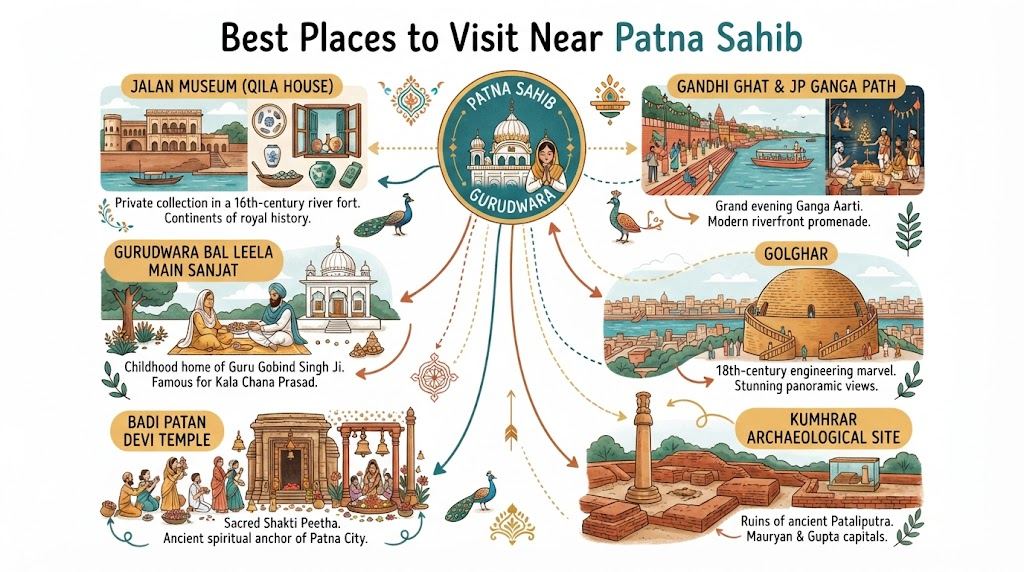
Jalan Museum (Qila House)
Perched directly on the historic banks of the Ganges, just a stone’s throw from Patna Sahib, the Jalan Museum is a spectacular private treasury built upon the foundational ruins of Sher Shah Suri’s 16th-century fort. Known locally as Qila House, this architectural landmark seamlessly blends English and Dutch design elements with traditional Indian motifs, mirroring the eclectic tastes of its founder, Dewan Bahadur Radha Krishna Jalan. The museum remains one of the few surviving private family collections in South Asia, requiring prior permission to enter, which only adds to its mystique as an exclusive time capsule of global history.
Inside its high-ceilinged galleries, visitors are treated to an astonishing array of artifacts that span continents and eras. From porcelain dinnerware belonging to King Louis XIV and Marie Antoinette to a heavy silver dinner service used by Napoleon Bonaparte, the collection is a breathtaking testament to European royal history. This sits side-by-side with priceless Chinese jade carvings, delicate Mughal glassware, and rare stone sculptures from the Mauryan and Gupta periods. The juxtaposition of international royal heirlooms against the backdrop of ancient Pataliputra creates an unforgettable sensory experience for history enthusiasts.
- Location: Patna City district, approximately 2.5 kilometers west of Patna Sahib Gurudwara.
- Why it is worth visiting: It holds an unparalleled private collection of European and Asian royal antiquities situated on top of a 16th-century river fort.
- Best things to do: Marvel at Napoleon’s silver service set, examine the intricate Chinese jade carvings, and enjoy panoramic river views from the historic fort terrace.
- Best time to visit: October to February; ideally between 11:00 AM and 1:00 PM for optimal natural lighting through the vintage galleries.
- Ideal for whom: History buffs, antique collectors, and travelers who appreciate exclusive, off-the-beaten-path experiences.
- Travel tip: Because this is a private residence, you must secure viewing permission at least 48 hours in advance via written or digital request to the family estate management.
Golghar
Rising dramatically like a giant, pillar-less beehive against the urban skyline of the capital, the Golghar is a monument born out of tragedy and colonial ambition. Following the devastating Great Bengal Famine of 1770, which wiped out a third of the regional population, Captain John Garstin of the British East Indian Engineer corps designed this massive, bulbous brick granary in 1786. Its primary goal was to store an emergency reserve of over 137,000 tons of grain for the British army, showcasing an innovative, dome-shaped design that completely avoids internal pillars.
Architecturally, Golghar is a marvel of structural engineering. The walls are a staggering 3.6 meters thick at the base, tapering upwards toward a central opening at the very peak through which grain was intended to be poured. Flanking the external walls are twin, sweeping spiral staircases with 145 steps that wind gracefully around the structure. Laborers were meant to carry heavy grain sacks up one side, dump their cargo through the top hole, and descend down the opposite staircase in a continuous, rhythmic loop. Clambering up these vintage steps rewards travelers with a stunning view of Patna and the Ganges.
- Location: Bankipore region, roughly 9.5 kilometers west of Patna Sahib via the scenic Ashok Rajpath or JP Ganga Path.
- Why it is worth visiting: It is an iconic 18th-century pillar-less dome that serves as a monument to colonial history and engineering.
- Best things to do: Climb the 145 spiral steps, capture panoramic landscape photographs of the Ganges, and enjoy the manicured green lawns that wrap around the base.
- Best time to visit: Late afternoon (4:00 PM to 5:30 PM) to catch the golden hour sunset reflecting off the river below.
- Ideal for whom: Architecture enthusiasts, photographers, and families traveling with energetic children who enjoy a good climb.
- Travel tip: Structural conservation efforts mean climbing to the very top platform is occasionally restricted; always check with the ground staff before buying your entry ticket.
Kumhrar Archaeological Site
To step onto the grassy expanse of Kumhrar is to walk directly into the epic center of ancient India’s golden age. This understated park preserves the precious, excavated ruins of Pataliputra, the glorious capital city of both the Mauryan Empire (322–185 BCE) and the Gupta Empire (320–550 CE). The crown jewel of this archaeological sanctuary is the site of the legendary 80-Pillared Hall, a massive palace structure described by the ancient Greek ambassador Megasthenes as a royal masterpiece surpassing the grand palaces of Susa and Ecbatana in Persia.
Though centuries of flooding by the shifting channels of the nearby rivers have buried much of the wooden platforms, visitors can view a remarkably preserved, polished sandstone pillar that stands as a tribute to Ashokan craft. The site also holds the excavated remains of Arogya Vihar, a sophisticated monastery-cum-hospital run by the celebrated ancient physician Dhanvantari during the 4th century CE. Walking through these silent ruins reveals the deep layers of medical, political, and spiritual history that thrived here when the rest of the world was in its infancy.
- Location: Kankarbagh Road area, approximately 4.5 kilometers southwest of Patna Sahib.
- Why it is worth visiting: It contains the direct archaeological proof of Emperor Ashoka’s imperial capital and ancient India’s earliest medical institutions.
- Best things to do: View the highly polished Mauryan sandstone pillars, explore the foundation bricks of the ancient Arogya Vihar hospital, and visit the on-site museum showcasing terracotta seals.
- Best time to visit: November to March, preferably in the early mornings when the morning mist hangs low over the ancient ruins.
- Ideal for whom: Archaeology purists, scholars, and spiritual travelers seeking to trace the roots of ancient Buddhist councils.
- Travel tip: Keep an eye out for the small on-site museum; it contains delicate terracotta coins, toys, and script fragments that provide incredible context before you walk the open grounds.
Gandhi Ghat & JP Ganga Path
For a taste of Patna’s vibrant contemporary life mixed with deep spiritual traditions, head over to Gandhi Ghat. Named to honor Mahatma Gandhi—whose sacred ashes were immersed in the river from this exact location in 1948—this bustling riverfront area has been wonderfully upgraded by the integration of the JP Ganga Path. This multi-lane expressway features wide, beautiful pedestrian boardwalks that mirror the energetic atmosphere of Mumbai’s Marine Drive, making it a favorite gathering spot for locals and visitors alike.
As evening falls, Gandhi Ghat transforms into a sea of light, music, and spiritual energy. Large crowds gather for the spectacular Ganga Aarti, a ritual where saffron-robed priests swing multi-tiered brass lamps in perfect harmony against the darkening sky, accompanied by chanting and ringing bells. The rhythmic sound of the prayers reflecting off the dark waters creates a moving experience that easily rivals the bigger ceremonies in Varanasi or Rishikesh, but with a deeply local feel.
- Location: Behind the NIT Patna campus, roughly 6.5 kilometers west of Patna Sahib.
- Why it is worth visiting: It offers an incredible view of the grand evening Ganga Aarti alongside the modern riverfront boardwalks of the JP Ganga Path.
- Best things to do: Attend the magnificent weekend evening Ganga Aarti, rent a traditional wooden boat for a sunset river cruise, and try local street food along the promenade.
- Best time to visit: Weekends (Saturday and Sunday) from 5:30 PM to 7:00 PM to experience the full grandeur of the Aarti ceremony.
- Ideal for whom: Spiritual seekers, street food lovers, and couples looking for a breezy evening walk along the river.
- Travel tip: To dodge the heavy evening traffic on Ashok Rajpath, use the JP Ganga Path entry ramps to cruise smoothly straight to the ghat parking zone.
Badi Patan Devi Temple
Deeply rooted in the ancient spiritual lore of the region, the Badi Patan Devi Temple is considered by many to be the ultimate guardian shrine of the city. According to Hindu mythology, this sacred spot is one of the revered 51 Shakti Peethas, marking the exact location where the right thigh of Goddess Sati fell during Lord Shiva’s cosmic dance of destruction. The very name of the capital city, Patna, is widely believed to be derived from this ancient temple and its presiding deity, Maa Patneshwari.
The temple complex itself stays buzzing with energy, filled with the scents of fresh hibiscus garlands, burning camphor, and crushed marigolds. The inner sanctum houses beautiful black stone idols of Goddesses Maha Kali, Maha Lakshmi, and Maha Saraswati, carved in a simple, striking style that dates back centuries. Visiting this sacred temple lets you dive straight into the authentic folk traditions of Bihar, where pilgrims from all walks of life gather to chant, pray, and seek blessings.
- Location: Sadikpur zone, roughly 2.5 kilometers west of Patna Sahib.
- Why it is worth visiting: It is a major ancient Shakti Peetha that gives Patna its modern name and serves as the city’s spiritual anchor.
- Best things to do: Witness the high-energy morning ritual prayers, collect traditional sweet prasadam, and admire the vintage artwork inside the temple courtyard.
- Best time to visit: Early morning at 6:00 AM to beat the mid-day lines, or during the vibrant autumn Navratri festival season.
- Ideal for whom: Devout pilgrims, cultural explorers, and anyone interested in regional folklore.
- Travel tip: The lanes leading to the temple are quite narrow and crowded; it is best to leave your rental car at a main lot and hop on an e-rickshaw for the last kilometer.
Offbeat Exploration: Hidden Gems Tourists Miss
Gurdwara Bal Leela Maini Sangat
Located just a few blocks away from the main Takht Sahib complex, this beautifully serene shrine is often missed by standard tour groups. This marks the site of the historical palace of Raja Fateh Chand Maini, a devout ruler whose queen formed a deep motherly bond with the young Guru Gobind Singh Ji during his childhood years. According to local lore, the young Guru would play in the palace courtyard and sit on the queen’s lap, where she would feed him boiled, seasoned black chickpeas (Kala Chana). Even today, following centuries of tradition, visitors here are served delicious boiled chana as holy prasadam instead of the traditional sweet halwa.
Mir Ashraf’s Mosque & Shahi Jama Masjid
Tucked away deep inside the bustling wholesale bazaars of old Patna City lies the Shahi Mosque of Hajiganj, built during the reign of Sher Shah Suri, alongside the beautiful 18th-century mosque complex of Mir Ashraf. These quiet, historic structures feature gorgeous Islamic architecture, showcasing classic low-slung domes, elegant minarets, and ancient stepped wells (baolis) hidden within their courtyards. Standing as calm, peaceful sanctuaries amidst the frantic energy of the surrounding markets, these hidden gems offer a wonderful glimpse into the rich, multi-layered religious history of the area.
Detailed Practical Guidance for Travelers
| Destination | Standard Entry Fee | General Timings | Best Local Food Options Nearby | Recommended Nearby Attractions |
| Jalan Museum | Free (Prior Permission Required) | 10:00 AM – 4:00 PM | Sattu Paratha at local old city stalls | Sher Shah Suri Masjid, Patna Sahib |
| Golghar | ₹20 for Indian Nationals | 10:00 AM – 6:00 PM | Litti Chokha at Maurya Lok vendors | Patna Museum, Buddha Smriti Park |
| Kumhrar Park | ₹25 for Indian Nationals | 8:00 AM – 5:30 PM | Malpua and Chai at Kankarbagh eateries | Agam Kuan, Chhoti Patan Devi |
| Gandhi Ghat | Free entry | 5:00 AM – 9:00 PM | Roasted Chana Sattu drinks, Bhelpuri | Sabhyata Dwar, NIT Market |
| Badi Patan Devi | Free entry | 5:00 AM – 10:00 PM | Traditional Bedmi Puri and Sabzi | Chhoti Patan Devi, Jalan Museum |
Logistics & On-Ground Navigation
Local Transport Options
- Railways: The Patna Sahib Railway Station (PNC) is an excellent transit point for short trips across the old city, while Patna Junction (PNBE) connects you to longer regional circuits.
- Auto-Rickshaws: Shared auto-rickshaws run constantly along the main Ashok Rajpath route. They are very budget-friendly, though they can get packed during peak hours.
- E-Rickshaws: These quiet, eco-friendly battery rides are perfect for navigating the narrow, winding alleys of the old city markets near the Gurudwara.
- Car Rentals: For a smoother, more comfortable day trip across different historical zones, booking an air-conditioned cab through app-based rides or local agencies is highly recommended.
Budget Planning
- Budget/Backpacking Tier: Expect to spend around ₹700 to ₹1,200 per day. This covers a comfortable stay in local dharamshalas or budget guesthouses, eating delicious street food like Litti Chokha, and using shared auto-rickshaws to get around.
- Mid-Range/Comfort Tier: Expect to spend around ₹2,500 to ₹5,000 per day. This easily covers a premium mid-range hotel stay, booking private app cabs for hassle-free travel, and dining at nice air-conditioned restaurants.
Safety and Inclusivity Tips
- For Families: The open green parks of Kumhrar and the upgraded boardwalks of the JP Ganga Path are incredibly safe, welcoming, and perfect for children and elderly relatives.
- For Couples: Enjoy a relaxed evening walk along Gandhi Ghat or grab a snack at the Maurya Lok complex. It is best to avoid poorly lit, isolated river banks after dark.
- General Safety: The local communities near the spiritual sites are warm, welcoming, and eager to help. Just remember to secure your personal belongings in busy market crowds, and always dress modestly when stepping into religious shrines.
Strategic Travel Planning Guardrails
Travel Planning Tips for Patna Sahib
- Pre-book your accommodation early if you plan to visit during major festival periods like Prakash Parv or Chhath Puja, as the city fills up quickly with pilgrims.
- Always keep a steady supply of hard cash on hand; while digital UPI payments are widely used, smaller e-rickshaws and street vendors in the old city still prefer paper money.
- Dress respectfully when visiting religious sites—always pack a clean scarf or handkerchief to cover your head before stepping inside the Gurudwara complexes.
- Start your outdoor sightseeing early in the morning during the summer months to avoid the intense afternoon heat.
- Make sure to try authentic seasonal local delicacies, like the crispy, sweet Khaja from nearby Silao or fresh winter Tilkut.
Common Mistakes to Avoid
- Over-packing your daily itinerary: Don’t try to cram distant sites into a single day; the old city traffic can slow you down, so give yourself time to explore at a relaxed pace.
- Assuming all transport fares are fixed: Always agree on a clear fare with local auto drivers before hopping in to avoid any awkward haggling later.
- Skipping the rich street food scene: Don’t stick exclusively to your hotel dining room; you’ll miss out on the incredible local flavors found at popular street stalls.
- Forgetting to cover your head: Avoid turning up at the Gurudwara gates without a proper head covering, or you’ll have to buy a temporary cloth outside.
- Overpaying for simple boat rides: Always cross-check prices with official government tourism boat rates at the ghats before hiring private boatmen.
Suggested Itinerary Blueprints
1-Day Quick Dash (The Spiritual Trail)
- Target Audience: Travelers with limited time who want a fast, high-impact cultural experience.
- Morning: Begin with morning prayers and a community breakfast (Langar) at Takht Sri Patna Sahib.
- Mid-Day: Take a quick e-rickshaw ride to visit the historic Jalan Museum and Badi Patan Devi Temple.
- Evening: Head down the modern JP Ganga Path to watch the majestic evening Ganga Aarti at Gandhi Ghat.
2-Day Deep-Dive (The Heritage Exploration)
- Day 1: Explore the deep spiritual roots of the old city, visiting Takht Patna Sahib, Gurdwara Bal Leela, and the ancient ruins of Kumhrar Park.
- Day 2: Discover colonial-era history by climbing the spiral steps of Golghar, visiting the Patna Museum, and catching a beautiful sunset along the river boardwalks.
3-Day Complete Weekend Travel Plan (The Ultimate Magadh Loop)
- Friday: Arrive and immerse yourself in the sights of Patna Sahib, ending the night with delicious street snacks at the vibrant Maurya Lok complex.
- Saturday: Take a mini road trip out to the ancient archaeological ruins of Nalanda University and the historic hills of Rajgir, located just a couple of hours away.
- Sunday: Return to explore the city’s hidden gems, wrapping up your journey with a relaxing sunset cruise on the Ganges from Gandhi Ghat.
Common Tourist Mistakes to Avoid
- Geographic Blunders: Don’t try to visit geographically opposite sides of the city during peak traffic hours. Group your old city visits (Patna Sahib, Patan Devi) together on one day, and save the western spots (Golghar, Bihar Museum) for the next.
- Commercial Traps: Skip the generic modern shopping malls. The true magic of the region lives in its historic, energetic local spaces—like the lively brass and textile lanes of the old city bazaars.
- Neglecting Alternative Zones: Don’t skip the beautiful, modern expansions of the city. Areas like the JP Ganga Path offer fantastic, wide-open views and a wonderful, relaxed contrast to the tight lanes of the old markets.
- Transport Overpayment: Don’t blindly accept the first price a private cab or auto driver quotes you. Use popular ridesharing apps to check standard rates so you can negotiate fairly.
- Luxury Dining Bias: Sticking only to high-end hotel menus will cause you to miss out on the culinary soul of Bihar. The most authentic, delicious Litti Chokha and Puri Sabzi are always found at the buzzing, high-turnover street counters loved by locals.
Frequently Asked Questions
1. What is the historical connection of Patna Sahib to Sikhism?
Takht Sri Harmandir Ji Patna Sahib marks the birthplace of Guru Gobind Singh Ji, the tenth Sikh Guru, who was born here in 1666. It is revered globally as one of the five holy Takhts (seats of temporal authority) in Sikhism, housing precious relics of the Guru.
2. How far is the ancient city of Nalanda from Patna Sahib?
Nalanda is located approximately 85 kilometers southeast of Patna Sahib. It takes about 2 to 2.5 hours to reach via well-maintained national highways, making it a perfect extension for a day trip.
3. Do I need an entry ticket to watch the Ganga Aarti at Gandhi Ghat?
No, watching the magnificent Ganga Aarti at Gandhi Ghat is completely free for everyone. However, if you would like to view the ceremony from a state tourism boat on the water, you will need to purchase a ticket at the ghat counter.
4. Can anyone eat at the community kitchen (Langar) in Patna Sahib?
Yes, the holy concept of Langar welcomes everyone, regardless of religion, caste, gender, or economic background. Delicious, freshly cooked vegetarian meals are served continuously to all visitors as a symbol of equality and community service.
5. Is the Jalan Museum open to the public every day?
The Jalan Museum is a private family residence and collection. It is not open for standard walk-ins; you must secure formal permission from the estate managers at least 48 hours before your intended visit.
6. What makes the architecture of Golghar completely unique?
Golghar was built entirely without internal pillars to maximize its grain storage capacity. Its brilliant, beehive-shaped dome relies entirely on structural brickwork balance, featuring twin external spiral staircases that wrap beautifully around its outside walls.
7. What is the best way to travel between Patna Junction and Patna Sahib?
The quickest and most comfortable option is to hop on a local train connecting Patna Junction to Patna Sahib station. Alternatively, you can take a fast cab ride along the new JP Ganga Path to bypass city traffic.
8. What exactly is the regional dish Litti Chokha?
Litti Chokha is the iconic culinary pride of Bihar. It consists of whole-wheat flour balls stuffed with a seasoned roasted chickpea flour mix (sattu), baked over wood fires, dipped in pure ghee, and served with a flavorful mash (chokha) of roasted eggplants, tomatoes, and potatoes.
9. Are there any strict dress codes for visiting the Badi Patan Devi Temple?
While there is no formal dress code, visitors are expected to dress modestly out of respect for local traditions. It is best to avoid short skirts or revealing clothes, and removing your shoes before entering the temple sanctum is mandatory.
10. When is the ideal time of year to plan a trip to this circuit?
The ideal travel window is during the cooler winter months, from October to March. The weather is pleasant for outdoor exploring, and you can experience major cultural celebrations like Prakash Parv and Chhath Puja.
11. Is the Kumhrar Archaeological Site stroller and wheelchair friendly?
The main park area features flat, well-paved pathways that are accessible for strollers and wheelchairs. However, getting right down into the deeper, unpaved excavation pits can be challenging without assistance.
12. Can I take photographs inside the inner sanctum of the Patna Sahib Gurudwara?
Photography is strictly prohibited inside the main inner sanctum to preserve the peaceful, sacred atmosphere of the prayers. However, you are welcome to take beautiful photographs of the striking white marble architecture from the outer courtyards.
Conclusion
Choosing to explore the historic corridors radiating from Patna Sahib is far more than a simple vacation; it is a profound journey into the spiritual and imperial soul of India. As you stand in the peaceful courtyards of ancient shrines, look out over the timeless flow of the Ganges from the modern boardwalks of the JP Ganga Path, or trace the ancient brick foundations of forgotten empires at Kumhrar, you connect with history in its most authentic form. This journey rewards the curious traveler with deep cultural insights, spiritual peace, and unforgettable stories that ordinary, overcrowded tourist destinations simply cannot match. Dive into this remarkable circuit, and let the rich heritage of modern Bihar leave its lasting mark on your travel soul.
