Introduction
Fast evening dinner rushes test even the sharpest dining teams. Modern hospitality platforms help your staff log bookings, organize tables, and greet each arriving party. Many restaurants still record guest names in paper books, but paper notebooks cause trouble quickly. Liquids spill, handwriting fades, and hosts face needless stress. Screen-based solutions trade old clipboards for tidy digital dashboards. They show your front desk crew open spots in real time. They also protect your diner contacts and notes securely. You can see these modern tools firsthand at DineGlobe.com. DineGlobe serves as a connected hub created to streamline everyday restaurant service. It unites guest schedules, floor maps, and door controls in one single space. Your workers save precious minutes, stop booking blunders, and provide great hospitality with ease.
What Is Restaurant Reservation Software?
Scattered binder pages trigger panic when the lobby fills up. Workers misread quick scribbles, lose phone numbers, and accidentally promise the same booth twice. Restaurant reservation software fixes these headaches by placing every reservation on a shared digital screen. This friendly system tracks dates, party counts, and meal times cleanly. Your hosts add walk-in parties or future dates with quick taps. The program also recalculates open seats without delay. Shift leaders inspect upcoming schedules from any connected tablet in seconds. Because every dietary note stays organized, your team never misplaces special requests again.
How an Online Restaurant Booking System Works
Diners want to reserve tables from their own phones at any hour. An online restaurant booking system keeps your dining room open to new business day and night. It acts like a digital front entrance for your website. A hungry diner visits your custom booking page and selects an open dining window. The system checks your actual chair count in real time. Next, the patron types in their contact details and party size. The program confirms their table in seconds. It also delivers an instant text or email receipt to their inbox. Your reception staff spots the booking on their main tablet screen immediately.
Why Direct Restaurant Booking Matters
Third-party dining apps charge heavy commission fees for every party they seat. A direct restaurant booking system allows patrons to book tables straight from your own web address. You retain complete ownership of your customer list and guest data. You also safeguard your profits and skip steep monthly marketplace invoices. DineGlobe provides a dedicated portal on dineglobe.com for your neighborhood guests. Diners view your real dining policies and current open slots. They book directly with your staff without third-party delay. This structure keeps guest details private under your control. You build real loyalty with your best repeat patrons week after week.
Restaurant Table Management Software Explained
Double bookings embarrass hosts and make cooks work too fast. Restaurant table management software pairs every accepted booking with a physical seat in your room. The digital map shows which booths hold diners right now. It also flags tables that will finish dessert shortly. Bright colors reveal if a table is free, occupied, or waiting on a check. Receptionists place arriving guests into open seats without hesitation. This smooth pacing stops long bottlenecks near your entrance. Kitchen tickets flow at a steady rate because waitstaff never receive six new tables at once.
Restaurant Floor Plan Software for Better Seating
Dining rooms feature unique layouts, angles, and tight corners. Restaurant floor plan software builds a visual map matching your exact dining room floor. You observe booths, high-top bars, and outdoor garden tables on one screen. When large dinner parties arrive, hosts combine two side-by-side tables with a finger swipe. The software also holds designated tables for high-priority diners. It builds brief buffer times between seatings so bussers can wipe tables thoroughly. For instance, a host holds Table Nine for eight minutes between bookings. The busser clears the glasses, resets the silverware, and the next party sits down without confusion.
Restaurant Waitlist Management Software
Weekend rushes often claim every open seat in under an hour. Restaurant waitlist management software gives your reception crew calm control over a crowded entrance. The host enters a guest’s first name and cell number into the tablet screen. The platform calculates expected wait times by tracking meal progress at occupied tables. Diners no longer need to stand shoulder-to-shoulder in your vestibule. They can stroll down the sidewalk or check nearby shops instead. As soon as a fresh table opens up, the software fires an automatic text message to their phone. Diners return inside promptly, and staff seat them without fuss.
Restaurant Host Stand Software for Front Desk Teams
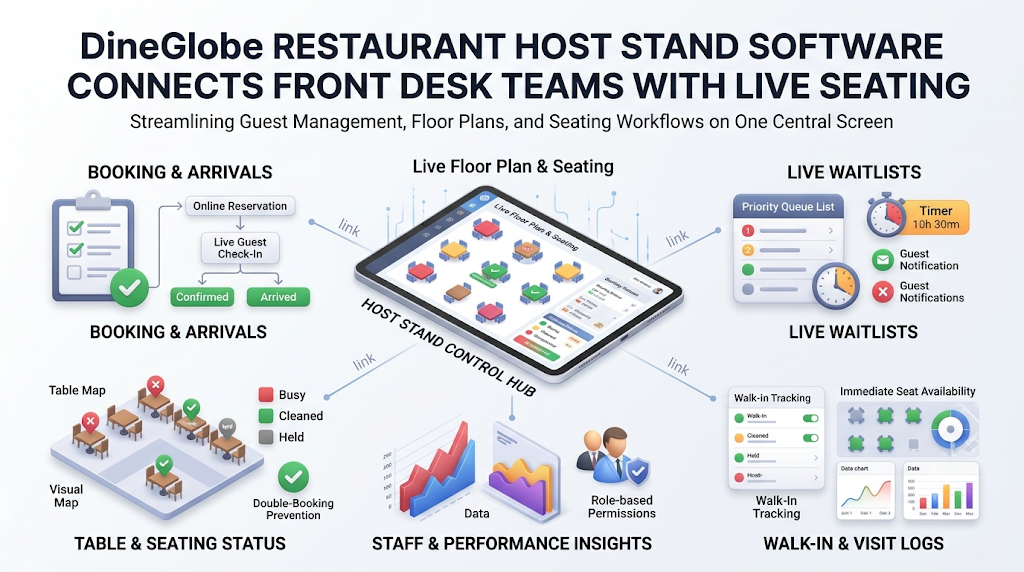
Your host stand drives the pace of the whole evening shift. Restaurant host stand software offers front desk staff a birds-eye view of your entire operation. Workers monitor incoming reservations, arrived guests, and empty seats from a central screen. The system displays special guest notes, such as peanut allergies or anniversary requests. Staff tap the screen once to flag an arrival. They tap once more when the group takes their seats. The host always sees which server can take another table and which server needs time to catch up. Shift changes take moments because all floor notes live on the digital screen.
Restaurant Walk-In Management Software
Plenty of hungry guests arrive without a planned booking in advance. Spontaneous diners simply stroll through the door hoping for an open stool or booth. Restaurant walk-in management software enables front desk teams to register unscheduled guests in two fast taps. The host spots available chairs on the floor plan and seats the walk-in party right away. The software marks those chairs as busy immediately. This safeguard prevents the system from assigning those same seats to an incoming online booking. Workers monitor how long walk-ins dine and when they settle their bills. Your venue captures extra dining revenue without disturbing reserved diners.
Restaurant Reservation Software for Small Restaurants
Independent cafes and small bistros operate with tight budgets and modest teams. They need clean tools that do not demand days of tech training. Restaurant reservation software for small restaurants supplies practical booking features without cluttered settings. DineGlobe assists independent dining rooms through a handy pilot program. You can examine their free restaurant reservation system by visiting dineglobe.com. This pilot lets boutique operators try booking links, table layouts, and digital waitlists without heavy setup fees. Small teams test these practical tools during live dinner shifts to confirm the best fit for their room.
How DineGlobe Helps Manage Daily Restaurant Tasks
DineGlobe gathers your most critical front-of-house tasks into one clear dashboard. Guests get self-service booking links and confirmation numbers to update their own plans. General managers configure role-based logins so employees only touch tools that match their daily jobs. The software also builds simple daily summaries that reveal peak customer hours. It even provides multilingual screens in English, Japanese, and Arabic for diverse dining crews. The comparison below displays how these tools compare with traditional handwritten notebooks.
| Operational Area | Traditional Paper Binder | DineGlobe Cloud Platform |
|---|---|---|
| Online Reservations | Impossible; phone calls only | 24/7 web booking page |
| Floor Tracking | Pen drawings; easily ruined | Live digital table map |
| Waitlist Handling | Paper names on a clipboard | Instant SMS text alerts |
| Double Booking Control | High human error risk | Automatic chair locks |
| Diner Preferences | Scattered across old paper | Organized digital guest tags |
| Staff Languages | One spoken language | English, Japanese, and Arabic |
Real-Life Scenarios / Experiences
- Handling Friday Night Crowds: A party of five stops by without notice at 7:15 PM. The host taps the tablet, sees Table Eight clears in six minutes, and texts the party as soon as the table is clean.
- Managing Large Dinner Parties: A group of ten reserves a table for Sunday lunch. The host links Table Five and Table Six on the digital floor map, which blocks other guests from booking that spot.
- Preparing for Food Allergies: A diner books through your direct link while riding the train. The kitchen sees an allergy notice on the ticket minutes before the patron enters the dining room.
- Passing the Torch Between Shifts: The lunch manager heads home at 3:30 PM. The night host signs in and checks every seated table, open chair, and evening booking on one tidy screen.
Common Mistakes to Avoid
- Trusting Paper Logs: Grease spills and stray pens destroy paper records, so switch to a cloud setup to protect your booking data.
- Cramming Too Many Bookings: Stacking too many reservations overwhelms servers, so set hourly guest caps that match your kitchen’s speed.
- Ignoring Spontaneous Walk-Ins: Failing to record drop-in diners leads to double bookings, so log walk-in parties on your screen immediately.
- Skipping Turn-Time Buffers: Packing diners back-to-back prevents proper cleaning, so build five-minute resets between scheduled seatings.
- Overpaying Booking Portals: Relying on third-party marketplace apps drains income, so guide diners toward your direct booking page.
- Overlooking Diner Requests: Missing notes about food allergies damages customer trust, so read guest profiles before dishes leave the kitchen pass.
- Selecting Clunky Programs: Buying bloated software slows down your hosts, so choose clean tools that your team can learn in one shift.
- Skipping Daily Summaries: Guessing your busiest meal hours creates staffing shortages, so study weekly digital logs to build better employee schedules.
How to Choose the Right Restaurant Booking System
Picking a reservation system demands a close look at your crew size and monthly budget. Seek platforms that let you sketch custom floor plans and create mobile waitlists. Verify that the tool functions smoothly on standard tablets and smartphones. Make sure your team can complete the system setup in hours rather than weeks. Wise owners test available pilot plans before signing expensive software agreements. Browse dineglobe.com to see if their direct tools suit your front desk style. The review table below outlines critical items to check before you adopt any reservation software.
| Evaluation Point | Operational Value | Desired Capability |
|---|---|---|
| Direct Booking Portal | Protects your patron relationships | Clean layout with zero diner fees |
| Interactive Floor Map | Eliminates double seating mix-ups | Simple drag-and-drop table layouts |
| SMS Mobile Waitlist | Clears out crowded lobby doorways | Fast text updates to guest phones |
| Tiered User Access | Keeps financial data confidential | Unique profiles for hosts and servers |
| Plain Daily Analytics | Streamlines grocery buys and labor | Clear charts tracking guest volume |
| Sensible Pricing Model | Protects your bottom line | Free pilot access or fair pricing |
Frequently Asked Questions
1. What is DineGlobe?
DineGlobe operates as a modern hospitality system designed for dining rooms. The software unites direct web bookings, floor maps, and waitlists on one screen. It assists restaurant teams with table assignments, walk-in tracking, and smooth guest arrivals. You can review all of its features directly at dineglobe.com.
2. Can small cafes use this software?
Small cafes benefit greatly from using this software. The screen displays large, simple icons that workers master in minutes. It runs on affordable tablets and mobile phones instead of pricey computers. Small teams cut out paper waste and avoid chaotic shifts every single day.
3. How do direct booking links help my restaurant?
Direct booking portals let guests reserve chairs straight from your own website. You skip hefty third-party fees and marketplace commissions. You also build personal bonds with your dining guests. This direct approach helps you grow a loyal following of neighborhood diners who visit often.
4. Does the system help prevent double bookings?
The platform prevents double bookings with automatic safeguards. When a customer confirms a seat, the system locks that specific table immediately. Other diners cannot select that reserved time slot. Your host watches the update happen in real time, which keeps seating smooth and fast.
5. How does the digital waitlist work?
The host logs a waiting diner’s name and mobile number on the tablet. The system tracks ongoing dining times and displays an estimated wait window. When an open table gets wiped clean, the software sends a text alert. The diner returns to the host stand without standing in line.
6. Can I join tables together for large groups?
The floor map tool allows hosts to combine tables with a quick tap. When a party of eight enters, you merge two adjacent tables on your screen. The program blocks both physical tables so other guests cannot claim them. This feature makes seating larger dinner parties effortless.
7. What happens when a walk-in guest arrives?
Your host checks the digital floor map for empty tables immediately. With two taps, the worker enters the walk-in party and picks their chairs. The software marks those tables as occupied right away. This simple step keeps walk-in diners organized alongside your existing advance bookings.
8. What languages does DineGlobe support?
DineGlobe provides complete interface support for English, Japanese, and Arabic. Front desk staff toggle between languages with a simple click. This flexibility helps multilingual teams communicate clearly during dinner rushes. It also makes training new staff faster across different regions.
9. Is there a free trial or pilot program available?
DineGlobe offers a free pilot program for restaurant teams today. This program allows dining spots to test live booking pages, floor layouts, and waitlist tools without upfront payments. You can visit dineglobe.com to review current pilot details, available features, and future pricing rules before you sign up.
10. Does the software require long staff training?
Staff pick up this software in minutes because it uses clear visual buttons. New hosts learn how to assign tables, log walk-ins, and send waitlist texts during their first shift. You do not need to hire expensive computer specialists to train your staff.
11. Can guests change their reservations online?
Guests adjust their own reservations through self-service web links and confirmation codes. Diners modify party sizes, change times, or cancel visits straight from their mobile devices. This direct control cuts incoming phone traffic and decreases empty seats from missed bookings.
12. How does table management improve kitchen speed?
The platform spaces incoming guest arrivals across the entire evening. It stops reception workers from seating ten groups at the exact same minute. Because orders enter the kitchen in a steady rhythm, cooks avoid sudden ticket jams. Dishes arrive hot, fast, and fresh to satisfied patrons.
Conclusion
Guiding a bustling dining room demands steady communication, great food, and reliable tools. Modern table software swaps out fragile paper clipboards for fast digital controls. It empowers your crew to manage direct web bookings, align dining room tables, and handle walk-in crowds with total poise. DineGlobe brings these essential front-of-house tasks together on one connected screen so your team can deliver memorable meals every night. Visit dineglobe.com today, inspect the features in their current pilot program, and see how this digital platform can improve your restaurant’s daily service.
