Introduction
Skip the mass-produced souvenir traps and crowded commercial malls of mainstream tourist hubs. Journeying through Bihar offers an unfiltered, deeply rooted encounter with living heritage, where every brushstroke, woven thread, and chiseled stone carries centuries of unbroken storytelling.
Here, shopping is never a rushed transaction; it is an intimate cultural dialogue. You sit beside National Award-winning painters grinding mineral pigments in courtyard verandas, listen to the rhythmic clatter of wooden looms in centuries-old silk quarters, and discover authentic folk art directly from the hands that shaped it.
Why Bihar is a must-visit destination
Bihar stands as the cultural cradle of eastern India, holding an extraordinary concentration of GI-tagged handicrafts, ancient textile traditions, and sacred sculptural lineages. From the vibrant Mithila plains in the north to the silk-weaving hubs along the Ganges and the stone-carving guilds of Magadh, the state offers travelers a rare chance to collect museum-grade artistry at fair, artisan-direct prices.
Navigating this craft circuit is remarkably straightforward across travel budgets. Major gateways like Patna, Gaya, and Darbhanga feature modern airports, well-connected railway junctions, and four-lane highways, supported by reliable boutique hotels, heritage stays, and welcoming local hospitality.
| Key Metric | Craft Circuit Overview |
| Primary Craft Hubs | Patna, Madhubani, Bhagalpur, Bodh Gaya, Nalanda, Muzaffarpur |
| Signature GI-Tagged Crafts | Madhubani Painting, Bhagalpuri Tussar Silk, Sujani Embroidery, Sikki Grass Craft, Khatwa Applique |
| Ideal Trip Duration | 3 to 6 days (modular by regional circuit) |
| Best Season to Visit | October to March (pleasant weather and peak festive exhibitions) |
| Connectivity | Domestic airports at Patna, Gaya, Darbhanga; dense Indian Railways network |
Best Places to Buy Handicrafts in Bihar
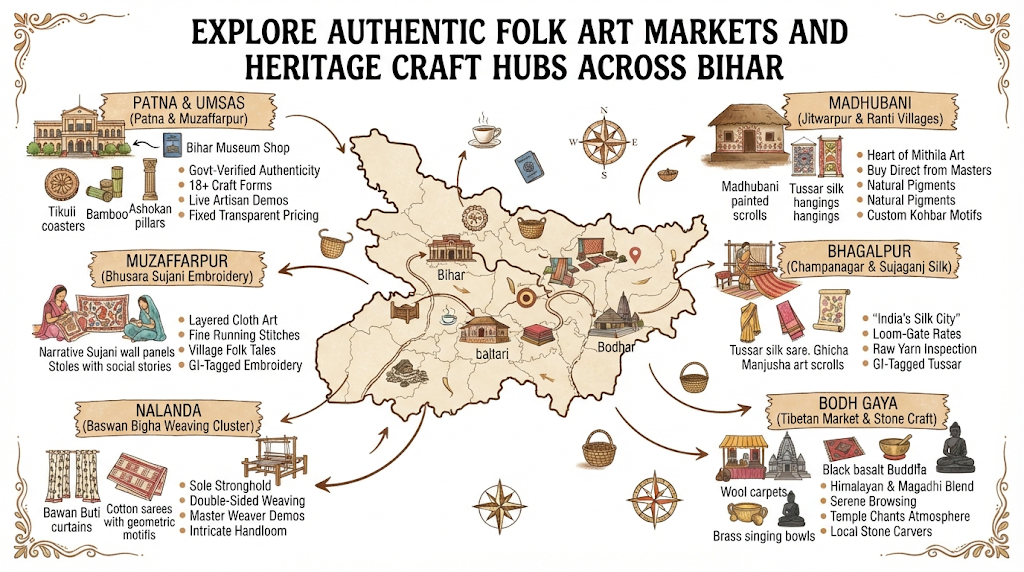
Upendra Maharathi Shilp Anusandhan Sansthan & Bihar Museum Shop, Patna
Established in 1956, Upendra Maharathi Shilp Anusandhan Sansthan (UMSAS) serves as Bihar’s premier state-backed sanctuary for traditional arts, housing a rare century-old craft museum alongside active artisan studios. Watching master craftspeople sculpt papier-mâché deities, weave golden sikki grass, and paint intricate tikuli medallions inside working ateliers transforms a simple shopping stop into an educational immersion.
Just down the road, the Bihar Museum Shop on Bailey Road curates UMSAS-certified pieces in an upscale gallery environment. Together, these two spaces guarantee strict authenticity, fixed transparent pricing, and direct financial support to rural craft clusters across all 38 districts.
- Location: Patliputra Industrial Area and Jawaharlal Nehru Marg (Bailey Road), central Patna (3 to 6 km from Patna Junction).
- Why it is worth visiting: Offers government-verified authenticity across 18 indigenous Bihar craft forms under one roof without aggressive haggling.
- Best things to do: Tour the 100-year-old permanent craft archive at UMSAS, observe live artisan workshops, and pick up glazed Tikuli coasters, bamboo utility ware, and miniature Ashokan pillar replicas.
- Best time to visit: Weekdays between 11:00 AM and 4:00 PM when live studio demonstrations are in full swing.
- Ideal for whom: First-time visitors, art collectors, researchers, and families seeking guaranteed genuineness.
- Travel tip: Ask the staff at the UMSAS sales counter about seasonal craft exhibitions happening at Gandhi Maidan during your travel dates.
Jitwarpur & Ranti Artist Villages, Madhubani
Tucked into the lush plains of the Mithila region, the twin villages of Jitwarpur and Ranti are the beating heart of Madhubani (Mithila) painting. Mud-plastered courtyard walls double as open-air murals, and nearly every household boasts generations of Padma Shri and National Award-winning painters preserving ancient Bharni, Kachni, and Godna styles.
Stepping into these quiet lanes allows you to witness the painstaking preparation of natural pigments derived from turmeric, indigo, lampblack, and flower petals bound with acacia gum. Purchasing unframed handmade paper scrolls or tussar silk wall hangings directly from the artists ensures 100% of your money sustains their studio lineage.
- Location: Madhubani district, North Bihar (approx. 5 to 8 km from Madhubani town and 175 km northeast of Patna).
- Why it is worth visiting: Unmatched opportunity to buy museum-caliber original folk paintings directly from celebrated master artists in their ancestral homes.
- Best things to do: Commission a custom Kohbar fertility motif painting, watch artists draw fine lines using bamboo twigs wrapped in cotton, and browse nearby Sikki grass basketry studios.
- Best time to visit: Morning hours (9:30 AM to 1:00 PM) between October and March for soft natural lighting and comfortable village walks.
- Ideal for whom: Serious art enthusiasts, cultural photographers, slow travelers, and textile designers.
- Travel tip: Carry cylindrical cardboard mailing tubes in your luggage so you can safely roll and transport unframed handmade paper paintings without creasing them.
Champanagar & Sujaganj Silk Markets, Bhagalpur
Known globally as India’s “Silk City,” Bhagalpur has been weaving lustrous Tussar silk along the southern banks of the Ganges for over two centuries. In the historic weaving quarters of Champanagar and Nathnagar, narrow brick lanes echo with the rhythmic wooden thud of handlooms operated by Ansari master weavers.
A short ride away, the bustling Sujaganj Bazaar serves as the commercial nerve center where wholesale merchants and family-run showrooms display yards of raw Ghicha silk, Katia weaves, and Tussar-linen blends. You can inspect the raw cocoons, watch yarn reeling in real time, and buy yardage or sarees at fraction-of-metro prices.
- Location: Champanagar (5 km west of Bhagalpur Junction) and Sujaganj (1.5 km from Bhagalpur Junction), Eastern Bihar.
- Why it is worth visiting: Direct access to India’s finest GI-tagged Bhagalpuri Tussar silk at authentic loom-gate rates.
- Best things to do: Walk the handloom lanes of Champanagar to see natural cocoon degumming, shop for raw Ghicha stoles in Sujaganj, and look for rare Manjusha paintings depicting the folklore of Bihula-Bishahari.
- Best time to visit: Morning (10:00 AM to 1:30 PM) in Champanagar for active loom work; late afternoon in Sujaganj (closed on Sundays).
- Ideal for whom: Bridal shoppers, fashion designers, textile collectors, and heritage travelers.
- Travel tip: Perform a quick burn test on a loose warp thread if buying high-value pure Tussar—real silk smells like burnt hair and leaves crisp black ash, whereas synthetic blends melt into hard plastic beads.
Bihar Khadi Mall & Maurya Lok Complex, Patna
Located right beside historic Gandhi Maidan, the multi-story Bihar Khadi Mall is India’s first dedicated mega-emporium showcasing hand-spun textiles and rural village crafts. Air-conditioned, organized by district, and stocked with certified handlooms, it bridges the gap between rural artisans and modern travelers who want convenience without compromising ethics.
A ten-minute walk south brings you to Maurya Lok Complex, home to the iconic Bihar Emporium (Amrapali) and dozens of independent craft stalls. As evening falls, the open-air courtyard transforms into Patna’s liveliest cultural hangout, pairing craft browsing with sizzling local street delicacies.
- Location: Gandhi Maidan Road and Dak Bungalow Chauraha, central Patna (within 2 km of Patna Junction).
- Why it is worth visiting: One-stop convenience combining government-certified Khadi apparel, Bhagalpuri silk yardage, and Mithila stationery with vibrant evening street life.
- Best things to do: Browse the district-wise handloom floors at Bihar Khadi Mall, pick up Madhubani-painted wooden boxes at Bihar Emporium, and sample hot Litti Chokha outside Maurya Lok.
- Best time to visit: 4:30 PM to 8:30 PM when the weather cools and Maurya Lok’s evening food kiosks come alive.
- Ideal for whom: Business travelers on tight schedules, families, and casual souvenir shoppers.
- Travel tip: Keep your receipts from Bihar Khadi Mall, as seasonal Gandhi Jayanti and festive rebates (often 10% to 20%) apply automatically at billing.
Tibetan Refugee Market & Kundan Bazaar, Bodh Gaya
Every winter, the spiritual town of Bodh Gaya blossoms into an international bazaar where Himalayan artistry meets Magadhi stone craft. Along the shaded lanes opposite the Mahabodhi Temple complex, Tibetan artisans set up vibrant stalls brimming with hand-knotted woollen carpets, brass singing bowls, prayer flags, and intricate Thangka scroll paintings.
Just beyond the monastic zone, local Magadh sculptors showcase hand-carved black basalt Buddha statues, soapstone incense holders, and sandalwood prayer beads. The atmosphere is serene, meditative, and deeply international, inviting slow browsing accompanied by the hum of distant temple chants.
- Location: Temple Road and Kundan Bazaar, Bodh Gaya, Gaya district (13 km south of Gaya Junction).
- Why it is worth visiting: A unique cross-cultural marketplace blending Himalayan Tibetan handicrafts with traditional Magadhi stone and wood carvings.
- Best things to do: Test resonant frequency singing bowls, inspect mineral-pigment Thangka paintings, and purchase miniature black stone stupas carved by Gaya artisans.
- Best time to visit: November to February (8:30 AM to 8:00 PM), when Tibetan winter stalls are fully assembled.
- Ideal for whom: Spiritual seekers, solo backpackers, mindfulness travelers, and home decor collectors.
- Travel tip: Check the weight and airport hand-baggage rules before purchasing heavy brass statues or solid black stone carvings, as airlines strictly enforce cabin weight limits at Gaya Airport.
Baswan Bigha Weaving Cluster, Nalanda
Hidden amidst the lush agricultural fields near the ancient ruins of Nalanda University lies Baswan Bigha, the sole surviving stronghold of Bawan Buti weaving. Literally translating to “fifty-two motifs,” this centuries-old extra-weft handloom technique weaves Buddhist symbols—lotuses, stupas, peepal leaves, and wheels—directly into fine cotton and tussar fabrics.
Unlike commercial markets, visiting Baswan Bigha feels like stepping into a living textile museum. Master weavers happily pause their shuttles to demonstrate how intricate geometric patterns emerge simultaneously on both sides of the fabric without a single loose thread on the reverse.
- Location: Near Bihar Sharif, Nalanda district (approx. 12 km from Nalanda ruins and 75 km southeast of Patna).
- Why it is worth visiting: The only place on earth to witness and acquire authentic, GI-recognized Bawan Buti textiles straight from master weavers.
- Best things to do: Observe double-sided extra-weft weaving on pit looms, purchase Bawan Buti cotton curtains or sarees, and explore traditional block-printing workshops in nearby Bihar Sharif.
- Best time to visit: 10:00 AM to 4:00 PM year-round (avoid heavy monsoon weeks in July–August).
- Ideal for whom: Textile historians, sustainable fashion advocates, and offbeat cultural explorers.
- Travel tip: Coordinate your visit through a local guide or hotel concierge in Rajgir/Nalanda a day in advance so weavers can lay out their finest archival sarees for viewing.
Offbeat Exploration: Hidden Gems Tourists Miss
Patharkatti Black Stone Sculpting Village, Gaya
Located roughly 35 km northeast of Gaya town, Patharkatti is home to hereditary stone carvers descended from artisans brought from Rajasthan by Queen Ahilyabai Holkar in the 18th century. Using local blue-black granite and phyllite stone, master sculptors chisel breathtaking temple icons, mortar-pestles, and finely detailed tabletop sculptures with simple hand tools.
Bhusara Sujani Embroidery Collective, Muzaffarpur
In the quiet village of Bhusara near Muzaffarpur, rural women transform humble layered cotton into expressive narrative textiles through Sujani embroidery. Originally stitched as quilted baby wraps using old saris, modern Sujani wall panels and stoles depict powerful social stories, village festivals, and mythological epics in fine running stitches.
Manjusha Art Studios of Nathnagar, Bhagalpur
Often overshadowed by Madhubani art, Manjusha painting is Bhagalpur’s indigenous scroll art characterized by strict tri-color palettes of pink, green, and yellow set against black outlines. Visiting local artist collectives in Nathnagar lets you collect box-shaped ritual shrines (manjushas) and vibrant folk paintings rooted in Anga regional folklore.
Detailed Practical Guidance for Travelers
| Destination | Standard Entry Fee | General Timings | Best Local Food Options Nearby | Recommended Nearby Attractions |
| Upendra Maharathi Sansthan & Bihar Museum Shop, Patna | Free (UMSAS); ₹100 (Bihar Museum) | 10:30 AM – 5:00 PM (Closed Mondays) | Authentic Champaran Ahuna Mutton, Sattu Paratha | Bihar Museum, Eco Park, Golghar |
| Jitwarpur & Ranti Villages, Madhubani | Free entry (Artisan studios) | 9:30 AM – 5:00 PM (Daylight hours) | Makhana Kheer, traditional Mithila Thali, Tilkor Pakora | Rajnagar Palace Ruins, Saurath Sabha |
| Champanagar & Sujaganj, Bhagalpur | Free entry | 10:00 AM – 8:00 PM (Closed Sundays) | Warm Dalpuri with Alu Dam, Katarni Chuda-Dahi | Vikramshila Ruins, Kuppaghat Caves |
| Bihar Khadi Mall & Maurya Lok, Patna | Free entry | 10:30 AM – 8:30 PM (Open daily) | Charcoal-roasted Litti Chokha, Khurma sweets | Gandhi Maidan, Buddha Smriti Park |
| Tibetan Market & Kundan Bazaar, Bodh Gaya | Free entry | 8:30 AM – 8:30 PM (Peak: Oct–Mar) | Tibetan Thukpa, steamed Tingmo, local Gaya Tilkut | Mahabodhi Temple, Great Buddha Statue |
| Baswan Bigha Weaving Cluster, Nalanda | Free entry | 10:00 AM – 4:30 PM (Daily) | Silao Khaja (flaky layered sweet), Rajgir Chana Ghugni | Nalanda Mahavihara Ruins, Rajgir Hot Springs |
Logistics & On-Ground Navigation
Local Transport Options
- Intercity Rail Network: Indian Railways connects Patna, Gaya, Bhagalpur, and Madhubani via fast daily express trains (such as Vande Bharat, Janshatabdi, and Rajya Rani Express), offering the most reliable long-distance transit.
- App-Based Cabs & Rentals: Uber and Ola operate reliably across Patna and Gaya for intra-city bazaar hopping, while full-day private cab rentals (₹2,200–₹3,000/day) are essential for reaching rural craft villages like Jitwarpur, Patharkatti, and Baswan Bigha.
- E-Rickshaws (Totos) & Auto-Rickshaws: Shared and reserved battery-operated e-rickshaws are the quickest way to navigate narrow market lanes in Sujaganj, Bodh Gaya, and old Patna without parking headaches.
Budget Planning
- Budget / Backpacking Tier (₹1,800 – ₹3,000 per day): Includes clean guesthouses or monastery stays (₹800–₹1,200), local dhaba meals and street snacks (₹400–₹600), and shared e-rickshaws or second-class train tickets (₹400–₹700), excluding handicraft purchases.
- Mid-Range / Comfort Tier (₹4,500 – ₹7,500 per day): Includes 3-to-4-star business or heritage hotels (₹2,800–₹4,500), sit-down regional restaurants (₹900–₹1,400), and private AC cab hires for village craft excursions (₹1,500–₹2,500).
Safety and Inclusivity Tips
- Families: Stick to daylight hours (9:30 AM to 5:30 PM) when exploring rural artisan clusters, and carry bottled drinking water and basic snacks as village lanes lack commercial cafes.
- Couples: Urban centers like Patna and international hubs like Bodh Gaya are welcoming and relaxed, though dressing modestly (covering shoulders and knees) ensures respectful interactions inside traditional family-run rural studios.
- General Safety: Keep cash divided across separate pockets when browsing crowded wholesale bazaars like Sujaganj or Hathwa Market, and always confirm return cab pickups before entering remote village pockets where mobile signal can dip.
Strategic Travel Planning Guardrails
Travel Planning Tips for Bihar
- Book Around Craft Festivals: Plan your trip between November and February to catch the annual Saras Mela at Gandhi Maidan in Patna, where artisans from every corner of Bihar gather under one roof.
- Balance Cash and UPI: While UPI QR codes work seamlessly across Patna, Bhagalpur, and Bodh Gaya shops, carry ₹3,000 to ₹5,000 in crisp cash notes when visiting remote villages like Jitwarpur or Baswan Bigha where network connectivity fluctuates.
- Inspect GI Tags and Silk Marks: Look for the official Silk Mark hologram on Bhagalpuri Tussar and Handloom Mark tags on Bawan Buti weaves to verify genuine hand-spun quality.
- Pack Protective Tubes and Bubble Wrap: Rural ateliers rarely stock heavy-duty shipping boxes, so bring rigid cardboard tubes for scrolls and bubble wrap for delicate Tikuli or stone pieces.
- Engage Respectfully in Home Studios: Always ask permission before photographing artists at work, and accept the customary cup of sweet tea—refusing hospitality can feel abrupt in Mithila and Magadh households.
Local Insider Secret: Never rush an artist into selling the first painting they pull out. Show genuine curiosity about their natural pigment recipes or family motifs, and master painters will often unlock their inner trunk to reveal their finest museum-grade archival works.
Common Mistakes to Avoid
- Assuming All Crafts Are Sold Everywhere: Don’t expect to find authentic Bawan Buti textiles or Patharkatti stone sculptures in random street stalls; target their specific geographic clusters or UMSAS outlets.
- Skipping Sunday Market Closures: Wholesale silk markets in Bhagalpur (Sujaganj) and older Patna bazaars remain shut on Sundays—schedule museum visits or village trips on Sundays instead.
- Buying Unverified “Pure Silk” From Touts: Avoid street touts outside railway stations promising “export surplus Tussar” at unrealistically low prices; these are almost always polyester-viscose powerloom blends.
- Overlooking Edible Souvenirs: Leaving Bihar without packing Silao Khaja, Gaya Tilkut, Bhagalpuri Katarni Chuda, or Mithila Makhana misses half the state’s GI-tagged heritage.
- Underestimating Road Travel Times: Highway distances look short on maps, but river bridges and market traffic can add 30–45 minutes to inter-district drives.
Suggested Itinerary Blueprints
- 1-Day Quick Dash (Patna Urban Heritage & Craft Loop): Ideal for business travelers and weekenders. Start at 10:30 AM at Upendra Maharathi Shilp Anusandhan Sansthan to watch live craft studios, visit the Bihar Museum and its curated craft shop at 1:00 PM, browse handlooms at Bihar Khadi Mall at 4:30 PM, and wrap up with evening shopping and Litti Chokha at Maurya Lok Complex.
- 2-Day Deep-Dive (Mithila Art & Handloom Immersion):
- Day 1: Drive or take an early train from Patna to Madhubani. Spend the morning exploring Jitwarpur artist homes for Bharni and Kachni paintings, enjoy a traditional Mithila lunch, and visit Ranti village in the afternoon to source Sikki grass baskets.
- Day 2: Morning excursion to the grand Rajnagar Palace ruins, followed by a visit to Saurath village craft collectives before boarding an evening return train to Patna.
- Complete Weekend Travel Plan (The Sacred Silk & Stone Circuit):
- Friday: Arrive in Bhagalpur by morning train; walk the handloom lanes of Champanagar to watch Tussar weavers, shop for silk yardage in Sujaganj, and visit Nathnagar’s Manjusha art studios before catching an overnight train or morning drive toward Gaya.
- Saturday: Explore Nalanda’s ancient ruins in the morning, visit Baswan Bigha village at noon to buy rare Bawan Buti weaves, and continue to Bodh Gaya for sunset meditation and evening browsing at the Tibetan Market.
- Sunday: Morning drive to Patharkatti village to meet black stone sculptors, return to Gaya town to pack fresh Tilkut, and depart from Gaya Airport or Junction.
Common Tourist Mistakes to Avoid
- Geographic Blunders: Never attempt to combine North Bihar (Madhubani) and South Bihar (Bodh Gaya or Bhagalpur) in a single day trip; crossing the Ganges and traversing rural highways requires dedicated regional clustering.
- Commercial Traps: Spending your entire afternoon inside generic air-conditioned shopping malls in Patna deprives you of the soulful, generational craft lineages thriving in Maurya Lok, UMSAS, and village ateliers.
- Neglecting Modern/Alternative Zones: Skipping contemporary artist-run spaces and curated museum cafes around Bailey Road and Patliputra means missing how young Bihari designers are reimagining ancient folk art for modern interiors.
- Transport Overpayment: Always cross-check auto-rickshaw quotes against Ola/Uber rates in Patna and Gaya, and agree on a fixed round-trip waiting fare before hiring an e-rickshaw for village lanes.
- Luxury Dining Bias: Eating exclusively inside hotel dining rooms robs you of Bihar’s culinary soul—some of the finest gastronomic experiences happen beside clay ovens serving smoky Litti Chokha, flaky Silao Khaja, and cardamom-spiked Tilkut.
Frequently Asked Questions
1. What is the single most iconic handicraft to buy in Bihar?
Madhubani (Mithila) painting is Bihar’s most celebrated GI-tagged folk art, prized worldwide for its intricate geometric borders, mythological narratives, and natural mineral pigments painted on handmade paper and Tussar silk.
2. Where can I buy genuine Madhubani paintings directly from the artists?
Visiting the villages of Jitwarpur and Ranti in Madhubani district lets you purchase directly from National Award-winning artists in their home studios, while UMSAS and Bihar Emporium in Patna offer verified pieces if you cannot travel north.
3. How do I verify if Bhagalpuri Tussar silk is 100% pure?
Check for the official Silk Mark tag issued by the Silk Mark Organisation of India, inspect the fabric for slight natural slubs (irregularities in hand-reeled yarn), and ask the weaver to perform a quick flame test on a stray thread.
4. Are digital UPI payments and credit cards accepted in Bihar’s craft markets?
Credit cards and UPI apps (Google Pay, PhonePe, Paytm) are widely accepted at Patna’s Bihar Khadi Mall, Bihar Museum Shop, and major Bhagalpur showrooms, though rural village artisans strongly prefer cash or direct UPI transfers.
5. What is Sikki grass craft, and where can I find the best pieces?
Sikki is a golden-hued wild river grass native to North Bihar that women artisans coil and weave into intricate figurines, jewelry boxes, and ceremonial baskets; the finest pieces are found around Madhubani, Darbhanga, and UMSAS Patna.
6. What makes Tikuli art unique among Bihar’s handicrafts?
Originating in Patna over 500 years ago, Tikuli art involves painting delicate folk motifs and gold-leaf accents onto glazed, hardboard or lacquered surfaces, making coasters, wall plates, and trays remarkably durable.
7. Is bargaining appropriate when buying handicrafts in Bihar?
Moderate, polite bargaining (10% to 15%) is customary in open street markets like Bodh Gaya’s Tibetan Market or Sujaganj retail shops, whereas prices at government emporiums (Khadi Mall, UMSAS) and rural artist homes are fair and fixed.
8. Can solo female travelers safely visit rural craft villages like Jitwarpur or Baswan Bigha?
Yes, Bihar’s artisan villages are warm, family-oriented communities; hiring a trusted private cab for the day and visiting between 10:00 AM and 4:30 PM ensures a safe, comfortable, and enriching experience.
9. What is Sujani embroidery, and how does it differ from regular quilting?
Practiced primarily around Muzaffarpur and Danapur, GI-tagged Sujani embroidery uses fine running stitches on layered cloth to narrate social themes, village life, and folklore rather than simple geometric quilting.
10. Which edible souvenirs should I pack alongside handicrafts?
Pick up vacuum-packed Silao Khaja near Nalanda, Tilkut (sesame-jaggery sweets) in Gaya, aromatic Katarni rice and chuda in Bhagalpur, and roasted Mithila Makhana (fox nuts) in Darbhanga or Patna.
11. What is the best month to visit Bihar for handicraft shopping?
November through February offers crisp, sunny weather ideal for walking village lanes and coincides with major state craft exhibitions like the Saras Mela in Patna.
12. How do I safely pack fragile stone carvings and large paintings for flights?
Roll unframed paper or silk paintings inside rigid PVC or cardboard tubes, and pack small Patharkatti stone statues inside checked luggage wrapped tightly in clothes rather than cabin bags, where heavy stone items may face security restrictions.
Conclusion
Choosing Bihar’s craft trails over an ordinary, packaged vacation rewards you with something far rarer than souvenirs—it connects you to the living pulse of Indian civilization. Every hand-loomed Tussar stole, natural-pigment Mithila scroll, and chiseled basalt sculpture you bring home carries the quiet dignity, resilience, and devotion of the artisans who kept these traditions alive across millennia, turning your journey into a lifelong story worth telling.
