Introduction
Forget sterile, air-conditioned mega-malls where every storefront looks identical from Mumbai to Delhi. When festive season arrives in eastern India, true magic unfolds in chaotic, lantern-lit alleys filled with the scent of sandalwood, sizzling ghee, and freshly dyed silk.
Shopping in Bihar Click to open side panel for more information during Diwali, Chhath Puja, or Durga Puja is not merely a retail errand; it is a living cultural immersion. Here, generations of master weavers, brassware artisans, and folk painters gather to trade heritage directly with locals preparing their homes for sacred celebrations.
Why Bihar is a must-visit city
Spanning the fertile Gangetic plains, Bihar Click to open side panel for more information holds a monumental legacy as the cradle of ancient empires, artisanal guilds, and timeless folk traditions. During festivals, its historic trading towns transform into sensory wonderlands where centuries-old craft economies pulse with unmatched energy.
Modern infrastructure now links this cultural heartland effortlessly. High-speed rail corridors, upgraded national highways, and expanding airports in Patna, Gaya, and Darbhanga allow comfortable access for luxury seekers, backpackers, and families alike.
This festive shopping circuit connects central urban bazaars in Patna with the silk-weaving looms of Bhagalpur, the painted villages of Mithila, and the sacred riverfront fairs of Sonepur.
| Key Aspect | Details |
|---|---|
| Primary Hub | Patna (Connected via Jay Prakash Narayan International Airport & Patna Junction) |
| Peak Festive Season | October to November (Navratri, Durga Puja, Diwali, Chhath Puja, Kartik Purnima) |
| Signature Crafts | Bhagalpuri Tussar Silk, Madhubani Paintings, Sikki Grass Art, Tikuli Craft, Brassware |
| Ideal Trip Duration | 4 to 6 Days for a multi-district craft and bazaar trail |
| Currency & Payments | Indian Rupee (INR); UPI widely accepted in cities, cash essential in rural haats |
Best Places or Experiences

Patna Market
Patna Market
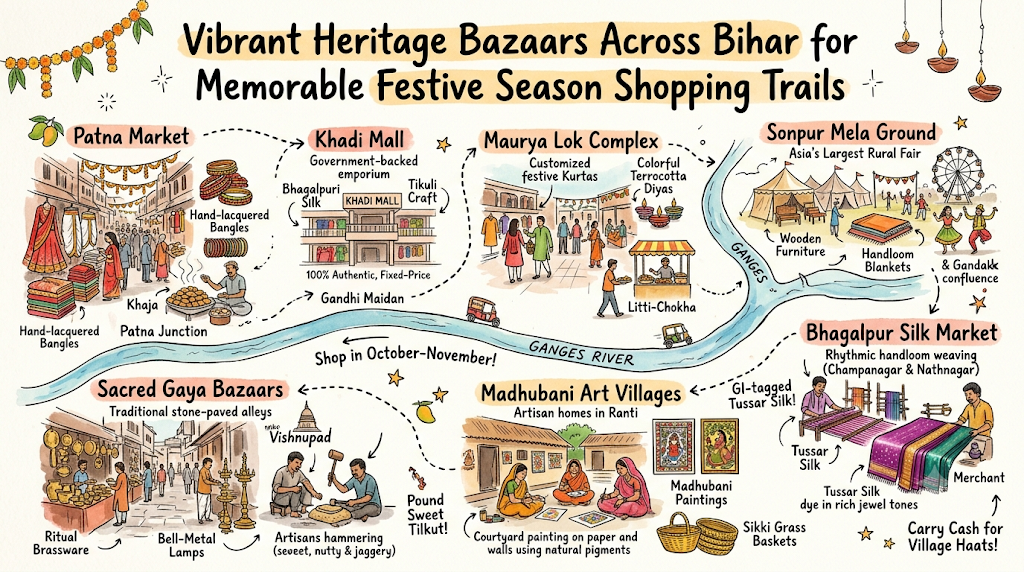
Tucked along Ashok Rajpath near the historic banks of the Ganges, Patna Market Click to open side panel for more information has served as the undisputed retail heartbeat of the capital for generations. Narrow lanes branch out like veins, packed wall-to-wall with family-run textile emporiums, bridal trousseau ateliers, and glittering bangle stalls.
During the weeks leading up to Diwali and Chhath Puja, the bazaar hums late into the evening under canopies of marigold garlands and fairy lights. Shoppers bargain spiritedly over Benarasi brocades, traditional sindoor boxes, and hand-embroidered festive kurtas while street vendors call out over steaming kettles of masala chai.
- Location: Ashok Rajpath, Sabzibagh zone in central Patna, roughly 4 km from Patna Junction railway station.
- Why it is worth visiting: Offers the most concentrated variety of traditional festive attire, bridal jewelry, and authentic Chhath Puja ritual items in one historic neighborhood.
- Best things to do: Hunt for hand-lacquered bangles in the inner lanes, pick up traditional cotton dhotis and sarees, and sample freshly fried khaja from century-old sweet shops.
- Best time to visit: Late afternoon between 4:30 PM and 8:00 PM during October and November when festive lighting peaks.
- Ideal for whom: Culture enthusiasts, wedding shoppers, street photographers, and festive bargain hunters.
- Travel tip: Leave private cars behind; the lanes are strictly pedestrian-friendly during peak evenings, and pickpocketing can occur in dense crowds.

Khadi Mall
Khadi Mall
Standing prominently beside Gandhi Maidan, Khadi Mall Click to open side panel for more information represents India’s largest dedicated showcase of handspun textiles and rural village industries. Multi-level galleries display meticulously curated collections sourced directly from artisan cooperatives across every district of the state.
Unlike chaotic street bazaars, this government-backed emporium provides a calm, transparent, and fixed-price shopping sanctuary. Visitors can trace the story of each weave—from raw organic cotton spun on wooden charkhas to intricate Madhubani-painted stoles and herbal wellness products.
- Location: East Gandhi Maidan Road, central Patna, approximately 3 km north of Patna Junction.
- Why it is worth visiting: Guarantees 100% authentic, GI-tagged handloom textiles and artisanal handicrafts with zero haggling required.
- Best things to do: Browse the dedicated Bhagalpuri silk floor, purchase organic honey and cold-pressed oils, and explore hand-painted Tikuli coasters for festive gifting.
- Best time to visit: Morning hours between 11:00 AM and 1:30 PM on weekdays for peaceful browsing and attentive staff assistance.
- Ideal for whom: Ethical shoppers, families, international travelers, and gift buyers seeking fixed-price authenticity.
- Travel tip: Look out for special Gandhi Jayanti and Diwali rebate windows when state subsidies offer flat 20% to 50% discounts on handloom garments.

Maurya Lok Complex
Maurya Lok Complex
Designed as an open-air commercial plaza in the heart of modern Patna, Maurya Lok Complex Click to open side panel for more information blends nostalgic 1980s civic architecture with bustling contemporary retail. Courtyards lined with bookshops, electronics showrooms, tailors, and boutique handicraft kiosks come alive every evening.
As dusk settles during the festive quarter, the complex transforms into an energetic social promenade. Locals gather to buy decorative diyas, fairy lights, and ethnic footwear before heading toward the legendary street-food stalls lining the perimeter walls.
- Location: New Dak Bunglow Road, central Patna, just 1.5 km from Patna Junction.
- Why it is worth visiting: Combines accessible festive shopping for modern essentials and ethnic accessories with Patna’s finest evening street-food culture.
- Best things to do: Shop for customized festive kurtas, browse seasonal pop-up stalls selling terracotta lamps, and feast on hot litti-chokha and chaat in the outer food lane.
- Best time to visit: Evenings from 6:00 PM to 9:30 PM when the open courtyards buzz with local families and food carts.
- Ideal for whom: Foodies, young travelers, families, and casual evening strollers.
- Travel tip: Carry small denomination cash notes for the exterior street-food vendors and seasonal potters selling clay diyas along the pavement.

Bhagalpur silk market
Bhagalpur silk market
Known worldwide as the Silk City, the historic weaving clusters around Champanagar and Nathnagar form the beating heart of the Bhagalpur silk market Click to open side panel for more information . Rhythmic clacking from thousands of wooden handlooms echoes through narrow residential lanes where master weavers transform wild tussar cocoons into luminous fabrics.
Visiting during the pre-festive rush allows travelers to buy directly from family-owned looms at wholesale prices. Bolts of raw tussar, ghicha, and katia silk shimmer in jewel tones of crimson, mustard, and emerald, ready to be draped for Durga Puja pandal hopping.
- Location: Champanagar and Nathnagar quarters of Bhagalpur district, roughly 230 km east of Patna along the Ganges.
- Why it is worth visiting: Unrivaled opportunity to source genuine, GI-tagged Bhagalpuri Tussar silk directly from the weavers who craft it.
- Best things to do: Watch the yarn-reeling and dyeing process in family courtyards, compare pure tussar against silk-cotton blends, and commission bespoke festive sarees.
- Best time to visit: October through February for pleasant weather and peak festive loom production between 10:00 AM and 5:00 PM.
- Ideal for whom: Textile connoisseurs, fashion designers, slow travelers, and heirloom collectors.
- Travel tip: Perform the burn-test or check for the official Silk Mark tag when buying high-value sarees to distinguish pure tussar from synthetic art silk.

Malu Silk Processor
Malu Silk Processor
Nestled within the Naya Bazar commercial hub of Bhagalpur, Malu Silk Processor Click to open side panel for more information offers a structured, trade-focused window into the city’s celebrated textile finishing and wholesale ecosystem. Here, raw woven yardage undergoes traditional degumming, natural dyeing, and calendering before reaching boutiques across India.
Travelers seeking crisp festive stoles, dupattas, and unstitched suit sets appreciate the organized inventory and deep technical knowledge available in this trading quarter. The surrounding Naya Bazar streets also brim with wholesale spice merchants and brass utensil dealers stocking up for Dhanteras.
- Location: Satish Sarkar Lane, Naya Bazar, Bhagalpur, about 3 km from Bhagalpur Junction railway station.
- Why it is worth visiting: Bridges the gap between raw village looms and finished, export-grade silk textiles in a single commercial pocket.
- Best things to do: Inspect varied weaves of matka and tussar silk, explore nearby Dhanteras brassware shops in Naya Bazar, and taste local Bhagalpuri katarni chura snacks.
- Best time to visit: Monday to Saturday between 11:00 AM and 6:00 PM before evening wholesale dispatches begin.
- Ideal for whom: Boutique buyers, serious textile shoppers, and cultural explorers.
- Travel tip: Combine your visit to Naya Bazar with an early morning walk along the nearby Barari Ghat on the Ganges for serene river views.

Madhubani
Madhubani
Across the northern plains of Mithilanchal, Madhubani Click to open side panel for more information turns entire village courtyards into open-air art galleries every festive season. Originally painted on freshly plastered mud walls to bless weddings and autumn festivals, Mithila art now adorns handmade paper, tussar silk sarees, and terracotta vessels.
Walking through artisan villages like Jitwarpur and Ranti near the district town lets visitors sit beside National Award-winning women artists. Watching fine bamboo nibs dip into natural pigments derived from turmeric, indigo, and lampblack transforms a simple souvenir purchase into a deeply personal connection.
- Location: Madhubani district in northern Bihar, approximately 170 km northeast of Patna via Darbhanga.
- Why it is worth visiting: Direct, ethical access to authentic Mithila folk paintings and Sikki golden-grass baskets straight from master artists.
- Best things to do: Visit artist homes in Jitwarpur and Ranti, commission custom wedding or Diwali wall hangings, and shop for hand-coiled Sikki grass jewelry boxes.
- Best time to visit: October to March, especially during Kojagara and Chhath Puja when courtyard murals are freshly painted.
- Ideal for whom: Art collectors, solo travelers, cultural researchers, and sustainable craft supporters.
- Travel tip: Always purchase directly from artist studios in Ranti or Jitwarpur rather than highway middlemen so 100% of your payment supports the painter’s household.

Sonpur Mela Ground
Sonpur Mela Ground
Every year on the full moon of Kartik Purnima, the sprawling Sonpur Mela Ground Click to open side panel for more information at the confluence of the Ganges and Gandak rivers hosts one of Asia’s largest traditional festive fairs. Stretching across hundreds of acres, this centuries-old congregation blends sacred river bathing with an extraordinary rural mega-bazaar.
Rows of canvas tents showcase everything from hand-carved wooden furniture from Saharanpur and Kashmiri woolens to Bihar’s own bamboo crafts, handloom blankets, and traditional ironware. Folk theatre performances, brass bands, and rustic sweet stalls create an unforgettable carnival atmosphere rooted in agrarian heritage.
- Location: Sonepur in Saran district, roughly 25 km north of Patna across the Mahatma Gandhi Setu or Digha-Sonpur bridge.
- Why it is worth visiting: An unmatched spectacle of rural Indian commerce, folk entertainment, and regional handicrafts gathered along a sacred river confluence.
- Best things to do: Explore the Bihar Pavilion for live craft demonstrations, browse rustic wooden kitchenware and woolens, and witness evening folk music performances.
- Best time to visit: November (starting on Kartik Purnima and running for roughly 3 to 4 weeks), ideally arriving by 9:30 AM.
- Ideal for whom: Adventure travelers, photographers, anthropology lovers, and families seeking grand festive spectacles.
- Travel tip: Wear sturdy closed-toe walking shoes; the fairgrounds are vast, dusty, and require several kilometers of walking on unpaved tracks.

Gaya
Gaya
Revered globally as a spiritual crossroads, Gaya Click to open side panel for more information awakens with extraordinary festive fervor from Pitru Paksha through Diwali and Chhath Puja. Surrounding the ancient Vishnupad Temple, historic stone-paved bazaars overflow with ritual brassware, hand-carved black stone figurines from Patharkatti, and fragrant incense.
No festive shopping trip here is complete without visiting the legendary tilkut alleys near Tekari Road and Chowk. Artisans rhythmically pound roasted sesame seeds and jaggery with heavy iron mallets, filling the crisp autumn air with warm, nutty aromas as shoppers pack boxes for relatives nationwide.
- Location: Gaya district in south-central Bihar, approximately 100 km south of Patna via NH-22.
- Why it is worth visiting: Combines sacred pilgrimage heritage with iconic culinary souvenirs and traditional stone and metal craftsmanship.
- Best things to do: Buy freshly pounded khoya and jaggery tilkut, shop for heavy bell-metal puja lamps near Vishnupad, and browse Bodh Gaya’s Tibetan winter woolens market nearby.
- Best time to visit: October to February when winter sesame harvests peak and morning temple bazaars buzz with energy.
- Ideal for whom: Spiritual travelers, culinary explorers, families, and traditional craft enthusiasts.
- Travel tip: Ask sweet vendors for freshly made tilkut packed in tin boxes if you are traveling long distances, as it preserves crispness far better than cardboard.
Offbeat Exploration: Hidden Gems Tourists Miss
Jitwarpur & Ranti Artisan Villages (Madhubani)
While most travelers stop at district town shops, venturing three kilometers into the twin villages of Jitwarpur and Ranti reveals the true soul of Mithila art. Nearly every household displays hand-painted courtyard walls, and families warmly invite visitors inside to view ancestral sketchbooks and natural pigment preparation.
Patharkatti Stone-Carving Cluster (Near Gaya)
Located roughly 35 kilometers northeast of Gaya Click to open side panel for more information near Atri, Patharkatti is home to descendants of master sculptors brought from Rajasthan centuries ago. Watching artisans chisel intricate deities, mortar-pestles, and decorative bowls from locally quarried black granite offers a rare look at living stonecraft.
Patna City’s Marufganj & Chhoti Patan Devi Spice Lanes
Far older than modern western Patna, the historic eastern quarter around Patna City houses centuries-old wholesale spice mandis and traditional potters. Before Chhath Puja, entire alleys brim with hand-woven bamboo soops (winnowing baskets), clay kosi lamps, and aromatic whole spices sold out of heritage wooden storefronts.
Local Insider Secret: During Chhath Puja preparations, skip commercial gift stores and visit the riverside bamboo markets near Patna’s Collectorate Ghat. Watching local artisans weave intricate bamboo baskets by hand offers the most authentic festive shopping experience in eastern India.
Detailed Practical Guidance for Travelers
| Destination | Standard Entry Fee | General Timings | Best Local Food Options Nearby | Recommended Nearby Attractions |
|---|---|---|---|---|
| Patna Market | Free | 11:00 AM – 8:30 PM (Closed Sundays) | Harihar Nath Sweets (Khaja & Gulab Jamun), Sabzibagh Kebabs | Gandhi Maidan, Golghar, Sabhyata Dwar |
| Khadi Mall | Free | 11:00 AM – 9:00 PM (Daily) | Bansi Vihar (South Indian), Maurya Lok Chaat Stalls | Gandhi Maidan, Bihar Museum, Buddha Smriti Park |
| Maurya Lok Complex | Free | 10:00 AM – 8:00 PM (Food stalls till 10:00 PM) | Litti Chokha carts, Pawan Sweets, South Indian Corner | Buddha Smriti Park, Patna Planetarium |
| Bhagalpur silk market | Free | 10:00 AM – 7:30 PM (Varies by weaver studio) | Bhagalpuri Katarni Chura & Dahi, Rabri at Station Chowk | Vikramshila Gangetic Dolphin Sanctuary, Kuppaghat |
| Madhubani | Free | 9:30 AM – 6:30 PM (Village studios) | Makhana Kheer, Malpua, Tarua (Crispy fried veggies) | Kapileshwar Temple, Saurath Sabha Grounds, Darbhanga Fort |
| Sonpur Mela Ground | Free (Ticketed shows inside) | 24 Hours during fair (Best 9:00 AM – 8:00 PM) | Jalebi-Rabri, Ghugni-Chura, Sattu Paratha | Hariharnath Temple, Confluence of Ganga & Gandak |
| Gaya | Free | 9:00 AM – 8:30 PM | Tilkut, Anarsa, Kesaria Peda near Tekari Road | Vishnupad Temple, Mahabodhi Temple (Bodh Gaya) |
Logistics & On-Ground Navigation
Local Transport Options
- Intercity Rail Network: Indian Railways connects Patna, Gaya, Bhagalpur, and Madhubani via fast morning and overnight express trains (such as Vande Bharat, Intercity Express, and Rajdhani routes). Book AC Chair Car or 3AC tickets at least 3 to 4 weeks ahead during festive months.
- App-Based Cabs & Rentals: Ola and Uber operate reliably across Patna and Gaya for airport transfers and cross-city shopping hops. For multi-day trips to Madhubani or Bhagalpur villages, hire a dedicated private sedan with a local driver through your hotel.
- Auto-Rickshaws & E-Rickshaws: Shared and reserved e-rickshaws (locally called totos) are the undisputed kings of congested bazaar lanes in Patna, Gaya, and Bhagalpur. Always agree on the fare before boarding for reserved rides.
Budget Planning
- Budget / Backpacking Tier (₹1,800 – ₹3,000 per day): Includes clean guesthouses or station-area budget hotels (₹900–₹1,500), shared e-rickshaws and sleeper/chair-car trains (₹300–₹500), and hearty street-level meals like litti-chokha, sattu parathas, and thalis (₹400–₹600), excluding shopping purchases.
- Mid-Range / Comfort Tier (₹5,500 – ₹9,500 per day): Covers 3-star or boutique business hotels in Patna, Bodh Gaya, or Bhagalpur (₹3,200–₹5,500), dedicated AC cab hires for village craft tours (₹1,500–₹2,500), and sit-down regional dining experiences (₹800–₹1,200).
Safety and Inclusivity Tips
- Families: Stick to daytime or early-evening shopping windows in dense markets like Patna Market, and keep children close near narrow lanes where two-wheelers share pedestrian space.
- Couples: Dress modestly—opting for comfortable cotton kurtas, palazzos, or casual trousers—to blend effortlessly into traditional conservative market neighborhoods and earn warm local hospitality.
- General Safety: Keep wallets and phones in front zippered pockets in crowded festive bazaars, carry a reusable water bottle, and avoid unlit rural highways after 9:00 PM when traveling between districts.
Strategic Travel Planning Guardrails
Travel Planning Tips for Bihar
- Time Your Arrival Around Festival Rhythms: Visit 10 to 15 days before Diwali or Chhath Puja for peak stock and relaxed bargaining; during the final two days before a festival, markets become shoulder-to-shoulder crowds.
- Balance Digital Payments with Cash: While UPI QR codes work at nearly every urban stall in Patna and Gaya, carry ₹3,000 to ₹5,000 in ₹100 and ₹500 notes when visiting village weavers in Madhubani or rural haats at Sonepur.
- Verify Geographic Indication (GI) Tags: Look for official GI labels and Silk Mark certifications when buying Bhagalpuri Tussar silk, Madhubani paintings, or Bhagalpuri Katarni rice to guarantee regional authenticity.
- Pack Expandable Luggage: Fold an empty lightweight duffel bag inside your main suitcase—between bulky silk sarees, brass puja lamps, and tins of tilkut, your luggage weight will double quickly.
- Respect Artisan Photography Etiquette: Always ask permission before photographing weavers at their looms or women painting in Mithila courtyards; a polite request almost always leads to an enthusiastic demonstration.
Budget & Packing Hack: Ask silk weavers and Madhubani artists to roll paintings in sturdy PVC pipes and vacuum-pack bulky textiles. This protects delicate natural pigments from creasing and keeps airline baggage fees low.
Common Mistakes to Avoid
- Trying to Cover All Districts in Two Days: Bihar’s craft hubs span hundreds of kilometers across the Ganges; attempting Patna, Madhubani, and Bhagalpur in 48 hours leads to exhausting highway transit.
- Relying Solely on Air-Conditioned Malls: Skipping street-level traditional bazaars for modern shopping centers robs you of artisan interactions, custom tailoring, and heirloom-grade weaves.
- Ignoring Sunday Bazaar Closures: Major wholesale markets like Patna Market remain closed on Sundays, while government emporiums stay open—plan your itinerary calendar accordingly.
- Overpaying for Unverified “Pure Silk” on Streets: Never buy high-priced silk from unsolicited touts near railway stations; stick to established weaving clusters in Champanagar or certified state malls.
- Skipping Regional Festive Sweets: Leaving without tasting fresh tilkut, khaja, malpua, or makhana kheer means missing half of Bihar’s festive cultural identity.
Suggested Itinerary Blueprints
- 1-Day Quick Dash (Patna Heritage & Handloom Express): Ideal for business travelers or weekend visitors based in the capital. Start at 11:00 AM at Khadi Mall Click to open side panel for more information for stress-free handloom and Madhubani gift shopping, enjoy a traditional Bihari thali lunch nearby, explore the bustling lanes of Patna Market Click to open side panel for more information from 3:30 PM to 6:30 PM for bangles and festive attire, and wrap up with street-food grazing at Maurya Lok Complex Click to open side panel for more information .
- 2-Day Deep-Dive (Capital Bazaars & Sacred Gaya Trail): Perfect for culture and food enthusiasts. Day 1: Spend the morning at Khadi Mall Click to open side panel for more information and the Bihar Museum, followed by an afternoon walking tour of Patna Market Click to open side panel for more information and evening snacks at Maurya Lok Complex Click to open side panel for more information . Day 2: Take an early morning train or highway drive south to Gaya Click to open side panel for more information , shop for ritual brassware near Vishnupad Temple, watch live tilkut making on Tekari Road, and spend the evening browsing winter woolens and Tibetan crafts in adjacent Bodh Gaya.
- Complete Weekend Travel Plan (The Grand Mithila & Ganges Craft Loop): Designed for immersive slow travelers over three days. Friday: Arrive in Patna, browse Khadi Mall Click to open side panel for more information , and explore Maurya Lok Complex Click to open side panel for more information by night. Saturday: Drive north across the Ganges to Madhubani Click to open side panel for more information , spending the day inside artist studios in Jitwarpur and Ranti commissioning paintings and Sikki grass baskets before returning south. Sunday: Morning excursion to Sonpur Mela Ground Click to open side panel for more information (during November) or Patna City’s historic spice and bamboo markets, concluding with an evening stroll along the illuminated Ganga Pathway.
Common Tourist Mistakes to Avoid
- Geographic Blunders: Combining northern Mithilanchal (Madhubani Click to open side panel for more information and eastern Anga (Bhagalpur Click to open side panel for more information in a single day’s drive is impossible due to river crossings and traffic; anchor each region with an overnight stay.
- Commercial Traps: Spending your entire afternoon inside generic modern multiplexes along Fraser Road rather than stepping into historic, atmospheric quarters where artisans actually trade.
- Neglecting Modern/Alternative Zones: Overlooking Patna’s emerging creative cafes around Boring Road and the museum district, where young local designers reinterpret Madhubani motifs onto contemporary apparel and home decor.
- Transport Overpayment: Accepting inflated flat-rate quotes from station-front auto drivers instead of checking Ola/Uber base fares first or walking 200 meters out to the main road for shared e-rickshaws.
- Luxury Dining Bias: Dining exclusively inside hotel restaurants deprives travelers of Bihar’s greatest culinary treasures—charcoal-roasted litti-chokha, piping hot jalebi-rabri, and freshly pounded sesame tilkut served straight from heritage halwai counters.
Frequently Asked Questions
1. Which month offers the best festive shopping experience across Bihar?
October and November provide the absolute richest experience, spanning Durga Puja, Diwali, Chhath Puja, and Kartik Purnima when every bazaar is decorated and artisan inventories peak.
2. How can I verify if Bhagalpuri Tussar silk is genuinely handwoven?
Look for slight natural slubs or irregular textures in the weave, check for an official Silk Mark India tag, and visit established weaving clusters in Champanagar rather than random highway stalls.
3. Is UPI digital payment accepted by small artisans in rural villages?
Yes, most younger family members in Madhubani and Bhagalpur artisan households accept PhonePe, Google Pay, and Paytm, though carrying backup cash is wise due to occasional patchy mobile data.
4. What are the must-buy edible festive souvenirs from Bihar?
Pack freshly pounded tilkut and anarsa from Gaya, layered khaja from Silao or Patna, aromatic katarni chura from Bhagalpur, and roasted makhana (fox nuts) from the Mithila region.
5. Are markets in Patna open on Sundays during the festive season?
While government-run stores like Khadi Mall remain open seven days a week, traditional wholesale hubs like Patna Market close on Sundays except during the final weekend right before Diwali.
6. How safe is it for solo female travelers to explore these festive markets?
Daytime and early-evening visits are very welcoming and safe, especially in busy commercial zones; dressing modestly and using app-based cabs after dusk ensures maximum comfort.
7. Can I ship bulky handicrafts and paintings directly home from Patna or Bhagalpur?
Yes, India Post speed-post counters and private couriers like DTDC and Blue Dart operate near all major market hubs and routinely pack rolled paintings and silk parcels for domestic shipping.
8. What is the ideal way to travel between Patna and Madhubani for art shopping?
Hiring a private AC cab for a day trip takes roughly 3.5 to 4 hours each way via NH-22 and Darbhanga, giving you door-to-door flexibility to visit multiple artisan villages.
9. Are prices negotiable in Bihar’s festive bazaars?
Polite bargaining of 10% to 20% is expected in open street markets like Patna Market and Sonepur Mela, whereas Khadi Mall and direct artisan studios maintain fair, fixed pricing.
10. What special items are sold exclusively for Chhath Puja?
Markets overflow with hand-woven bamboo soops and dauras (baskets), brass utensils, sugarcane stalks, coconuts, turmeric plants, and intricately painted clay elephants called kosi.
11. Where can I find authentic Sikki grass handicrafts?
You can purchase intricately coiled golden Sikki grass boxes, figurines, and coasters directly from women’s cooperatives in Madhubani villages or at the handicraft section of Khadi Mall in Patna.
12. How early should I book trains and hotels for a November festive trip?
Book train tickets at least 45 to 60 days in advance and reserve hotels 3 to 4 weeks ahead, as Chhath Puja triggers massive homecoming travel across the entire state.
Conclusion
Choosing Bihar Click to open side panel for more information for your festive shopping trail trades predictable, mass-produced retail for something infinitely more enduring: human connection. Every hand-loomed tussar thread, natural-pigment Mithila brushstroke, and clay diya you carry home carries the blessing of an artisan who poured centuries of ancestral pride into its creation—turning your holiday into a deeply soulful celebration of living Indian heritage.
