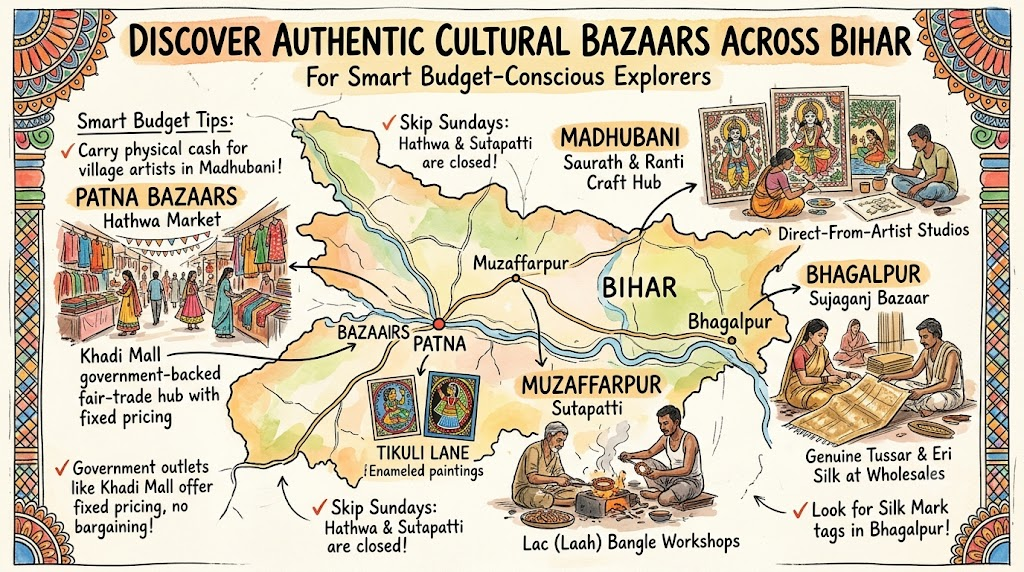
Introduction
Mainstream retail hubs in metropolitan cities have become sanitized, predictable, and remarkably detached from local heritage. Stepping into the historic street bazaars of Bihar reveals a starkly different, deeply grounded reality where age-old commerce thrives through human connection and inherited artisan traditions.
Centuries-old trade lanes here hum with the banter of generational merchants, the earthy scent of handspun fabrics, and the gleam of brassware and lac ornaments. Navigating these bustling street alleys offers an unfiltered window into the soul of the heartland, delivering genuine handmade craft at honest, budget-friendly prices.
Atmospheric local street bazaar in Bihar.
Why Bihar is a must-visit city
Bihar sits at the civilizational crossroads of ancient empires, monastic knowledge, and timeless regional crafts. Beyond its sacred Buddhist and Jain heritage routes, the state harbors an intricate network of regional craft clusters that funnel directly into historic urban bazaars.
Travelers journeying through Bihar experience a seamless tapestry of distinct micro-economies. The fertile Gangetic belt connects the tussar silk weavers of Bhagalpur to the folk studios of Madhubani and the bustling riverine trade markets of Patna, all tied together by extensive railway networks, modernized national highways, and warm local hospitality.
| Feature | Details |
|---|---|
| Primary Craft Specializations | Madhubani Folk Art, Bhagalpuri Tussar Silk, Sikki Grass Crafts, Tikuli Art, Muzaffarpur Lac Bangles |
| Core Transit Hubs | Jay Prakash Narayan Airport (Patna), Patna Junction, Bhagalpur Junction, Darbhanga Airport |
| Best Travel Season | October to March (Crisp winter mornings and pleasant afternoons) |
| Typical Daily Shopping Budget | ₹500 – ₹2,500 (Covers authentic textiles, brass souvenirs, and folk canvases) |
| Primary Cultural Circuits | Patna Capital Loop, Mithila Folk Craft Belt, Anga Silk Route |
Best Places or Experiences
Hathwa Market, Patna
Hathwa Market stands as the undisputed heart of traditional clothing and festive wear in central Patna. Located near the historic Bari Path, this sprawling bazaar has catered to wedding shoppers, students, and family households for generations. Narrow corridors open into multi-story fabric chambers stacked ceiling-high with ethnic silks, embroidered dupattas, and everyday cottons.
The atmosphere is lively and sensory, soundtracked by merchants calling out unstitched suit fabric bargains and tailoring shops whirring at full speed. For budget-conscious travelers seeking high-grade traditional Indian attire without designer markups, Hathwa Market delivers extraordinary variety at direct-wholesale rates.
- Location: Bari Path, Bakerganj, Patna (approx. 3.5 km from Patna Junction railway station).
- Why it is worth visiting: Unmatched selection of bridal wear, unstitched suit sets, dress materials, and ethnic accessories sold at wholesale rates.
- Best things to do: Pick up custom zardozi dress pieces, browse boutique lanes for handcrafted stoles, and explore traditional shoe stalls lining the outer gates.
- Best time to visit: 11:30 AM to 3:00 PM on weekdays to skip heavy evening wedding shopping crowds.
- Ideal for whom: Fashion enthusiasts, budget solo travelers, couples assembling ethnic wardrobes, and textile collectors.
- Travel tip: Wear slip-on footwear since you will often remove shoes to sit on cloth-covered mattress floors inside traditional fabric shops.
Maurya Lok Complex, Patna
Built as one of the state capital’s first organized open-air shopping plazas, Maurya Lok combines open public courtyards with classic brick-and-mortar storefronts. The complex acts as a lively cultural crossroad where university students, bureaucrats, and travelers meet over street delicacies and regional purchases.
Beyond seasonal khadi sales and folk craft counters, Maurya Lok is famed for its collection of state handicraft emporiums, bookstore corners, and ready-made ethnic garments. The tree-shaded central promenade lets you inspect handcrafted terracotta pots and brass knick-knacks without battling motorized vehicle traffic.
- Location: Fraser Road, Dak Bunglow Crossing, Central Patna (approx. 1.5 km from Patna Junction).
- Why it is worth visiting: Clean, walkable open-air environment housing official government craft stores, independent bookshops, and artisanal stalls.
- Best things to do: Visit the regional handloom outlets for pure khadi shirts, buy miniature Tikuli art plates, and sample hot litti chokha at the open courtyard kiosks.
- Best time to visit: 4:00 PM to 8:00 PM for the full evening social buzz and illuminated courtyards.
- Ideal for whom: Families, casual walkers, solo backpackers, and souvenir hunters seeking fixed, transparent rates.
- Travel tip: Several government stalls here accept digital payments seamlessly, making it ideal if you are running low on physical cash.
Sujaganj Bazaar, Bhagalpur
Bhagalpur has carried the mantle of India’s “Silk City” for over a century, and Sujaganj is its living engine room. Threading through central Bhagalpur, this dense market trades in raw Tussar silk, Eri silk, and featherlight linen-silk blends woven in the nearby looms of Champanagar.
The visual palette of Sujaganj is captivating, displaying shimmering natural golden-beige reeled silks alongside modern block-printed sarees. Buying directly from Sujaganj wholesalers bypasses middleman commissions, allowing travelers to secure heirloom-grade pure silk pieces at a fraction of high-end metropolitan boutique tags.
- Location: Sujaganj Main Road, Bhagalpur (approx. 1 km from Bhagalpur Junction).
- Why it is worth visiting: World-famous hub for genuine, direct-from-weaver Bhagalpuri Tussar silk sarees, stoles, and dress yards.
- Best things to do: Test natural tussar fabric using the friction touch test, purchase undyed organic silk yardage, and browse traditional brass button merchants.
- Best time to visit: 10:30 AM to 1:00 PM when wholesale shop owners open fresh morning bundles.
- Ideal for whom: Textile aficionados, sustainable fashion advocates, and travelers hunting timeless handloom investments.
- Travel tip: Look for the Silk Mark certification tag on higher-end weaves to verify genuine natural silk fiber content.
Saurath & Ranti Craft Hub, Madhubani
The shopping experience in the Mithila heartland transcends standard retail shops. In artisan hubs like Ranti, Jitwarpur, and the surrounding market bazaars of Madhubani, family courtyards double as direct artist studios and open-air sales points.
Generations of women artisans create breathtaking Mithila paintings on handmade paper treated with cow dung wash, using natural pigments derived from crushed berries, soot, turmeric, and leaves. Purchasing art directly from these village artist collectives ensures full financial remuneration goes straight to the creator while keeping prices astonishingly accessible for travelers.
Authentic hand-painted Madhubani folk canvas.
- Location: Madhubani District (approx. 30 km from Darbhanga Airport; 170 km northeast of Patna).
- Why it is worth visiting: The geographic epicenter of UNESCO-recognized Mithila art, offering direct-from-source canvas, bookmark, and sari purchases.
- Best things to do: Commission a personalized Kohbar or tree-of-life painting, watch master artists paint using fine bamboo twigs, and purchase hand-painted bookmarks for budget souvenirs.
- Best time to visit: 9:00 AM to 12:30 PM during winter months for crisp natural daylight in village courtyards.
- Ideal for whom: Art lovers, cultural ethnographers, photographers, and ethical shoppers.
- Travel tip: Carry hard cash in crisp smaller denominations; rural artist homesteads frequently have intermittent network connectivity for digital scanner apps.
Sutapatti, Muzaffarpur
Sutapatti in Muzaffarpur is North Bihar’s oldest wholesale cloth and accessory exchange. Tucked right behind the city center, this maze of tight lanes is nationally renowned for its bustling textile trade and magnificent lac (laah) bangle cottage workshops.
The glowing furnaces in adjoining alleyways melt natural lac resin, which skilled craftsmen roll and shape into ornate, mirror-studded bangles right before your eyes. In Sutapatti, you can purchase sets of bridal chudas and everyday brass-infused bangles at straightforward manufacturing prices.
- Location: Sutapatti Cloth Market, Muzaffarpur (approx. 1.5 km from Muzaffarpur Junction; 75 km north of Patna).
- Why it is worth visiting: Historic wholesale textile trade district and the regional cradle of handcrafted, skin-friendly lac bangles.
- Best things to do: Watch artisans embed glass stones into heated lac forms, customize bangle sets to your wrist size, and pick up block-printed cotton gamchas.
- Best time to visit: 2:00 PM to 6:00 PM on non-holiday weekdays.
- Ideal for whom: Jewelry collectors, craft admirers, and wedding trousseau shoppers.
- Travel tip: Lac bangles are heat-sensitive; pack your purchases between soft cotton cloths inside a sturdy container to prevent bending in warm luggage.
Khadi Mall, East Gandhi Maidan, Patna
For travelers seeking a relaxed, reliable, all-in-one ethical shopping experience, Khadi Mall in Patna sets a benchmark as India’s first large-format government-backed khadi shopping destination. Spanning four expansive floors opposite Gandhi Maidan, this modern complex houses products curated directly from hundreds of village cooperatives across all 38 districts of Bihar.
The shelves feature handspun khadi kurtas, organic honey from Champaran, Sikki golden grass storage baskets, stone-carved bowls from Gaya, and traditional handloom blankets. Everything is sold at strictly standardized government-regulated rates, sparing travelers the stress of aggressive street haggling while supporting grassroots artisans.
- Location: East Gandhi Maidan, Patna (approx. 2.5 km from Patna Junction).
- Why it is worth visiting: Guaranteed authenticity, government-certified quality standards, and fixed fair-trade pricing across diverse state crafts under a single roof.
- Best things to do: Select crisp seasonal khadi jackets, purchase golden Sikki grass desk organizers, and pick up jars of unprocessed forest honey.
- Best time to visit: 11:00 AM to 2:00 PM for peaceful browsing across all floors before evening shopper rushes.
- Ideal for whom: First-time visitors, business travelers on tight schedules, and tourists looking for certified ethical keepsakes.
- Travel tip: Watch for government khadi discount periods in October and January, when special seasonal rebates of 15% to 25% are applied at the billing desk.
Offbeat Exploration: Hidden Gems Tourists Miss
Upendra Maharathi Shilp Anusandhan Sansthan, Patliputra
Far from tourist gift traps, this premier state research institute operates quiet display and production studios in Patliputra Colony. Travelers can quietly observe master craftsmen perfecting bamboo architecture, stone sculpture, and rare paper-maché toys, with an adjoining museum shop offering authentic works at production prices.
Tikuli Lane, Danapur Cantonment Fringe
Tikuli craft—an 800-year-old art form utilizing enameled glass and gold leaf miniature painting—has its surviving artisan roots preserved around the Danapur fringe. Exploring these residential workshops allows visitors to buy stunning hand-painted coasters, trays, and wall medallions directly from the artisan families keeping the craft alive.
Babu Bazaar, Buxar
Set along the holy bend of the Ganges near the Uttar Pradesh border, Babu Bazaar is famous among regional pilgrims for brass temple bells, hand-beaten copper vessels, and ceremonial incense. Buying kitchen utensils and prayer ware here by weight yields remarkable cost savings compared to heritage antique stores in major metros.
Detailed Practical Guidance for Travelers
| Destination | Standard Entry Fee | General Timings | Best Local Food Options Nearby | Recommended Nearby Attractions |
|---|---|---|---|---|
| Hathwa Market (Patna) | Free Public Access | 10:30 AM – 9:00 PM (Closed Sundays) | Maurya Mishthan Bhandar (Jalebi, Kachori) | Patna Museum, Buddha Smriti Park |
| Maurya Lok Complex (Patna) | Free Public Access | 10:00 AM – 9:30 PM (Open Daily) | Kapil Dev’s Elevens & Local Litti Chokha stalls | Bihar Museum, Golghar |
| Sujaganj Bazaar (Bhagalpur) | Free Public Access | 10:00 AM – 8:30 PM (Closed Sundays) | Champa Nala Chaat & local Motichoor Ladoos | Vikramshila University Ruins, Gangetic Dolphin Sanctuary |
| Saurath & Ranti (Madhubani) | Free (Village visits) | Sunrise to Sunset (Daily) | Local Mithila fish thali & creamy Makhana Kheer | Rajnagar Palace Ruins, Kapileshwar Temple |
| Sutapatti (Muzaffarpur) | Free Public Access | 11:00 AM – 8:00 PM (Closed Sundays) | Baban Shahi Litchi Juice & crispy Samosas | Garib Nath Temple, Jubba Sahni Park |
| Khadi Mall (Patna) | Free Public Access | 10:00 AM – 8:30 PM (Open Daily) | Bapu Sabhaghar canteen & Gandhi Maidan street chaat | Golghar, Sabhyata Dwar |
Logistics & On-Ground Navigation
Local Transport Options
- Railways: Bihar’s suburban rail network is its lifeline; frequent passenger and express trains link Patna, Muzaffarpur, Darbhanga, and Bhagalpur cheaply and efficiently.
- E-Rickshaws (Tuk-Tuks): Omnipresent in every town; they run along fixed routes for ₹10 to ₹20 per seat and are the best option for navigating congested bazaar lanes.
- App-Based Cabs & Autos: Ola and Uber operate reliably in Patna, Muzaffarpur, and Gaya for point-to-point city transit without bargaining.
- Private Car Rentals: Ideal for multi-town heritage circuits (e.g., Patna to Madhubani); standard sedans cost approximately ₹2,800 to ₹3,500 per day including driver allowance.
Budget Planning
- Backpacker / Solo Tier (₹1,000 – ₹1,800 per day): Stays in verified guest houses or railway retiring rooms (₹500–₹800), street-food dining (₹250–₹350), e-rickshaw travel (₹150), and modest souvenir shopping.
- Mid-Range / Comfort Tier (₹3,000 – ₹6,000 per day): Three-star heritage or business hotel rooms (₹2,200–₹3,800), casual dining restaurants (₹800–₹1,200), private app-cab rentals (₹1,000), and generous artisanal shopping allocations.
Safety and Inclusivity Tips
- For Families: Keep small children close in high-density corridors like Hathwa Market and Sutapatti; keep stroller equipment packed away as cobblestone alleys favor baby carriers.
- For Couples: Markets are conservative and family-oriented; dressing in modest everyday attire ensures respectful, frictionless interactions with shopkeepers.
- General Safety: Keep wallets and mobile devices in zipped front pockets while navigating crowded market choke-points, and decline informal street money-exchange or tout assistance.
Strategic Travel Planning Guardrails
Travel Planning Tips for Bihar
- Time Your Visits for Daylight: Historic bazaars operate best between 11:00 AM and 5:00 PM; early departures keep you ahead of narrow alley rush-hour jams.
- Carry a Dual Payment Strategy: While UPI QR codes work widely in established shops, keep ₹1,500 in small physical currency notes (₹20, ₹50, ₹100) for curbside craft makers.
- Test Fabric Threads Authentically: When buying silk, pull a loose thread from the raw edge and burn it carefully; pure silk smells like burnt hair and leaves soft ash, whereas synthetic polyester melts into a hard plastic bead.
- Inspect Handloom Imperfections: Remember that tiny irregularities in weave tension or hand-painted ink lines are hallmarks of genuine human craft, not factory defects.
- Respect Photography Boundaries: Always ask for verbal permission before snapping portraits of craftswomen working on delicate looms or canvas paintings.
Common Mistakes to Avoid
- Aggressive or Disrespectful Haggling: While gentle price negotiation is expected in wholesale textile lanes, avoid severe lowballing with independent village folk painters whose livelihoods depend on fair art compensation.
- Overlooking Packaging Integrity: Fragile items like terracotta pots, raw silk rolls, and lac bangles require firm cardboard backing; never let vendors pack them loosely in flimsy polythene bags.
- Assuming Markets Open at Dawn: Retail bazaars across Bihar rarely open for customers before 10:30 AM; planning early 8:00 AM shopping runs leaves you standing before closed shutters.
- Ignoring Sunday Closures: Several historic district markets (such as Hathwa Market in Patna and Sutapatti in Muzaffarpur) remain strictly shut on Sundays.
- Skipping Direct Rural Clusters: Limiting your purchases solely to city retail stores deprives you of visiting living artisan villages like Jitwarpur, where entire streets breathe pure folk art.
Suggested Itinerary Blueprints
- Day Quick Dash (Patna Craft & Culture Sprint): Tailored for business transit visitors and weekend day-trippers. Start at 10:30 AM at Khadi Mall for certified regional handicrafts and textiles, proceed via e-rickshaw to Maurya Lok for afternoon shopping and fresh litti chokha, and wrap up with an evening stroll through Hathwa Market for wedding textiles.
- Day Deep-Dive (Capital & Silk Belt Loop): Designed for serious textile hunters.
- Day 1: Explore Patna’s Upendra Maharathi Shilp Sansthan in the morning, followed by fabric hunts through Hathwa Market. Wanderlog
- Day 2: Board an early morning express train along the Ganga to Bhagalpur; dedicate the day to inspecting natural tussar silk reeled directly in Sujaganj and Champanagar looms before returning on an evening service.
- Complete Weekend Travel Plan (The Mithila Folk Art Trail):
- Friday: Fly into Darbhanga Airport, check into your hotel, and explore the surrounding local brass and sweet bazaars.
- Saturday: Take a private day excursion to Madhubani’s Ranti and Jitwarpur artisan homesteads; spend uninterrupted hours buying master-series paintings directly from village families.
- Sunday: Drive south to Muzaffarpur’s Sutapatti to shop for bespoke lac bangles, taste seasonal litchi delicacies, and connect to Patna Junction for your onward journey.
Common Tourist Mistakes to Avoid
- Geographic Blunders: Attempting to combine the northern Mithila art circuit (Madhubani) with southern silk towns (Bhagalpur) in a single day trip is physically impossible due to river crossings; group destinations cleanly along the North Gangetic or South Gangetic highway corridors.
- Commercial Traps: Wasting precious travel time in generic glass-and-steel modern air-conditioned suburban shopping plazas that feature the exact same global chain stores found in every major airport city.
- Neglecting Modern/Alternative Zones: Forgetting to explore the emerging artisan-led studio spaces, quiet residential design collectives, and independent boutique cafes in Patna’s Patliputra and Boring Road neighborhoods.
- Transport Overpayment: Agreeing to arbitrary roadside flat-rate auto quotes outside major railway stations; always step away from arrivals gates to hail e-rickshaws along their set fixed-price paths or book via digital ride apps.
- Luxury Dining Bias: Eating exclusively inside generic multi-cuisine hotel buffets; missing out on street-corner chana ghugni, sattu sharbat, khaja from Silao, and clay-cup chai deprives you of the region’s true gastronomic identity.
Frequently Asked Questions
1. What is the single best handmade souvenir to buy in Bihar on a tight budget?
A hand-painted Madhubani bookmark or miniature Tikuli art coaster set is the ideal budget souvenir. These items showcase centuries-old folk traditions, fit effortlessly into cabin baggage, and cost between ₹50 and ₹200 directly from local artisan stalls.
2. How do I know if the Bhagalpuri silk I am buying is genuine?
Genuine Bhagalpuri Tussar silk has a naturally matte, slightly textured surface with subtle irregularities across the weave. Perform a simple burn test on a loose edge thread if the shopkeeper allows: natural silk burns slowly with a distinct singed-hair scent and crumbles into dark ash, whereas synthetic polyester forms a hard bead.
3. Are street market prices fixed, or is bargaining expected across Bihar?
Prices in private street bazaars like Hathwa Market and Sutapatti involve customary bargaining, where polite counter-offers 15% to 25% below the initial asking price are normal. However, government-run hubs like Khadi Mall and village cooperative workshops feature fixed, transparent rates that need no negotiation.
4. Is it safe to carry cash while shopping in crowded local bazaars?
Yes, but standard street vigilance is essential. Keep higher-value currency notes inside an inner zipped pouch, carry pocket-friendly bundles of ₹20 and ₹50 notes for quick purchases, and avoid displaying thick wads of cash openly at vendor stalls.
5. What are the typical operating hours of street markets in Patna?
Most shops in traditional markets open their doors around 10:30 AM to 11:00 AM and stay active until 8:30 PM to 9:00 PM. Wholesale lanes usually wind down business earlier in the evening, and Hathwa Market remains closed on Sundays.
6. Can I buy authentic Madhubani paintings directly from the artists who make them?
Yes, visiting the artist hamlets of Jitwarpur and Ranti in Madhubani allows you to sit in open village courtyards with award-winning master artisans. You can browse extensive portfolios of work, discuss the iconography, and purchase paintings directly without middleman markups.
7. Why are Muzaffarpur lac bangles special compared to ordinary glass bangles?
Lac bangles are crafted using natural insect resin, making them gentle on the skin, naturally warm to the touch, and far more durable than brittle glass bangles. Artisans embed glittering stones, mirrors, and colored enamel into the heated lac while it rests on wooden shaping spindles.
8. Do vendors in these local markets accept digital UPI payments?
Virtually all established permanent shops and mid-sized market kiosks accept UPI payments via standard QR code scanners. However, independent street-side artisans, cycle vendors, and village home workshops still require physical cash notes due to occasional mobile network gaps.
9. What should I wear while shopping in traditional city markets?
Comfortable, culturally modest clothing made of breathable cotton is ideal. Avoid elaborate jewelry, and choose slip-on shoes or flat sandals since you will often take them off when stepping onto white fabric sheets in traditional saree and textile shops.
10. What is the best month to plan a market and shopping tour across Bihar?
The winter months from November through February offer cool, sunny daytime weather perfect for long walking explorations through open-air markets. Avoid the peak summer heat of May and June, when midday temperatures regularly exceed 40°C.
11. Is luggage parcel and courier service easily available for bulky purchases?
Yes, major commercial hubs like Patna, Bhagalpur, and Muzaffarpur house reliable logistics branches including India Post, Blue Dart, and DTDC. Most established silk and textile merchants in Sujaganj and Hathwa Market will also arrange door-to-door insured parcel delivery for a modest surcharge.
12. How much should I budget for an authentic handloom silk saree in Bhagalpur?
A pure handloom Bhagalpuri Tussar silk saree purchased directly from Sujaganj wholesale quarters typically costs between ₹2,200 and ₹5,500, depending on thread count and printing complexity. The same piece easily commands double or triple that price in luxury metro boutiques.
Conclusion
Choosing to explore the historic street bazaars of Bihar over air-conditioned tourist malls transforms shopping into a meaningful cultural discovery. The real reward lies in connecting directly with the weavers, painters, and metal-smiths whose hands keep ancient crafts alive. Bringing home a hand-painted canvas or a woven silk stole means carrying forward a living piece of India’s cultural tapestry, enriched by memories of genuine human warmth.
