Introduction
Mainstream vacation trails across India often funnel hungry travelers toward crowded commercial bistros, westernized cafes, and sanitized buffet halls that lack a sense of place. Bihar offers an exhilarating, grounded culinary journey where food is anchored in centuries of rustic survival, royal refinement, and indigenous culinary wisdom.
The aroma of woodsmoke drifting from slow-burning cow-dung cake ovens tells you everything about this land’s commitment to slow, honest cooking. Biting into a ghee-soaked litti stuffed with pungent spiced sattu or listening to the delicate crunch of fifty caramelized pastry layers in Silao connects you directly to the culinary soul of the Gangetic plain.
Why Bihar is a must-visit city
Bihar is one of the most culturally vital and historically dense regions in Asia, having nurtured the Maurya and Gupta Empires alongside the sacred roots of Buddhism and Jainism. This deep agricultural and cultural history shaped a regional culinary map defined by micro-local specialties, where distinct towns possess centuries of mastery over a single dish. Reaching these culinary epicenters is straightforward thanks to modern four-lane expressways, the Patna and Gaya international airports, and frequent Vande Bharat trains.
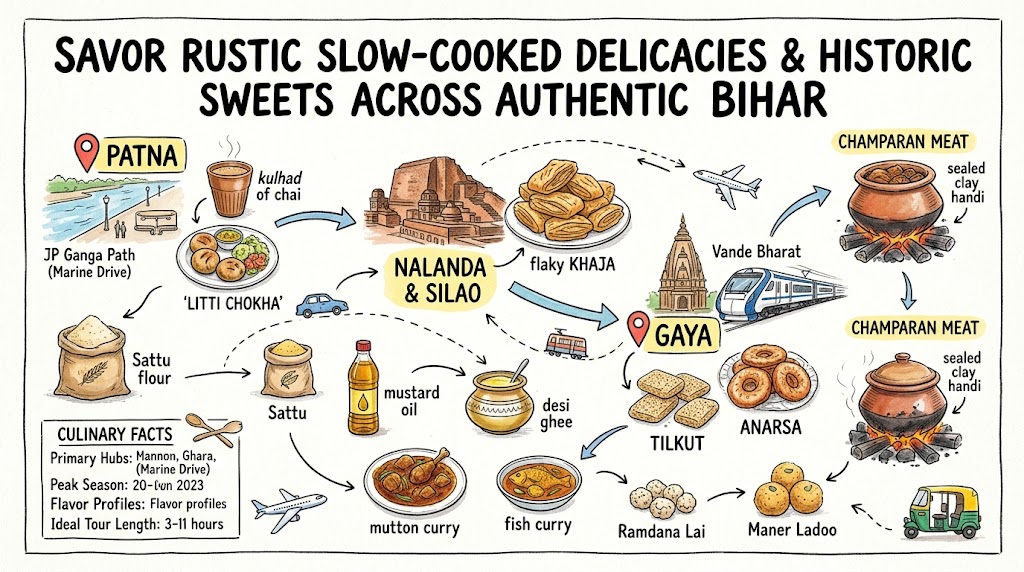
The quintessential food lover’s circuit begins along the wide riverfront banks of Patna, moves south through the sweet-making clusters of Nalanda and Silao, and extends into the heritage confectioneries of Gaya. This route blends world-class archaeological wonder with roadside stalls whose secret recipes have been handed down through five generations.
| Key Culinary Fact | Details |
|---|---|
| Primary Transit Hubs | Jay Prakash Narayan Airport (Patna), Gaya Junction, Patna Junction |
| Peak Gastronomy Season | October to March (Crisp weather perfect for hot winter sweets and roasted meats) |
| Signature Flavor Profiles | Pungent mustard oil, roasted gram flour (sattu), raw garlic, clarified butter (desi ghee) |
| Signature Cooking Styles | Slow-coal charcoal smoking, multi-layered deep sugar crusting, clay-pot sealing |
| Ideal Food Tour Length | 3 to 4 days for the full central culinary loop |
Crisp wood-roasted Litti Chokha.
Best Places or Experiences
1. The Litti Chokha Trail at Maurya Lok and Dak Bungalow
The Maurya Lok complex and surrounding Dak Bungalow lanes in central Patna represent the bustling heart of everyday Bihari street dining. Here, local vendors roast rustic dough globes filled with spiced sattu over smoldering cow dung and charcoal braziers before cracking them open and submerging them whole into brass cauldrons of smoking hot desi ghee.
Paired with a pungent, smoky chokha composed of roasted fire-charred brinjals, wood-baked tomatoes, boiled potatoes, raw mustard oil, and green chilies, this humble plate delivers an explosion of rustic textures. The sensory interplay between the crisp charred crust, the savory cumin-carom roasted flour filling, and the sharp bite of raw garlic forms the gold standard of Bihari comfort food.
- Location: Maurya Lok Complex, Fraser Road Area, Central Patna (2 km from Patna Junction).
- Why it is worth visiting: The definitive street-level introduction to Bihar’s globally recognized culinary ambassador.
- Best things to do: Watch the cooks crack hot littis directly into pure ghee, taste the fiery green chili-garlic pickle, and pair your meal with chilled sattu sharbat.
- Best time to visit: 12:30 PM to 3:30 PM for lunch, or 6:30 PM to 9:30 PM for lively dinner ambiance.
- Ideal for whom: Solo culinary backpackers, families, street food photographers, and adventurous eaters.
- Travel tip: Ask the vendor for extra sukha sattu masala and a wedge of fresh lemon to sprinkle across your opened litti.
2. Silao’s GI-Tagged Khaja Cluster
Situated between the archaeological ruins of Nalanda and the forested hills of Rajgir, the roadside market town of Silao has perfected the art of the multi-layered flaky sweet known as Khaja for over a millennium. Legend holds that even Lord Buddha and Chinese traveler Xuanzang were presented with these fragile pastries during their travels across Magadha.
Master halwais fold refined wheat flour dough with clarified shortening dozens of times, rolling it paper-thin before slicing it into oblongs that are flash-fried in boiling ghee and kissed with warm sugar syrup. The resulting confection features 48 to 52 microscopic crispy layers that melt on the tongue without excessive stickiness or heavy sweetness.
- Location: Silao Market Stretch, Nalanda District (95 km southeast of Patna on the Rajgir Highway).
- Why it is worth visiting: Home of the official Geographical Indication (GI) tagged pastry celebrated for its delicate, paper-thin flakiness.
- Best things to do: Observe the synchronized dough-folding techniques in open-air workshops, sample piping-hot unsweetened saada khaja, and purchase vacuum-packed boxes for travel.
- Best time to visit: 10:00 AM to 4:00 PM when fresh daytime batches emerge hot from the frying pans.
- Ideal for whom: History buffs, sweet connoisseurs, and cultural road trippers.
- Travel tip: Seek out the historic Kali Sah shop; purchase both the classic sugar-glazed version and the milder, less sweet meetha-kam variant.
Golden flaked Silao Khaja
3. Champaran Meat Houses of Patna
Originating in the forested frontier of West Champaran, the distinct style of slow-cooking mutton in tightly sealed earthenware vessels has swept through Bihar’s urban culinary scene. The meat is marinated with whole pods of unpeeled garlic, thick slices of red onion, whole dried red chilies, crushed ginger, and pure raw mustard oil before being packed into narrow-mouthed earthen handis.
The lids are sealed airtight with wet wheat dough and placed over glowing charcoal embers, allowing the mutton to braise gently in its own rendered juices without added water. When the clay seal is cracked open at your table, the fragrant rush of garlic, earthy baked terracotta, and caramelizing mutton fat delivers an unforgettable aroma.
- Location: Old Jakkanpur and Bailey Road dining belts, Patna (3 km from Patna Airport).
- Why it is worth visiting: An authentic demonstration of ancient pressure cooking using raw terracotta and charcoal embers.
- Best things to do: Savor the tender whole garlic cloves softened inside the mutton stew, dip hot tawa rotis into the thick onion-gravy emulsion, and capture the theatrical dough-breaking reveal.
- Best time to visit: 1:00 PM to 3:00 PM for the freshest daytime clay pots, or early dinner by 8:00 PM before stocks sell out.
- Ideal for whom: Dedicated carnivores, spice lovers, and culinary history enthusiasts.
- Travel tip: Arrive early for lunch service; the best handis finish slow-cooking around 12:45 PM and the day’s limited pots often sell out completely within two hours.
4. Tekari Road Tilkut and Anarsa Emporiums of Gaya
The sacred city of Gaya is just as famous for its heritage winter confections as it is for ancient temple rituals. As cool winter air rolls in, the narrow alleys of Tekari Road and Ramna resonate with the rhythmic thud of wooden mallets pounding roasted white sesame seeds and boiling jaggery syrup into gossamer sheets of Tilkut.
This manual pounding creates thousands of microscopic air pockets within the sesame mass, giving Gaya Tilkut its signature brittle snap and feather-light chew. Alongside tilkut, massive cauldrons bubble with Anarsa, a confection of fermented rice flour and poppy seeds stuffed with sweet reduced milk (khoya) and fried to a deep golden crisp.
- Location: Tekari Road and GB Road Bazaar, Old Gaya (110 km south of Patna, 2 km from Gaya Junction).
- Why it is worth visiting: Centuries of artisanal winter confectionery heritage built upon physical rhythm and ancient confectioners’ techniques.
- Best things to do: Watch sweet-makers stretch hot sugar taffy on wall hooks, sample warm jaggery (gur) tilkut fresh from the hammer, and taste bite-sized round anarsa golis.
- Best time to visit: 8:00 AM to 1:00 PM, especially between November and February during peak winter production.
- Ideal for whom: Traditional dessert enthusiasts, street photographers, and cultural explorers.
- Travel tip: Always ask for Gur ka Tilkut (made with dark unrefined sugarcane jaggery) rather than white sugar tilkut for a richer, more complex caramel flavor profile.
Fresh winter Tilkut sweets.
5. Evening Chaat and Street Stalls at JP Ganga Path
Patna’s modernized river promenade, the JP Ganga Path (popularly known as Marine Drive), has quickly transformed into one of Eastern India’s liveliest open-air street gastronomy strips. As dusk settles over the Ganges, mobile wooden carts and pop-up food vendors line the breezy riverfront.
The culinary scene here moves from traditional staples to urban street food: plates of spicy Ghugni-Chura (spiced yellow peas topped with crunchy flattened rice flakes), tangy Batata Puri, coal-roasted sweet corn brushed with lime and rock salt, and clay cups of thick saffron tea. The panoramic view of the wide river under cooling breezes makes it the ultimate social dining escape in the capital.
- Location: Northern riverfront expressway, Digha to Didarganj stretch, Patna (6 km from Patna city center).
- Why it is worth visiting: A vibrant, family-friendly evening food atmosphere pairing cool river winds with spicy regional bites.
- Best things to do: Sip hot spiced Kulhad Chai at sunset, share a plate of dry-roasted spicy Chura-Badam, and enjoy people-watching along the illuminated riverside.
- Best time to visit: 5:00 PM to 8:30 PM for sunset views and comfortable evening air.
- Ideal for whom: Couples, friend groups, family crowds, and late-afternoon tea lovers.
- Travel tip: Park near the Digha access ramp where pedestrian walkways are widest and vendors provide comfortable plastic stool seating right beside the water.
Bustling riverfront at JP Ganga Path.
6. Barh’s Heritage Lai and Dalmoth Stalls
Located along the historic Grand Trunk rail corridor east of Patna, the sub-divisional town of Barh is legendary for crafting Lai, an ancient sweet cake made from puffed grains held together with reduced artisanal molasses. The key ingredient is Khas Khas seeds or Ramdana (amaranth seeds) and puffed Khobi rice, bound with dark, slow-boiled winter sugarcane syrup.
These spherical, crunchy cakes offer a balance of earthy sweetness and crackling texture, carrying a culinary tradition that predates modern refining methods. Paired with a handful of savory, black-pepper-laced fried gram flour sev (dalmoth), it represents the pinnacle of traditional Bihari travel snacks.
- Location: Station Road and Bazaar area, Barh (65 km east of Patna along NH31).
- Why it is worth visiting: An uncommercialized heritage sweet celebrating ancient super-grains and regional unrefined sugarcane molasses.
- Best things to do: Sample both Ramdana Lai and Khobi Rice Lai side-by-side, inspect ancient brass boiling pans used to reduce cane syrup, and pack dry tin containers for easy transit.
- Best time to visit: 9:00 AM to 5:00 PM year-round.
- Ideal for whom: Culinary ethnographers, off-the-beaten-path travelers, and clean-eating enthusiasts.
- Travel tip: Buy from shops advertising Shuddh Ghee Ramdana Lai, which use clarified butter to roast the amaranth seeds before syrup binding.
Offbeat Exploration: Hidden Gems Tourists Miss
Maner’s Ghee-Drenched Motichoor Ladoos
Perched beside the historic Mughal tomb of Chhati Dargah, 30 km west of Patna, lies the dusty market town of Maner. Generations of halwais here produce an exceptionally melt-in-mouth variety of Motichoor Ladoo. The tiny gram flour pearls are fried in pure desi ghee using traditional brass perforated ladles and infused with the sweet, mineral-rich groundwater of the Son river basin, creating a delicate, aromatic orange sweet that dissolves instantly without any greasy aftertaste.
The Fish Curry and Rice Culture of Simri Bakhtiyarpur
While meat often dominates regional culinary conversations, the wetlands and floodplains of the Kosi and Mithila basins shelter an exquisite freshwater fish culture. Near the backwaters of Saharsa and Simri Bakhtiyarpur, road travelers can discover rustic shacks serving river-fresh Rohu and Catla steaks simmered in a golden, mustard-seed and green-chili emulsion (Machh-Bhaat). The dish is cooked with unpeeled mustard paste and garnished with fresh coriander, offering a sharp, herbaceous alternative to heavier central curries.
Surajgarha’s Roasted Kasar Sweets
In the rural heart of Lakhisarai district, roadside confectioners prepare Kasar, an earthy, energy-dense festive sweet traditionally associated with the Chhath Puja festival. Made from coarsely dry-ground rice flour, toasted fennel seeds, dry ginger powder, and dark jaggery, these hard-pressed round spheres are designed to stay fresh for weeks. They offer a rare glimpse into ancient preservation food traditions crafted specifically for long journeys across the plains.
Detailed Practical Guidance for Travelers
| Destination | Standard Entry Fee | General Timings | Best Local Food Options Nearby | Recommended Nearby Attractions |
|---|---|---|---|---|
| Maurya Lok Street Hub | Free | 11:00 AM – 10:30 PM | Desi Ghee Litti Chokha, Peda, Sattu Paratha | Bihar Museum, Patna Planetarium |
| Silao Khaja Market | Free | 8:00 AM – 9:00 PM | Fresh Ghee Khaja, Khoya Roll, Balushahi | Nalanda University Ruins, Xuanzang Memorial |
| Champaran Meat Houses (Jakkanpur) | Free | 12:30 PM – 10:00 PM | Ahuna Handi Mutton, Tawa Roti, Garlic Gravy | Golghar, Patna Sahib Gurudwara |
| Tekari Road Market (Gaya) | Free | 7:00 AM – 9:00 PM | Jaggery Tilkut, Anarsa, Kesaria Rabdi | Vishnupad Temple, Mahabodhi Temple (Bodh Gaya) |
| JP Ganga Path Promenade | Free | 4:00 PM – 11:00 PM | Ghugni Chura, Kulhad Chai, Roasted Bhutta | NIT Ghat, Gandhi Ghat River Aarti |
| Barh Heritage Market | Free | 8:00 AM – 8:00 PM | Ramdana Lai, Spicy Dalmoth, Pedakiya | Umanath Temple, Bakhtiyarpur Junction |
Logistics & On-Ground Navigation
Local Transport Options
- Railways: Exceptional intra-state rail density connects Patna Junction directly to Gaya, Bakhtiyarpur, and Nalanda with rapid express trains operating every hour.
- Private Car Rentals: Hiring a private taxi with a local driver from Patna remains the best strategy for custom food tours across multiple districts.
- Auto-Rickshaws & E-Rickshaws: E-rickshaws dominate city hubs like Bodh Gaya and Rajgir, providing cheap, emission-free transport through tight market lanes.
- State Roadways & AC Buses: Modern Rajdhani-grade AC buses operate between Patna, Muzaffarpur, and Gaya at thirty-minute intervals throughout the day.
Budget Planning
- Backpacker / Budget Tier: ₹1,200 – ₹1,800 per day (Covers local shared transport, budget guest rooms, and generous street food feasts including multiple plates of litti and sweets).
- Mid-Range / Comfort Tier: ₹3,800 – ₹6,500 per day (Includes private air-conditioned car hire, upscale heritage hotel stays in Patna or Bodh Gaya, and restaurant dining).
Safety and Inclusivity Tips
- Families: Street-food zones around Maurya Lok and JP Ganga Path are wide, well-lit, and welcoming to multi-generational family groups with children.
- Couples: Bodh Gaya’s quiet monastery cafes and Rajgir’s scenic valley restaurants offer peaceful, relaxed atmospheres for couples.
- General Safety: Drink only sealed bottled water, choose street food stalls with roaring flames and high local customer turnout, and carry basic digestive antacids for rich ghee dishes.
Strategic Travel Planning Guardrails
Travel Planning Tips for Bihar
- Target the Winter Season: Schedule your trip between November and mid-February when cool temperatures make hot fried sweets, rich curries, and roasted littis most enjoyable.
- Carry Paper Currency: While digital UPI payments work seamlessly across Patna, small sweet artisans in remote villages prefer cash.
- Carry Digestive Remedies: Bihari culinary traditions rely on hearty helpings of pure desi ghee, whole mustard oil, and roasted gram flour; pack digestive enzymes and rehydration salts.
- Respect Meal Timing: Unlike metropolitan cities where food is served late into the night, rural sweet makers and roadside meat houses finish their daily batches by early afternoon.
- Dress for Conservative Neighborhoods: When exploring traditional culinary lanes like Tekari Road in Gaya or old city Patna, opt for comfortable, modest walking clothes.
Common Mistakes to Avoid
- Skipping Mustard Oil: Do not ask cooks to tone down mustard oil in dishes like chokha or Champaran mutton; it provides the essential authentic flavor profile.
- Overpacking the Itinerary: Avoid scheduling more than two districts per day; rural roads and traffic can slow down travel between regional food stops.
- Assuming All Sweets Are Equal: Never purchase pre-packaged sweets from bus terminals; always visit the dedicated artisan streets for freshly prepared batches.
- Eating Too Late: Do not plan on 10:00 PM dinners in smaller towns like Silao or Barh; markets typically wrap up by 8:30 PM.
- Ignoring Sattu Refreshments: Skipping local roadside sattu pani stands robs you of an essential indigenous cooling superfood packed with plant protein.
Suggested Itinerary Blueprints
1. Day Quick Dash (Patna Urban Street Feast)
A focused, full-day sprint tailored for short business layovers or quick weekend visits to the capital.
- 08:30 AM – 10:30 AM: Warm Kochai kachoris and fresh jalebis at a legendary Fraser Road halwai, followed by a glass of chilled salted sattu sharbat.
- 11:00 AM – 01:30 PM: Cultural exploration inside the sprawling galleries of the Bihar Museum.
- 01:45 PM – 03:30 PM: Authentic slow-simmered handi mutton served in terracotta pots along Old Jakkanpur Road.
- 05:30 PM – 08:30 PM: Sunset walk along the JP Ganga Path promenade, savoring hot Ghugni-Chura and Kulhad Chai as riverboats pass by.
- 09:00 PM – 10:30 PM: Freshly roasted litti chokha soaked in desi ghee at Maurya Lok.
2. Day Deep-Dive (The Ancient Heritage & Confectionery Trail)
A balanced two-day itinerary connecting the historic ruins of Nalanda with the sweet-making clusters of Magadha.
- Day 1 (Patna to Rajgir via Silao): Depart Patna at 7:00 AM. Stop in Silao by 10:30 AM to sample hot, fresh-fried Khaja straight from the wood-fired oil pans. Tour the ancient brick ruins of Nalanda University during early afternoon, followed by dinner in Rajgir featuring hot sattu rotis and roasted vegetable curries.
- Day 2 (Rajgir to Gaya): Morning ropeway ride to Vishwa Shanti Stupa in Rajgir. Drive two hours to Gaya, exploring the narrow lanes of Tekari Road to watch artisans pound winter tilkut and fry sweet anarsa. Finish with a peaceful sunset visit to the Mahabodhi Temple in neighboring Bodh Gaya.
3. Complete Weekend Travel Plan (Grand Gangetic Food Loop)
A definitive three-day loop covering ancient monuments, river culture, and regional specialties.
- Friday: Arrive in Patna; enjoy an afternoon food walk across Fraser Road, followed by a riverfront dinner of Champaran handi mutton and fresh roomali rotis.
- Saturday: Early morning drive east to Barh to taste freshly pressed Ramdana Lai. Continue south through the ancient monastic ruins of Nalanda and pause for afternoon Khaja tasting in Silao before checking into your hotel in Bodh Gaya.
- Sunday: Early sunrise visit to the Mahabodhi Temple, followed by a breakfast of piping-hot sweet Rabdi and crunchy samosas in Gaya’s old bazaar. Watch tilkut artisans at work on Tekari Road before an afternoon drive back to Patna for your return journey.
Common Tourist Mistakes to Avoid
Geographic Blunders
Trying to visit Sasaram for its tombs, Bhagalpur for silk and fish curry, and Bodh Gaya for sweets on the same day is impossible. The state is geographically broad; focus strictly on one distinct sector, such as the central Patna-Nalanda-Gaya triangle, to maximize your dining and sightseeing time.
Commercial Traps
Spending precious vacation meals inside sanitized shopping mall food courts in western Patna deprives you of authentic regional cooking. Avoid standardized multi-cuisine restaurants and choose buzzing local stands with visible wood fires and active crowd turnover.
Neglecting Modern/Alternative Zones
While historic markets hold immense appeal, ignoring modern, relaxed public spaces like the newly expanded river corridors along JP Ganga Path means missing out on today’s lively evening street culture.
Transport Overpayment
Auto-rickshaw drivers at Patna Junction and Gaya Station often quote inflated flat rates to out-of-state travelers. Always use prepaid taxi booths, confirm standard seat-share rates, or use app-based rides to ensure fair pricing.
Luxury Dining Bias
High-end luxury hotel dining rooms in regional hubs frequently adjust authentic dishes to make them milder for generic palates. Limiting yourself to these dining rooms prevents you from tasting the unapologetic pungency of cold-pressed mustard oil, fire-roasted brinjals, and raw garlic that define true Bihari cuisine.
Frequently Asked Questions
1. Is Bihari food primarily vegetarian or non-vegetarian?
Bihari cuisine features an equal, highly sophisticated balance of both worlds. The everyday rural diet celebrates plant-based dishes made with sattu, lentils, leafy greens, and vegetable chokhas, while royal and festive traditions showcase slow-cooked clay-pot mutton and flavorful mustard-based fish curries.
2. What exactly is sattu, and why is it so prominent in Bihar?
Sattu is roasted Bengal gram (chana) ground into a fine, aromatic flour. It is considered an indigenous superfood packed with plant protein and dietary fiber, utilized in savory stuffed breads, cooling summer drinks, and spicy seasonings that keep travelers energized throughout the day.
3. What makes Champaran meat distinct from other Indian mutton curries?
Champaran meat is cooked entirely inside an earthenware clay pot sealed with raw wheat dough. It uses no added water, relying exclusively on melting sliced onions, pure mustard oil, whole heads of garlic, and slow charcoal heat to gently tenderize the meat in its own juices.
4. Can people with low spice tolerance enjoy authentic Bihari street food?
Yes, travelers can easily enjoy dishes with milder heat. Sweets like Silao Khaja, Gaya Tilkut, and Ramdana Lai contain no chili at all, and vendors preparing Litti Chokha are happy to serve milder mashed potatoes or non-spicy eggplant variations upon request.
5. How long does authentic Silao Khaja remain fresh after purchase?
When stored in a dry, airtight tin container away from moisture, authentic fried Silao Khaja easily stays fresh and delightfully crunchy for two to three weeks without needing any artificial preservatives.
6. Is it safe to drink water served at local roadside dhabas across Bihar?
It is strongly recommended for visiting travelers to drink only sealed, packaged mineral water from reputed brands or to carry personal insulated bottles with built-in purification filters when touring rustic market hubs.
7. Why is winter considered the premier season for food lovers visiting Bihar?
Winter brings the production of regional specialties like handcrafted Gaya Tilkut, sweet jaggery-infused Anarsa, tender roasted winter vegetables, and rich clay-pot mutton that can feel too heavy during humid summer months.
8. Are credit cards and digital wallets accepted at traditional sweet shops in Gaya?
While major sweet merchants in central Gaya and Patna readily accept UPI mobile payments, carrying paper currency remains essential when purchasing from smaller family-run stalls and remote roadside artisans.
9. What makes the Khaja of Silao different from layered sweets made elsewhere?
The distinct mineral composition of Silao’s local well water, combined with traditional multi-layered dough folding techniques, produces exceptionally thin, flaky layers that remain light and crisp rather than heavy or overly saturated with sugar syrup.
10. How is street-side Litti Chokha cooked differently from home-cooked variations?
Street vendors roast the stuffed wheat balls over smoldering cakes of dried cow dung and charcoal, infusing the dough with a distinct smoky flavor that conventional gas stoves and home ovens simply cannot replicate.
11. What is the best culinary souvenir to bring back home from a Patna food trip?
A vacuum-sealed tin of GI-tagged Silao Khaja, a box of artisanal jaggery Tilkut from Gaya, and a sealed packet of spiced roasted chana sattu are the most iconic, travel-friendly gifts to bring back.
12. Is pre-booking required for popular slow-food dhabas serving handi mutton in Patna?
While formal table reservations are rarely taken, it is wise to arrive right as daytime service begins around 12:45 PM to ensure you get a freshly opened pot before the limited daily stock sells out.
Conclusion
Embarking on a food lover’s journey across Bihar rewards the traveler with an unforgettable encounter with culinary authenticity. Beyond the modern rush of urban life, the cooking here remains honest, anchored in slow fires, generational patience, and deep agricultural heritage. Every crisp bite of freshly layered pastry and every smoky taste of coal-roasted grain connects you to a timeless culinary tradition that nourishes the spirit as much as the body.
