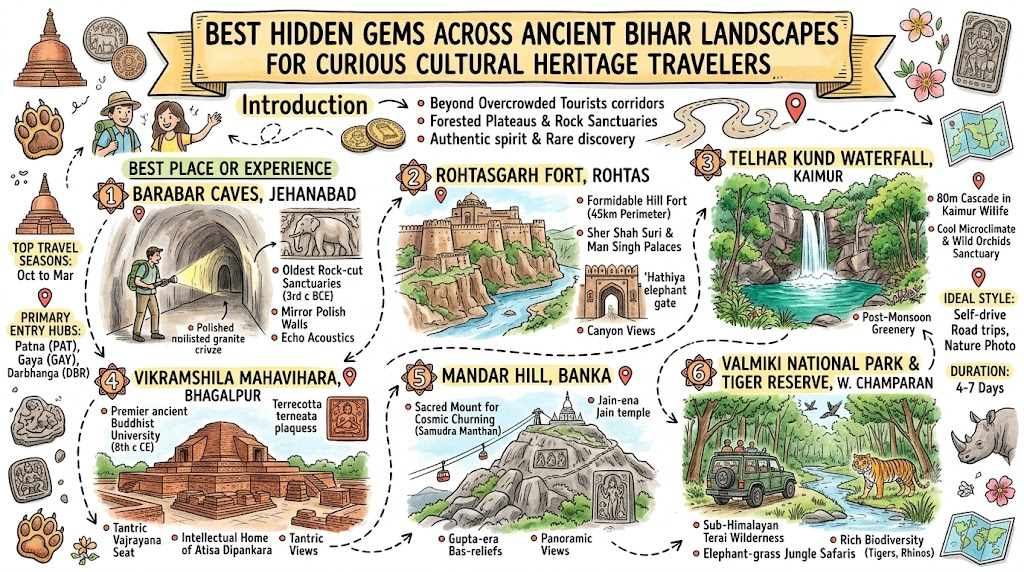
Introduction
While standard travel itineraries herd crowds toward commercialized, overcrowded tourist corridors, Bihar preserves an authentic, untamed spirit found in few other places across the subcontinent. Beyond conventional tourist stops lie forested plateaus, monolithic rock sanctuaries, cascading jungle waterfalls, and monumental fortresses.
Wandering through quiet valleys where ancient scholars once debated or standing atop mist-covered battlements provides a rare, personal sense of discovery. Exploring Bihar’s lesser-known wonders rewards curious travelers with profound heritage, raw topography, and unmatched cultural warmth.
Why Bihar is a must-visit city
Bihar is a foundational pillar of world history and Eastern philosophy. As the cradle that nurtured Buddhism, Jainism, and India’s first great imperial dynasties, the state holds immense cultural and geographic weight. Traveling across the region today is remarkably smooth, supported by an expanding network of four-lane expressways, modern Vande Bharat rail connections, and upgraded regional air hubs in Patna, Gaya, and Darbhanga.
The hidden gem circuit connects the mist-clad Kaimur hills in the southwest to the fertile river valleys of the east and the sub-Himalayan Terai in the north. Curious travelers can easily transition from rugged trekking routes to serene monastic remains within hours.
| Circuit Indicator | Key Information |
| Primary Entry Hubs | Patna (PAT), Gaya (GAY), Deoghar/Darbhanga regional airports |
| Top Travel Seasons | October to March (Pleasant daytime temperatures, crisp mornings) |
| Geographic Variety | Sandstone plateaus, deciduous forests, alluvial river plains |
| Ideal Exploration Style | Self-drive road trips, heritage walks, nature photography |
| Recommended Duration | 4 to 7 days for a multi-district offbeat loop |
Best Places or Experiences
1. Barabar Caves, Jehanabad
Carved into massive granite boulders during the 3rd century BCE under the Mauryan Emperor Ashoka, the Barabar Caves are the oldest surviving rock-cut sanctuaries in India. These subterranean chambers were originally dedicated to the ascetic Ajivika sect, featuring a distinctive architectural style that mimics wooden structures in stone.
Stepping inside the Lomas Rishi and Sudama caves reveals granite walls polished to a mirror-like finish that continues to reflect light after more than two millennia. The unique vaulted ceilings generate extraordinary acoustic resonance, where a single whisper echoes for several seconds across the pitch-black chamber.
- Location: Makhdumpur block, Jehanabad District; approximately 70 km south of Patna and 35 km north of Gaya.
- Why it is worth visiting: The world’s finest example of ancient Mauryan stone polishing and acoustic engineering.
- Best things to do: Test the famous echo resonance inside the Sudama cave, admire the intricately carved elephant frieze at the Lomas Rishi entrance, and hike the granite ridge for panoramic rural views.
- Best time to visit: October to February, ideally between 7:30 AM and 10:30 AM for pleasant hiking weather.
- Ideal for whom: Architecture enthusiasts, archaeology buffs, and acoustic researchers.
- Travel tip: Bring a high-powered flashlight or headlamp, as the interior chambers have no artificial lighting to preserve the ancient stone surface.
2. Rohtasgarh Fort, Rohtas
Perched atop the rugged Kaimur plateau at an elevation of 1,500 feet above the Son River valley, Rohtasgarh is one of the most formidable hill forts in India. Spanning an expansive perimeter of nearly 45 kilometers, this citadel served as a strategic stronghold for indigenous kings, Sher Shah Suri, and Raja Man Singh.
The vast complex contains grand multi-storied palaces, stone-carved elephant gateways, hanging stepwells, and ancient vaulted barracks overgrown with forest vines. Reaching the fort involves traversing panoramic cliffside roads with sweeping views across the Son River basin.
- Location: Kaimur Plateau, Rohtas District; approximately 160 km southwest of Patna and 45 km from Sasaram.
- Why it is worth visiting: One of India’s largest and most atmospheric cliff-top fort complexes, completely free from heavy crowds.
- Best things to do: Explore the expansive corridors of the Man Singh Palace, photograph the sandstone Hathiya Pol (Elephant Gate), and view the sheer 1,000-foot drop at the Hanging Palace edge.
- Best time to visit: November to March, starting early in the morning around 6:30 AM to allow ample time for walking.
- Ideal for whom: Trekking enthusiasts, landscape photographers, and deep history explorers.
- Travel tip: Hire a local guide from the base village of Akbarpur or Rohtas to navigate the interior forest trails inside the fort safely.
3. Telhar Kund Waterfall, Kaimur
Plunging more than 80 meters into a deep, emerald-green plunge pool enclosed by sheer sandstone cliffs, Telhar Kund is one of Bihar’s most dramatic natural spectacles. The waterfall is fed by streams winding through the dense deciduous canopies of the Kaimur Wildlife Sanctuary.
The surrounding mist creates a perpetually cool microclimate where wild orchids flourish and rare raptors soar along the canyon thermals. A well-constructed viewing deck allows travelers to soak in the thunderous cascade against a backdrop of raw forest foliage.
- Location: Bhabhua-Adhaura road, Kaimur District; roughly 190 km west of Patna and 35 km from Bhabhua town.
- Why it is worth visiting: An uncommercialized canyon waterfall offering pristine wilderness scenery.
- Best things to do: Photograph the vertical drop from the designated cliffside overlook, birdwatch along the forest trail, and picnic along the forested upper stream.
- Best time to visit: August to January (post-monsoon through winter for peak water volume and lush greenery).
- Ideal for whom: Nature lovers, road-trippers, and landscape photographers.
- Travel tip: Descending into the deep pool canyon is strictly prohibited for safety; stick to the authorized viewing platforms along the rim.
4. Vikramshila Mahavihara, Bhagalpur
Established by King Dharmapala in the late 8th century CE, Vikramshila stood alongside Nalanda as one of the two premier Buddhist universities of the ancient world. The sprawling excavated complex centers around a colossal cruciform brick stupa decorated with terracotta art.
Wandering through the restored foundation corridors reveals ancient lecture halls, residential monastic cells, and underground meditation chambers. The site remains remarkably tranquil, allowing visitors to walk undisturbed across centuries of intellectual history.
- Location: Kahalgaon, Bhagalpur District; approximately 235 km east of Patna and 38 km east of Bhagalpur city.
- Why it is worth visiting: The intellectual home of legendary scholar Atisa Dipankara and the seat of Tantric Vajrayana philosophy.
- Best things to do: Examine the carved terracotta plaques depicting scenes of daily life, explore the underground library chambers, and visit the on-site ASI Archaeological Museum.
- Best time to visit: October to March, particularly in the late afternoon when golden light strikes the brick stupa.
- Ideal for whom: Historians, solo travelers, and heritage enthusiasts.
- Travel tip: Combine your visit with a boat safari along the Kahalgaon stretch of the Vikramshila Gangetic Dolphin Sanctuary nearby.
5. Mandar Hill, Banka
Rising 700 feet from flat alluvial plains, this monolithic granite hill holds deep significance in Hindu and Jain traditions. Legend identifies it as the sacred Mount Mandara used as the churning rod during the cosmic Samudra Manthan.
The hillside is adorned with ancient rock-cut bas-reliefs, inscriptions dating back to the Gupta Empire, and natural water reservoirs carved into stone. At the summit sits a revered Jain temple dedicated to the 12th Tirthankara, Vasupujya, offering panoramic views across the countryside.
- Location: Bounsi block, Banka District; 240 km southeast of Patna and 45 km south of Bhagalpur.
- Why it is worth visiting: A multi-faith pilgrimage hill featuring ancient rock sculptures and a modern ropeway ascent.
- Best things to do: Ride the ropeway to the hilltop, explore the mysterious Sita Kund rock pool, and admire the Gupta-era rock carvings.
- Best time to visit: November to February (especially during the annual Makar Sankranti fair in January).
- Ideal for whom: Trekking families, cultural explorers, and panoramic view seekers.
- Travel tip: The stone steps can become hot by midday; complete your ascent before 9:00 AM or use the ropeway for comfort.
6. Valmiki National Park & Tiger Reserve, West Champaran
Nestled along the India-Nepal border in the foothills of the outer Himalayas, Valmiki National Park is Bihar’s crown ecological jewel. The sanctuary features dense Sal forests, Terai grasslands, and the meandering Gandak River.
Home to Royal Bengal tigers, Indian leopards, one-horned rhinoceroses, and over 250 species of birds, this wilderness offers authentic jungle safaris away from overcrowded wildlife circuits. The meeting of mountain streams and thick forests creates an immersive natural escape.
- Location: West Champaran District; approximately 290 km northwest of Patna and 40 km from Bagaha railway station.
- Why it is worth visiting: Untamed sub-Himalayan Terai wilderness and elephant-grass jungle safaris.
- Best things to do: Take an early morning open-top jeep safari through the Manguraha range, raft on the calm Gandak River, and trek the canopy trails.
- Best time to visit: November to April when safari tracks are dry and wildlife spotting around water bodies increases.
- Ideal for whom: Wildlife photographers, adventure travelers, and eco-tourists.
- Travel tip: Book your forest department eco-huts and jungle safari permits at least two weeks in advance during winter weekends.
Offbeat Exploration: Hidden Gems Tourists Miss
Kesaria Stupa, East Champaran
Rising over 104 feet, Kesaria is one of the tallest ancient Buddhist stupas in the world—surpassing even Indonesia’s Borobudur in original height. Excavated from a massive earthen mound, its stepped circular terraces hold multiple terracotta Buddha niches overlooking serene countryside.
Tutla Bhawani Waterfall & Valley, Rohtas
Hidden inside a dramatic green gorge near Tilauthu, this sacred waterfall cascades down sheer red sandstone cliffs into a pristine mountain river. A modern suspension bridge across the gorge offers breathtaking aerial views of the forest canopy and the historic rock shrine of Goddess Bhavani.
Cyclopean Wall, Rajgir
Dating back over 2,500 years to the pre-Mauryan era, this massive 40-kilometer defensive wall was assembled using enormous unhewn stone boulders without mortar. Walking along its remaining ridges offers a tangible connection to ancient military engineering that once protected the imperial capital of Magadha.
Detailed Practical Guidance for Travelers
| Destination | Standard Entry Fee | General Timings | Best Local Food Options Nearby | Recommended Nearby Attractions |
| Barabar Caves | Free | 6:00 AM – 5:30 PM | Sattu Drink & Dal Puri at Makhdumpur | Nagarjuni Caves, Kauva Dol Hill |
| Rohtasgarh Fort | Free | Sunrise to Sunset | Local Bihari Thali at Akbarpur Village | Tutla Bhawani, Dhuan Kund Falls |
| Telhar Kund | ₹20 per person | 8:00 AM – 5:00 PM | Roasted Chana & Sattu Paratha at Bhabhua | Karkat Waterfall, Kaimur Sanctuary |
| Vikramshila Ruins | ₹25 (Indian), ₹300 (Foreigner) | 8:30 AM – 5:00 PM | Katarni Rice Thali & Champaran Meat | Dolphin Sanctuary, Bateshwar Sthan |
| Mandar Hill | Free (Ropeway: ₹100) | 6:00 AM – 6:00 PM | Peda & Fresh Curd at Bounsi Bazaar | Paparni Lake, Madhusudan Temple |
| Valmiki Tiger Reserve | ₹150 (Safari extra) | 6:00 AM – 5:00 PM | Taas (Spiced Pan-fried Mutton) at Valmikinagar | Gandak Barrage, Triveni Ghat |
Logistics & On-Ground Navigation
Local Transport Options
- Railways: Excellent connectivity linking Patna, Gaya, Sasaram, Bhagalpur, and Bagaha via express and superfast trains.
- Private Car Rentals: Hiring a private SUV or sedan with an experienced driver is the most flexible way to navigate rural plateaus and forest roads.
- Auto-Rickshaws & E-Rickshaws: Inexpensive and abundant for transit between rural railway stations and base villages (e.g., Makhdumpur to Barabar).
- State Highways & Expressways: High-quality asphalt routes like the Purvanchal link, NH19, and the Patna-Gaya Expressway make road journeys reliable.
Budget Planning
- Budget / Backpacker Tier: ₹1,200 – ₹1,800 per day (Includes budget lodges, shared passenger jeeps/e-rickshaws, and local dhaba meals).
- Mid-Range / Comfort Tier: ₹3,500 – ₹6,000 per day (Includes heritage properties or 3-star hotels, private AC car rental, and specialty dining).
Safety and Inclusivity Tips
- Families: Destinations like Mandar Hill, Telhar Kund, and Vikramshila feature well-maintained access roads, resting pavilions, and kid-friendly walking trails.
- Couples: Offbeat natural spots like Valmiki Tiger Reserve and Ghora Katora offer serene, crowd-free environments; maintain respectful decorum near religious shrines.
- General Safety: Start early for forest and plateau trips (Rohtasgarh, Kaimur) to ensure return to base towns before sunset; keep offline navigation maps downloaded.
Strategic Travel Planning Guardrails
Travel Planning Tips for Bihar
- Target the Winter Window: Plan your trip between November and February to enjoy cool breezes, misty dawns, and comfortable outdoor hiking.
- Maintain Liquid Cash Reserves: Rural fuel stations, village dhabas, and local guides in remote zones often operate strictly on cash.
- Carry Offline Maps: Download offline Google Maps for hilly districts like Rohtas and Kaimur where mobile network signals can be intermittent.
- Pack Modest, Layered Clothing: Early mornings can be chilly (9°C–14°C), requiring light woolens; ensure shoulders and knees are covered when visiting sacred hills.
- Hire Registered Local Guides: Engaging local community guides supports the regional economy and unlocks hidden architectural details.
Common Mistakes to Avoid
- Overpacking Daily Itineraries: Attempting to combine southern plateaus (Sasaram) with eastern river plains (Bhagalpur) in one day leads to exhaustion.
- Relying Solely on Digital Payments: Expecting UPI QR codes at remote forest checkpoints or village tea stalls will cause avoidable delays.
- Ignoring Daylight Windows: Avoid trekking down steep hill trails like Rohtasgarh after dusk; always begin your descent by 4:30 PM.
- Skipping Regional Cuisine: Don’t stick only to generic hotel menus; sample local specialties like Katarni Chura, Sattu drinks, and freshly fried Khaja.
- Traveling Without Camera Batteries: Remote sites often lack accessible power charging outlets, so carry a fully charged high-capacity power bank.
Suggested Itinerary Blueprints
1. Day Quick Dash (Granite & Monoliths Route)
Designed for time-pressed travelers based in Patna wanting an immersive one-day heritage immersion.
- 06:30 AM – 08:30 AM: Drive south from Patna via NH22 to the historic Barabar Caves in Jehanabad.
- 08:30 AM – 11:30 AM: Explore the mirror-polished Mauryan caves and the acoustic wonders of Sudama Chamber.
- 12:00 PM – 01:30 PM: Enjoy an authentic lunch featuring Sattu Paratha and roasted Chana at a local Makhdumpur eatery.
- 02:00 PM – 04:30 PM: Visit the nearby Nagarjuni hill caves and ancient rock carvings before heading back to Patna by evening.
2. Day Deep-Dive (Southwestern Wilderness & Fortress Circuit)
A rewarding 2-day exploration of waterfalls, plateaus, and medieval sandstone fortifications.
- Day 1: Morning drive from Patna to Kaimur. Spend the midday admiring the scenic drop of Telhar Kund waterfall, followed by an afternoon visit to the cliffside Tutla Bhawani temple gorge. Overnight stay in Sasaram.
- Day 2: Early morning departure to Rohtasgarh Fort. Dedicate 4 hours to exploring the palace quarters, stepwells, and panoramic ramparts. Return to Sasaram to view the grand Tomb of Sher Shah Suri before departure.
3. Complete Weekend Travel Plan (Eastern Heritage & Riverlands Loop)
A comprehensive 3-day journey across ancient academic ruins, sacred granite hills, and river ecosystems.
- Friday: Arrive in Bhagalpur. Afternoon excursion to the riverfront for an eco-boat safari to spot Gangetic river dolphins.
- Saturday: Full-day heritage exploration of Vikramshila University ruins at Kahalgaon, followed by an evening visit to the Bateshwar Sthan rock sculptures along the Ganges.
- Sunday: Morning drive south to Mandar Hill in Banka. Take the ropeway to the summit temple and explore the ancient Gupta rock reliefs before returning to Patna or Bhagalpur for departures.
Common Tourist Mistakes to Avoid
Geographic Blunders
Attempting to map Valmiki Tiger Reserve in the far northwest and Vikramshila in the far east on consecutive mornings requires over 10 hours of transit. Always organize your travel into distinct geographic clusters: Northwest (Champaran), Southwest (Kaimur/Rohtas), Central (Nalanda/Gaya), or East (Bhagalpur/Banka).
Commercial Traps
Spending excess time inside standard shopping plazas in major towns prevents travelers from experiencing atmospheric rural haats (weekly village markets) where authentic local crafts and fresh produce are traded.
Neglecting Modern/Alternative Zones
Overlooking emerging cultural spots like Patna’s expanded art corridors, the world-class Bihar Museum galleries, and scenic riverside cafes deprives you of experiencing the state’s dynamic contemporary evolution.
Transport Overpayment
Always negotiate private auto-rickshaw hires in advance or use pre-booked cab services with standard rate cards to avoid inflated charges at remote rural railheads.
Luxury Dining Bias
Confining your meals to sanitized hotel restaurants misses the soul of Bihari culinary artistry. Sampling street-side Litti Chokha, freshly prepared Tilkut, or sweet Anarsa straight from hot oil woks offers unforgettable authenticity.
Frequently Asked Questions
1. Which hidden gem in Bihar is best for wildlife and adventure?
Valmiki National Park in West Champaran offers dense sub-Himalayan Sal forests, jeep safaris, and excellent chances to spot Royal Bengal tigers, rhinos, and diverse bird species.
2. Are the Barabar Caves accessible by regular passenger cars?
Yes, well-paved asphalt roads lead directly to the base parking lot at Barabar Hills, followed by an easy 10-minute walk up gentle stone steps.
3. Do I need special permits to visit Rohtasgarh Fort?
No special permits are required for general Indian or foreign tourists, though registering your details at the forest checkpoint near the base village is standard protocol.
4. What should I wear when trekking to hill sites like Mandar Hill?
Wear lightweight, breathable cotton clothing, sturdy trekking or walking shoes with good grip, and a sun hat; carry a light windcheater during winter mornings.
5. How far is Telhar Kund waterfall from the nearest major railway junction?
Telhar Kund is roughly 65 km from Sasaram Junction and about 40 km from Bhabhua Road (Kudra) railway station on the Grand Chord rail line.
6. Can Vikramshila ruins be visited on a day trip from Patna?
While possible by taking an early morning superfast train to Bhagalpur (around 3.5 hours), staying overnight in Bhagalpur allows a far more relaxed and thorough visit.
7. Are there clean accommodation options near Kaimur and Rohtas?
Sasaram and Dehri-on-Sone offer reputable 3-star hotels and tourist lodges, providing comfortable bases within a 1-hour drive of key plateau attractions.
8. What is the best offbeat spot in Bihar for landscape photography?
Rohtasgarh Fort and the sheer cliff overlooks of Telhar Kund waterfall provide unmatched scale, dramatic drop-offs, and vibrant morning light.
9. Is it possible to see Gangetic Dolphins near Bhagalpur?
Yes, hiring an authorized country boat at Kahalgaon or Barari Ghat during early mornings offers frequent sightings of freshwater dolphins surfacing in the river.
10. What unique handicraft souvenirs should travelers buy in rural Bihar?
Look for authentic hand-painted Madhubani art on handmade paper, Bhagalpuri Tussar silk fabrics, Sikki grass woven baskets, and traditional stone carvings.
11. Is public transport available directly to Kesaria Stupa?
Regular buses run along the Muzaffarpur-Motihari highway; from the Kesaria turnoff, frequent shared e-rickshaws take you directly to the stupa entrance.
12. Are there entry fees for visiting natural waterfalls in Kaimur?
Most natural waterfalls charge only a nominal environmental conservation fee ranging from ₹10 to ₹20 per vehicle or visitor at local forest counters.
Conclusion
Choosing an offbeat expedition across Bihar delivers something vanishingly rare in modern tourism: the thrill of genuine discovery untarnished by commercial excess. Whether listening to the haunting resonance inside 2,300-year-old polished stone caves, gazing across mist-filled canyons from ruined fortress walls, or walking through ancient monastic courtyards in complete silence, this journey leaves an indelible mark on your traveler’s soul. Step beyond the ordinary itinerary, embrace the road less traveled, and let the timeless wonder of these hidden landscapes reshape your perspective.
