Introduction
When planning a getaway, mainstream travel algorithms routinely point you toward overcrowded mountain resorts or hyper-commercialized beach strips. But for travelers who crave deep roots, raw authenticity, and a true cultural connection, the geographic heart of Patna tells a far more compelling story. Standing at Gandhi Maidan—the world’s largest open-space historic ground—you aren’t just standing in a city square; you are standing at the epicenter of ancient empires, spiritual revolutions, and modern transformations. While casual tourists pass through quickly, the area radiating around this historic ground holds secrets that bridge millennia, offering an enriching alternative to the predictable tourist trail.
Why Patna is a must visit city
Patna, anciently known as Pataliputra, is a cornerstone of global heritage that shaped the political and spiritual maps of Asia. It serves as a macro-level gateway where the legacies of the Magadha Empire, Emperor Ashoka, Lord Buddha, and Lord Mahavir intersect along the perennial banks of the River Ganga. For modern explorers, this region combines immense historical weight with seamless practical accessibility. Connected by expansive national highways, an extensive railway network terminating right next to the central hub, and a rapidly expanding hospitality infrastructure, it comfortably accommodates backpackers, family vacationers, and heritage enthusiasts alike.
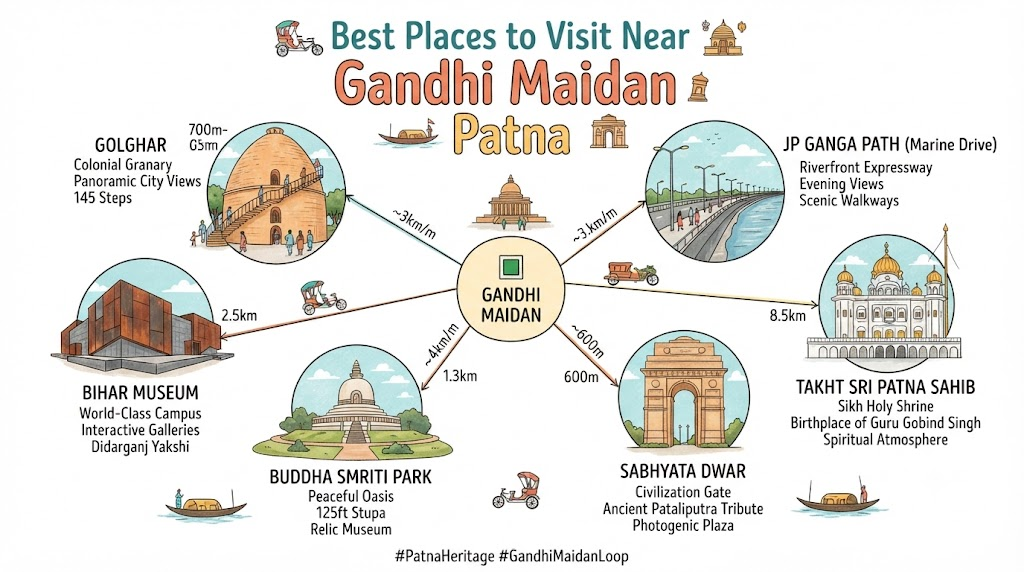
Navigating the local travel circuit is incredibly straightforward. The attractions near Gandhi Maidan form a highly concentrated, easily accessible loop that allows you to transition from world-class modern museums to ancient architectural marvels within minutes.
| Quick Fact Category | Metric / Detail |
| Ideal Trip Duration | 2 to 3 Days |
| Nearest Transit Hubs | Patna Junction Railway Station (1.5 km), Jayprakash Narayan International Airport (6 km) |
| Primary Attractions Loop | Heritage Architecture, Spiritual Shrines, Riverfront Promenades, High-Tech Museums |
| Best Local Conveyance | E-Rickshaws, App-based Cabs, Fixed-route Auto Rickshaws |
Best Places or Experiences
Golghar
Constructed in 1786 by Captain John Garstin following the devastating famine of 1770, Golghar stands as a monumental brick granary that looks like a massive beehive. This pillarless dome is a stunning feat of colonial engineering, boasting walls that are 3.6 meters thick at the base. Its twin spiral staircases wrap elegantly around the exterior, designed specifically so that laborers could carry grain bags up one side, dump them through the top opening, and descend down the other.
The structure remains an architectural wonder, maintaining its balance without a single internal pillar support. From its summit, visitors are treated to a panoramic vista of the modern city layout juxtaposed against the vast, serene curve of the Ganga River.
- Location: Ashok Rajpath, Chajju Bagh, approximately 700 meters northwest of Gandhi Maidan.
- Why it is worth visiting: It is a unique piece of colonial history offering the most recognizable architectural silhouette in Patna and an incredible vantage point of the river.
- Best things to do: Climb the 145 steps of the spiral staircase, enjoy the manicured lawns at the base, and catch the evening light show that illuminates the historic brick structure.
- Best time to visit: Late afternoon (4:00 PM to 5:30 PM) when the sun dips low, making the climb cool and providing perfect golden-hour lighting for photography.
- Ideal for whom: Architectural enthusiasts, history buffs, and families looking for a breezy city view.
- Travel tip: The internal chamber has an echoing acoustic layout; stand inside if open and try a simple whisper to hear it bounce across the dome.
Bihar Museum
Spanning across a world-class campus, the Bihar Museum is a masterpiece of modern architecture designed by the renowned Japanese firm Maki and Associates. It stands as a state-of-the-art repository that houses millennia of regional history, presented through incredibly interactive, immersive galleries. The exterior features weathering steel surfaces that pay homage to India’s historical iron age breakthroughs centered right here in ancient Magadha.
Inside, the galleries showcase everything from prehistoric stone tools to stunning medieval bronzes. The crown jewel of the entire collection is the iconic Didarganj Yakshi, a highly polished sandstone sculpture dating back over two thousand years that represents the pinnacle of Mauryan artistic mastery.
- Location: Jawaharlal Nehru Marg (Bailey Road), roughly 2.5 km west of Gandhi Maidan.
- Why it is worth visiting: It is widely considered one of the finest museum spaces in South Asia, masterfully combining ancient heritage with digital interactive storytelling.
- Best things to do: Marvel at the mirror-like polish of the Didarganj Yakshi, explore the specialized Children’s Gallery, and enjoy a quiet stroll through the minimalist open-air internal courtyards.
- Best time to visit: Morning hours right at opening time (10:30 AM) to beat the afternoon school crowds and enjoy the artifacts in peace.
- Ideal for whom: Art connoisseurs, global history scholars, solo travelers, and curious children.
- Travel tip: Opt for the audio guide at the reception desk; the curatorial narrations provide incredible depth to the galleries that you might otherwise miss.
Takht Sri Harmandir Ji Patna Sahib
This magnificent white marble shrine marks the birthplace of Guru Gobind Singh Ji, the tenth Guru of Sikhism, who was born here in 1666. Built out of pure white stone with gleaming golden domes, it stands proudly as one of the five sacred Takhts (seats of temporal authority) in Sikhism. The current structure beautifully showcases classic Sikh architecture, featuring intricate marble carvings, spacious internal courtyards, and an atmosphere filled with deep devotion.
The air here is continually filled with the soothing, melodic strains of live Gurbani Kirtan. Inside the main sanctuary, several rare personal relics belonging to the tenth Guru are preserved with the utmost reverence, serving as a powerful spiritual anchor for pilgrims arriving from across the globe.
- Location: Harmandir Gali, Patna City, approximately 8.5 km east of Gandhi Maidan.
- Why it is worth visiting: It is a deeply spiritual site of immense global religious importance, offering an authentic look into the living heritage of Bihar.
- Best things to do: Sit peacefully inside the central Darbar Sahib during the evening prayers, partake in the traditional community kitchen meal (Langar), and view the historical relics on display.
- Best time to visit: Early morning hours or during evening twilight when the entire marble complex is softly lit and the crowd is calm.
- Ideal for whom: Spiritual seekers, cultural travelers, and photographers looking to capture soulful moments.
- Travel tip: Ensure your head is covered with a scarf or handkerchief before entering the complex, and leave your shoes at the designated free storage counter outside.
JP Ganga Path (Marine Drive)
Fondly dubbed as Patna’s very own ‘Marine Drive’, the JP Ganga Path is a stunning modern engineering project built along the banks of the river. This multi-lane expressway features long, elevated sections that offer unobstructed views of the expansive Ganga River. At night, the entire pathway transforms completely as bright streetlights cast long, shimmering reflections across the moving water.
The promenade has quickly evolved into the absolute favorite evening hangout for locals. It provides a massive, open breathing space away from the dense city traffic, where you can feel a cool, refreshing river breeze all year round.
- Location: Runs directly along the northern edge of the city, with easy entry ramps situated less than 1 km from Gandhi Maidan.
- Why it is worth visiting: It provides a beautiful blend of modern infrastructure and natural river views, making it the perfect spot to experience local evening life.
- Best things to do: Enjoy an evening drive or stroll along the walkway, try some spicy street food from the vendors, and watch the sun set over the historic riverbanks.
- Best time to visit: 6:00 PM to 9:00 PM when the daytime heat subsides and the street lights turn the riverfront into a glowing boardwalk.
- Ideal for whom: Couples looking for a scenic evening walk, friend groups, and street photography enthusiasts.
- Travel tip: The stretch near the Digha end features vibrant street food stalls specializing in spicy Kulhad Chai and unique local snacks—definitely worth a culinary stop.
Buddha Smriti Park
Inaugurated to commemorate the 2554th birth anniversary of Lord Buddha, this beautifully manicured 22-acre urban oasis stands right in the middle of a bustling commercial district. The center of the park is dominated by the majestic, 125-foot-tall Patliputra Karuna Stupa, a striking structure built with traditional sandstone accents. The park also features an expansive meditation center, a dedicated library filled with rare spiritual texts, and a museum containing holy relics brought directly from various Buddhist nations across Asia.
- Location: Frazer Road, near Patna Junction, located roughly 1.3 km south of Gandhi Maidan.
- Why it is worth visiting: It offers an incredibly quiet, peaceful sanctuary right in the middle of the noisy city center, showcasing Bihar’s deep connection to Buddhist philosophy.
- Best things to do: Walk through the tranquil meditation pavilions, explore the relic museum galleries, and watch the mesmerizing evening musical fountain and laser light show.
- Best time to visit: Late afternoon, allowing you to seamlessly transition from a peaceful sunset stroll directly into the evening laser show.
- Ideal for whom: Peace seekers, solo backpackers, and families looking for wide-open green spaces.
- Travel tip: The entry ticket to the main park is separate from the museum and meditation hall access, so buy a combined ticket at the counter if you plan to explore everything.
Sabhyata Dwar (Civilization Gate)
Standing tall on the northern banks of Patna, the Sabhyata Dwar is a majestic sandstone archway built to honor the ancient glory of Pataliputra. Standing at an impressive height of 32 meters, it is entirely constructed from rich red and white sandstone, closely mirroring the timeless architectural styles of ancient monuments. The structure is adorned with powerful inscriptions from historical figures like Ashoka, Megasthenes, Lord Buddha, and Lord Mahavir, reminding visitors of the deep moral foundations laid in this region.
- Location: Located just behind the Samrat Ashok Convention Centre, roughly 600 meters north of Gandhi Maidan.
- Why it is worth visiting: It serves as a modern architectural tribute to Bihar’s ancient civilization, providing a grand, photogenic backdrop right next to the riverfront.
- Best things to do: Read the inspirational historical inscriptions carved into the stone facades, enjoy the open plaza layout, and take wide-angle landscape photographs.
- Best time to visit: Early morning for quiet contemplation, or late evening when the monument is lit up by bright floodlights.
- Ideal for whom: Photographers, history students, and casual strollers.
- Travel tip: Combine your visit here with a walk along the adjacent riverfront promenade, as both spots are connected by a single pedestrian pathway.
Offbeat Exploration: Hidden Gems Tourists Miss
Khuda Bakhsh Oriental Public Library
Founded in 1891, this quiet library houses one of the world’s most valuable collections of rare Arabic, Persian, and Rajput manuscripts. It is an absolute treasure trove for literature lovers, holding incredible historical pieces like a tiny, exquisite Quran measuring less than an inch, and the richly illustrated Shahnamah manuscript.
Collectorate Ghat & Darbhanga House
Tucked away safely behind the historic university campus, Darbhanga House is a magnificent palace built by the Maharaja of Darbhanga that sits right on the edge of the river. The adjacent Collectorate Ghat offers a peaceful, uncrowded riverfront view that stands in stark contrast to the busy public docks, making it the perfect spot to sit and watch traditional wooden boats slowly drift by.
Detailed Practical Guidance for Travelers
The following logistical breakdown outlines costs, timings, and culinary options to help you plan your route seamlessly:
| Destination | Standard Entry Fee | General Timings | Best Local Food Options Nearby | Recommended Nearby Attractions |
| Golghar | ₹5 (Park entry) | 10:00 AM – 6:00 PM | Litti Chokha stalls outside the gate | Sabhyata Dwar, Gandhi Sangrahalaya |
| Bihar Museum | ₹100 (Adults) | 10:30 AM – 5:00 PM (Closed Mondays) | The internal museum cafe (Mahi) | Eco Park, Patna Museum |
| Patna Sahib | Free | 4:00 AM – 10:00 PM | Traditional Langar, Local sweet shops | Jalan Museum, Mangal Talaob |
| JP Ganga Path | Free | Open 24/7 (Best in evening) | Kulhad Chai, Roasted Corn vendors | Gandhi Ghat, NIT More market |
| Buddha Smriti Park | ₹20 (Park entry) | 9:00 AM – 7:00 PM (Closed Mondays) | Maurya Lok food outlets | Mahavir Mandir, Patna Junction |
| Sabhyata Dwar | Free | 6:00 AM – 8:00 PM | Street food counters at Gyan Bhawan | Samrat Ashok Convention Centre |
Logistics & On-Ground Navigation
Local Transport Options
- Auto-Rickshaws: Shared auto-rickshaws run continuously along the main Ashok Rajpath and Fraser Road routes, offering a highly economical way to travel.
- E-Rickshaws: These quiet, eco-friendly vehicles are perfect for short hops around Gandhi Maidan and navigating tight, historic alleyways.
- Car Rentals / App Cabs: Services like Ola and Uber are widely available across Patna, providing a reliable option for longer runs out to Patna Sahib.
Budget Planning
- Budget/Backpacker Tier (₹1,200 – ₹1,800 per day): Uses shared auto-rickshaws, enjoys street-level dining, visits public monuments, and stays in affordable guesthouses around Fraser Road.
- Mid-Range/Comfort Tier (₹3,500 – ₹6,000 per day): Uses private app-based cabs, dines at air-conditioned family restaurants, opts for museum audio guides, and stays in comfortable 3-star hotels around the Gandhi Maidan area.
Safety and Inclusivity Tips
- For Families: The wide lawns of Buddha Smriti Park and the interactive galleries at Bihar Museum are completely safe, highly engaging, and easy to navigate with children.
- For Couples: Enjoy a peaceful evening stroll along the well-lit promenades of the JP Ganga Path or catch the musical fountain shows at the central urban parks.
- General Safety: While Patna is a welcoming city, it’s best to wrap up your riverfront explorations by 9:30 PM and stick to well-lit public transport routes during late-night hours.
Strategic Travel Planning Guardrails
Travel Planning Tips for Patna
- Digital vs. Cash: While major museums and restaurants accept UPI payments seamlessly, keep small cash notes handy for e-rickshaws and street food vendors.
- Seasonal Packing: If visiting during the peak winter months (November to February), pack a light jacket or woolen shawl for those breezy evening river cruises.
- Pre-booking Guides: If you want an in-depth look at history, book certified regional guides online well in advance before visiting historic archives.
- Physical Preparation: Wear comfortable walking shoes, as exploring destinations like the Bihar Museum and climbing Golghar involves plenty of steps.
- Local Etiquette: Dress modestly when visiting active places of worship like Takht Sri Patna Sahib or local temple complexes.
Common Mistakes to Avoid
- Over-packing Itineraries: Don’t try to cram Patna Sahib and the western museums into a single morning; the city’s cross-town traffic requires a more relaxed pace.
- Ignoring Sub-Regions: Skipping the narrow lanes of Old Patna means missing out on the city’s authentic, atmospheric historical charm.
- Transport Assumptions: Always confirm the fare with local e-rickshaw drivers before climbing aboard to avoid any confusion later.
- Skipping Regional Cuisine: Don’t rely solely on familiar fast-food chains; make sure to try authentic local delicacies like Litti Chokha and Sweets like Khaja.
- Overpaying at Docks: Avoid paying inflated prices for private river boats; stick to the official, government-run Ganga cruises instead.
Suggested Itinerary Blueprints
1. Day Quick Dash (The Heritage Express)
Designed for business travelers or short layovers. Start your morning with a climb up Golghar for a quick bird’s-eye view of the city. Head straight to the Bihar Museum to spend 3 hours exploring ancient artifacts. End your evening with a sunset drive along the JP Ganga Path, grabbing a quick Kulhad Chai right by the river.
2. Day Deep-Dive (The Culture & Continuity Circuit)
- Day 1: Explore the historical landmarks surrounding Gandhi Maidan. Visit Golghar, read the inscriptions at Sabhyata Dwar, and spend your afternoon immersed in the incredible galleries of the Bihar Museum. Wrap up your day with the laser light show at Buddha Smriti Park.
- Day 2: Dive deep into the spiritual roots of the city. Head east into Old Patna to visit Takht Sri Harmandir Ji Patna Sahib. Spend your afternoon browsing the rare manuscripts at the Khuda Bakhsh Library, and end your evening watching the grand sunset from Collectorate Ghat.
3. Complete Weekend Travel Plan (The Ultimate Patna Loop)
- Friday: Arrive and check into a hotel near Gandhi Maidan. Take an easy evening walk around the maidan, visit the Sabhyata Dwar, and enjoy dinner at a local rooftop restaurant.
- Saturday: Dedicate your morning to the Bihar Museum. In the afternoon, explore the quiet walkways of Buddha Smriti Park, and spend your evening enjoying the bustling atmosphere of the JP Ganga Path.
- Sunday: Spend your morning immersed in the spiritual serenity of Patna Sahib. On your way back, stop to admire the colonial architecture of Darbhanga House, and wrap up your weekend shopping for unique local handloom items at Maurya Lok.
Common Tourist Mistakes to Avoid
- Geographic Blunders: Trying to combine geographically opposed zones—like heading to Patna Sahib in the far east and the Bihar Museum in the west—within a tight two-hour window will leave you stuck in transit.
- Commercial Traps: Spending your limited vacation time inside modern, glass shopping malls rather than exploring the historic, atmospheric lanes of the older bazaars.
- Neglecting Alternative Zones: Forgetting to explore the quieter, artistic, and cafe-centric modern expansions opening up in the western sectors of the city.
- Transport Overpayment: Agreeing to arbitrary transport rates; always cross-reference fares with ride-sharing apps to avoid any price gouging.
- Luxury Dining Bias: Missing out on street-level culinary masters who have been serving perfected local dishes for generations across the city squares.
Frequently Asked Questions
1. Is there an entry fee for the Sabhyata Dwar complex?
No, visiting the Sabhyata Dwar plaza is completely free for all visitors throughout the day.
2. Can we climb to the very top of Golghar currently?
The main structural staircase is accessible for panoramic city views, though internal chamber entries may occasionally have restricted access for preservation.
3. Are mobile phones allowed inside the Bihar Museum galleries?
Mobile photography is permitted in most general galleries, but certain high-security antiquity halls may restrict camera usage.
4. How far is Takht Sri Patna Sahib from Gandhi Maidan?
It is roughly 8.5 kilometers east, taking about 30 to 45 minutes to reach depending on local traffic.
5. What is the best way to travel from Patna Junction to Gandhi Maidan?
Shared auto-rickshaws and app-based cabs are readily available outside the station, taking less than 10 minutes.
6. Is the JP Ganga Path safe for solo female travelers in the evening?
Yes, the main promenade is heavily policed and bustling with local families, though it’s best to head back by 9:30 PM.
7. Are there good vegetarian food options available near Buddha Smriti Park?
The nearby Maurya Lok Complex features dozens of highly rated vegetarian restaurants, traditional sweet shops, and clean street food stalls.
8. Is the Bihar Museum closed on any specific day of the week?
Yes, the Bihar Museum remains completely closed to the public every Monday.
9. Can we book a boat ride directly from Gandhi Ghat?
Yes, Bihar Tourism operates safe, official motorboat rides and double-decker river cruises directly from the ghat.
10. Do I need to wear specific clothing to visit the Patna Sahib Gurudwara?
There is no strict dress code, but modest clothing is required, and your head must remain covered inside the complex.
11. Is parking available for private vehicles near Golghar?
There is a dedicated parking zone situated right outside the main entrance gate for cars and two-wheelers.
12. How much time does it take to fully explore the Buddha Smriti Park?
You can comfortably explore the park lawns, the stupa exterior, and the museum section in about 1.5 to 2 hours.
Conclusion
Choosing a journey through the historical heart of Patna offers a reward that goes far beyond a typical holiday. Instead of returning home with just standard sightseeing photos, you walk away with a deeper appreciation for the ancient roots that shaped an entire subcontinent. Standing by the eternal currents of the Ganga, watching the evening light illuminate ancient brick monuments, and experiencing the warm hospitality of the local community connects you to something truly timeless. It’s an exploration that challenges your perspectives, enriches your understanding of history, and leaves you with stories that linger long after the trip has ended.
