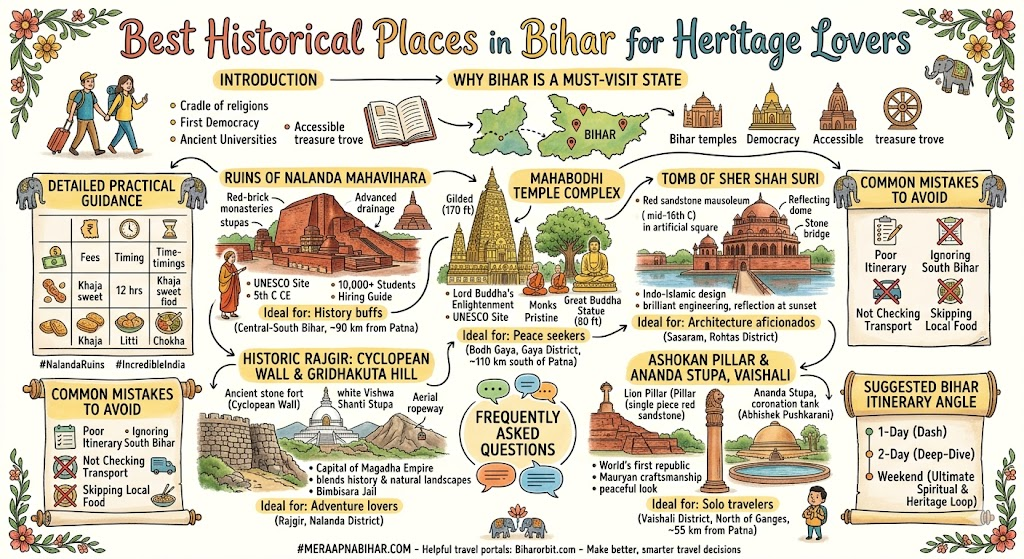
Introduction
When most people think of a quick vacation in India, their minds often drift toward the crowded beaches of Goa or the bustling nightlife of metro cities. But true travelers know that the most unforgettable journeys are those that connect you with the very roots of civilization. If you are looking for a destination that offers deep culture, pristine nature, incredible local food, peaceful spirituality, and unparalleled heritage, it is time to open your map to Bihar.
For a long time, the true depth of Bihar as a premium travel destination remained a well-kept secret. Today, it stands proud as a haven for heritage lovers, backpackers, solo travelers, and families alike. Far from the superficial rush of typical tourist spots, a trip here rewards you with local experiences that stay with you forever. Whether you want to trace the footsteps of ancient emperors, sit under the same tree where wisdom was born, or marvel at architectural wonders built thousands of years ago, this Bihar travel guide will help you plan an unforgettable journey.
Why Bihar is a Must-Visit State
Bihar is not just a place on a map; it is an epic chapter in human history. This is the cradle where two of the world’s major religions—Buddhism and Jainism—were born. It is the land that gave the world its first democracy in Vaishali and cultivated minds at the earliest international universities.
From a practical perspective, Bihar is incredibly versatile. For families and couples, it offers peaceful, well-maintained heritage parks and serene spiritual sites. For solo travelers and backpackers, it provides an affordable, deeply authentic journey off the beaten path. With excellent railway connectivity, newly upgraded highways splitting into the North Bihar travel guide circuits and the South Bihar travel guide trails, and warm local hospitality, it is an accessible treasure trove waiting to be explored.
Best Places or Experiences
1. The Ancient Ruins of Nalanda Mahavihara
The ruins of Nalanda University are a spectacular testament to ancient India’s intellectual golden age. Founded in the 5th century CE, this UNESCO World Heritage Site was home to over 10,000 students and 2,000 teachers from across the globe, including the famous Chinese traveler Xuanzang. Walking through the red-brick monasteries and massive stupas gives you a profound sense of the scale of ancient learning.
- Location: Nalanda District, Central-South Bihar (around 90 km from Patna).
- Why it is worth visiting: It is one of the most significant archaeological and educational landmarks in human history, featuring advanced ancient drainage systems, classrooms, and temples.
- Best things to do: Hire a local certified guide to understand the layout of the monasteries, explore the nearby Nalanda Archaeological Museum, and visit the Xuanzang Memorial Hall.
- Best time to visit: October to March, when the weather is pleasantly cool for walking around the open-air complex.
- Ideal for whom: History buffs, solo travelers, students, and families looking for educational yet awe-inspiring things to do in Bihar.
- Travel tip: The site involves a fair amount of walking under the open sun. Carry an umbrella, wear comfortable walking shoes, and keep a bottle of water handy.
2. Mahabodhi Temple Complex, Bodh Gaya
This is the spiritual heart of Bihar. The Mahabodhi Temple marks the exact spot where Prince Siddhartha Gautama attained enlightenment under the sacred Bodhi Tree and became Lord Buddha. The towering 170-foot temple structure is surrounded by beautiful monastic gardens, where monks from all over the world gather to chant and meditate.
- Location: Bodh Gaya, Gaya District (approx. 110 km south of Patna).
- Why it is worth visiting: It is a pristine UNESCO World Heritage Site that radiates an unmatched sense of peace and spiritual energy, making it one of the absolute best places to visit in Bihar.
- Best things to do: Meditate under the sacred Bodhi Tree, admire the 80-foot Great Buddha Statue nearby, and explore the various beautiful monasteries built by different countries like Japan, Thailand, and Bhutan.
- Best time to visit: November to February. The annual Kagyu Monlam and Buddha Jayanti festivals bring a vibrant cultural energy to the town.
- Ideal for whom: Peace seekers, couples looking for a serene getaway, solo backpackers, and families.
- Travel tip: Electronic gadgets, including mobile phones and smartwatches, are strictly banned inside the main temple complex. You can store them safely at the locker counter near the entrance.
3. The Tomb of Sher Shah Suri, Sasaram
Often referred to as the “Second Taj Mahal of India,” this magnificent mausoleum is an architectural masterpiece of Indo-Islamic design. Built in the mid-16th century, the red sandstone tomb stands right in the middle of a massive, artificial square lake. The reflection of the grand dome on the water during sunset is a sight you will never forget.
- Location: Sasaram, Rohtas District (South-West Bihar).
- Why it is worth visiting: It showcases the brilliant engineering of Sher Shah Suri, the ruler who defeated the Mughals and built the historic Grand Trunk Road.
- Best things to do: Walk across the stone bridge leading to the island tomb, marvel at the geometric architecture inside the dome, and take stunning photographs from the lakeside banks.
- Best time to visit: October to March. Late afternoons offer the best lighting for photography.
- Ideal for whom: Architecture aficionados, photographers, couples, and weekend travelers looking for hidden places in Bihar.
- Travel tip: Sasaram is well-connected by train. If you are traveling via the South Bihar travel guide route, a train journey from Patna or Gaya is the most efficient way to reach here.
4. Historic Rajgir: Cyclopean Wall and Gridhakuta Hill
Rajgir is a beautiful valley town surrounded by seven rocky hills. It served as the first capital of the mighty Magadha Empire. The area is packed with ancient ruins, including the Cyclopean Wall—a 40-km-long fortification made of massive, interlocking raw stones that predates the Great Wall of China.
- Location: Rajgir, Nalanda District.
- Why it is worth visiting: It seamlessly blends ancient military history with stunning natural landscapes and spiritual sites central to both Buddhism and Jainism.
- Best things to do: Take the scenic aerial ropeway up to the brilliant white Vishwa Shanti Stupa, explore the ancient Bimbisara Jail ruins, and relax at the natural hot springs (Brahmakund).
- Best time to visit: October to March. Avoid the peak summer months as climbing the hills can become exhausting.
- Ideal for whom: Adventure lovers, hikers, families, and backpackers looking for a mix of heritage and nature.
- Travel tip: For an eco-friendly and romantic experience, try the local horse-drawn carriages (tongs) to travel between nearby historical spots in the town.
5. Ashokan Pillar and Ananda Stupa, Vaishali
Vaishali holds the distinct honor of being the place where the ancient Licchavi clan established the world’s very first republic long before ancient Rome. It is also the birthplace of Lord Mahavira and the site where Lord Buddha delivered his final sermon. The beautifully preserved Ashokan Pillar here features a life-sized single lion carved out of a single piece of polished red sandstone.
- Location: Vaishali District (North of the Ganges, approx. 55 km from Patna).
- Why it is worth visiting: The site is historically profound and significantly less crowded than Bodh Gaya, offering a peaceful look into Mauryan craftsmanship.
- Best things to do: See the pristine Lion Pillar, visit the Relic Stupa where a portion of Buddha’s ashes were enshrined, and explore the ancient coronation tank known as Abhishek Pushkarani.
- Best time to visit: October to March.
- Ideal for whom: Solo travelers, heritage purists, and families looking for a quiet weekend travel destination.
- Travel tip: Since Vaishali is a key spot on the North Bihar travel guide, it can easily be done as a comfortable day trip from Patna by crossing the Atal Path and Mahatma Gandhi Setu.
Detailed Practical Guidance for Heritage Travelers
| Historical Destination | Standard Entry Fee (Indian Citizens) | General Timings | Best Food Options Nearby | Recommended Nearby Attractions |
| Nalanda Ruins | ₹30 per person | 9:00 AM – 5:00 PM | Local Khaja sweet shops, North Indian thalis | Xuanzang Memorial, Pawapuri Jal Mandir |
| Mahabodhi Temple | Free entry (Camera fee applies) | 5:00 AM – 9:00 PM | Tibetan cafes, traditional Bihari Litti Chokha | Great Buddha Statue, Dungeshwari Caves |
| Sher Shah Suri Tomb | ₹25 per person | 10:00 AM – 6:00 PM | Classic highway dhabas, local sweets | Rohtasgarh Fort, Tutla Bhawani Waterfalls |
| Rajgir Heritage Sites | Free (Ropeway/Zoo Safari extra) | 6:00 AM – 6:00 PM | Local vegetarian joints, organic sattu drinks | Ghora Katora Lake, Pandu Pokhar |
| Vaishali Pillar | ₹25 per person | 9:00 AM – 5:00 PM | Local countryside dhabas, seasonal fresh litchis | Shanti Stupa Vaishali, Raja Vishal Ka Garh |
Local Transport Options
Navigating Bihar during your Bihar trip planning phase is quite straightforward:
- Railways: The backbone of Bihar travel. Patna Junction, Gaya, and Rajgir stations connect all major historical hubs.
- Auto-Rickshaws: Readily available for shared or private hire (reserve) in towns like Rajgir, Gaya, and Sasaram. Always agree on a fare before jumping in.
- E-Rickshaws: Perfect for short-distance commutes within temple zones and heritage towns. They are silent, cheap, and eco-friendly.
- Car Rentals: Booking a private taxi from Patna for a few days is the most comfortable option for families and couples looking to cover multiple towns seamlessly.
Budget Planning
Bihar is remarkably light on the pocket. A budget traveler or backpacker can comfortably manage on ₹1,200 to ₹1,500 per day including hostel/dharamshala stays, public transport, and street food. Mid-range travelers looking for comfortable air-conditioned hotels and private cabs can expect to spend around ₹3,500 to ₹5,000 per day for two people.
Safety and Inclusivity Tips
- For Families: Stick to well-established tourist routes like Patna-Rajgir-Nalanda-Bodh Gaya. These circuits feature excellent family-friendly hotels and well-paved heritage walkways.
- For Couples: Places like Ghora Katora Lake in Rajgir or the sprawling gardens around the Thai Monastery in Bodh Gaya offer beautiful, respectful spaces to spend quiet time together.
- General Safety: Avoid wandering into isolated or unlit rural archaeological zones late at night. Stick to populated town markets after dark.
Travel Planning Tips for Bihar
- Book Stays Early During Peak Season: Heritage towns like Bodh Gaya and Rajgir experience a huge influx of international travelers and pilgrims between November and February. Book your hotels at least a month in advance.
- Carry Cash for Local Markets: While digital payments (UPI) are widely accepted in cities and mid-sized restaurants, small auto-rickshaw drivers, local street food vendors, and rural handicraft sellers prefer cash.
- Respect Local Culture and Environment: Many historic places are actively revered as sacred shrines. Dress modestly (cover shoulders and knees) when entering temples and monasteries.
- Hire Certified Local Guides: To truly appreciate the subtle details of places like Nalanda or Vaishali, pay a little extra for a government-certified guide at the ticket counter. It breathes life into the old stones.
- Stay Hydrated and Wear Sun Protection: Even in winter, the afternoon sun can be surprisingly sharp when you are exploring expansive, open-air ruins. Carry a hat and sunglasses.
- Keep Heritage Sites Clean: Bihar’s historical monuments are ancient treasures. Avoid littering, use the designated trash bins, and do not touch or deface centuries-old brickwork.
Common Mistakes to Avoid
- Poor Itinerary Planning: Trying to cover North and South Bihar in a single weekend. The state is geographically large; attempting to rush through it means you will spend all your time on the road.
- Ignoring South Bihar: Many people visit Patna and head straight back north. Missing out on the incredible archaeological belt of Gaya, Nalanda, and Rohtas in South Bihar means missing the true historical core of the state.
- Not Checking Transport Options Ahead: Assuming you can easily find a late-night intercity cab in remote heritage areas. It is always safer to schedule your travel during daylight hours.
- Skipping the Local Food: Don’t stick purely to standard hotel room service. Missing out on authentic, freshly prepared Litti Chokha, Malpua, Dal Puri, or the melt-in-the-mouth Khaja of Silao is a major travel sin.
- Overpaying for Local Rides: Forgetting to negotiate fares with manual or auto-rickshaw drivers before starting your journey. Ask a local shopkeeper or your hotel front desk for the standard rates first.
Suggested Bihar Itinerary Angle
To make your Bihar itinerary seamless, here is a flexible blueprint showing how you can group these timeless heritage spots based on the length of your stay.
1.1-Day Historical Dash (The Patna and Vaishali Circuit):Best for business or quick weekend travelers.
Start early in the morning from Patna. Cross the Ganges to explore the Ashokan Pillar and ancient ruins in Vaishali. Return to Patna by afternoon to visit the grand Patna Museum and the historic Golghar storehouse for a sunset view over the river.
2.2-Day Heritage Deep-Dive (The Nalanda & Rajgir Trail):Perfect for couples and history buffs.
- Day 1: Arrive in Rajgir. Spend the morning taking the ropeway up to the Vishwa Shanti Stupa and exploring the ancient Cyclopean Wall. In the evening, enjoy a peaceful boat ride at Ghora Katora Lake.
- Day 2: Drive 20 minutes to the majestic ruins of Nalanda Mahavihara. Spend hours exploring the excavations and the Archaeological Museum before returning.
3.Complete Weekend Travel Plan (The Ultimate Spiritual & Heritage Loop):Ideal for families and solo backpackers.
- Friday Afternoon: Base yourself in Bodh Gaya. Spend a quiet evening watching the sunset and listening to chants at the Mahabodhi Temple Complex.
- Saturday: Take a morning drive to Rajgir and Nalanda to explore the ancient kingdoms, universities, and natural hot springs. Stay overnight in Rajgir.
- Sunday: Head towards Sasaram to witness the breathtaking lakeside Tomb of Sher Shah Suri before catching your return train or flight from Patna/Gaya.
FAQs
1. Which is the best historical place to visit in Bihar for first-timers?
The Ruins of Nalanda University and the Mahabodhi Temple in Bodh Gaya are the absolute best places to start. They are UNESCO World Heritage Sites, exceptionally well-maintained, and provide the deepest look into Bihar’s grand history.
2. Is Bihar safe for solo travelers and female backpackers?
Yes, the major heritage circuits (Patna, Rajgir, Nalanda, and Bodh Gaya) are quite safe and see a steady stream of domestic and international tourists. However, standard travel safety rules apply: avoid traveling between towns late at night and stay in highly rated, reputable accommodations.
3. What is the best time of year to plan a Bihar trip?
The best time is during the cooler months from October to March. The weather is perfect for exploring open archaeological ruins. Summers (April to June) can be intensely hot, with temperatures frequently crossing 40°C.
4. How can I travel between Patna, Rajgir, and Bodh Gaya easily?
These towns are well-connected by regular passenger and express trains run by Indian Railways. Alternatively, you can book intercity tourist buses or hire a private taxi for a smooth, flexible road trip.
5. Are there any hidden or less-crowded historical places in Bihar?
Yes! The 16th-century Shergarh Fort in Rohtas, the ancient rock-cut Barabar Caves in Jehanabad (the oldest surviving rock-cut caves in India), and the ruins of Vikramshila University in Bhagalpur are incredible, peaceful alternatives to the main tourist hubs.
6. Can I take photos inside the historical monuments?
Photography is permitted at almost all historical sites in Bihar, though some locations charge a nominal camera fee (usually ₹25 to ₹50). Note that mobile phones and cameras are completely prohibited inside the main Mahabodhi Temple structure.
7. What is the local food that every traveler must try in Bihar?
You absolutely must try Litti Chokha (roasted wheat balls stuffed with spiced gram flour, dipped in pure ghee, and served with mashed vegetables). For dessert, don’t miss the layered Khaja sweet in Silao (near Nalanda) and Tilkut in Gaya.
8. Are these historical places family-friendly?
Absolutely. Most of these destinations feature large, open green parks, paved walking pathways, and nearby amenities, making them perfect for children and elderly family members.
9. Do I need to book entry tickets to these historical sites online?
While you can purchase physical tickets at the entry gates of Nalanda, Vaishali, and Sasaram, booking online via the Archaeological Survey of India (ASI) official portal or scanning the QR codes at the venue can help you skip long queues.
10. How much does a standard 3-day heritage tour of Bihar cost?
A comfortable mid-range 3-day tour for a couple or family—including a private hired car, decent 3-star hotel stays, entry tickets, and local meals—will cost roughly between ₹10,000 and ₹15,000 in total.
Conclusion
Bihar is a land waiting to reward the conscious traveler. It challenges the ordinary and offers a profound journey through time that few other places on earth can match. By planning your trip mindfully, respecting the local customs, and exploring beyond the basic tourist hubs, you will discover an authentic, soul-stirring side of India.
For more detailed destination breakdowns, booking assistance, and locally sourced hidden gems, keep checking meraapnabihar.com. When you’re ready to take the next step in your Bihar trip planning journey, look to helpful travel portals like Biharorbit.com to find local contacts, updated itineraries, and everything you need to make better, smarter travel decisions. Pack your bags, keep an open heart, and get ready to step into living history!
