INTRODUCTION
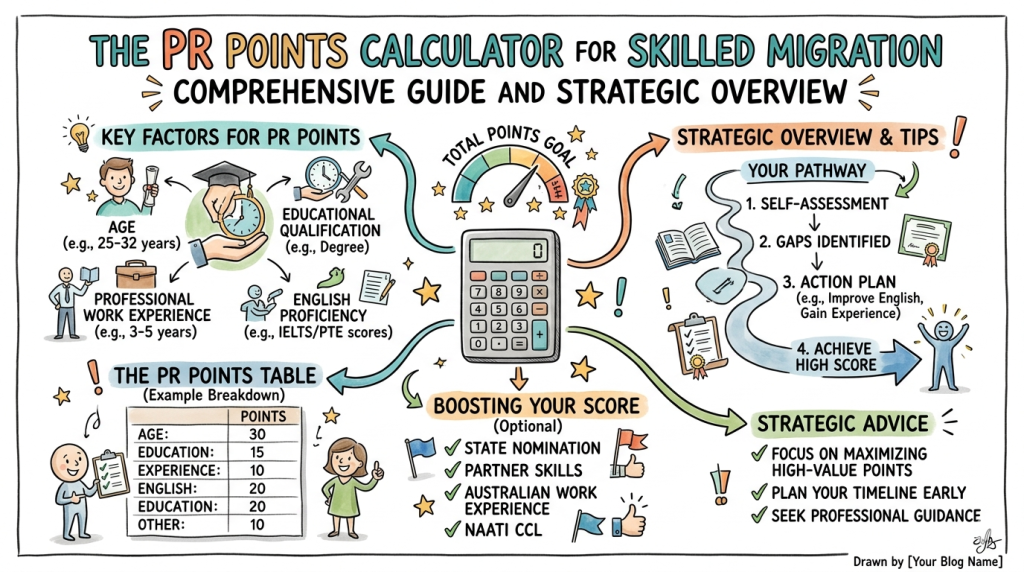
Navigating the complexities of international migration requires a robust understanding of the underlying metrics that determine eligibility for permanent residency. Prospective migrants often feel overwhelmed by the intricate web of regulations and shifting criteria that define the modern immigration landscape. Consequently, establishing a clear roadmap is essential for anyone seeking to transition their professional life to a new global jurisdiction successfully. This guide provides a deep dive into the mechanisms of the PR Points Calculator, offering a transparent analysis of how individual attributes translate into a competitive score. Because the competition for skilled visas remains intense, mastering these details allows applicants to position themselves strategically against other candidates. Therefore, we will explore the human capital factors, regional nuances, and optimization strategies required to achieve a favorable outcome. By the end of this comprehensive analysis, you will possess the clarity needed to navigate the selection system with professional confidence and technical precision.
What Is a PR Points Calculator?
The PR Points Calculator functions as a sophisticated diagnostic tool designed to quantify an individual’s suitability for skilled migration based on specific human capital variables. Furthermore, it operates as the gatekeeper for various visa subclasses, ensuring that only those who meet a predetermined threshold receive an invitation to apply for permanent residency. Since migration authorities prioritize candidates who can contribute immediately to the national economy, the calculator assigns numerical values to age, education, and work experience. Moreover, this objective framework removes ambiguity from the selection process, allowing for a merit-based system that remains consistent across thousands of applications. Consequently, the logic behind the tool is to predict the long-term economic integration success of a potential migrant. Understanding this logic is the first step toward building a profile that resonates with the current economic priorities of the host nation.
- The Core Purpose of PR Points Calculator:
- This instrument serves as a preliminary self-assessment mechanism that allows candidates to determine their likelihood of success before committing significant financial resources to the formal application process.
- It standardizes the evaluation of diverse global backgrounds, creating a unified metric that ensures every applicant is judged against the same rigorous economic and social benchmarks.
- How the PR Points Calculator System Works:
- The system utilizes a cumulative scoring algorithm where points from different categories are aggregated to reach a final sum that must meet or exceed the current pass mark.
- Data entry requires precise inputs regarding professional history and testing results, which the backend logic then cross-references against established legislative frameworks to generate a real-time eligibility estimate.
- Eligibility Standards vs. Selection Criteria:
- Eligibility standards represent the absolute minimum requirements, such as age limits or health clearances, that a candidate must satisfy to even enter the pool of potential migrants.
- Selection criteria involve the competitive point-scoring elements where higher marks in specific areas, such as superior language skills, provide a distinct advantage over other qualified applicants.
PR Points Calculator Components: The Building Blocks
The architecture of a migration profile relies on several foundational building blocks that reflect a candidate’s potential for societal and economic contribution. Specifically, these components include demographic data and verified professional achievements which form the bedrock of the points-based evaluation. Since these factors are often interconnected, a deficiency in one area must frequently be compensated for by a surplus in another. For instance, a candidate who is slightly older may need to demonstrate higher educational qualifications or niche work experience to remain competitive. Furthermore, the authorities meticulously weigh these factors because they represent the “human capital” that drives national innovation and productivity. Therefore, analyzing each component individually is crucial for a holistic understanding of how the final score is derived. By treating these blocks as modular elements, applicants can identify which areas are fixed and which can be actively improved through dedicated effort.
- Age Factors in PR Points Calculator:
- The scoring system typically favors younger professionals who are in the early-to-mid stages of their careers, as they offer the longest potential window for economic contribution and tax revenue.
- Points are distributed across specific age brackets, with the maximum allocation usually reserved for those between their mid-twenties and early thirties, gradually tapering off as an applicant approaches the upper age limit.
- Educational Evaluation for PR Points Calculator:
- Academic qualifications are assessed based on their level of attainment, with doctoral degrees and masters-level certifications yielding significantly higher point values than basic diplomas.
- The relevance of the degree to the nominated occupation is often scrutinized, ensuring that the theoretical knowledge possessed by the applicant aligns with the practical requirements of the local labor market.
- Language Proficiency Standards:
- Applicants must demonstrate a high degree of English language competency through standardized tests, with “Proficient” or “Superior” levels acting as major point multipliers in the final calculation.
- Consistency across all four communicative modules—reading, writing, speaking, and listening—is mandatory, as a low score in a single area can prevent the applicant from claiming maximum points for the entire category.
- Professional Experience Verification:
- Points are awarded for years of relevant work experience, with a clear distinction often made between experience gained within the host country versus international professional history.
- The verification process involves strict documentation requirements, including employment references and tax records, to ensure that the claimed duration and seniority of the roles are entirely accurate.
International Pathways for PR Points Calculator
Navigating the various international pathways requires a deep understanding of how different visa subclasses utilize the points system to manage migration flow. Furthermore, these pathways are often categorized into independent, state-sponsored, or employer-nominated streams, each with its own set of point-weighted priorities. Because different regions have varying economic needs, the points threshold for a specific pathway might fluctuate based on the demand for particular skill sets. Consequently, an applicant who does not meet the criteria for a general independent visa might find success through a regional or state-sponsored alternative. Moreover, these pathways are designed to distribute skilled labor across the country, preventing urban congestion while revitalizing rural economies. Therefore, selecting the correct pathway is just as important as the points total itself. By aligning your profile with the specific requirements of a niche pathway, you can often secure an invitation with a score that might otherwise be considered borderline in a general stream.
- Key Categories and Classes:
- The Independent Skilled stream is purely meritocratic, relying solely on the applicant’s personal attributes and points without the need for external nomination or sponsorship.
- State-Nominated subclasses provide a significant points boost to candidates who agree to live and work in a specific jurisdiction, thereby addressing localized labor shortages.
- Comparative Results Summary:
- Analysis of previous invitation rounds shows that certain high-demand occupations, such as healthcare or engineering, often receive invitations at lower point scores compared to saturated fields like accounting.
- The processing times and success rates vary significantly between subclasses, making it imperative for applicants to compare the trade-offs between speed and the freedom of movement offered by different visa classes.
Advanced Regional Requirements for PR Points Calculator
Regional migration strategies play a pivotal role in the points-based system by offering incentives for professionals to settle outside of major metropolitan hubs. Furthermore, state and territory governments actively use these regional requirements to attract specific talent that supports local industries like agriculture, mining, or specialized manufacturing. Because these regions often face demographic challenges, the points awarded for regional commitment are designed to be highly attractive. Consequently, many applicants utilize these regional pathways as a strategic “safety net” when their independent points are insufficient. Moreover, regional sponsorship often comes with a pathway to permanent residency that is more streamlined than urban-focused options. Therefore, understanding the geography of the points system is essential for a comprehensive migration strategy. By focusing on regional incentives, you can leverage your skills in a market where they are most needed, often resulting in a faster and more certain migration outcome.
- Regional Study Bonuses:
- Candidates who have completed their higher education at an institution located in a designated regional area are often eligible for additional points as a reward for their local integration.
- This bonus recognizes the likelihood that students who have spent years in a regional community are more inclined to remain there long-term and contribute to the local social fabric.
- Sponsorship Weights:
- A nomination from a state or territory government can add substantial points to an application, often bridging the gap between a “qualified” profile and a “competitive” one.
- These weights are subject to change based on the annual migration quotas and the evolving economic priorities of each specific state government, requiring constant monitoring by the applicant.
The Global Landscape of PR Points Calculator
The global landscape of migration is increasingly defined by points-based systems as nations compete for the world’s best and brightest talent. Furthermore, while the specific metrics may vary, the underlying philosophy of selecting migrants based on economic potential remains a common thread across major western economies. Because these systems are dynamic, they often mirror the geopolitical and economic shifts occurring worldwide. Consequently, a professional who is highly valued in one points-based system will likely find a warm reception in another, though the specific point distributions will differ. Moreover, the transparency of these global frameworks allows for a high degree of predictability for mobile professionals. Therefore, comparing international systems provides valuable context for why certain attributes are weighted more heavily than others. By understanding the global context, applicants can better appreciate the competitive nature of international migration and the high standards expected by host nations.
- Major Global Frameworks:
- Nations like Australia, Canada, and New Zealand utilize very similar points-based architectures, though they prioritize different factors such as linguistic fluency or specific trade qualifications.
- These frameworks are often updated in response to global economic trends, such as the increasing demand for tech professionals or the need for essential workers during public health crises.
- Key International Differences:
- Some countries place a heavier emphasis on a pre-existing job offer, effectively making employer sponsorship a mandatory or near-mandatory component of the points total.
- Other nations focus purely on human capital, allowing young, highly educated individuals to migrate without a secured position, trusting that their skills will lead to rapid employment.
Benefits of Utilizing a PR Points Calculator
Utilizing a PR Points Calculator offers immense benefits by providing clarity and structure to what can often be a chaotic and stressful process. Furthermore, it empowers applicants to take control of their migration journey by identifying exactly where they stand in relation to current standards. Because the calculator provides an objective result, it eliminates the guesswork and false hope that can lead to poor decision-making. Consequently, professionals can use the data generated by the tool to make informed choices about their education, career moves, and even their timing for application. Moreover, the tool acts as a strategic simulator, allowing users to see how future achievements—like a higher language score—might impact their overall standing. Therefore, the calculator is not just a measurement tool but a vital planning asset. By leveraging these insights, applicants can avoid common pitfalls and focus their energy on the activities that will yield the highest return on investment for their migration goals.
- Planning Accuracy:
- The tool provides a precise snapshot of an applicant’s current standing, which is essential for creating a realistic timeline for migration and financial preparation.
- Accuracy in planning prevents the wastage of significant funds on application fees for which the candidate might not yet be competitive or eligible.
- Strategic Resource Allocation:
- By identifying which categories offer the most potential for growth, applicants can decide whether to invest in further education, professional certifications, or intensive language coaching.
- This focused approach ensures that time and money are spent on the specific attributes that the migration authorities value most highly at any given time.
Educational Credential Assessment (ECA) Standards
The Educational Credential Assessment (ECA) is a critical component of the points system, ensuring that foreign qualifications meet the rigorous standards of the host country’s domestic education system. Furthermore, this assessment process involves a thorough verification of the institution’s accreditation and the curriculum’s depth. Because global education standards vary widely, the ECA provides a level playing field, translating diverse degrees into a standardized point value. Consequently, a degree from a top-tier international university is given its due weight, while qualifications from unverified sources are filtered out. Moreover, the ECA is often a mandatory prerequisite for claiming any points in the education category. Therefore, initiating this process early is vital, as it can often take several months to finalize. By securing a positive ECA, applicants solidify a major portion of their points total and demonstrate their academic legitimacy to the migration authorities.
| Education Level | Typical Points Awarded | Common Requirements |
|---|---|---|
| Doctorate (Ph.D.) | 20 Points | Full research thesis and verification |
| Bachelor / Masters Degree | 15 Points | Minimum 3-4 years of full-time study |
| Diploma / Trade Cert | 10 Points | Relevant to nominated occupation |
| High School / Other | 0-5 Points | Rarely yields significant points |
Export to Sheets
- Verification Protocols:
- Authorized assessing bodies conduct a forensic review of transcripts and graduation certificates to prevent the use of fraudulent or substandard academic credentials.
- The protocols also verify the duration of the course and the language of instruction, which can sometimes impact the overall assessment outcome.
Step-by-Step Guide to Mastering PR Points Calculator
Mastering the PR Points Calculator involves a systematic approach that moves from broad data collection to precise calculation and optimization. Furthermore, the process begins with the honest appraisal of one’s own qualifications and the gathering of supporting evidence. Because the calculator is only as accurate as the data provided, meticulous attention to detail is required during the input phase. Consequently, applicants should treat the calculation as a formal exercise, using official documents rather than memory or estimates. Moreover, once the initial score is generated, the focus should shift to identifying “low-hanging fruit”—areas where small improvements could lead to a significant points jump. Therefore, following a structured guide ensures that no potential point source is overlooked and that the final result is a true reflection of the applicant’s highest possible score. By being methodical, you transform a complex bureaucratic hurdle into a manageable and predictable task.
- Gathering Necessary Documents:
- Collect all academic transcripts, employment contracts, and reference letters, ensuring they are translated into the official language of the host country by authorized translators.
- Maintain a centralized digital and physical folder of these documents, as they will need to be uploaded as evidence once the formal invitation is received.
- Practicing Core Assessments:
- Before sitting for official language or skills tests, utilize practice materials to gauge your likely performance and identify areas where extra study is required.
- This preparation phase reduces the risk of achieving a score that is lower than what you need for your target points threshold.
- Checking Market Demand Lists:
- Verify that your occupation appears on the current skilled occupation lists, as these lists dictate which occupations are eligible for points in different visa subclasses.
- These lists are dynamic and can be updated without notice, so checking them regularly is a crucial part of the mastery process.
- Calculating the Final Result:
- Use the tool to run multiple scenarios, such as how your points might change if you gain another year of experience or achieve a higher language score.
- This final calculation should be reviewed against the most recent “cut-off” scores published by the immigration department to understand your actual competitive position.
Strategies to Optimize Your PR Points Score
Optimizing your PR points score requires a proactive and often long-term strategy aimed at maximizing every available category. Furthermore, this optimization often involves making deliberate life choices, such as choosing to work in a specific region or taking on additional professional responsibilities. Because the migration pool is constantly being replenished with high-quality candidates, simply meeting the minimum is rarely enough. Consequently, the most successful applicants are those who actively seek out bonus points through niche qualifications or community-based contributions. Moreover, the timing of the application is a strategic element itself, as points for age can decrease while points for experience increase. Therefore, optimization is a balancing act that requires a deep understanding of the points lifecycle. By applying these strategies, you can push your score into the top percentile of candidates, drastically increasing your chances of a swift invitation.
- The Performance Enhancement Strategy:
- Focusing on the English language component is often the fastest way to increase a score, as moving from “Competent” to “Superior” can add 20 points in a single step.
- Investing in a professional coaching program for language exams can provide the technical skills needed to bridge the gap between a good score and a maximum score.
- Bonus Qualification Advantages:
- Acquiring a certification in a community language or completing a “Professional Year” program in the host country can provide the extra five points that often make the difference.
- These qualifications not only add points but also demonstrate a commitment to integrating into the local culture and professional environment.
- Regional Nomination Opportunities:
- Actively seeking out state-specific sponsorship programs can bypass the high competition of the independent stream, offering a reliable path to residency for those willing to relocate.
- Researching the specific “occupational lists” of each state allows you to target the jurisdiction that has the highest demand for your specific professional profile.
Common Mistakes in the PR Points Process
The PR points process is fraught with potential errors that can lead to application delays or, in the worst cases, permanent bans due to misinformation. Furthermore, overestimating one’s attributes is a frequent mistake that occurs when applicants do not strictly follow the official definitions of “skilled employment” or “relevant education.” Because the immigration department verifies every claim against rigorous evidence, any discrepancy can be interpreted as a lack of integrity. Consequently, the “points inflation” that some applicants engage in during the self-assessment phase often leads to disappointment during the formal audit. Moreover, failing to account for the expiration of documents like language test results or skills assessments is a common logistical oversight. Therefore, awareness of these pitfalls is just as important as knowing how to gain points. By avoiding these common errors, you ensure that your application remains credible and passes through the verification stage without unnecessary friction.
- Overestimating Attributes:
- Claiming years of work experience that occurred before a qualification was completed is a frequent error, as many assessing bodies only count “post-qualification” experience.
- Misinterpreting the point brackets for age or education levels can lead to a score that is significantly higher than what the applicant can actually prove with documentation.
- Expired Documentation Risks:
- Language test results usually have a specific validity period, and if they expire before the invitation is issued, the points claimed for them become invalid.
- Regularly checking the expiration dates of all key documents is essential, as the processing times for new tests can be long and might cause you to miss a nomination window.
Real-Life Case Scenarios Using PR Points Calculator
Real-life case scenarios provide invaluable insight into how the points system applies to diverse professional backgrounds and life stages. Furthermore, by examining these profiles, prospective migrants can identify which scenario most closely mirrors their own and learn from the strategies employed. Because every career path is unique, seeing how a software engineer’s points differ from a nurse’s or an architect’s helps to ground the abstract numbers in reality. Consequently, these scenarios highlight the importance of “compensatory factors,” showing how a younger applicant with less experience can compete with an older, more experienced professional. Moreover, they illustrate the impact of regional choices and language scores in a tangible way. Therefore, analyzing these cases serves as a final “reality check” before an applicant commits to their own migration path. By understanding these dynamics, you can better predict your own trajectory and set realistic expectations for your journey.
- The Early Career Scenario:
- A 25-year-old graduate with a Master’s degree and perfect language scores can often reach a high points total despite having only a few years of work experience.
- This scenario emphasizes the heavy weighting given to youth and academic excellence, allowing talented young professionals to enter the workforce of the host nation early.
- The Experienced Professional Scenario:
- A 38-year-old with over a decade of experience and a PhD may face challenges due to declining age points but can compensate with maximum points for education and professional history.
- In this case, the strategy often revolves around securing state sponsorship or regional nomination to bolster the total score back into a competitive range.
- The Specialized Hero Scenario:
- An applicant in a niche field, such as renewable energy engineering, may find that their specific occupation is so highly sought after that they receive an invitation at a lower points threshold.
- This scenario highlights the importance of matching one’s skills to the specific economic needs of the country, proving that “demand” is sometimes as important as the raw points total.
Frequently Asked Questions (FAQs)
- How often are the points thresholds updated?
Points thresholds can change with every invitation round, which typically occurs on a monthly or quarterly basis depending on the specific visa subclass and government policy.
- Can I update my points after I have submitted my Expression of Interest?
Yes, you can and should update your profile if you gain more work experience, complete a new qualification, or achieve a higher score on a language proficiency test.
- Does the calculator guarantee that I will receive a visa invitation?
No, the calculator is a self-assessment tool; a high score makes an invitation more likely but does not guarantee it, as invitations depend on overall pool competition and government quotas.
- What is the minimum score required to be eligible for skilled migration?
While the technical minimum is often 65 points, the actual competitive score required for an invitation is usually significantly higher, often ranging between 85 and 95 points for popular occupations.
- Is work experience gained in my home country worth the same as local experience?
Generally, experience gained within the host country is weighted more heavily and can yield more points than the same duration of international work experience.
- How do I prove my language proficiency for the points calculation?
You must provide a valid test report from a recognized provider, such as IELTS, PTE Academic, or TOEFL, with scores that meet the specific requirements for “Proficient” or “Superior” levels.
- Are points awarded for my spouse’s qualifications?
Yes, you can often claim additional points if your spouse or de facto partner meets specific age, language, and skills assessment criteria, contributing to your overall household score.
- What happens if my age changes while my application is in the pool?
The system automatically updates your points based on your current age, which may result in a point decrease if you cross into a new age bracket before receiving an invitation.
- Can I claim points for a job offer from a local employer?
In many visa streams, a valid job offer or employer nomination can provide a significant boost to your points, though the requirements for the “offer” are strictly defined by law.
- What is the “Professional Year” and how many points is it worth?
The Professional Year is a structured career development program for certain graduates that typically provides 5 bonus points upon successful completion.
- Do I need a skills assessment before using the points calculator?
While you can use the calculator for an estimate at any time, you must have a formal, positive skills assessment from the relevant authority to officially claim points for your occupation.
- Are there any occupations that do not require a points-based assessment?
Some employer-sponsored or global talent visas operate outside the standard points-based system, focusing instead on high salaries or exceptional international recognition.
FINAL THOUGHT
Mastering the intricacies of the migration points system is a transformative endeavor that requires both technical precision and strategic foresight. As we have explored, the journey toward permanent residency is not merely about meeting a numerical threshold but about crafting a profile that reflects high economic value and cultural integration potential. By utilizing a PR Points Calculator, you transition from a state of uncertainty to one of informed action, allowing you to navigate the complexities of international law with a clear objective. The road to migration is often long and demands significant persistence, yet the rewards of a successful application are profound, offering a future filled with new professional opportunities and personal growth. Remember that every point claimed is a testament to your hard work, your education, and your commitment to a global career. Stay diligent in your documentation, proactive in your score optimization, and remain adaptable to the ever-evolving landscape of migration policy. With the right preparation and a thorough understanding of the metrics, you are well-equipped to turn your aspirations for a new life into a reality. You possess the skills and the drive to succeed in this competitive global arena.
