Introduction
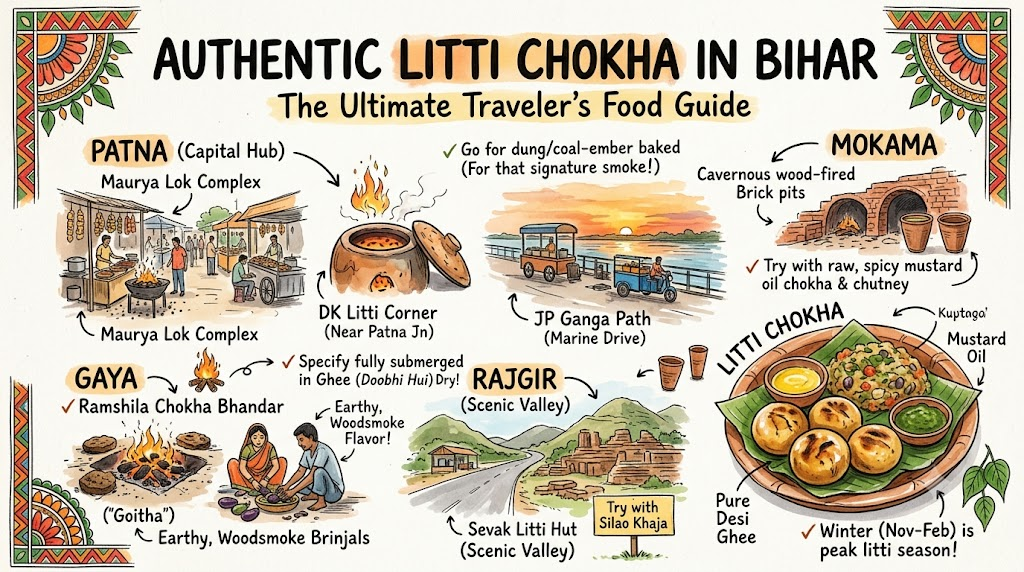
While ordinary travel trails shuffle sightseers between identical food courts and sanitized commercial dining chains, Bihar offers an unvarnished culinary pilgrimage rooted in smoke, clay, and soul. To understand this ancient land, one must look beyond air-conditioned restaurant facades and seek the intoxicating perfume of roasting sattu over glowing cow dung embers.
Here, food is a living cultural tapestry rather than a pre-packaged commodity. Biting into a rustic, wood-fired litti dripping with golden desi ghee offers an immediate connection to the timeless soil, legendary hospitality, and fiery culinary heritage of eastern India.
Why Bihar is a must-visit city
Bihar is the spiritual cradle of major global philosophies and ancient empires, yet its culinary geography remains one of India’s most thrilling, under-celebrated frontiers. The state’s food tells the story of resilience and agrarian abundance, where hearty gram flour, pungent mustard oil, and roasted winter aubergines converge into a nutritional marvel. Connected by modern multi-lane expressways, upgraded railway junctions, and high-frequency flight routes into Patna and Gaya, this culinary circuit welcomes budget foodies, road-trippers, and cultural purists with effortless ease.
From open-air urban riverfronts to bustling bazaar alleys dating back centuries, the gastronomic trail covers dynamic contrast across central and southern Bihar. Travelers can transition smoothly from heritage monuments directly into smoke-filled street stalls that have perfected a single recipe over five generations.
| Key Culinary Fact | Details |
|---|---|
| Primary Transit Hubs | Patna Airport, Gaya Airport, Patna Junction, Deen Dayal Upadhyaya Junction |
| Peak Season for Litti | October to March (Winter harvest brings fresh brinjal and mustard oil) |
| Signature Flavor Base | Roasted chana sattu, ajwain, kalonji, mustard oil, smoked baingan |
| Average Cost Range | ₹40 – ₹150 per hearty, ghee-soaked serving |
| Recommended Circuit | Patna – Mokama – Gaya – Rajgir – Sasaram |
Authentic fire-roasted litti with spicy chokha.
Best Places or Experiences
1. Bhojpuri Litti Chokha, Maurya Lok Complex, Patna
Nestled in the bustling Maurya Lok Complex in the heart of Patna, this iconic open-air food joint is an institution of urban Bihari street food. For decades, it has drawn politicians, college students, artists, and visiting gourmands to its crackling charcoal stoves. The aroma of crushed spices and roasted gram flour fills the corridor long before you reach the front counter.
Each portion features crisp, charred whole-wheat spheres packed tightly with spicy, garlic-laced sattu, thoroughly crushed by hand and drenched in fragrant liquid ghee. Their accompaniment is a masterclass in balance: slow-roasted brinjal blended with boiled potatoes, green chilies, raw mustard oil, and a zesty coriander-mint dip.
- Location: Maurya Lok Complex, Dak Bungalow Road, Patna; 2 km from Patna Junction.
- Why it is worth visiting: The legendary benchmark for classic, high-volume urban street-side litti in Patna.
- Best things to do: Watch the cooks deftly crack open scalding hot littis by hand, order a side of their special raw green chili pickle, and wash it down with fresh sattu sharbat.
- Best time to visit: 5:00 PM to 8:30 PM for fresh evening batches straight off the coal grill.
- Ideal for whom: Street food enthusiasts, curious backpackers, and solo travelers.
- Travel tip: Parking can be chaotic around Dak Bungalow Road; take an e-rickshaw directly to the complex archway.
2. DK Litti Corner, Station Road, Patna
Situated directly across the dynamic transit currents of Patna Junction, DK Litti Corner caters to weary long-distance rail passengers and local daily commuters with unrelenting speed and remarkable consistency. Operating for over four decades, this compact storefront relies on a continuous assembly line of bakers turning golden dough balls over red embers.
The secret to their enduring popularity lies in the robust seasoning of the stuffing, which incorporates homemade mango pickle masala alongside roasted gram flour. The exterior dough retains an addictive biscuit-like crunch that yields to a steamy, savory core that dissolves on the tongue.
- Location: Near Patna Junction roundabout, Fraser Road, Patna; 200 meters from the central station.
- Why it is worth visiting: Unfiltered railway-station street food culture delivering uncompromised rustic flavors.
- Best things to do: Stand alongside the open counter to observe traditional tandoor-style baking, pair your plate with sweet dry balushahi, and grab packed parcels for long train journeys.
- Best time to visit: 11:30 AM to 3:00 PM when lunchtime batches are continually rotated fresh.
- Ideal for whom: Transit travelers, budget backpackers, and solo rail enthusiasts.
- Travel tip: Ask the vendor for extra dry sattu filling sprinkled right on top of your crushed litti for an authentic textural punch.
3. JP Ganga Path (Marine Drive) Stalls, Patna
As the afternoon sun dips below the horizon along the wide expanse of the river Ganges, the elevated promenade of JP Ganga Path transforms into a modern open-air promenade filled with mobile food carts. Here, the traditional preparation of litti encounters Patna’s burgeoning modern recreational riverfront culture.
Eating warm littis on the banks of the sacred river as cooling breezes sweep off the water provides an unforgettable sensory atmosphere. The vendors here often roast on earthen clay pots called angethis, serving their delicacies on biodegradable sal leaf plates with roasted whole garlic pods on the side.
- Location: Northern riverfront expressway, Patna; 6 km from Patna city center.
- Why it is worth visiting: Panoramic river sunset views matched with piping hot, wood-roasted country-style snacks.
- Best things to do: Capture sunset silhouettes across the Ganges, taste special roasted whole garlic heads, and enjoy post-meal clay-cup kulhad chai while sitting by the promenade.
- Best time to visit: 5:00 PM to 8:00 PM during twilight and post-dusk hours.
- Ideal for whom: Couples, weekend road-trippers, photography lovers, and young friend circles.
- Travel tip: Visit on weekday evenings; weekend crowds lead to long wait times and congested promenade shoulders.
4. Ramshila Chokha Bhandar, Gaya
Located near the historic Ramshila Hill in Gaya, this modest roadside establishment honors old-school Magahi culinary customs without compromise. Unlike modern metropolitan vendors who roast on gas stoves, this hearth relies strictly on dried cow dung patties (goitha), imparting a deep, primordial woodsmoke character that permeates every layer of the crust.
The chokha served here is uniquely coarse and unhurried: whole eggplants and red tomatoes are buried directly under dying embers until charred black, peeled by hand, and mashed with raw shallots and artisanal cold-pressed mustard oil. The resulting combination delivers an earthy, rustic punch impossible to replicate in modern kitchens.
- Location: Near Ramshila Temple turnoff, Gaya; 3.5 km from Gaya Junction, 110 km south of Patna.
- Why it is worth visiting: Pure ancestral preparation technique using authentic cow dung ember baking.
- Best things to do: Inspect the outdoor ember pits to see traditional baking in real-time, taste their spicy raw ginger dip, and hike up Ramshila Hill afterward for valley views.
- Best time to visit: 8:00 AM to 11:00 AM for fresh breakfast batches.
- Ideal for whom: Food anthropologists, culinary purists, and culture researchers.
- Travel tip: Wear casual clothing; the open ember pits produce aromatic woodsmoke that lingers on fabric.
5. Sevak Litti Hut, Rajgir Valley
Set against the backdrop of the rugged hills of Rajgir, Sevak Litti Hut serves visitors winding down from explorations of ancient ruins and scenic Buddhist ropeways. The establishment is famous throughout Nalanda district for pairing its crisp whole-wheat crusts with a side of rich, homestyle rustic potato curry alongside traditional roasted baingan bharta.
Their filling leans heavily on pungent carom seeds (ajwain) and sun-cured red chili pickle mash, creating an invigorating kick that cuts right through the rich cow ghee coating. It has long been a celebrated halt for long-distance drivers and pilgrims journeying between Nalanda and Bodh Gaya.
- Location: Kund Area, Main Highway Road, Rajgir; 15 km from Nalanda University ruins, 100 km from Patna.
- Why it is worth visiting: The definitive highway pitstop known for tangy, pickle-infused sattu fillings and vibrant spicy curries.
- Best things to do: Pair your meal with famous sweet multi-layered Khaja from nearby Silao, walk to the natural hot springs, and chat with local drivers about highway road conditions.
- Best time to visit: 1:00 PM to 4:00 PM for a replenishing mid-journey road lunch.
- Ideal for whom: Road-trippers, family vacationers, and heritage explorers.
- Travel tip: If you have low spice tolerance, specifically ask the server for kam teekha (mild) chokha, as their default green chili paste packs significant heat.
Traditional litti served with spicy curry.
Offbeat Exploration: Hidden Gems Tourists Miss
Mokama Highway Dhabas, National Highway 31
Far from modern city centers, the truck-stop dhabas dotting the highway around Mokama keep the primordial spirit of Bihari cuisine burning through the night. The cooks here roast hundreds of oversized, thick-crusted littis inside cavernous wood-fired brick pits. Eaten late at night under open skies alongside fiery mustard dips, this rugged highway experience reveals the dish in its true working-class avatar.
Silao Sweet & Savory Junction, Nalanda
While tourists flock to the town of Silao almost exclusively for its geographical indication tagged Khaja, the small backstreet litti stalls here offer an extraordinary counterpoint. The bakers blend crushed peanuts and roasted cumin into the traditional gram filling, producing an unusually nutty, fragrant interior that balances beautifully against traditional hot potato-tomato gravy.
Barabar Foothill Carts, Jehanabad
Scattered around the base path leading to the ancient 3rd-century BCE Mauryan rock-cut caves of Barabar, village grandmothers roast small, bite-sized littis over tiny twigs and dry cow dung cakes. Served without commercial cutlery on broad banyan leaves with simple charred tomato mash, these unassuming trailside snacks provide an authentic taste of ancient rural cooking.
Detailed Practical Guidance for Travelers
| Destination | Standard Entry Fee | General Timings | Best Local Food Options Nearby | Recommended Nearby Attractions |
|---|---|---|---|---|
| Bhojpuri Litti Chokha (Maurya Lok) | Free Access (₹50–₹90 per plate) | 12:00 PM – 10:30 PM | Cold Badam Milk, Kesar Kulfi, Chaat | Bihar Museum, Patna Planetarium |
| DK Litti Corner (Station Road) | Free Access (₹40–₹70 per plate) | 7:00 AM – 11:00 PM | Balushahi, Motichoor Ladoo, Lassi | Buddha Smriti Park, Mahavir Mandir |
| JP Ganga Path Stalls | Free Access (₹60–₹120 per plate) | 4:30 PM – 10:00 PM | Roasted Corn (Bhutta), Kulhad Chai | Kali Ghat, Golghar, Gandhi Ghat |
| Ramshila Chokha Bhandar (Gaya) | Free Access (₹40–₹80 per plate) | 7:30 AM – 8:00 PM | Gaya Tilkut, Anarsa, Khurchan Peda | Vishnupad Temple, Mangla Gauri Temple |
| Sevak Litti Hut (Rajgir) | Free Access (₹50–₹100 per plate) | 9:00 AM – 9:30 PM | Silao Khaja, Fresh Sugarcane Juice | Vishwa Shanti Stupa, Venu Vana |
Logistics & On-Ground Navigation
Local Transport Options
- Railways: Exceptional inter-city rail links connect Patna Junction, Gaya Junction, and Rajgir; fast passenger expresses and Jan Shatabdi trains make day-tripping between food hubs simple.
- Auto-Rickshaws & E-Rickshaws: The most practical way to weave through crowded bazaar lanes like Maurya Lok and station markets; always negotiate fares or insist on digital meter apps where available.
- Private Car Rentals: Hiring an air-conditioned sedan with a local driver (costing roughly ₹2,500 – ₹3,500 per day) offers the highest flexibility for reaching highway dhabas and out-of-town hill stalls.
Budget Planning
- Backpacker / Street Foodie Tier: ₹900 – ₹1,500 per day (Covers budget lodge accommodation, unlimited street meals, shared auto transit, and regional passenger trains).
- Mid-Range / Comfort Tier: ₹3,000 – ₹5,500 per day (Includes heritage or 3-star city hotels, dedicated private cab hire, sit-down dining supplements, and curated local tastings).
Safety and Inclusivity Tips
- Families: Major urban hubs like Maurya Lok and JP Ganga Path offer clean open sitting areas suitable for children and multi-generational groups.
- Couples: Riverfront promenades and the foothills of Rajgir provide relaxed, welcoming atmospheres; avoid isolated highway stalls very late at night.
- General Safety: Drink only sealed bottled water alongside spicy street meals, and ensure your litti is served piping hot directly from the fire rather than resting at room temperature.
Strategic Travel Planning Guardrails
Travel Planning Tips for Bihar
- Target the Winter Window: Plan your foodie journey between November and February when outdoor clay baking is comfortable and winter harvests produce top-grade eggplants.
- Embrace Digital Payments: Most street kiosks across Patna, Gaya, and Rajgir prominently display QR codes for UPI transfers; carrying ₹500 in small cash notes remains wise for remote dhabas.
- Acclimate to Raw Mustard Oil: Authentic chokha relies on unheated, pungent mustard oil; take small bites initially if your palate is unaccustomed to its horseradish-like bite.
- Order Desi Ghee Explicitly: When purchasing, specify whether you want doobhi hui (fully submerged in ghee) or sookhi (dry litti with light ghee brush) based on your dietary preferences.
- Pace Your Caloric Intake: Dense roasted sattu digest slowly and keep you full for hours; avoid scheduling heavy meals closely together.
Common Mistakes to Avoid
- Judging Spots by Exterior Decor: The humblest tin-roof stalls with glowing coal pits consistently produce far superior crusts than plush multi-cuisine hotel buffets.
- Skipping the Chokha Mix: Eating only the dry bread misses the essence of the dish; the acidic, smoky mash is essential to cut the dense wheat interior.
- Arriving Right at Closing: Vendors at top stalls often exhaust their day’s freshly kneaded dough supply by 8:30 PM; arrive during peak service hours.
- Drinking Cold Tap Water: Avoid unfiltered tap water offered in street pitchers; always opt for bottled water or fresh coconut water.
- Ignoring Seasonal Sweets: Do not conclude a fiery meal without balancing your palate with seasonal local sweets like Tilkut in winter or Silao Khaja year-round.
Suggested Itinerary Blueprints
1. Day Quick Dash (Patna Urban Food Loop)
Tailored for transit travelers and business visitors on a 24-hour layover in the capital.
- 10:00 AM – 01:00 PM: Morning heritage walk around Patna Museum and Golghar, followed by an early lunch of fiery station-style litti at DK Litti Corner.
- 02:00 PM – 04:30 PM: Cultural gallery exploration inside the modern Bihar Museum complex.
- 05:00 PM – 07:30 PM: Evening promenade stroll along JP Ganga Path, sampling open-air charcoal-roasted littis with river sunset views.
- 08:30 PM – 10:00 PM: Dinner stop at Maurya Lok Complex for street food tastings, rounded off with warm sweet gulab jamuns.
2. Day Deep-Dive (Capital to Bodh Gaya Trail)
A balanced two-day itinerary spanning the state’s urban center and historic southern plains.
- Day 1: Start in Patna with a hearty breakfast litti near Dak Bungalow. Drive south via NH22 toward Rajgir, stopping at Sevak Litti Hut for lunch and spending the afternoon exploring Nalanda’s ancient monastic ruins.
- Day 2: Early morning departure to Gaya; taste traditional dung-ember roasted littis at Ramshila Chokha Bhandar before spending a peaceful afternoon meditating around the Mahabodhi Temple in Bodh Gaya.
3. Complete Weekend Travel Plan (Grand Culinary Circuit)
A three-day loop covering the finest historical and culinary landmarks across south-central Bihar.
- Friday: Arrive in Patna; spend the evening hopping between street stalls at Maurya Lok and enjoying the night lights of JP Ganga Path.
- Saturday: Morning drive through the green fields of Nalanda; savor roadside littis at Silao followed by an afternoon visit to Rajgir’s Peace Pagoda and hot springs.
- Sunday: Early transit to Gaya for heritage street tastings near Vishnupad Temple, followed by an afternoon journey to Sasaram to view the floating tomb of Sher Shah Suri before catching evening return trains.
Common Tourist Mistakes to Avoid
Geographic Blunders
Attempting to drive from Patna to Sasaram, then over to Bhagalpur in a single day is a grueling, counter-productive mistake. Distances across Bihar are best divided into logical linear corridors over multiple days.
Commercial Traps
Wasting precious lunch hours inside upscale international franchise restaurants in Patna shopping malls robs you of world-class, authentic regional preparations made steps away in historic bazaars.
Neglecting Modern/Alternative Zones
Do not restrict your visit solely to crowded railway neighborhoods. Patna’s modern riverfront drives, expansive urban parks, and thriving arts centers offer refreshing, clean environments to enjoy traditional delicacies.
Transport Overpayment
Avoid accepting arbitrary flat rates demanded by aggressive drivers outside transit terminals. Insist on booking through verified app-based aggregators or cross-check average standard fares with hotel staff.
Luxury Dining Bias
Believing that upscale five-star hotel kitchens prepare better regional food is a common tourist fallacy. Commercial kitchens frequently tone down the mustard oil, smoke, and garlic spices, losing the very soul of real Bihari cuisine.
Frequently Asked Questions
1. What exactly is the difference between authentic Litti and Rajasthani Baati?
While both are round wheat dough spheres, Rajasthani baati is typically baked plain and crushed entirely into sweet or savory dal. Litti is stuffed with heavily seasoned roasted gram flour (sattu), infused with raw mustard oil, carom seeds, and herbs, then baked directly over cow dung or charcoal embers and eaten with smoky vegetable mash.
2. Is it safe for international tourists to eat litti from street carts?
Yes, provided you choose busy stalls with high customer turnover where littis are served scalding hot straight from the coals. Ensure that the vendor cracks the litti open and dips it in fresh ghee in front of you, and always drink sealed bottled water to avoid digestive upset.
3. What ingredients make up the traditional chokha accompaniment?
Traditional chokha is an unpureed, rustic mash made from large eggplants (baingan) and ripe tomatoes that are roasted whole over open coals until charred. The skin is peeled away, and the flesh is mashed with boiled potatoes, finely chopped raw onions, green chilies, garlic, cilantro, salt, and generous splashes of raw mustard oil.
4. How is traditional coal or dung baking different from oven baking?
Baking litti over dried cow dung cakes (goitha) or hardwood coals imparts a distinct, deep woodsmoke flavor and creates an earthy, crisp, blistered exterior crust. Electric household ovens bake evenly but leave the exterior crust uniform, dry, and lacking the signature rustic smokiness that defines authentic rural Bihari cooking.
5. Can travelers find vegetarian-safe litti stalls throughout Bihar?
Almost all traditional litti stalls in Bihar are strictly vegetarian, preparing their sattu fillings, brinjal chokhas, and potato curries without meat. Some establishments also offer mutton gravy as an optional accompaniment, but these pots and serving ladles are kept clearly segregated from the core vegetarian preparations.
6. What are the best drinks to pair with a spicy plate of litti chokha?
A glass of cold, salted sattu sharbat spiced with roasted cumin and mint is the classic summer accompaniment. During cooler months, travelers typically pair their spicy meal with fresh clay-cup ginger milk chai (kulhad chai) or a thick, sweet lassi to balance the fiery mustard oil and green chilies.
7. How long can freshly baked littis be preserved for train journeys?
Dry, un-dipped littis baked thoroughly over embers can easily last up to 48 hours at room temperature without spoiling, thanks to the roasted nature of sattu. Avoid packing wet chokha or dipping the balls in ghee beforehand if you intend to carry them as travel food for long overnight train trips.
8. Why is raw mustard oil added directly to the vegetable chokha?
Raw, cold-pressed mustard oil contains natural allyl isothiocyanate, which imparts a sharp, pungent kick akin to wasabi or horseradish. In Bihari cuisine, this sharp pungency is essential to elevate the mild flavors of roasted eggplant and potato, providing an unmistakable culinary identity that cooked oils cannot deliver.
9. Is litti chokha considered a healthy meal option for diet-conscious travelers?
Litti is exceptionally nutritious, featuring high-protein, low-glycemic roasted gram flour encased in whole wheat, packed with dietary fiber, iron, and digestive spices like ajwain. For a lighter, health-conscious meal, simply ask the cook to serve the littis dry (bina ghee ke) alongside the nutrient-rich, roasted vegetable chokha.
10. What is the standard cost for a hearty meal of litti chokha in Bihar?
A standard street plate featuring two large stuffed littis bathed in desi ghee, generous scoops of two types of chokha, and green chutney costs between ₹40 and ₹80. At sit-down regional heritage restaurants or specialized rural resorts, the price generally ranges from ₹120 to ₹200 per serving.
11. Which festival season offers the best atmosphere to experience Bihari food?
The post-monsoon festival of Chhath Puja (celebrated in October or November) showcases Bihar’s cultural and culinary traditions at their absolute peak. The cooler weather coincides with the arrival of fresh winter crops, sweet sugarcane harvests, and vibrant community spirit across all public river ghats and city streets.
12. How do I politely communicate my spice tolerance level at local street stalls?
Street cooks in Bihar prepare chokha fresh in small batches and are happy to accommodate your spice preference upon request. Simply tell the vendor kam teekha for mild spice or bina mirchi ka for no green chilies, and they will assemble your vegetable mash without extra chili paste or spicy pickles.
Conclusion
Embarking on a culinary journey through the heart of Bihar offers an experience far more rewarding than an ordinary vacation—it is an immersion into an ancient land that wears its heart, history, and hospitality on a clay plate. As the smoke clears from roadside embers to reveal golden, sun-cracked littis drenched in fragrant ghee, you are not merely tasting street food; you are partaking in a living tradition preserved through generations of agrarian pride. Leave behind the predictable menus of modern cities, follow the intoxicating scent of roasted sattu along the Ganges, and discover the deep, unforgettable soul of authentic Indian comfort food.
