Introduction
While mainstream travel corridors empty your savings on overpriced souvenir strips, cookie-cutter resorts, and manufactured theme parks, Bihar offers an unfiltered encounter with human civilizational roots. Here, wanderers touch red bricks laid fifteen centuries ago, sit under sacred canopies where timeless philosophies took form, and feast on heritage flavors without dreading the bill.
This is not a cosmetic getaway; it is a ground-level odyssey into spiritual gravitas, living arts, and warm vernacular hospitality. Stepping across its landscapes reveals how much wonder remains completely affordable when destinations prize living heritage over commercial spectacle.
Why Bihar is a must-visit city
Bihar anchors the intellectual and spiritual foundations of the subcontinent. As the cradle of both Buddhism and Jainism, the heartland of the ancient Mauryan Empire, and home to the world’s first residential university, its historical footprint remains unmatched. Modern infrastructure now unlocks this monumental heritage: four-lane national expressways, frequent rail junctions connecting tier-one hubs, and expanded terminals at Patna, Gaya, and Darbhanga ensure seamless transit for backpackers, pilgrims, and families alike.
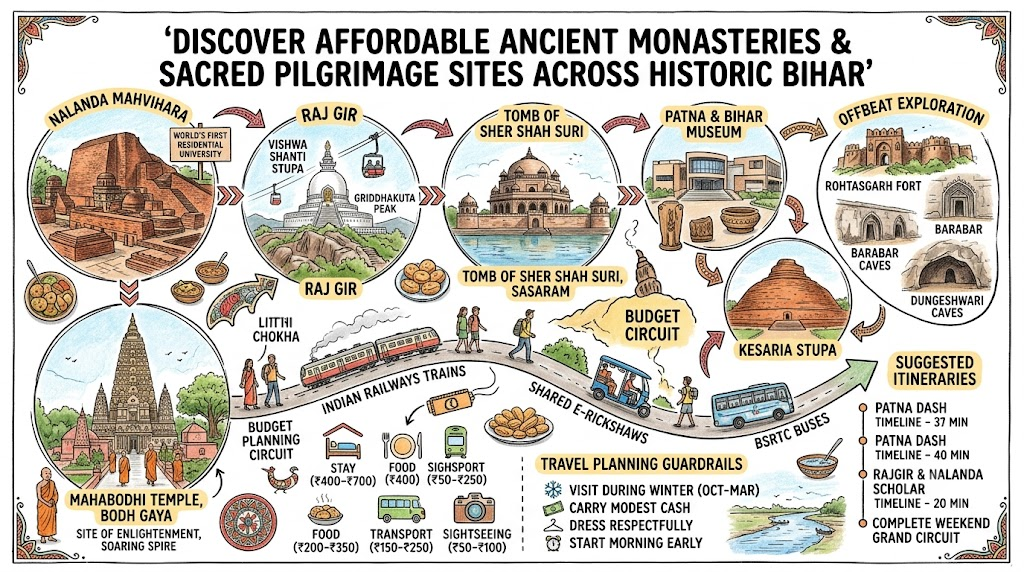
The primary budget travel circuit connects the riverine energy of Patna southward toward the rolling forested folds of Rajgir, the spiritual calm of Bodh Gaya, and the archaeological vistas of Nalanda and Sasaram. State-run transport, shared jeeps, and pocket-friendly eateries make touring this historic corridor surprisingly economical without compromising visual or cultural depth.
| Circuit Dimension | Practical Overview |
|---|---|
| Primary Transit Hubs | Patna Junction, Gaya Junction, Jay Prakash Narayan Airport |
| Ideal Travel Season | October to March (Crisp mornings, pleasant daylight) |
| Top Travel Motifs | Monastic Architecture, Sacred Waterways, Geo-Forest Hills |
| Core Transit Mode | Indian Railways Express Trains, Local Shared Autos, State Buses |
| Average Daily Spend | ₹900 – ₹1,800 per traveler (Budget tier inclusive of food and stay) |
Ancient red-brick monasteries of Nalanda.
Best Places or Experiences
Nalanda Mahavihara Archaeological Complex
The monastic remains of ancient Nalanda stand as an architectural triumph that hosted ten thousand scholars when Europe was traversing the Dark Ages. Walking along its manicured lawns, the terracotta-toned stupas and multi-tiered residential cells reflect a sophisticated university town planned with covered drains, courtyards, and massive lecture halls.
Temple Number 3 commands the entire complex, its stepped brick terrace rising toward the sky flanked by votive stupas bearing intricate stucco carvings. The site remains remarkably well-preserved, making it easy to picture Xuanzang studying sacred scriptures within its walls.
- Location: Nalanda District, Central Bihar; 85 km southeast of Patna.
- Why it is worth visiting: A UNESCO World Heritage site offering deep architectural genius for the price of a local bus ticket.
- Best things to do: Explore the living cells of Monastery Site 1, admire the stucco deities on Temple 3, and study bronze relics inside the Nalanda Archaeological Museum.
- Best time to visit: November to February, between 9:00 AM and 11:30 AM before afternoon heat reflects off the brickwork.
- Ideal for whom: Solo backpackers, history buffs, architecture students, and budget family travelers.
- Travel tip: The on-site museum across the road costs a mere ₹5; do not discard your monument ticket before exploring it.
Mahabodhi Temple Complex, Bodh Gaya
Surrounded by quiet stone railings dating to the Sunga period, the soaring 55-meter grand spire of Mahabodhi Temple radiates an undeniable aura of peace. Beneath the sprawling canopy of the sacred Bodhi Tree, maroon-robed monks sit in quiet contemplation alongside travelers from across the world.
The intricate brickwork, stone carvings, and peaceful Lotus Pond create a calming atmosphere where hours pass unnoticed. Even for travelers without spiritual leanings, the sheer historical weight of this sanctuary leaves an indelible mark.
- Location: Gaya District, Southern Bihar; 115 km south of Patna, 15 km from Gaya Railway Junction.
- Why it is worth visiting: One of the most venerated spiritual monuments in human history with zero entry admission fee.
- Best things to do: Sit beside the sacred Bodhi Tree during early morning chanting, examine the carved sandstone railings, and tour the nearby international Buddhist monasteries for free.
- Best time to visit: 5:00 AM to 7:00 AM for sunrise prayers and absolute tranquility.
- Ideal for whom: Spiritual pilgrims, solo wanderers, culture documentarians, and conscious budget explorers.
- Travel tip: Mobile phones and electronics must be safely deposited in the complimentary lockers outside the main security gate; bring a standard analog notebook if you like journaling.
Mahabodhi Temple complex in Bodh Gaya.
Vishwa Shanti Stupa & Griddhakuta Peak, Rajgir
Perched atop Ratnagiri Hill, the stark white dome of the Vishwa Shanti Stupa cuts a striking silhouette against the rugged greenery of the Rajgir valley. Built by the Japanese Buddhist community, the stupa houses four radiant golden statues of the Buddha depicting his birth, enlightenment, teaching, and passing.
A short walk along the ridgeline brings you to Griddhakuta, or Vulture’s Peak, a natural rocky terrace where the Buddha taught the Heart Sutra. Looking outward across the rolling valley hills costs nothing and offers some of the finest natural views in the state.
- Location: Rajgir, Nalanda District; 100 km south of Patna via SH4.
- Why it is worth visiting: Panoramic hilltop vistas and sacred heritage accessible via an affordable aerial chairlift or a gentle hiking trail.
- Best things to do: Ride the historic single-chair ropeway up the hill, hike down the stone trail via Vulture’s Peak, and explore the ancient Cyclopean stone walls.
- Best time to visit: October to March; early morning between 8:00 AM and 10:30 AM.
- Ideal for whom: Nature lovers, trekking enthusiasts, couples, and budget-conscious weekenders.
- Travel tip: Skip the chairlift queue on busy holiday weekends and take the paved stone hiking path; it takes just 25 minutes to ascend on foot and saves on tickets.
Vishwa Shanti Stupa on Ratnagiri Hill.
Tomb of Sher Shah Suri, Sasaram
Rising like a floating stone island from the center of a massive artificial lake, this mausoleum stands as a crowning achievement of Indo-Islamic architecture. Built from fine Chunar sandstone, the grand octagonal tomb spans over 120 feet in height, boasting an expansive central dome larger than that of the Taj Mahal.
A stepped stone causeway connects the shore to the island tomb, creating perfect mirror reflections across the still water. The tranquil garden paths surrounding the lake offer quiet vantage points to study its domed kiosks and pierced stone screens.
- Location: Sasaram, Rohtas District; 150 km southwest of Patna on Grand Trunk Road.
- Why it is worth visiting: An architectural masterpiece matching Mughal capitals at a fraction of standard entry and travel costs.
- Best things to do: Walk the perimeter stone promenade for reflection photography, admire the arched corridors, and inspect the inscribed cenotaph inside the dome chamber.
- Best time to visit: 6:30 AM to 8:30 AM or 4:00 PM to 5:30 PM during golden hour.
- Ideal for whom: Architecture enthusiasts, heritage photographers, and travelers tracing medieval Indian history.
- Travel tip: Board any early morning express train from Gaya to Sasaram for a comfortable, low-cost day-trip without paying for private car rentals.
Sandstone mausoleum of Sher Shah Suri in Sasaram.
Patna Museum & Bihar Museum Corridor
Patna offers a fascinating dual museum experience, bridging vintage colonial architecture with contemporary exhibition design. The older Patna Museum, built in the Indo-Saracenic style, holds priceless antiquities including the Didarganj Yakshi and sacred relics of the Buddha.
Just down Bailey Road, the modern Bihar Museum showcases thousands of years of regional history across vast, air-conditioned galleries. Interactive displays, immersive courtyards, and detailed folk art wings deliver a world-class educational experience at deeply subsidized public admission prices.
- Location: Bailey Road, Central Patna; 3 km from Patna Junction.
- Why it is worth visiting: A world-standard museum infrastructure preserving over two millennia of sculptures, coins, and indigenous crafts.
- Best things to do: Gaze at the polished Mauryan polish of ancient stone sculptures, explore the interactive children’s gallery, and stroll through the modern open-air installations.
- Best time to visit: Weekday mornings from 10:30 AM to 1:00 PM to explore the galleries in peace.
- Ideal for whom: Families, students, art lovers, and researchers on a budget.
- Travel tip: Combine both museum visits using the affordable local electric bus routes running along Bailey Road.
Kesaria Stupa, East Champaran
Rising dramatically above the rural plains of North Bihar, the Kesaria Stupa is regarded as the tallest ancient Buddhist stupa in the world, standing higher than Java’s Borobudur. Discovered by the Archaeological Survey of India, the stepped circular brick terraces once stood over 150 feet high before historical earthquakes altered its profile.
The surrounding countryside remains largely rural and uncommercialized, offering visitors an authentic and uncrowded historical experience. Walking along its base terraces reveals small brick niches that once housed carved figures of the Buddha.
- Location: East Champaran District, North Bihar; 110 km northwest of Patna.
- Why it is worth visiting: Standing before the tallest ancient stupa in the world with wide, peaceful rural vistas.
- Best things to do: Circumambulate the massive brick terraces, observe village life along the perimeter, and photograph the monument against wide open skies.
- Best time to visit: November through February during early daylight.
- Ideal for whom: Offbeat adventurers, road-trippers, and archaeological purists.
- Travel tip: Pack drinking water and snacks in advance, as commercial vendor stalls near this rural monument remain minimal.
Offbeat Exploration: Hidden Gems Tourists Miss
Rohtasgarh Fort, Rohtas
Perched high on a plateau in the Kaimur hills, this sprawling fortress complex encompasses grand gateways, ancient temples, and abandoned royal palaces. Reaching the fort requires a rewarding morning hike through forested trails, shielding the site from crowded tour buses. The view from the cliff edges overlooking the Son River valley below is breathtaking and completely free.
Barabar Caves, Jehanabad
Known as the oldest surviving rock-cut caves in India, these Mauryan sanctuaries feature mirror-polished granite interiors that create surreal echoes. Carved directly into enormous boulders, caves like Lomas Rishi and Sudama present early arch forms that later shaped rock-cut cave art across the country. Local passenger trains from Gaya stop nearby, making an excursion here inexpensive.
Teliya Agar & Dungeshwari Caves, Bodh Gaya Outskirts
Tucked into the rugged hills across the Phalgu River, these caves preserve the spot where Siddhartha Gautama practiced severe austerities before attaining enlightenment under the Bodhi Tree. Away from the town center, a short stone climb leads to peaceful meditation chambers stewarded by resident monks, offering open panoramic valley views.
Detailed Practical Guidance for Travelers
| Destination | Standard Entry Fee | General Timings | Best Local Food Options Nearby | Recommended Nearby Attractions |
|---|---|---|---|---|
| Nalanda Ruins | ₹40 (Indians), ₹600 (Foreigners) | 9:00 AM – 5:00 PM | Fresh Silao Khaja, Sattu Thali stalls | Nalanda Museum, Hieun Tsang Memorial |
| Mahabodhi Temple | Free (Camera Permit: ₹100) | 5:00 AM – 9:00 PM | Tibetan Momos, Local Thukpa, Chai stalls | Thai Monastery, Giant Buddha Statue |
| Vishwa Shanti Stupa | Free (Chairlift: ₹100 return) | 6:00 AM – 6:00 PM | Local Poha, roasted corn, seasonal guavas | Vulture’s Peak, Bimbisara Jail ruins |
| Sher Shah Suri Tomb | ₹25 (Indians), ₹300 (Foreigners) | 6:00 AM – 6:00 PM | Sattu Parathas, Bihari Balushahi | Rohtasgarh Fort, Chaurasan Mandir |
| Bihar Museum | ₹100 (Adults), ₹50 (Children) | 10:30 AM – 5:00 PM (Closed Mondays) | In-house Cafeteria, Maurya Lok street foods | Patna Museum, Golghar, Gandhi Ghat |
| Kesaria Stupa | ₹25 (Indians), ₹300 (Foreigners) | Sunrise to Sunset | Dhabas along NH722 serving hot Dal Puri | Vaishali Kolhua Complex, Ashokan Pillar |
Logistics & On-Ground Navigation
Local Transport Options
Navigating Bihar on a budget is easy once you use the state’s extensive transit network:
- Passenger & Express Railways: The most economical way to move between major nodes like Patna, Gaya, Sasaram, and Rajgir; unreserved general coaches cost as little as ₹30–₹60, while sleeper class tickets run under ₹150.
- Shared E-Rickshaws & Auto-Rickshaws: Operating on fixed point-to-point routes within cities and towns for just ₹10–₹25 per seat.
- State Road Transport Buses (BSRTC): Direct, affordable connections between Patna and regional destinations like Nalanda and Gaya running every 30 minutes from the Bankipore and Bairiya bus terminals.
- App-Based Taxis: Uber and Ola operate extensively in Patna and Gaya, ideal for cross-referencing prices against street autos.
Budget Planning
- Backpacking / Shoestring Tier:₹900 – ₹1,500 per day
- Stay: Pilgrim dharamsalas, youth dorms, or basic guesthouses (₹400–₹700/night).
- Food: Street-side Litti Chokha, roadside dhabas, and temple canteens (₹200–₹350/day).
- Transport: Trains and shared e-rickshaws (₹150–₹250/day).
- Sightseeing: ASI monuments and public temples (₹50–₹100/day).
- Mid-Range / Comfort Tier:₹2,500 – ₹4,500 per day
- Stay: AC rooms in clean 3-star regional hotels or boutique monastery guesthouses (₹1,500–₹2,500/night).
- Food: Sit-down regional family restaurants and museum cafes (₹600–₹900/day).
- Transport: Reserved point-to-point auto charters or shared private cabs (₹600–₹1,000/day).
- Sightseeing: All entry passes, museum tickets, and authorized guides (₹300–₹500/day).
Safety and Inclusivity Tips
- For Families: Stick to established heritage circuits (Patna–Rajgir–Bodh Gaya), where wide pavements, family eateries, and clean rail stations make traveling with kids hassle-free.
- For Couples: Town centers like Bodh Gaya offer relaxed international cafes and peaceful parks; dress respectfully near active places of worship.
- General Safety: Avoid traveling between distant rural districts on unlit state highways late at night; plan transit between 6:00 AM and 8:00 PM.
Strategic Travel Planning Guardrails
Travel Planning Tips for Bihar
- Visit During the Winter Window: Plan your trip between late October and early March for crisp morning air and comfortable sightseeing weather.
- Carry Modest Cash Reserves: Small vendors, shared auto drivers, and ticket counters in smaller towns may have poor network connectivity for UPI payments.
- Embrace Pilgrim Accommodations: Look for monastery guesthouses in Bodh Gaya run by Japanese, Thai, or Sri Lankan missions; they offer clean, peaceful rooms at modest suggested donations.
- Dress for Religious Modesty: Ensure knees and shoulders are covered when entering Buddhist temples, Hindu shrines, and Islamic tombs.
- Start Every Morning Early: Beat the afternoon heat and avoid school groups by reaching ticket gates right when monuments open.
- Pack a Basic Personal Pharmacy: Keep hydration salts and digestive tablets on hand as you sample fiery street delicacies.
Common Mistakes to Avoid
- Overpacking Too Many Circuits: Avoid squeezing North and South Bihar into one short weekend; focus on one specific corridor to minimize travel fatigue.
- Assuming Street Food is Unhygienic: Skipping piping-hot Litti Chokha or freshly fried sweet Khaja means missing out on the state’s best culinary traditions.
- Hiring Unregistered Touts: Always buy tickets directly from official ASI booths rather than dealing with unauthorized middlemen outside gates.
- Overlooking Camera Rules: Forgetting that video cameras or drones require special permits can lead to delays or confiscation at protected sites.
- Traveling Without Rail Bookings: Always reserve long-distance train tickets ahead during festival seasons like Chhath Puja, when trains run full.
Suggested Itinerary Blueprints
1. Day Quick Dash (Patna Heritage Loop)
Ideal for business travelers or transit passengers with 24 hours to spare in the state capital.
- 07:30 AM – 09:30 AM: Morning stroll and breakfast along the Ganga Path (Marine Drive), sampling roasted Chana and Chai in clay cups.
- 10:00 AM – 01:00 PM: Explore the Bihar Museum along Bailey Road to take in its world-class archaeological galleries.
- 01:30 PM – 03:00 PM: Lunch at Maurya Lok complex featuring authentic Champaran meat or vegetarian Thali.
- 03:30 PM – 05:30 PM: Panoramic city views from Golghar followed by a visit to the historic Patna Sahib Gurudwara.
2. Day Deep-Dive (Rajgir & Nalanda Scholar Route)
A weekend route exploring ancient learning, mountain ridges, and sacred sanctuaries.
- Day 1 (Rajgir): Morning passenger train from Patna to Rajgir. Take the chairlift to the Vishwa Shanti Stupa, walk down past Vulture’s Peak, and spend the afternoon visiting the ancient Cyclopean Walls and hot springs.
- Day 2 (Nalanda & Silao): Early morning shared auto to the Nalanda University ruins. Spend three hours exploring the monasteries, visit the on-site museum, and stop in Silao on the way back to taste freshly layered Khaja sweets.
3. Complete Weekend Travel Plan (Grand Magadh Circuit)
A Friday-to-Sunday loop covering the spiritual, architectural, and natural highlights of Southern Bihar.
- Friday: Arrive in Gaya by train; transfer to Bodh Gaya. Spend the evening soaking in the tranquil atmosphere of the Mahabodhi Temple and surrounding monasteries.
- Saturday: Take an early morning train to Sasaram to photograph the island Tomb of Sher Shah Suri. Return to Bodh Gaya for an evening Tibetan dinner.
- Sunday: Early morning hike to Dungeshwari Cave, followed by an afternoon auto ride to the historic Barabar Caves before boarding your evening return train from Gaya Junction.
Common Tourist Mistakes to Avoid
Geographic Blunders
Attempting to visit Valmiki Tiger Reserve in the northwest and Sasaram in the southwest on consecutive days involves cross-state journeys that waste valuable vacation time. Plan your routes within distinct cultural clusters: either the Magadh circuit (South) or the Mithila-Tirhut belt (North).
Commercial Traps
Spending your budget inside high-end malls in Patna wastes resources you could use on authentic local handloom products. Instead, visit government-certified outlets like Upendra Maharathi Shilp Anusandhan Sansthan to buy Madhubani paintings, Tikuli craft, and Bhagalpuri silk directly from local artisans.
Neglecting Modern/Alternative Zones
Don’t focus solely on ruined stone walls and miss the modern developments across the state. Patna’s updated riverfront promenades, sprawling public parks, and contemporary art galleries offer a lively look at modern local life.
Transport Overpayment
Accepting the first quote from auto drivers outside railway stations often results in paying double the local rate. Walk out to the main road, verify standard route fares with a local shopkeeper, or book an app-based cab where available to keep transit costs low.
Luxury Dining Bias
Confining your meals to air-conditioned hotel restaurants deprives you of the region’s culinary soul. Street-side stalls serve wholesome, fire-roasted dishes that are not only friendly on the wallet, but also offer the freshest, most authentic regional flavors.
“True travel insight comes from sitting where the locals sit: over a five-rupee clay cup of tea beside the Ganges, listening to living history.”
Frequently Asked Questions
1. Is Bihar truly safe for budget backpackers and solo travelers?
Yes, Bihar is safe for budget travelers who follow sensible transit habits. Main pilgrimage and heritage destinations like Bodh Gaya, Rajgir, and Nalanda maintain an active police presence, friendly local communities, and well-traveled routes. Simply avoid taking unmarked private vehicles across unlit rural roads late at night, and keep your valuables secure during busy train rides.
2. How cheap is local food across small towns in Bihar?
Local food is remarkably inexpensive and deeply satisfying. A wholesome plate of authentic Litti Chokha roasted over cow-dung patties costs around ₹30 to ₹50 at street stalls. Traditional vegetarian Thalis featuring seasonal vegetables, dal, rice, and hot rotis range between ₹70 and ₹120 at neighborhood dhabas, keeping your daily food budget well under ₹300.
3. What is the most budget-friendly way to travel between Patna, Rajgir, and Bodh Gaya?
The most affordable way to travel between these hubs is by using the Indian Railways network combined with state transport buses. Regular passenger and express trains run from Patna to Gaya and Rajgir for under ₹60 in unreserved general compartments. For local transit between towns, shared e-rickshaws charging ₹10 to ₹25 per hop eliminate the need for private taxis.
4. Can budget travelers find affordable accommodations near the Mahabodhi Temple?
Bodh Gaya offers an array of budget accommodations right next to the temple. Various international Buddhist monasteries—including Sri Lankan, Burmese, and Japanese guest houses—welcome visitors for modest donations ranging from ₹300 to ₹700 per night. In addition, numerous family-run guesthouses along the surrounding lanes provide clean, basic private rooms with attached bathrooms for under ₹800.
5. Are photography permits expensive at the major historical sites in Bihar?
Standard still photography with personal smartphones or non-professional DSLRs is completely free across all Archaeological Survey of India monuments, including Nalanda and Sasaram. The Mahabodhi Temple charges a nominal ₹100 fee for dedicated cameras, while commercial gear, video setups, and drones require prior written approval and substantially higher permits from the relevant heritage authorities.
6. What are the best traditional souvenirs to buy on a modest budget?
Authentic Madhubani paintings on handmade paper can be purchased directly from regional craft stalls starting at just ₹150. Other great affordable souvenirs include Sikki grass woven baskets, hand-painted wooden Tikuli coasters, and packaged local delicacies like crumbly Gaya Tilkut or layered Silao Khaja, which stay fresh for weeks and cost very little.
7. How do I visit the Barabar Caves cheaply without booking an expensive tour?
You can reach the Barabar Caves cheaply by boarding a local passenger train from Gaya Junction to Makhdumpur station for around ₹20. From the station, shared auto-rickshaws or local shared jeeps run to the base of the hills for approximately ₹30. This allows you to explore the ancient rock-cut caves independently without booking an expensive guided day tour.
8. What should a solo female traveler pack for an economical trip through Bihar?
Pack comfortable, loose-fitting cotton clothing that covers your shoulders and knees to show respect at sacred temples, mosques, and rural villages. A lightweight scarf or dupatta is useful for covering your head at religious shrines and shielding yourself from roadside dust. Comfortable slip-on sandals, a portable power bank, and a compact door-stop alarm are also great essentials.
9. Is it easy to get around using digital UPI payments in remote areas of Bihar?
UPI payments through apps like Google Pay and PhonePe are accepted by most roadside tea stalls, small eateries, and auto drivers in towns like Patna, Gaya, and Rajgir. However, when venturing out toward offbeat sites like Kesaria, Rohtasgarh, or rural archaeological mounds, weak mobile reception makes it essential to carry ₹500 to ₹1,000 in cash.
10. Can you easily visit Rajgir and Nalanda together in a single day?
Yes, you can easily combine Rajgir and Nalanda in a single day trip. Nalanda sits just 15 kilometers north of Rajgir, with shared auto-rickshaws running between them for around ₹25. Start early at the Nalanda ruins when they open at 9:00 AM, and by afternoon, take an auto into Rajgir to catch the scenic chairlift to Vishwa Shanti Stupa.
11. What is the single most economical time of year to visit Bihar?
The shoulder months of late September and early March offer a great balance between mild weather and budget-friendly room rates. During these periods, hotels and guesthouses lower their prices compared to the peak winter pilgrimage months of December and January. You can also explore popular monuments without dealing with major tourist crowds.
12. Are there any hidden entrance fees for historical spots in Bihar?
Most historical spots have transparent pricing set by the Archaeological Survey of India: ₹25 to ₹40 for Indian nationals and ₹300 to ₹600 for foreign travelers. Free access applies to all children under the age of fifteen across national monuments. Major active temples charge no general entry fees, with small optional fees only for footwear storage or special prayer queues.
Conclusion
Choosing to explore Bihar on a modest budget is not about cutting corners; it is about immersing yourself in the living fabric of an ancient land. When you trade luxury private tours for passenger trains, roadside clay cups of tea, and quiet hours among time-worn brick monasteries, the journey rewards you with unmatched perspective. Stand beneath the Bodhi tree or along the banks of the Ganges at dawn, and you will find that the richest travel memories come from heritage and hospitality, not high costs.
