Introduction
While commercial tourism funnels travelers into crowded hill stations, over-hyped beaches, and endless souvenir alleys, Bihar conceals a soulful, untouched realm of absolute stillness. Beyond the familiar pilgrimage maps lies a landscape of mist-cloaked sandstone plateaus, mirror-surfaced forest lakes, millennia-old rock caves, and cascading river gorges where silence is the only resident.
Traveling through these hidden sanctuaries reconnects you to the raw pulse of Indian heritage and pristine nature. Here, every breeze through ancient Sal canopies whispers forgotten chronicles of hermits, scholars, and forest monarchs, giving modern seekers an unadulterated refuge far from concrete noise.
Why Bihar is a must-visit city
Bihar holds an unmatched macro-level stature as the crucible of ancient Indian civilization, the philosophical cradle where the Mauryan Empire consolidated administrative genius and where Buddhism and Jainism flourished. Its diverse geography bridges the fertile Gangetic basin with the dramatic, ancient scarps of the Vindhyan range and the Himalayan terai foothills. Modern four-lane highways, well-linked railway nodes, and regional airports make reaching these secluded enclaves accessible for backpackers, family road-trippers, and history buffs.
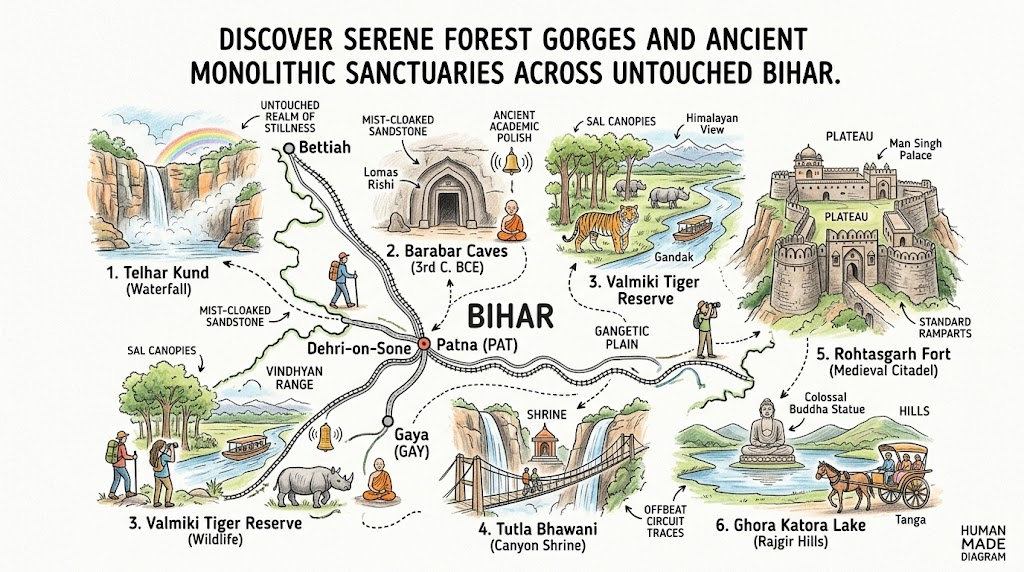
The offbeat circuit traces an arc from the rugged canyon waterfalls of the Kaimur-Rohtas plateau up to the dense wildlife corridors along the Gandak River. Travelers can experience secluded eco-resorts, unexcavated ruins, and village hospitality unaffected by mass tourism.
| Travel Dimension | Key Details |
|---|---|
| Primary Transit Hubs | Patna (PAT), Gaya (GAY), Dehri-on-Sone, Bettiah |
| Best Travel Season | October to March (Crisp air, full waterfalls, cool mornings) |
| Circuit Character | Forest gorges, monolithic caves, medieval ramparts, riverine silence |
| Terrain Profile | Vindhyan sandstone plateaus, terai sal forests, Gangetic plains |
| Local Hospitality | Forest rest houses, boutique eco-camps, district heritage homestays |
Plunging waters of Telhar Kund.
Best Places or Experiences
1. Telhar Kund, Kaimur
Tucked into the emerald folds of the Kaimur Wildlife Sanctuary, Telhar Kund is a dramatic plunge waterfall that tumbles roughly 80 feet into an enclosed, sun-dappled canyon pool. Flanked by vertical sandstone precipices and dense sub-tropical vegetation, the secluded gorge remains blanketed in cool spray, throwing vibrant morning rainbows across the mist.
The site feels completely removed from the bustle of urban centers, preserving a sacred quiet where only water song and bird calls break the air. Because the gorge acts as a natural amphitheater, visitors can sit on the surrounding plateau rocks and soak in hours of undisturbed solitude while watching wild raptors glide on thermal drafts overhead.
- Location: Kaimur District, along the Bhabua–Audhora road; approximately 210 km southwest of Patna and 32 km from Bhabua town.
- Why it is worth visiting: One of Eastern India’s most pristine plunge waterfalls, offering profound natural stillness without commercial clutter.
- Best things to do: Stand on the designated lookout edge for misty canyon panoramas, photograph forest rainbows, and explore quiet shaded nature walks along the upper reservoir rim.
- Best time to visit: October to February, when post-monsoon water volume is strong and forest trails are crisp.
- Ideal for whom: Nature lovers, solo retreat seekers, landscape photographers, and quiet road-trippers. Latehar Tourism
- Travel tip: Pack all your food and drinking water in advance, as the plateau has zero commercial eateries; refrain from descending down slick, unmarked rocks into the deep pool basin.
2. Barabar Caves, Jehanabad
Carved directly into monolithic granite boulders during the reign of Emperor Ashoka in the 3rd century BCE, the Barabar Caves are the oldest surviving rock-cut chambers in India. Created for the ascetic monks of the ancient Ajivika sect, chambers like Lomas Rishi and Sudama display jaw-dropping Mauryan polish that leaves rough granite gleaming with a mirror-like finish.
Inside these subterranean sanctuaries, an acoustic phenomenon awaits: a whisper reverberates with resonant chime for several seconds, transforming the dark interior into a contemplative chamber. Outside, the windswept rocky knolls offer wide vistas of open pastures, village groves, and undisturbed horizons.
- Location: Jehanabad District; roughly 85 km south of Patna and 40 km north of Gaya.
- Why it is worth visiting: Unmatched ancient acoustic architecture and razor-sharp Mauryan mirror-polished granite interiors.
- Best things to do: Test the remarkable echo chamber with vocal hums, photograph the carved chaitya facade of Lomas Rishi Cave, and hike the granite boulders at sunset.
- Best time to visit: November to February during early morning or late afternoon for gentle sunlight.
- Ideal for whom: Architecture purists, meditation seekers, solo wanderers, and history scholars.
- Travel tip: Carry a high-lumen pocket flashlight because the deepest sanctum chambers have zero interior illumination and are pitch black.
Lomas Rishi rock-cut cave entrance.
3. Valmiki Tiger Reserve & Gandak Riverfront
Bordering the Royal Chitwan National Park across the Nepal border, Valmiki National Park protects Bihar’s premier expanse of Himalayan terai moist deciduous forest. Towering sal forests, moist river grasslands, and braided channels of the Gandak River create a sanctuary where Bengal tigers, Indian leopards, rhinos, and hundreds of bird species roam freely.
A wooden boat ride over the emerald waters of the Gandak River at sunrise yields an ethereal silence found in few wildlife reserves. Morning mist hangs low over the water, revealing snowy silhouettes of the distant Himalayan ranges on crisp winter mornings.
- Location: West Champaran District; approximately 290 km northwest of Patna and 100 km from Bettiah.
- Why it is worth visiting: Bihar’s solitary tiger habitat, providing peaceful wilderness safaris without the jeep stampedes of mainstream national parks.
- Best things to do: Take an early morning jungle safari across the Madanpur range, enjoy a serene Gandak boat cruise, and walk through canopy bridges at the eco-tourism campus.
- Best time to visit: November to March, when sanctuary roads are dry, animal movements peak, and migratory waterfowl arrive.
- Ideal for whom: Eco-tourists, bird watchers, wildlife photographers, and peace-seeking families.
- Travel tip: Book your state forest department cottage in Valmikinagar well ahead of time, and carry a set of warm thermal inner layers for dawn boat rides.
4. Tutla Bhawani Gorge, Rohtas
Hidden within a deep, rocky ravine of the Kaimur scarp near Tilauthu, the shrine of Tutla Bhawani sits beneath twin cascading waterfalls that tumble into a calm green river pool. A narrow suspension bridge arches across the gorge floor, letting travelers walk suspended above rushing waters while vertical rock cliffs rise on both flanks.
The red sandstone walls, covered in moisture-loving ferns, block out highway noise, replacing it with the rhythmic roar of plunging water. An 8th-century stone idol of Goddess Mahishasuramardini rests at the canyon head, worshipped by local villagers in quiet forest rituals untouched by commercial temple circuits.
- Location: Rohtas District, near Tilauthu; roughly 165 km southwest of Patna and 25 km from Dehri-on-Sone.
- Why it is worth visiting: A thrilling combination of lush canyon scenery, a suspension footbridge, and ancient forest mythology.
- Best things to do: Walk across the hanging suspension bridge, photograph the dual waterfall plumes against dark rock walls, and sit by the stream bed.
- Best time to visit: July to January, when the waterfall flows with full vigour and the surrounding gorge remains intensely green.
- Ideal for whom: Adventure hikers, spiritual travelers, landscape photographers, and eco-explorers.
- Travel tip: Visit on weekday mornings before 10:00 AM to enjoy the suspension bridge in total silence before any regional day-trippers arrive.
Sacred canyon waters of Tutla Bhawani.
5. Rohtasgarh Fort, Rohtas
Perched atop an isolated plateau rising over 1,500 feet above the Son River valley, Rohtasgarh Fort is one of the largest and most dramatically situated medieval fortresses in Asia. Once held by the Solar Dynasty, the Chandelas, Sher Shah Suri, and Raja Man Singh, this massive stone citadel spans miles of defensive ramparts, ornate palaces, stepwells, and watchtowers.
Because accessing the high plateau demands a committed road journey or a rewarding trek up stone stairways, the citadel is blissfully empty. Wandering through the multi-tiered Man Singh Palace, you will hear nothing save the whistling plateau winds and wild doves echoing down silent courtyards.
- Location: Rohtas District; approximately 190 km southwest of Patna and 50 km from Sasaram.
- Why it is worth visiting: Vast medieval ramparts, ornate stone stepwells, and boundless cliff-edge lookouts over the winding Son River.
- Best things to do: Explore the arched corridors of Man Singh Palace, trek the perimeter battlements overlooking the valley, and examine ancient stone carvings at the Aina Mahal.
- Best time to visit: October to February, avoiding the midday heat of summer months.
- Ideal for whom: History buffs, avid trekkers, adventurous photographers, and solitude seekers. Latehar Tourism
- Travel tip: Wear sturdy trekking shoes with sticky rubber soles, hire a local guide from Akbarpur village at the base, and carry ample electrolytes for the hike.
6. Ghora Katora Lake, Rajgir
Resting in a natural amphitheater between five craggy, forest-clad hills of the Rajgir range, Ghora Katora is an eco-reserve that bans all motorized vehicles. The teardrop-shaped lake derives its name from its natural shape, serving as a sanctuary where tranquil green water mirrors a colossal pink sandstone statue of Lord Buddha standing serenely at its center.
Access is limited to horse-drawn tangas, rented bicycles, or a scenic 6-kilometer walk along a forest-bordered path. Free from horns, traffic fumes, and pavement hawkers, visitors can rent a pedal boat to glide gently across the mirror-like waters as migratory Siberian birds swoop low in winter.
- Location: Nalanda District, within the southern folds of Rajgir; about 105 km southeast of Patna.
- Why it is worth visiting: A pristine, zero-carbon environmental zone ringed by ancient hills and calm waters.
- Best things to do: Take an eco-friendly electric boat ride around the standing Buddha monument, cycle the pine-fringed access road, and birdwatch along the water banks.
- Best time to visit: September to March; arrive between 7:30 AM and 9:30 AM for the stillest reflections.
- Ideal for whom: Couples seeking peaceful landscapes, eco-travelers, writers, and families with young children.
- Travel tip: Park your main vehicle at the primary check-post and rent an electric golf cart early to beat small afternoon tourist batches.
Offbeat Exploration: Hidden Gems Tourists Miss
Karkatgarh Waterfall & Crocodile Sanctuary
Situated along the border with Uttar Pradesh on the Karamnasa River, Karkatgarh is a roaring natural waterfall surrounded by jagged rocky ravines. The calm, sun-drenched sandbars downstream serve as a natural crocodile breeding sanctuary. A stone pathway leads to cliff-top viewpoints where you can view mugger crocodiles basking on warm river stones while the river rushes below.
Bihar Tourism – Government of Bihar
Shergarh Fort, Sasaram
Unlike its larger sibling Rohtasgarh, Shergarh Fort lies hidden deep within the Kaimur forest canopy on a secluded ridge overlooking the Durgavati River. Built by Sher Shah Suri as a tactical forest fortress, it contains a mysterious network of underground subterranean chambers, vaults, and tunnels meant to conceal military troops. Dense jungle vines now wrap around its battlements, giving it the feel of an untouched archaeological mystery.
Bateshwar Sthan & Vikramshila River Terraces
Near the town of Kahalgaon in Bhagalpur, Bateshwar Sthan sits on rocky promontories where the Ganges curves sharply. Ancient rock-cut sculptures from the Pala period line the riverbank steps, while ancient granite temples overlook the river. The spot remains remarkably peaceful, allowing travelers to watch the sunset over calm river waters where endangered Gangetic river dolphins surface.
Detailed Practical Guidance for Travelers
| Destination | Standard Entry Fee | General Timings | Best Local Food Options Nearby | Recommended Nearby Attractions |
|---|---|---|---|---|
| Telhar Kund | Free | 6:00 AM – 5:00 PM | Pack own picnic; fresh guavas at Bhabua roadside stalls | Maa Mundeshwari Temple, Karkatgarh Falls |
| Barabar Caves | Free | 6:00 AM – 6:00 PM | Local tea shops with hot Sattu kachori in Makhdumpur | Nagarjuni Caves, Kauva Dol Monolith |
| Valmiki Reserve | ₹150 (Safari extra) | 6:00 AM – 5:30 PM | Champaran Handi Meat and Taas in Valmikinagar town | Gandak Barrage, Triveni Sangam |
| Tutla Bhawani | ₹20 per head | 7:00 AM – 5:30 PM | Tilauthu village dhabas serving piping hot Dal-Bhat | Rohtasgarh Fort, Dhuan Kund |
| Rohtasgarh Fort | Free | Sunrise to Sunset | Simple rustic Puri-Sabzi at Akbarpur base camp | Shergarh Fort, Durgavati Dam |
| Ghora Katora | ₹20 per head | 8:00 AM – 5:00 PM | Rajgir town: Hot Khaja and sweet Sattu sherbet | Venu Vana, Griddhakuta Peak |
Logistics & On-Ground Navigation
Local Transport Options
- Railways: Major junctions like Patna, Gaya, Sasaram, and Bettiah serve as primary regional anchors. From these railheads, hire dedicated local taxis for offbeat excursions.
- Private Car Rentals: Because many hidden waterfalls and hill fortresses lack frequent public bus schedules, booking a private SUV or reliable sedan from Patna or Sasaram is the most efficient choice.
- E-Rickshaws: Excellent for quiet towns and heritage zones like Rajgir and Bodh Gaya; zero emissions and whisper-quiet operation match the peaceful vibe.
- Auto-Rickshaws & Jeeps: Local shared jeeps run between small sub-divisional towns like Bhabua, Sasaram, and Dehri, but they fill up and are unsuited for strict sunrise schedules.
Budget Planning
- Budget / Backpacker Tier: ₹1,200 – ₹1,800 per day. This covers clean dormitory beds or simple state tourist bungalows, meals at rural dhabas, and shared transport links.
- Mid-Range / Comfort Tier: ₹3,500 – ₹6,500 per day. This includes private air-conditioned SUV rentals, character-rich boutique heritage hotels or forest resort eco-cottages, and fine local dining.
Safety and Inclusivity Tips
- For Families: Stick to well-maintained eco-tourism trails like Ghora Katora and Valmiki Tiger Reserve; carry plenty of bottled water, basic medication, and child-safe snacks.
- For Couples: The tranquility of Ghora Katora and the peaceful vistas of Rajgir hills offer private, serene experiences; dress conservatively when visiting sacred shrines like Tutla Bhawani.
- General Safety: In isolated plateau areas such as Kaimur and Rohtas, avoid driving across remote forest switchbacks after sunset; always complete your waterfall hikes in good daylight and return to base towns by dusk.
Strategic Travel Planning Guardrails
Travel Planning Tips for Bihar
- Target the Winter Window: Plan your quiet trips between November and February to experience comfortable walking weather, crisp mountain air, and rich morning light.
- Carry Paper Currency: While digital UPI payments work reliably in central towns, canyon checkpoints, village tea shacks, and forest gate permits require physical cash.
- Dress in Breathable Layers: Early mornings on hilltops and near waterfalls feel crisp and chilly, while afternoons can turn warm under full sun.
- Download Offline Maps: Mobile cellular networks drop out deep inside the Kaimur limestone canyons and Valmiki forest belts; download complete offline map zones in advance.
- Hire Registered Local Guides: In complex ruin complexes like Rohtasgarh, hiring a local village guide supports the native economy and keeps you on safe, marked stone tracks.
Common Mistakes to Avoid
- Overpacking the Day’s Route: Avoid trying to cover the Kaimur plateau waterfalls and Nalanda ruins on the same day; respect rural driving times and focus on one geographic zone.
- Assuming Public Transit Runs Late: Rural buses and shared jeeps often stop running by 5:00 PM; never assume you can hail an impromptu ride back from secluded sanctuaries after dark.
- Skipping Rustic Regional Food: Do not confine your meals to hotel buffets; you will miss out on authentic regional gems like Sattu parathas, Litti Chokha, and freshly fried Khaja.
- Disregarding Forest Advisory Signs: Pay close attention to barrier signs near fast-flowing waterfall pools; sudden flash currents after upstream rainfall can make rock ledges slippery.
- Underestimating Plateau Hikes: Heading up Rohtasgarh Fort without sturdy footwear and at least two liters of water leads to unnecessary exhaustion on steep medieval paths.
Suggested Itinerary Blueprints
1. Day Quick Dash (Rajgir Hill & Water Sanctuary)
An invigorating day escape for travelers based in Patna wanting an immediate dose of nature and calm.
- 06:00 AM – 08:30 AM: Drive south from Patna through scenic rural highways to reach the Rajgir valley.
- 08:45 AM – 11:30 AM: Board an electric cart to Ghora Katora Lake; enjoy peaceful pedal boating around the Buddha idol amidst green hills.
- 12:00 PM – 01:30 PM: Savor a traditional thali lunch in Rajgir town with freshly prepared Khaja for dessert.
- 02:00 PM – 04:30 PM: Hike or take the ropeway up to the Vishwa Shanti Stupa on Ratnagiri Hill for sweeping valley views.
- 05:00 PM – 07:30 PM: Leisurely return drive to Patna before dinner.
2. Day Deep-Dive (Canyons & Fortresses of Rohtas)
A two-day adventure tailored for photography enthusiasts, history lovers, and mountain travelers.
- Day 1: Arrive at Sasaram via morning express train. Drive out to the narrow red-stone gorge of Tutla Bhawani; walk the hanging suspension bridge and explore the surrounding sacred forest pool. Head to Akbarpur village for an authentic rustic dinner and an overnight stay in a local lodge.
- Day 2: Start at dawn to ascend the ancient stone stairways of Rohtasgarh Fort. Spend the cool morning wandering through Man Singh Palace and looking out from the perimeter ramparts. In the afternoon, return to Sasaram to photograph the sandstone reflection of Sher Shah Suri Tomb in its tranquil surrounding lake before catching your evening train.
3. Complete Weekend Travel Plan (Forest & Riverfront Loop)
A full Friday-to-Sunday loop balancing dense wildlife jungle with quiet cultural sights.
- Friday: Arrive in Bettiah by rail or road, transfer to the Valmikinagar forest reserve eco-campsite, and unwind with an evening riverside walk along the banks of the Gandak River.
- Saturday: Take a 06:00 AM jeep safari deep into the dense sal forests of Valmiki National Park to spot native wildlife. In the afternoon, take an electric country boat along the riverbanks to observe migratory birds and gharials before joining an evening tribal folk storytelling session by the campfire.
- Sunday: Enjoy an early morning bird-watching trail through the forest canopy walkway. Drive south toward the Kesariya Stupa to marvel at the towering ancient brick monument rising out of quiet farmlands, then continue onward to Patna for your evening departure.
Common Tourist Mistakes to Avoid
Geographic Blunders
Attempting to merge the remote western waterfalls of Kaimur with the eastern silk-weaving towns of Bhagalpur during a brief trip results in exhausting, full-day car journeys across contrasting terrain. Group your explorations into logical regional clusters: Central Heritage, Southwestern Plateaus, or Northern Terai.
Commercial Traps
Wasting precious travel days browsing air-conditioned shopping plazas in central Patna deprives you of the atmospheric country markets, village craft centers, and quiet riverfronts that reveal the authentic lifestyle of the state.
Neglecting Modern/Alternative Zones
Skipping the expanding creative spaces, contemporary cafes, and landscaped river promenades along the JP Ganga Path means missing how contemporary urban youth celebrate their rich heritage.
Transport Overpayment
Always confirm regional rates with your hotel desk or compare options using online booking apps before hiring unmetered regional taxis to ensure honest, standardized pricing.
Luxury Dining Bias
Relying entirely on upscale multi-cuisine hotel restaurants disconnects you from the soul of local cuisine. Roadside clay-oven bakeries, family-run litti stalls, and local halwais offer flavors honed over decades of culinary mastery.
Frequently Asked Questions
1. Is it safe to travel to offbeat locations like Kaimur and Rohtas?
Yes, these regions have seen major infrastructural upgrades and welcoming eco-tourism development, making daylight exploration safe and reliable for all types of travelers. Simply plan your journeys to reach your base hotel before full darkness.
Latehar Tourism
2. Do I need special permits to enter the Valmiki Tiger Reserve?
Indian citizens do not need prior government entry permits for general tourism areas, though day-safaris and boat rides require standard forest department entry tickets bought at the local gate. Foreign passport holders should register their details at the entry post.
3. Are there comfortable places to stay near Telhar Kund?
The area immediately around the waterfall is a protected eco-sanctuary with no hotels. The best lodging options are located in Bhabua town, Mohania, or across the district border in Sasaram.
4. How difficult is the trek to the top of Rohtasgarh Fort?
The hike from the base at Akbarpur involves ascending steep, uneven stone steps over roughly two to three hours. It demands moderate physical fitness, proper hiking shoes, and sufficient water. Alternatively, an unpaved rural road allows high-clearance SUVs to drive up from the plateau flank.
5. Can I swim in the natural pool at Telhar Kund?
Swimming is strongly discouraged and restricted by local eco-guards because the water basin below the plunge pool is deep and surrounded by slippery underwater boulders. Admire the waterfall safely from the protected stone viewpoints.
6. What is the best vehicle type for road-tripping through southwestern Bihar?
While state highways are smoothly paved, an SUV or a crossover with decent ground clearance is best for accessing rugged rocky dirt roads leading to remote canyon viewpoints and forest sanctuaries.
7. Are Barabar Caves accessible for elderly travelers?
The walk from the parking area to the main cave group involves a gradual uphill climb across stone ramps and wide granite boulders. Visitors with limited mobility may find the natural stone footing challenging and will need assistance.
8. Is mobile network coverage reliable in these peaceful destinations?
Major telecom networks provide solid 4G and 5G connectivity in base towns like Rajgir, Sasaram, and Bettiah. However, cellular signals drop in deep river gorges like Tutla Bhawani and inside thick sal forest tracts.
9. Can I visit Ghora Katora Lake on my own bicycle?
Yes, travelers are permitted to bring non-motorized bicycles or rent them directly at the entry gate to enjoy the quiet 6-kilometer ride through the forest.
10. What unique local handicrafts should I look for on this circuit?
Look for authentic stone-carved souvenirs in Gaya, hand-woven tussar silk in Bhagalpur, Sikki grass woven baskets, and traditional hand-painted Madhubani artworks directly from village cooperative stalls.
11. How do I arrange an electric boat safari in Valmiki National Park?
Boat safaris are managed directly by the eco-tourism cell of the Bihar Forest Department at the Valmikinagar riverfront; tickets can be booked on arrival at the eco-center reception desk.
12. What traditional dishes should I sample in rural Bihar?
Beyond the famous Litti Chokha baked over cow-dung embers, sample Dal Pitha, crispy Sattu Parathas with spicy Baingan Bharta, sweet Makhanas, and hot crumbly Khaja straight out of sweetshop frying pans.
Conclusion
Choosing an offbeat journey through the hidden corners of Bihar rewards the mindful traveler with something rare in the modern world: unhurried peace, pristine landscapes, and living history that speaks without commercial noise. As you watch the mist lift off secluded forest waterfalls, listen to your own breath inside ancient rock chambers, and wander through silent hilltop citadels, you realize that true travel is not about ticking off overcrowded landmarks. It is about discovering those quiet, sacred spaces where the spirit of the earth and the memory of ancestors remain deeply alive.
