Introduction
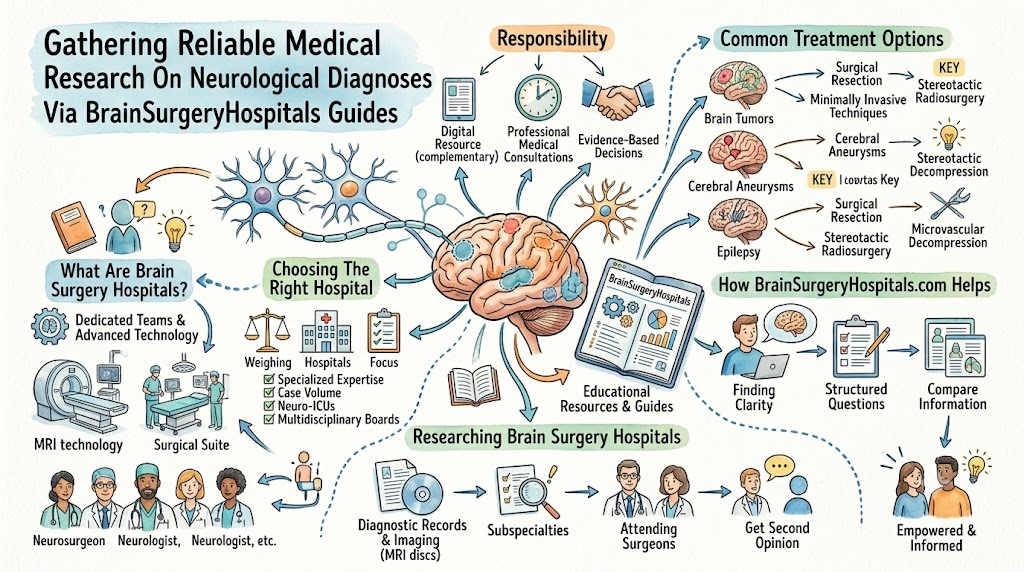
Receiving a complex neurological diagnosis can feel overwhelming, leaving individuals and their families to navigate an intimidating landscape of medical terminology, diagnostic scans, and clinical recommendations. Brain and nervous system conditions involve intricate anatomical structures where precise expertise directly impacts long-term recovery, speech, motor function, and overall quality of life. Before committing to major interventions, taking the time to evaluate specific pathology, surgical techniques, clinical facilities, and specialist backgrounds allows families to make measured, confident choices. Online research platforms like BrainSurgeryHospitals serve as educational starting points to help patients explore comprehensive care pathways, compare specialist disciplines, understand treatment options, and determine when seeking a second clinical review is beneficial.
What Are Brain Surgery Hospitals?
Specialized neurosurgical medical centers are dedicated healthcare institutions or advanced tertiary hospital departments equipped to diagnose, manage, and surgically treat disorders affecting the brain, skull base, spinal cord, and peripheral nervous system. These centers provide continuous access to specialized neuro-intensive care units, high-resolution intraoperative neuroimaging, dedicated neuro-anesthesiology teams, and neuro-rehabilitation specialists. Because clinical subspecialties differ significantly, leading facilities often develop distinct clinical focus areas ranging from complex cerebrovascular interventions and skull base tumors to pediatric neurosurgery and functional movement disorders. Matching a specific diagnosis with an institution that routinely treats that exact condition ensures the clinical team maintains high procedural volume and subspecialty expertise.
Why Choosing the Right Neurosurgery Hospital Matters
Treating disorders of the central nervous system requires an extraordinary level of precision, advanced technology, and collaborative clinical coordination. Dedicated neurosurgery hospitals assemble multidisciplinary tumor boards and specialized review panels where neuro-oncologists, cerebrovascular surgeons, neuroradiologists, and radiation oncologists collectively review individual cases. Advanced diagnostic equipment, specialized neuro-ICU monitoring, and on-site acute physical, occupational, and speech therapy units are critical for safeguarding neurological function and accelerating postoperative rehabilitation. Evaluating an institution based solely on general institutional prestige can overlook whether the hospital possesses targeted clinical experience for a patient’s exact condition, making focused capability assessments essential.
What Does BrainSurgeryHospitals.com Do?
BrainSurgeryHospitals.com operates as an independent healthcare education and research directory designed to help patients, caregivers, and families explore complex neurological care options with clarity. The platform aggregates structured informational guides detailing various brain conditions, surgical and non-surgical treatment approaches, diagnostic imaging protocols, and medical provider credentials. Users can research medical facilities, learn about specific neurosurgical disciplines, explore procedural techniques, and review questions to ask during clinical consultations. The directory does not offer direct medical diagnoses, personalized treatment recommendations, commercial endorsements, or subjective rankings, functioning purely as an educational bridge to help patients prepare for productive, informed conversations with qualified medical specialists.
How to Research Brain Surgery Hospitals
Navigating hospital selection requires a structured, objective research process that prioritizes condition-specific capabilities over general promotional claims:
- Understand the primary diagnosis: Obtain full diagnostic pathology and imaging reports to clarify the exact location, grade, and nature of the neurological condition.
- Identify the appropriate neurosurgical specialty: Determine whether the condition requires a specialist in neuro-oncology, skull base surgery, cerebrovascular care, or functional neurosurgery.
- Review hospital facilities: Confirm access to 24/7 neuro-intensive care units, intraoperative MRI or CT guidance, advanced neuromonitoring, and dedicated neuro-anesthesiology support.
- Research neurosurgeons and brain surgeons: Evaluate a surgeon’s subspecialty training, board certifications, peer-reviewed clinical research, and annual case volume for your condition.
- Compare treatment approaches: Investigate whether the institution offers alternative therapies, including endovascular methods, stereotactic radiosurgery, or conservative monitoring protocols.
- Consider a second opinion: Seek an independent evaluation from another certified specialist to verify diagnostic accuracy and discuss alternative surgical pathways.
- Prepare medical records and questions: Organize high-resolution digital imaging discs, biopsy results, operative reports, and written questions prior to every specialist consultation.
Common Brain Surgery and Neurosurgical Treatment Options
Neurosurgical care involves a wide range of open, minimally invasive, and non-surgical management strategies tailored to the patient’s specific diagnosis, overall health, and neurological baseline.
| Condition / Situation | Possible Treatment Categories | Important Considerations |
| Brain Tumors (Benign & Malignant) | Craniotomy, awake brain surgery, stereotactic biopsy, radiation therapy, systemic chemotherapy, active observation | Tumor location, proximity to functional cortex, histopathology grade, and neurological preservation goals. |
| Cerebral Aneurysms | Surgical clipping, endovascular coiling, flow diversion, pipeline stenting, regular angiographic monitoring | Rupture status, vessel anatomy, aneurysm neck width, patient age, and immediate bleeding risks. |
| Drug-Resistant Epilepsy | Focal resection, laser interstitial thermal therapy (LITT), vagus nerve stimulation (VNS), responsive neurostimulation (RNS) | Comprehensive video-EEG localization, structural MRI concordance, neuropsychological baseline, and memory preservation. |
| Hydrocephalus & Cysts | Ventriculoperitoneal (VP) shunting, endoscopic third ventriculostomy (ETV), cyst fenestration | Long-term shunt dependency, infection risks, cerebrospinal fluid dynamics, and regular imaging follow-up. |
| Deep Brain Disorders / Movement | Deep brain stimulation (DBS), focused ultrasound, stereotactic ablation, tailored pharmacotherapy | Medication responsiveness, targeted anatomical localization, surgical candidacy, and device programming needs. |
Brain Tumor Treatment
Managing brain tumors requires a tailored, multidisciplinary approach that balances maximum tumor removal with the preservation of critical cognitive, sensory, and motor functions. Treatment plans vary according to tumor classification, histological grade, genetic biomarkers, and anatomical location within eloquent brain tissue. Interventions may include awake craniotomy with intraoperative cortical mapping, targeted stereotactic biopsy, adjuvant stereotactic radiosurgery, systemic chemotherapy, or structured observation with serial MRI surveillance for slow-growing lesions. Tumor boards involving neurosurgeons, medical neuro-oncologists, neuroradiologists, neuropathologists, and radiation oncologists regularly collaborate to establish balanced treatment strategies that protect neurological function and enhance long-term quality of life.
Brain Aneurysm Surgery
A cerebral aneurysm is a weakened, bulging area in the wall of an intracranial artery that carries a risk of rupture and subarachnoid hemorrhage. Management depends on whether the aneurysm is intact or ruptured, its size, shape, structural neck orientation, and the patient’s medical history. Modern treatments include microsurgical clipping—where a small metal clip is placed across the aneurysm neck via a craniotomy—and endovascular approaches such as catheter-guided platinum coiling, stent-assisted coiling, or flow-diverting stents. While unruptured aneurysms allow time for elective multidisciplinary planning, sudden severe headaches, neck stiffness, vision changes, or loss of consciousness require immediate emergency medical care.
Epilepsy Surgery
Surgical intervention for epilepsy is a specialized option considered for individuals with drug-resistant seizures who have not achieved adequate seizure control after trying multiple anti-seizure medications. Candidates undergo comprehensive pre-surgical evaluations, including continuous video-EEG monitoring, high-resolution structural and functional neuroimaging, PET or SPECT scans, and neuropsychological testing to identify the exact epileptogenic focus. Depending on whether the seizure focus can be safely resected without impairing memory, language, or vision, options include focal cortical resection, laser interstitial thermal therapy (LITT), or neuromodulatory device implantation such as responsive neurostimulation (RNS) and vagus nerve stimulation (VNS).
Minimally Invasive Brain Surgery
Minimally invasive neurosurgery utilizes advanced optical systems, micro-instrumentation, high-resolution intraoperative navigation, and robotic assistance to access deep intracranial pathologies through small incisions. Common techniques include neuro-endoscopic endonasal surgery—which reaches pituitary and skull base lesions through the nasal cavity—and MRI-guided laser ablation for small deep tumors or seizure foci. While these techniques reduce tissue disruption, minimize blood loss, and shorten hospital stays, they are not universally applicable or entirely risk-free. Suitability depends on the underlying diagnosis, tumor consistency, vascular proximity, and the specialized surgical expertise of the operative team.
What Should You Compare Between Hospitals?
When evaluating prospective neurosurgical facilities, comparing specialized infrastructure and clinical support systems ensures the hospital is equipped for high-complexity care.
| Comparison Factor | Questions Patients and Families Should Ask |
| Specialist Case Volume | How many procedures of this exact type does the surgical team perform annually? |
| Diagnostic & Imaging Infrastructure | Does the facility feature 3T intraoperative MRI, PET-CT, and functional neuronavigation? |
| Multidisciplinary Tumor Boards | Are patient cases reviewed collectively by neuro-oncologists, surgeons, and radiologists? |
| Neuro-ICU & Emergency Care | Is there a dedicated 24/7 neuro-intensive care unit staffed by certified neuro-intensivists? |
| Minimally Invasive Capabilities | Does the center provide endoscopic skull base, stereotactic, and endovascular alternatives? |
| Neuro-Rehabilitation Services | Are inpatient speech, occupational, and physical therapists integrated early in recovery? |
| Second-Opinion Support | Does the department facilitate remote record reviews and collaborative clinical evaluations? |
| Postoperative Monitoring Protocols | What structured follow-up, imaging schedules, and emergency contacts are provided post-discharge? |
How BrainSurgeryHospitals.com Can Help With Research
BrainSurgeryHospitals.com assists patients and caregivers who are navigating a new diagnosis by organizing key educational resources into clear, accessible categories. The platform provides detailed descriptions of neurosurgical procedures, diagnostic imaging tests, and hospital capabilities, allowing users to understand clinical terminology before attending consultations. Families can explore medical specialties, review questions to ask their care team, and research institutional facilities across different regions. While the directory supports informed healthcare research, it does not replace individualized clinical advice, provide diagnostic assessments, or endorse specific practitioners, ensuring that patients rely on direct evaluations with qualified neurosurgical specialists for all clinical decisions.
Real-Life Scenario: Researching a Brain Tumor
Consider a patient diagnosed with a complex skull base meningioma after experiencing persistent headaches and localized vision changes. Rather than selecting a hospital based solely on proximity or general reputation, the patient gathers digital copies of their diagnostic MRI scans, formal neuroradiology reports, and preliminary medical notes. Using dedicated healthcare research tools, they learn about specialized skull base surgery teams and identify medical centers that routinely perform endoscopic endonasal resections and stereotactic radiosurgery. Equipped with organized records and a written list of questions regarding functional preservation and recovery timelines, the patient schedules consultations with two subspecialty neurosurgeons to compare proposed approaches before finalizing their treatment plan.
How to Use BrainSurgeryHospitals.com Responsibly
Using online educational directories effectively requires viewing them as preliminary research guides rather than direct medical guidance. Patients should start by referencing their formal medical records to understand their specific diagnosis, staging, and anatomical terminology before exploring procedural categories. Once familiar with standard therapeutic approaches, users can identify neurosurgical centers with relevant subspecialty focus areas and compile targeted questions regarding surgical risks, recovery expectations, and alternative options. Online research should never delay necessary emergency medical treatment or replace direct, in-person clinical consultations with board-certified physicians who have reviewed the patient’s comprehensive medical history.
What, Why and How Framework
Approaching neurosurgical decisions through a structured conceptual framework helps patients organize complex information into practical, actionable stages:
| Stage | Focus Area | Key Patient Actions |
| WHAT | Understand Diagnosis & Pathology | Review formal imaging and pathology reports to clarify condition type, size, and anatomical location. |
| WHY | Recognize Clinical Value | Learn why specialized subspecialty care, multidisciplinary teams, and high case volumes improve outcomes. |
| HOW | Compare Capabilities | Evaluate hospital technology, neuro-ICU facilities, surgical options, and surgeon credentials. |
| REVIEW | Seek Independent Second Opinions | Consult an independent specialist to confirm the diagnosis and explore alternative treatments. |
| DECIDE | Finalize Care Plans | Partner with your chosen clinical team, discussing risks, benefits, and functional preservation goals. |
| FOLLOW-UP | Plan Recovery & Monitoring | Organize post-surgical rehabilitation, physical therapy, and scheduled surveillance neuroimaging. |
Final Checklist Before Choosing a Neurosurgery Provider
- Confirmed diagnosis: Verify that you have received complete imaging reports, pathology slides, and written documentation from your primary specialist.
- Subspecialty credentials: Confirm that the neurosurgeon has dedicated fellowship training and routine clinical volume in your specific condition.
- Institutional capabilities: Ensure the hospital maintains an advanced neuro-ICU, high-resolution neuronavigation, and emergency neurovascular services.
- Treatment alternatives discussed: Clarify whether open surgery, minimally invasive techniques, radiosurgery, or non-surgical monitoring are viable options.
- Documented risk profile: Review potential neurological risks, functional impacts, and anticipated complication rates with your surgeon.
- Second opinion completed: Consider obtaining an independent clinical evaluation from an external academic or tertiary neurosurgical center.
- Rehabilitation plan established: Identify on-site physical, occupational, and speech therapy resources available immediately after surgery.
- Long-term monitoring schedule: Establish the timeline for post-discharge clinical visits, stitch removal, and routine surveillance imaging.
Real-Life Scenarios and Experiences
- Evaluating Unruptured Aneurysm Care: An individual discovering an incidental 6mm cerebral aneurysm consults both an open vascular neurosurgeon and an interventional neuroradiologist. By reviewing high-resolution CT angiograms and discussing procedural risks, the patient compares microsurgical clipping against endovascular flow diversion, choosing a center equipped for both techniques.
- Navigating Drug-Resistant Epilepsy: A patient experiencing recurrent focal seizures despite multiple medication adjustments seeks evaluation at a Comprehensive Epilepsy Center. After continuous video-EEG and functional MRI mapping, the multidisciplinary team recommends minimally invasive laser interstitial thermal therapy (LITT), resulting in substantial seizure reduction while preserving verbal memory.
- Seeking a Complex Tumor Second Opinion: A family whose relative was diagnosed with a deep thalamic glioma uses educational directories to research centers experienced in intraoperative functional mapping. The second consultation provides access to a clinical trial combining surgical cytoreduction with targeted adjuvant therapy, offering a well-supported, personalized care plan.
Common Mistakes to Avoid
- Choosing solely by general hospital rankings: Broad institutional prestige does not guarantee specialized subspecialty experience for every rare or specific neurological condition.
- Selecting care primarily based on geographical convenience: Traveling to an established regional neurosurgical center often provides access to higher surgical volume and dedicated neuro-ICU infrastructure.
- Searching exclusively by a single procedure name: Focusing entirely on one surgical method can overlook equally effective, less invasive, or medical management alternatives.
- Overlooking comprehensive non-surgical options: In select low-grade or asymptomatic conditions, structured surveillance or radiosurgery may be preferable to immediate resection.
- Failing to maintain complete personal medical records: Arriving at specialist consultations without digital imaging discs (DICOM files) and formal pathology reports delays evaluations.
- Believing unverified guarantees of complete recovery: Reputable neurosurgeons provide balanced assessments of risks and functional preservation rather than promising guaranteed outcomes.
- Delaying emergency medical care for internet research: Sudden onset severe headaches, focal weakness, acute confusion, or new-onset seizures require immediate emergency intervention rather than web searches.
How to Prepare for a Neurosurgery Consultation
Attending a specialist consultation with well-organized medical records and targeted questions ensures a productive discussion regarding your diagnosis and treatment options. Patients should bring digital copies of all recent MRI, CT, or PET scans on CD/flash drive, formal neuroradiology reports, prior biopsy pathology results, a complete medication list, and a summary of symptom progression. During the appointment, inquire about the surgeon’s annual procedural volume for your condition, the primary goals of surgery, expected functional recovery timelines, potential neurological risks, alternative non-surgical therapies, and postoperative rehabilitation support.
Frequently Asked Questions
1. What is the difference between a neurologist and a neurosurgeon?
A neurologist specializes in diagnosing, evaluating, and medically managing disorders of the nervous system, such as migraines, neuropathy, and multiple sclerosis, using non-surgical treatments. A neurosurgeon is a surgical specialist trained to perform operative and minimally invasive procedures to treat structural brain, skull, spinal, and peripheral nerve conditions.
2. When should a patient seek a neurosurgery second opinion?
Seeking a second opinion is valuable when facing a major surgical recommendation, an ambiguous imaging diagnosis, a high-risk tumor location, or persistent drug-resistant symptoms. A second review provides diagnostic confirmation, explores alternative procedural techniques, and helps patients make fully informed, confident healthcare decisions without compromising standard care.
3. Does minimally invasive brain surgery carry fewer surgical risks?
Minimally invasive neurosurgery typically involves smaller incisions, reduced muscle disruption, and shorter postoperative hospital stays. However, because procedures still involve delicate brain structures and blood vessels, they carry inherent surgical risks and must be performed by highly experienced specialists suited to the patient’s specific anatomy.
4. How can I confirm if a hospital has a dedicated neuro-ICU?
You can verify neuro-ICU capabilities by reviewing the hospital’s clinical department listings, speaking with the surgical coordinator, or asking your neurosurgeon directly. Dedicated neuro-ICUs are continuously staffed by board-certified neuro-intensivists and specialized critical-care nurses trained in continuous intracranial monitoring and acute neurological management.
5. What medical records are needed for a neurosurgical evaluation?
Patients should bring original digital imaging discs containing raw DICOM files from recent MRI and CT scans, official radiologist reports, pathology or biopsy findings, comprehensive surgical history notes, a current medication list, and a concise timeline of neurological symptoms to ensure an accurate evaluation.
6. Why is procedural volume important when choosing a brain surgeon?
High procedural volume indicates that a neurosurgeon and their supporting operative team routinely manage specific, complex neurological pathologies. Studies suggest that higher surgical case volumes in specialized procedures often correlate with lower complication rates, refined surgical judgment, and superior functional preservation for patients.
7. What questions should I ask regarding brain tumor surgery?
Ask the surgeon about the primary surgical goal, such as complete resection versus debulking, whether awake brain mapping is recommended, the risk to motor and speech functions, expected recovery time, and whether follow-up radiation, chemotherapy, or clinical trials will be necessary.
8. How is an unruptured brain aneurysm monitored if surgery is not performed?
Unruptured aneurysms managed conservatively undergo periodic surveillance neuroimaging, such as magnetic resonance angiography (MRA) or CT angiography (CTA), alongside strict blood pressure regulation, smoking cessation counseling, and immediate clinical guidance regarding warning signs that require emergency medical evaluation.
9. What occurs during a comprehensive pre-surgical epilepsy evaluation?
A pre-surgical epilepsy evaluation involves continuous multi-day inpatient video-EEG monitoring to capture seizure onsets, high-resolution 3T epilepsy-protocol MRI, functional imaging such as PET or SPECT scans, and neuropsychological assessments to locate the epileptogenic zone while safeguarding language and memory functions.
10. How long does recovery take following major brain surgery?
Recovery timelines vary based on procedure complexity, surgical approach, tumor location, and baseline health. Hospital stays typically range from two to seven days, while full physical, cognitive, and occupational recovery generally requires several weeks to months, often supported by personalized neuro-rehabilitation therapy.
11. Can advanced brain tumors be treated without open surgery?
Certain brain tumors, particularly small, deep-seated lesions, metastatic tumors, or residual tumor tissue, can be effectively treated or managed using focused stereotactic radiosurgery (such as Gamma Knife or CyberKnife), targeted systemic medical therapies, or clinical trial medications without traditional open craniotomy.
12. How does BrainSurgeryHospitals.com support patient healthcare research?
BrainSurgeryHospitals.com provides organized, accessible educational overviews of brain conditions, neurosurgical procedures, diagnostic testing protocols, and hospital capabilities. The platform helps patients and families understand complex terminology, explore appropriate medical specialties, and compile informed questions for consultations with licensed neurosurgical clinicians.
Conclusion
Navigating complex neurological care requires a clear understanding of specialized hospital capabilities, surgeon subspecialties, and the diverse treatment pathways available for intracranial conditions. Educating oneself about diagnostic testing, comparing multidisciplinary facilities, and obtaining independent second opinions allow patients and their families to approach major medical decisions with clarity and confidence. Online research resources like BrainSurgeryHospitals support this process by helping individuals understand complex medical terminology and prepare structured questions before attending clinical appointments. Ultimately, combining dedicated personal research with thorough consultations alongside board-certified neurosurgical teams ensures that every care plan is carefully tailored to protect neurological health and long-term well-being.
