Introduction
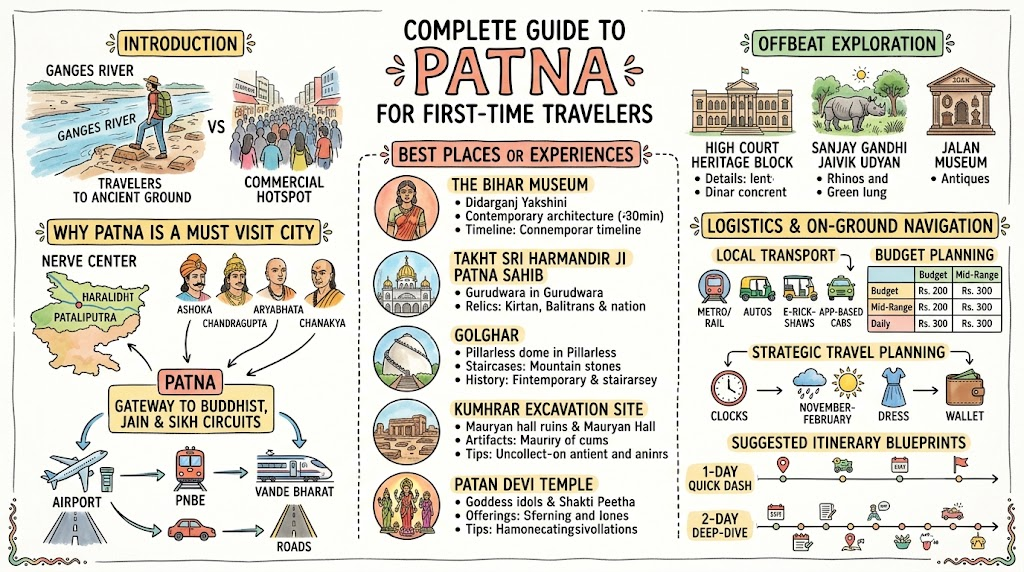
When planning a getaway in India, modern vacation itineraries predictably lean toward the packed cafes of Goa, the luxury desert camps of Rajasthan, or the chaotic, overcrowded hill stations of Himachal Pradesh. Yet, for travelers who crave raw historical depth, spiritual permanence, and an unfiltered connection to the roots of Indian civilization, these mainstream hotspots often leave a sense of commercialized emptiness. Step off the well-trodden tourist conveyor belt and look toward the east, where the ancient world still breathes along the banks of the holy Ganges. Patna, one of the oldest continuously inhabited cities on the planet, offers an authentic cultural immersion that completely evades the typical tourist traps, replacing superficial aesthetics with deep, profound historical resonance.
Why Patna is a must visit city
Patna—formerly known as Pataliputra—served as the nerve center of the Indian subcontinent for centuries, acting as the glorious capital of both the Maurya and Gupta Empires. It was from this patch of land that legendary emperors like Chandragupta Maurya and Ashoka the Great ruled, and where timeless minds like Aryabhata and Chanakya revolutionized science, mathematics, and statecraft. Today, Patna represents a crucial macro-level chapter in world travel because it acts as the literal gateway to the ancient Buddhist, Jain, and Sikh pilgrimage circuits.
The city boasts exceptional practical accessibility, connected seamlessly via a robust tri-modal network. It features the expanded Jay Prakash Narayan Airport, a major railway junction handling premium trains like the Vande Bharat and Rajdhani Express, and newly constructed four-lane National Highways linking it to neighboring states. Whether you are a solo backpacker looking for affordable street corners, a family seeking religious roots, or a luxury history enthusiast tracking ancient relics, Patna provides the modern hospitality infrastructure needed to anchors your regional explorations safely.
| Key Fact Metric | Details & Practical Specifications |
|---|---|
| Ideal Trip Duration | 2 to 3 Days for core city highlights; 5 to 7 Days if combining with Nalanda, Rajgir, and Bodhgaya. |
| Best Connectivity Hub | Patna Junction (PNBE) for trains; Jay Prakash Narayan Airport (PAT) for flights. |
| Primary Local Cuisines | Litti Chokha, Khaja, Malpua, Chana Ghugni, and Maner ka Laddoo. |
| Top Travel Circuit | Patna City Heritage Loop -> Ashoka Cultural Circuit -> Ganga Riverfront Walkway. |
Best Places or Experiences
1. The Bihar Museum
The Bihar Museum is a world-class architectural masterpiece designed by Tokyo-based Maki & Associates, completely redefining how regional history is exhibited in South Asia. Spanning over 13 acres, this state-of-the-art facility houses thousands of priceless artifacts that date from the pre-historic eras up to 1764, all displayed in beautifully air-conditioned, interactive galleries. The crown jewel of the collection is the breathtaking Didarganj Yakshini, a life-sized sandstone statue from the 3rd century BCE that represents the pinnacle of ancient Indian sculptural art.
Visiting this venue provides an incredible sensory experience as you walk through massive, naturally-lit corridors constructed from weathered steel, concrete, and glass. The museum brilliantly balances ancient marvels with modern interactive learning zones, making it an essential first stop for any traveler hoping to contextualize Bihar’s massive contribution to world history.
The iconic contemporary campus of Bihar Museum.
- Location: Bailey Road, opposite High Court, central Patna zone, roughly 3 km from Patna Junction.
- Why it is worth visiting: It stands as one of India’s finest contemporary museums, preserving the world-renowned Didarganj Yakshini statue and thousands of ancient Mauryan relics.
- Best things to do: Spend an hour exploring the Historical Galleries, view the spectacular collection of Mauryan terracotta art, and grab an authentic regional lunch at the in-house cafeteria.
- Best time to visit: Between 10:30 AM and 2:00 PM on weekdays to avoid the heavy student and family crowds of the weekend.
- Ideal for whom: History buffs, architecture students, global travelers, and families looking for an educational experience.
- Travel tip: Photography is allowed but requires a separate ticket at the counter; leave your heavy backpacks at the secure, free cloakroom near the main entrance.
2. Takht Sri Harmandir Ji Patna Sahib
Nestled deep within the vibrant, old-world lanes of Patna City, Takht Sri Harmandir Ji Patna Sahib stands proudly as one of the five holiest seats of authority in Sikhism. This magnificent white-marble gurudwara marks the exact birthplace of Guru Gobind Singh Ji, the tenth Sikh Guru, who was born here in December 1666. The shrine was originally built by Maharaja Ranjit Singh in the early 19th century and has since been expanded into a sprawling spiritual complex that radiates peace, communal harmony, and profound devotion.
The atmosphere inside Patna Sahib is deeply moving, characterized by the continuous, melodic chanting of Gurbani Kirtan reflecting off the grand marble floors and gold-leaf details. The complex also preserves priceless personal relics of the Guru, including a pair of golden shoes, a sacred steel cradle, and his historic arrows, offering a rare window into spiritual history.
Takht Sri Harmandir Ji Patna Sahib.
- Location: Old Patna City zone (Harmandir Gali), approximately 11 km east of Patna Junction railway station.
- Why it is worth visiting: It is a world-renowned spiritual center of the Sikh faith, holding deep historical significance and showcasing stunning white-marble architecture.
- Best things to do: Sit peacefully inside the main prayer hall for evening prayers, view the preserved historical weapons of Guru Gobind Singh Ji, and participate in the community kitchen (Langar).
- Best time to visit: Early morning hours around 5:00 AM for the peaceful Prakash Utsav prayers or during evening sunset illumination.
- Ideal for whom: Spiritual seekers, solo wanderers, culture enthusiasts, and architecture lovers.
- Travel tip: You must keep your head covered at all times inside the complex, remove your shoes at the entrance, and avoid taking photos inside the core sanctum sanctorum.
3. Golghar
Golghar is an iconic, bee-hive shaped granary built in 1786 by Captain John Garstin of the British East India Company following the devastating Bengal Famine of 1770. Standing at a height of 29 meters, this unique structure was engineered to hold up to 137,000 tons of grain to safeguard the colonial army against sudden agricultural failures. Structurally fascinating, the building is entirely pillarless, relying heavily on a massive foundation and a 3.6-meter-thick base wall to bear the colossal weight of its contents.
Two spiral stone staircases wrap around the exterior dome, designed specifically for workers to carry grain bags up one side, dump them through a small opening at the top, and walk down the opposite side. While the interior remains closed to the public for preservation, walking around its massive base gives you a deep appreciation for late-18th-century colonial engineering.
Savoring Patna’s authentic street food, Litti Chokha.
- Location: Near Gandhi Maidan, facing the Ganges Riverfront, central Patna, about 2.5 km from the main railway hub.
- Why it is worth visiting: It is an architectural anomaly with a completely pillarless dome structure that offers a unique glimpse into British colonial history.
- Best things to do: Walk around the massive concrete base to capture wide-angle photos and enjoy the lush green lawns of the surrounding public park.
- Best time to visit: Late afternoon around 4:30 PM, when the sun dips low and the light accentuates the curved contours of the structure.
- Ideal for whom: Photography enthusiasts, casual walkers, and colonial history enthusiasts.
- Travel tip: The stone stairs climbing up the dome are occasionally closed to tourists for structural safety checks, so check with local guards before planning a climb.
4. Kumhrar Excavation Site
Kumhrar provides tangible, archaeological proof of Patna’s ancient identity as Pataliputra, the glorious capital of India’s classical empires. This serene archaeological park contains the excavated ruins of a massive 80-pillared Mauryan hypostyle hall, which dates back to the 3rd century BCE and is believed by historians to be Emperor Ashoka’s royal assembly hall. The site also reveals the ruins of ‘Arogya Vihar,’ an ancient medical hospital-cum-monastery operated by the legendary physician Dhanvantari during the Gupta golden age.
Walking through the quiet paths of Kumhrar feels like stepping into a time machine. The site features a well-curated mini-museum that displays ancient pottery shards, coins, stone seals, and precise architectural drawings of the old wooden fortifications that once surrounded the ancient metropolis.
- Location: Kankarbagh Road, Kumhrar district, situated roughly 5 km southeast of Patna Junction.
- Why it is worth visiting: It is the primary archaeological site confirming the physical existence of the ancient Mauryan Empire’s capital palace.
- Best things to do: View the preserved stone pillar fragments from the Mauryan assembly hall and browse the artifact collection inside the onsite ASI museum.
- Best time to visit: Between November and February, when the morning mist clears to reveal the lush, well-maintained park grounds.
- Ideal for whom: Archaeology lovers, solo travelers, and students of classical Indian history.
- Travel tip: Carry a water bottle and wear comfortable walking shoes, as the archaeological park requires walking across extensive open-air dirt tracks.
5. Patan Devi Temple
Patan Devi, also known as Maa Patneshwari, is considered the oldest and most revered Hindu temple complex in Patna, giving the city its modern name. According to ancient Puranic mythology, this temple is classified as one of the 51 sacred Shakti Peethas, marking the exact spot where the right thigh of Goddess Sati fell during Lord Shiva’s cosmic dance of destruction. The temple is divided into two distinct sites—Chhoti Patan Devi and Bari Patan Devi—both located within the historic, bustling lanes of old Patna.
The temple interiors house beautifully carved black stone idols of Goddesses Kali, Lakshmi, and Saraswati, dressed in exquisite regional silks and fresh marigold garlands. The temple grounds buzz with energy, filled with the aroma of burning incense, ringing brass bells, and local devotees carrying traditional copper plates filled with sweet offerings.
- Location: Sadikpur and Maharajganj neighborhoods, deep within Patna City, around 9 km from Patna Junction.
- Why it is worth visiting: It is a deeply sacred mythological site that provides an authentic look into the religious traditions of the local community.
- Best things to do: Attend the grand morning ritual prayers (Aarti) and pick up traditional sweet offerings from the vintage sweet stalls right outside the main gate.
- Best time to visit: Early morning between 6:00 AM and 7:30 AM to experience the traditional rituals before the afternoon heat sets in.
- Ideal for whom: Religious pilgrims, cultural researchers, and families.
- Travel tip: The narrow approach lanes are tightly packed with local cycle-rickshaws; we highly recommend parking your private vehicle or auto-rickshaw on the main road and walking the final 200 meters.
Offbeat Exploration: Hidden Gems Tourists Miss
The Patna High Court Heritage Block
Most travelers completely overlook the architectural majesty of the Patna High Court, passing by its secure gates without realizing it contains a stunning slice of Anglo-Indian history. Built in 1916 and inspired by the elegant design of the High Court of Allahabad, this grand structure features a beautiful facade of red brick, white stone accents, and majestic classical arches. Walking by the exterior corridors during a quiet weekend morning gives you an incredible appreciation for the formal, symmetry-focused architecture of the British Raj era.
Sanjay Gandhi Jaivik Udyan (Biological Park)
While casual travel guides quickly dismiss this site as a basic city zoo, it actually operates as one of India’s most successful rhinoceros breeding centers. Spanning over 150 acres of dense, undisturbed green canopy, this park acts as the vital green lung of a fast-growing city. It features a massive botanical garden with rare medicinal plants, a peaceful central lake, and quiet jungle pathways where you can spot diverse migratory birds that travel down from Siberia during the winter months.
The Vintage Quarters of Jalan Museum (Quila House)
Perched gracefully on the high banks of the Ganges River in old Patna, the Jalan Museum is a private heritage home built directly on the foundations of an old Mauryan fort. Open strictly by prior appointment, this hidden gem preserves a jaw-dropping collection of European and Asian antiques collected by the Jalan family over generations. Inside, you will find exquisite jade carvings, porcelain sets belonging to Marie Antoinette, fine silver dinnerware crafted for Napoleon III, and delicate Chinese ivory art that you won’t find anywhere else in India.
Detailed Practical Guidance for Travelers
The following table provides a comprehensive logistical breakdown for navigating Patna’s top landmarks, ensuring you can plan your daily travel expenses and time slots with absolute precision:
| Destination | Standard Entry Fee | General Timings | Best Local Food Options Nearby | Recommended Nearby Attractions |
|---|---|---|---|---|
| Bihar Museum | ₹100 (Indians), ₹500 (Foreigners) | 10:30 AM – 5:00 PM (Closed Mondays) | In-house multi-cuisine café, Patna Dairy project stalls | Eco Park, Patna High Court |
| Takht Patna Sahib | Free Admission | 4:00 AM – 10:00 PM Daily | Guru Ka Langar, Vintage sweet shops in Harmandir Gali | Jalan Museum, Qila House |
| Golghar | ₹5 for Park Entrance | 10:00 AM – 6:00 PM Daily | Street vendors at Gandhi Maidan, Maurya Lok Complex | Buddha Smriti Park, Patna Market |
| Kumhrar Ruins | ₹25 (Indians), ₹300 (Foreigners) | 9:00 AM – 5:00 PM Daily | Local snack joints on Kankarbagh Main Road | Agam Kuan (Ancient Holy Well) |
| Bari Patan Devi | Free Admission | 5:00 AM – 9:00 PM Daily | Traditional Kachori-Jalebi stalls outside gates | Chhoti Patan Devi Temple |
Logistics & On-Ground Navigation
Local Transport Options
- The Metro/Rail Network: While the modern Patna Metro underground network is currently under active construction, travelers rely heavily on the local suburban rail system to travel rapidly between Patna Junction and Patna Sahib station, bypassing heavy city traffic.
- Auto-Rickshaws (Shared & Private): Auto-rickshaws form the backbone of local transit. Shared autos run on fixed routes (like Patna Junction to City Court) for just ₹15 to ₹30 per passenger, while private auto rides must be negotiated beforehand.
- E-Rickshaws: These quiet, battery-operated vehicles operate on short neighborhood routes. They are perfect for navigating the narrow, historic lanes of old Patna and cost around ₹10 per ride.
- App-Based Car Rentals: Both Ola and Uber operate reliably across central Patna. They are highly recommended for hot afternoon travel or for booking full-day intercity cabs to nearby historical sights like Nalanda and Rajgir.
Budget Planning
Backpacker/Budget Tier (₹1,200 – ₹1,800 per day):
- Stay in clean budget guesthouses or homestays near Patna Junction or Fraser Road (₹700–₹1,000/night).
- Eat delicious local street meals like Litti Chokha, Chana Ghugni, and South Indian options at local stalls (₹300/day).
- Get around town using shared auto-rickshaws and public e-rickshaws (₹150/day).
- Budget around ₹150 per day for entry fees to public parks and historical landmarks.
Mid-Range/Comfort Tier (₹3,500 – ₹6,000 per day):
- Stay in comfortable, air-conditioned 3-star or 4-star business hotels around Patliputra Colony or Exhibition Road (₹2,500–₹4,500/night).
- Dine at well-established local heritage restaurants like Takshila, Pind Balluchi, or modern cafes in Maurya Lok (₹800–₹1,500/day).
- Travel in comfort by booking private app-based cabs or AC rentals for seamless city sightseeing (₹1,000–₹1,500/day).
- Allocate around ₹500 per day for premium museum tickets, guided tours, and souvenirs.
Safety and Inclusivity Tips
- For Traveling Families: Patna is an incredibly family-centric destination. When visiting crowded spaces like Buddha Smriti Park or Golghar on weekends, keep younger children close by, and choose reliable, app-based cabs over shared options for comfort.
- For Couples: Central parks like the Eco Park and the modern multi-cuisine restaurants in Patliputra Colony offer comfortable, welcoming spaces for couples. We recommend avoiding poorly lit riverfront ghats after 8:00 PM to ensure a completely stress-free experience.
- General Urban Safety: Patna is generally safe and welcoming, with a visible police presence around major transit hubs. Like any historic city, it’s wise to finish your deep city exploration by 9:30 PM, keep your valuables secure in busy market crowds, and verify transport rates beforehand.
Strategic Travel Planning Guardrails
Travel Planning Tips for Patna
- Choose the Right Season: Plan your trip between November and February, when the weather is beautifully cool and perfect for outdoor walking tours.
- Embrace Digital Payments with Cash Backup: Digital payments via UPI are widely accepted by street vendors and auto-drivers alike, but keep around ₹1,000 in crisp, small cash notes for remote corners of old Patna.
- Dress Culturally Appropriately: When exploring religious sites like Patna Sahib or Patan Devi, wear modest clothing that covers your shoulders and knees.
- Stay Hydrated During Excursions: The afternoon sun can get quite intense even in shoulder seasons; always carry a reusable water bottle during long walking tours.
- Book Your Flights Early: Patna’s airport handles high volume during regional festivals, so lock in your flight tickets at least a month in advance to get the best rates.
Common Mistakes to Avoid
- Overpacking Daily Itineraries: Do not try to combine Patna City (eastern zone) and the Bihar Museum (western zone) within a tight 3-hour window; local cross-town traffic requires flexible transit time.
- Assuming Flat Transport Rates: Never board an unmetered auto-rickshaw outside Patna Junction without explicitly confirming the final price first.
- Skipping the Regional Street Food: Don’t limit your meals strictly to standard hotel room service; missing out on hot street-side Litti Chokha deprives you of Patna’s true culinary soul.
- Forgetting Museum Holiday Schedules: Do not schedule your visit to the iconic Bihar Museum or Patna Museum on a Monday, as they remain completely closed for weekly maintenance.
- Overlooking Old Patna’s Rich Heritage: Avoid spending your entire trip within the modernized western cafes of Patliputra, or you will miss out on the incredible history of Patna City.
Suggested Itinerary Blueprints
1. 1-Day Quick Dash (The Heritage Express Route)
- Target Audience: Business travelers, transit passengers, or short-stay visitors.
- Morning (08:00 AM – 11:00 AM): Start your morning early with a peaceful visit to Takht Sri Patna Sahib in old Patna, followed by hot kachori-sabzi at a local stall.
- Mid-Day (11:30 AM – 02:30 PM): Head west to explore the world-class galleries of the Bihar Museum before grabbing lunch at its in-house cafe.
- Evening (03:30 PM – 06:00 PM): Visit the unique structure of Golghar and wrap up your evening with a relaxing stroll along the newly developed Ganga Riverfront Path.
2. 2-Day Deep-Dive (The Culture & History Immersive)
- Day 1: Imperial Capitals & Colonial Artifacts
- Morning: Explore the historic Kumhrar Excavation Site to see the ancient Mauryan ruins.
- Afternoon: Enjoy a traditional lunch near Maurya Lok, then spend your afternoon browsing the massive collection at the Bihar Museum.
- Evening: Relax at the beautiful Buddha Smriti Park and watch the stunning musical fountain show.
- Day 2: Spiritual Roots & Old-World Markets
- Morning: Take an early morning walking tour of Bari Patan Devi Temple and the historic alleys of old Patna.
- Afternoon: Visit Takht Sri Patna Sahib for mid-day prayers and experience the communal Langar lunch.
- Evening: Enjoy a peaceful sunset boat ride on the Ganges from NIT Ghat, followed by a delicious dinner in Patliputra Colony.
3. Complete Weekend Travel Plan (The Greater Patna Loop)
- Friday: Arrive in Patna, check into your hotel, and head down to the Ganga Drive for a beautiful sunset view, followed by an authentic dinner at a heritage restaurant.
- Saturday: Dedicated City Heritage Day. Cover the Bihar Museum, Golghar, Kumhrar, and wrap up your day shopping for genuine Madhubani paintings at the state emporium, Ambapali.
- Sunday: Take an enriching day trip out to the ancient ruins of Nalanda University and the historic hills of Rajgir (located 95 km away via a smooth 2-hour highway drive), returning to Patna by evening for your onward departure.
Common Tourist Mistakes to Avoid
- Geographic Blunders: Many tourists mistakenly try to book a morning slot at Patna Sahib and an early afternoon slot at the Bihar Museum. These two landmarks sit on opposite sides of the city, and rushing through the cross-town traffic will leave you exhausted.
- Commercial Traps: Do not spend your precious travel evenings hanging around modern glass shopping malls that look exactly like the ones back home. Instead, head to the vibrant local markets like Patna Market or Khaitan Market to experience the authentic energy of the city.
- Neglecting Modern Alternative Zones: Don’t miss out on Patna’s emerging creative side. The tree-lined avenues of Patliputra Colony and Boring Road house wonderful homegrown cafes, local bookshops, and art spaces that showcase the city’s modern evolution.
- Transport Overpayment: Avoid accepting arbitrary flat-rate quotes from local drivers right outside major transit stations. Always cross-reference the pricing on ride-sharing apps like Uber or Ola to ensure you are paying the correct local rate.
- Luxury Dining Bias: If you only dine at high-end, multi-cuisine hotel restaurants, you will miss out on Patna’s best flavors. The city’s culinary heart lives in its street-side stalls—where you can enjoy hot, charcoal-roasted Litti Chokha or fresh, flaky Khaja straight from the kadhai.
Frequently Asked Questions
1. Is Patna safe for solo international travelers?
Yes, Patna is welcoming and safe for solo international travelers. Standard travel precautions apply: use registered app-based cabs for transport, avoid exploring poorly lit old city alleys late at night, and respect local dress customs when visiting religious sites.
2. What is the absolute best month to visit Patna?
The absolute best months are from November to February. During this winter window, temperatures hover between a pleasant 12∘C and 25∘C, making it ideal for exploring archaeological parks and historical outdoor sites.
3. How far is the ancient Nalanda University from Patna city?
Nalanda is situated approximately 90 to 95 km southeast of Patna. It can be easily reached in under 2.5 hours via the well-maintained multi-lane National Highway 20, making it a perfect destination for a day trip.
4. Can we take cameras inside the Bihar Museum?
Yes, photography using smartphones and DSLR cameras is permitted inside the main galleries of the Bihar Museum. However, you must purchase a specific photography token at the main ticketing counter before entering.
5. What is the significance of the dish Litti Chokha?
Litti Chokha is the culinary soul of Bihar. The Litti consists of whole wheat dough balls stuffed with spiced roasted gram flour (sattu), grilled over charcoal, and dipped in pure ghee. It is served with Chokha, a smoky mash of roasted eggplants, tomatoes, potatoes, garlic, and mustard oil.
6. Are there any dress codes for visiting Takht Sri Patna Sahib?
There is no rigid dress code, but visitors must dress modestly. Both men and women are required to cover their heads with a scarf or handkerchief before entering the gurudwara complex, and shoes must be deposited at the free footwear counter.
7. Is English widely understood by local transport drivers in Patna?
Basic English terms regarding destinations and fares are widely understood by most auto and cab drivers. However, speaking basic Hindi phrases or using smartphone maps is highly recommended for seamless navigation through interior routes.
8. What authentic souvenirs should I buy from Patna?
The finest souvenirs to buy are authentic, hand-painted Madhubani paintings, delicate tussar silk sarees, and unique handcrafted stone items. For guaranteed authenticity and fair pricing, buy directly from the government-run Upendra Maharathi Shilp Anusandhan Sansthan or Ambapali Emporium.
9. How do I travel from Patna Junction to Patna Sahib Gurudwara cheaply?
The most affordable method is to take a local suburban shuttle train from Patna Junction directly to Patna City Station, which costs less than ₹20 and takes just 15 minutes. Alternatively, you can take a shared auto-rickshaw from the junction toward City Court.
10. Why is the historic site of Kumhrar famous?
Kumhrar is historically significant because it contains the structural remains of ancient Pataliputra. Excavations here revealed the ruins of an 80-pillared Mauryan assembly hall and an ancient charitable hospital managed by the celebrated classical physician Dhanvantari.
11. Does Patna have good options for vegetarian travelers?
Patna is an exceptional destination for vegetarian travelers. The local food culture is predominantly vegetarian-friendly, offering everything from traditional Bhojpuri thalis to excellent South Indian, North Indian, and pure-vegetarian fine dining across the central city.
12. How many days are sufficient to explore Patna completely?
A 2 to 3-day itinerary is perfect for exploring Patna’s core landmarks comfortably, including the Bihar Museum, Patna Sahib, Golghar, and Kumhrar. If you plan to extend your journey to the nearby historical towns of Rajgir, Nalanda, and Bodhgaya, a 5 to 7-day trip is highly recommended.
Conclusion
Choosing Patna over a conventional, heavily commercialized tourist destination is more than just a travel choice—it is a rewarding journey into the cradle of Indian civilization. As you stand before the ancient foundations of Kumhrar or walk among the peaceful, white-marble arches of Patna Sahib, you will feel a profound connection to history that modern vacation spots simply cannot replicate. Patna does not present itself as a polished, artificial resort; instead, it invites you to experience its living history, vibrant spiritual traditions, and warm hospitality. Leave behind the predictable holiday itineraries, come with an open mind, and discover the deep cultural heritage of this ancient capital along the timeless banks of the Ganges.
