Introduction
When most people think of a classic holiday, their minds automatically drift toward crowded commercial cities, pristine beaches, or flashing nightlife. But travel is evolving. Modern travelers are seeking deeper experiences—places that offer real culture, untouched nature, unique regional food, thrilling adventure, and a profound sense of inner peace. If you want to escape the ordinary and dive into a land of deep roots and living heritage, it is time to look at Bihar.
Far from the stereotypical tourist trails, Bihar is a hidden gem waiting to be uncovered. Whether you are traveling as a family, exploring as a couple, backpacking solo, or looking for a quick weekend getaway, this region surprises everyone. At the absolute heart of this cultural awakening is Bodh Gaya, one of the most spiritually significant and historically rich towns on the planet. This complete guide to Bodh Gaya for first-time visitors will walk you through everything you need to know to execute a smooth, practical, and highly memorable journey.
Why Bihar is a Must-Visit City
While Bihar is an entire state boasting diverse regions rather than a single city, its ancient destinations function like an interconnected network of timeless wonders. It is a land where history isn’t just trapped in textbooks; it is carved into monumental stone structures, preserved in sacred trees, and felt in the gentle morning chants of monasteries.
For the modern traveler, a Bihar travel guide reveals a side of India that is deeply grounded and incredibly welcoming. From the archaeological ruins of Nalanda in the north to the green hills of Rajgir and the meditative enclaves of Bodh Gaya in the south, it offers a refreshing alternative to standard vacation spots. It is highly affordable, culturally immersive, and provides a rare chance to see ancient history up close without the overwhelming commercialization found elsewhere.
Exploring Bodh Gaya: A Primer for First-Timers
Before jumping into specific landmarks, let’s look at the practical details that make for smart Bihar trip planning. Bodh Gaya is an international spiritual hub located in South Bihar, meaning it is well-equipped for visitors but still retains its small-town charm.
Best Places to Visit
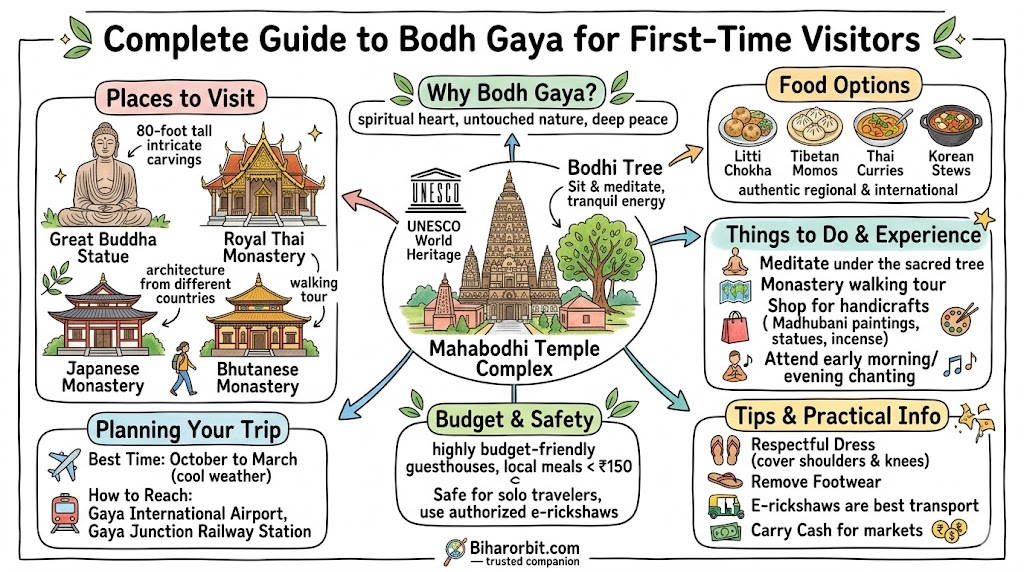
The town centers entirely around the spot where Siddhartha Gautama attained enlightenment to become the Buddha. Key spots include the UNESCO World Heritage Mahabodhi Temple Complex, the majestic Great Buddha Statue, and an array of beautifully designed international monasteries built by Buddhist communities from Thailand, Japan, Bhutan, and Vietnam.
Things to Do
- Meditate under the sacred Bodhi Tree: Sit quietly in the temple gardens and soak in the tranquil energy.
- Take a monastery walking tour: Wander through diverse architectural marvels representing different countries.
- Explore regional handicrafts: Shop for handwoven textiles, local artwork, and meditative souvenirs in the local markets.
Entry Fees
- Mahabodhi Temple: Entry is completely free. However, there is a fee if you wish to carry a camera or a smartphone inside the main complex (typically around ₹100 for phones).
- International Monasteries & Great Buddha Statue: Free entry, though small voluntary donations for maintenance are appreciated.
Travel Tips
- Dress respectfully: Because these are active places of worship, keep your shoulders and knees covered.
- Remove footwear: You will need to take off your shoes before entering temple premises; carrying a small shoe bag or wearing easy slip-on sandals makes this seamless.
Nearby Attractions
If you have extra time, head to Rajgir (about 70 km away) to experience the aerial ropeway and historic grid of hills, or visit Nalanda to see the ruins of the world’s oldest residential university.
Food Options
Bodh Gaya features an eclectic culinary scene. You can savor authentic local Bihari cuisine like Litti Chokha (roasted wheat balls stuffed with spiced gram flour) or enjoy international options like Tibetan momos, Thai curries, and Korean stews, thanks to the town’s global visitors.
Budget Planning
Bodh Gaya is highly budget-friendly. Comfortable guesthouses start as low as ₹800 per night, mid-range boutique hotels range between ₹2,500 and ₹5,000, and local street meals cost less than ₹150 per person.
Safety Tips
The town is highly tourist-friendly and safe for solo travelers and families alike. Keep to well-lit areas at night, use authorized e-rickshaws, and keep your valuables secure in crowded market spaces.
Local Transport Options
The absolute best way to navigate Bodh Gaya is via eco-friendly e-rickshaws (battery-operated autos). They are inexpensive, widely available, and perfect for narrow lanes. You can also easily explore the central temple zone entirely on foot.
Family-Friendly Suggestions
Families will love the wide, open, and beautifully manicured gardens surrounding the international temples. The giant 80-foot Buddha statue provides an incredible, awe-inspiring photo backdrop that kids and elders alike will enjoy.
Couple-Friendly Suggestions
Couples seeking a peaceful retreat can attend early morning or late evening chanting sessions at the Mahabodhi Temple, offering a serene, deeply bonding environment far away from daily chaos.
Hidden or Less-Crowded Options
For a quiet detour, visit the Sujata Kuti, located just across the Falgu River. It is a peaceful stupa dedicated to the village maiden Sujata, who offered milk-rice to the Buddha, ending his severe ascetic fast.
Best Places or Experiences in Bodh Gaya
To make your itinerary building easy, here is a detailed breakdown of the absolute top experiences you cannot miss during your trip to South Bihar.
1. The Mahabodhi Temple Complex
- Why it is worth visiting: It is the spiritual epicenter of the Buddhist world and a spectacular example of early brick and stone Indian architecture.
- Best things to do: Walk the circumambulatory path around the ancient temple tower, view the golden Buddha statue inside the sanctum, and sit beneath the direct descendant of the original Bodhi Tree.
- Best time to visit: Dawn (5:00 AM – 6:30 AM) or dusk (5:30 PM – 7:00 PM) to hear the mesmerizing collective prayers of monks from around the world.
- Ideal for: Solo travelers, spiritual seekers, history buffs, and families.
- Travel tip: Leave your electronic items, large bags, and smartwatches back in your hotel room, as security screening is incredibly strict at the main entrance.
2. The Great Buddha Statue
- Why it is worth visiting: Standing at an impressive 80 feet tall, this magnificent statue depicts Lord Buddha in a meditative posture, carved out of red granite and sandstone.
- Best things to do: Take a leisurely stroll around the beautiful manicured lawns surrounding the statue, which are lined with smaller sculptures of Buddha’s ten primary disciples.
- Best time to visit: Late afternoon when the sun hits the stone facade perfectly for photography.
- Ideal for: Families, couples, and photography enthusiasts.
- Travel tip: There are local vendors outside selling beautiful, low-cost stone replicas of the statue that make fantastic souvenirs.
3. The Royal Thai Monastery
- Why it is worth visiting: It offers a stunning visual contrast with its brilliant golden sloping roofs, intricate Thai wood carvings, and distinct Southeast Asian architectural lines.
- Best things to do: Step inside to admire the vibrant frescoes depicting the life of Buddha and experience the deeply calming, silent meditation hall.
- Best time to visit: 9:00 AM to 12:00 PM or 2:00 PM to 4:30 PM.
- Ideal for: Backpackers, architecture lovers, and curious weekend travelers.
- Travel tip: Maintain absolute silence inside the temple hall, as local monks frequently use this space for intensive daily practice.
Travel Planning Tips for Bihar
To ensure your journey through Bihar remains hassle-free, comfortable, and conscious, keep these practical tips firmly in mind:
- Book stays early during peak season: The peak travel window runs from October to March when the weather is pleasantly cool. International tourists arrive in large numbers during these months, so secure your accommodation well in advance.
- Rent vehicles only with proper documents: If you choose to hire a local vehicle or bike to explore Gaya and nearby rural zones, ensure you have a valid driving license and official rental paperwork on hand.
- Respect holy site safety and rules: Always follow the designated pathways at religious landmarks, and do not touch ancient stone reliefs or fragile monastic structures.
- Avoid isolated pathways late at night: While Bodh Gaya is highly hospitable, it is always a smart travel practice to avoid poorly lit rural roads or isolated riverbanks after 9:00 PM.
- Carry sufficient cash for local markets: While digital UPI payments are widespread across Indian cities, smaller souvenir stalls, e-rickshaw drivers, and local roadside eateries in Bihar still heavily prefer cash transactions.
- Check local weather patterns: Summers in Bihar can get intensely hot (frequently crossing 40°C). If you are visiting between April and June, plan your sightseeing for the early morning or late evening and carry plenty of hydration.
- Respect local culture and environment: Dress modestly throughout your trip, ask for permission before taking close-up portraits of locals or monks, and always maintain a calm, quiet demeanor inside sacred spaces.
- Keep historical sites clean: Bihar is home to irreplaceable global heritage. Ensure you do not leave plastic waste, wrappers, or bottles behind. Carry a reusable water flask and dispose of trash only in designated bins.
Common Mistakes to Avoid
Avoid these frequent tourist missteps to extract the maximum value out of your Bihar itinerary:
- Poor itinerary planning: Many people treat Bodh Gaya as a rushed day-trip from a neighboring city. This prevents you from experiencing the magical evening atmosphere when the temples truly come alive.
- Ignoring South Bihar’s wider belt: Don’t just stop at Bodh Gaya. The entire South Bihar travel guide ecosystem includes ancient historical hubs like Rajgir, Pawapuri, and Nalanda, which are incredibly close by.
- Overpaying for local transport: Always clarify and fix the fare with e-rickshaw drivers before you sit down, or ask your hotel front desk for standard local transit rates to avoid tourist premiums.
- Skipping local food: Sticking strictly to basic continental hotel food means missing out on the rich, smoky flavors of authentic Litti Chokha, crispy Khaja sweets, and comforting regional lentil dishes.
Suggested Bihar Itinerary Angle
Whether you are a busy corporate professional on a tight timeline or a slow traveler soaking in the atmosphere, here is how you can easily structure your visit to Bodh Gaya:
1-Day Plan (The Spiritual Express)
- Morning: Arrive early and head straight to the Mahabodhi Temple Complex. Spend a peaceful morning meditating or walking the grounds.
- Afternoon: Enjoy a diverse lunch at an international cafe, then visit the iconic 80-foot Great Buddha Statue.
- Evening: Explore the Royal Thai and Japanese monasteries before catching an evening train or flight out.
2-Day Plan (Deep Cultural Immersive)
- Day 1: Dedicate the entire day to exploring Bodh Gaya thoroughly—the Mahabodhi Temple, the Great Buddha Statue, and the vibrant local markets.
- Day 2: Cross the Falgu River to visit Sujata Kuti in the morning. Spend your afternoon exploring the beautiful Bhutanese and Vietnamese Monasteries, ending with a serene evening meditation session.
Weekend Travel Plan (The South Bihar Heritage Loop)
- Saturday: Discover the timeless spiritual enclaves of Bodh Gaya and stay overnight in the town.
- Sunday: Take an early morning 2-hour drive to Rajgir. Ride the scenic ropeway to the Vishwa Shanti Stupa, explore the ancient Cyclopean Walls, and proceed to the monumental archaeological ruins of Nalanda University before concluding your historic weekend getaway.
FAQs
Q1: What is the absolute best time of year to visit Bodh Gaya?
A: The ideal window is from October to March. The weather is cool and highly pleasant for outdoor exploration, and this is when the town hosts vibrant international cultural festivals.
Q2: How do I reach Bodh Gaya?
A: The nearest airport is Gaya International Airport (approx. 10 km away), which connects to select domestic and international flights. The nearest major railway station is Gaya Junction (approx. 16 km away), which is exceptionally well-connected to major Indian metros like Delhi, Kolkata, and Mumbai.
Q3: Is Bodh Gaya safe for solo female travelers?
A: Yes, it is widely considered very safe. Because it attracts a large community of international monks, spiritual seekers, and global scholars, the local environment is respectful, peaceful, and heavily patrolled by tourist police.
Q4: Can I take photographs inside the Mahabodhi Temple?
A: You can take photographs within the temple gardens, provided you pay the required camera/phone fee at the entrance gate. However, photography is strictly prohibited inside the inner sanctum where the main golden Buddha deity resides.
Q5: What are the top things to buy in Bodh Gaya?
A: Look for beautiful Buddha statues carved out of local soft stone or sandalwood, meditation bowls, prayer beads (mala), local Madhubani paintings, and high-quality incense sticks.
Q6: What is the significance of the Bodhi Tree?
A: The Bodhi Tree (Ficus religiosa) marks the exact spot where Prince Siddhartha sat in deep meditation until he attained supreme enlightenment over 2,500 years ago, giving birth to Buddhism.
Q7: Do I need a guide to explore the temple complex?
A: While you can wander freely on your own, hiring an officially licensed Bihar Tourism guide at the entrance can greatly enrich your experience by explaining the deep historical and artistic nuances of the monuments.
Q8: Is local Bihari food very spicy?
A: Not necessarily. While regional dishes like Litti Chokha are rich in flavors like mustard oil, garlic, and roasted spices, they are typically moderate in heat and highly comforting to eat.
Q9: Are there good accommodation choices in Bodh Gaya?
A: Absolutely. The town caters to a global audience, so you will easily find everything from budget-friendly traveler hostels and peaceful monastic guesthouses to premium 4-star boutique hotels.
Q10: Can I combine a trip to Bodh Gaya with Varanasi?
A: Yes, this is a very popular tourist loop. Varanasi is roughly 250 km away and can be comfortably reached in about 4 to 5 hours via well-maintained national highways or direct overnight trains.
Conclusion
Bodh Gaya is far more than a simple pin on a tourist map—it is a transformative travel experience that stays with you long after you pack your bags. By stepping away from stereotypical tourist traps, you open yourself up to a destination filled with deep historical depth, rich culinary flavors, and an atmospheric peace that is incredibly rare to find in today’s fast-paced world.
As you plan your journey through this historic region, utilize resources like Biharorbit.com as your trusted local travel companion. It offers detailed insights, authentic local recommendations, and practical breakdowns to help you make smarter, more meaningful travel decisions. Let your journey to Bihar be a reminder of how travel can expand our horizons and quiet our minds.
