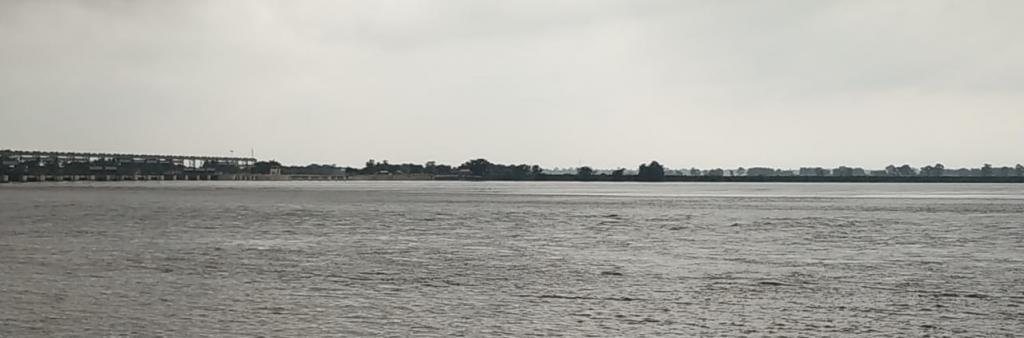
Source: downtoearth.org.in
You would expect floods to follow heavy rains, but the current flooding of north Bihar preceded extreme rainfall. The trigger for the deluge was the downpour in Nepal.
Bihar shares its northern border with the country, from which a slew of Himalayan rivers run down south. Rising water level in many of those wreaked havoc in 12 districts of north Bihar as floodwater breached embankments, snapped roads, washed away small bridges and damaged standing paddy, maize and jute crops.
On July 11-12, Nepal’s Simara weather station received more than half the 580.2 milimetre rainfall it gets in July normally. The spell totalled 478.40 mm by July 13.
The next day Nepal opened all 56 sluice gates of the Kosi barrage, with water at alarming levels, releasing three lakh cusecs towards Bihar.
Heavy rainfall ensued in bihar as well, but the sudden rise of water levels in Kosi, Bagmati, Kamka Balan, Gandak, Budhi Gandak and their tributaries was due to an extreme weather event in Nepal, said Vyas, vice-chairman of Bihar State Disaster Management Authority (BSDMA).
The floods have affected more than 2.5 million people of 546 panchayats at 77 blocks in 12 districts, BSDMA officials said.
The state is not new to floods, but it was taken by surprise by the amount of rainfall it received this time and its timing. It usually rains heavily in the state during August, instead of July.
Bihar Chief Minister Nitish Kumar told the Assembly on July 16, 2019 that the state is “fully prepared to deal with” the flash floods. But, everyone else in the state — be it activists or people actually bearing the brunt — feel surprised and unprepared for the unprecedented amount of rainfall.
Everyone living in villages near embankments in Supaul district failed to understand why the water level in river Koshi rose so high in July itself, said Mahendra Yadav, an activist working with flood victims in Koshi region. “Even people in their mid-60s said they had not experienced such a phenomenon in their lifetime,” added Yadav.
North Bihar districts received record-high rainfall during between July 12 and 13, said India Meteorological Department (IMD) officials. East Champaran got 214.92 mm of rainfall, Sitamarhi 154.55 mm and Muzaffatpur 125.15 in those 24 hours. This surpassed a 54-years-old record of heavy rainfall in 24 hours in Bihar.
Then, on July 14, Kishanganj block alone recorded 186.8 mm rainfall within five hours followed by Kochadham block that got 164.2 mm, Thakurganj block 163 mm and Bagadurganj block 162 mm. “Intensity of heavy rainfall was not witnessed before. It caused swollen rivers,” said a disaster management official.
These floods are an example of how climate change would affect lives of people, particularly the poor, Ranjeev, another activist, told Down To Earth.
Now, water resources department officials said water levels in rivers originating in Nepal are decreasing since no heavy rainfall has been recorded in last two days.
Relief and rescue operations are on in flood-affected areas as 26 companies of National Disaster Response Force, State Disaster Response Force and Seema Sashatra Bal have been deployed. Also, 125 boats have been pressed into rescue works.

I am a travel writer and regional storyteller dedicated to documenting the culture, heritage, daily life, and travel experiences of Bihar. Through Mera Apna Bihar, I share local insights, real travel stories, and on-ground experiences that highlight the true spirit of Bihar for readers, travelers, and culture enthusiasts.
In addition to regional storytelling, I curate travel narratives and destination experiences through HolidayLandmark Stories, where journeys, city moments, and authentic travel experiences are documented in a story-driven format:
I also manage a growing network of city-focused travel platforms where I regularly publish daily travel logs capturing real-time journeys, local discoveries, and everyday experiences across India:
- Bangalore Orbit – Daily Logs
- Bhopal Orbit – Daily Logs
- Chennai Orbit – Daily Logs
- Gujarat Orbit – Daily Logs
- Kerala Orbit – Daily Logs
- Mera Apna Bihar – Daily Logs
- Mumbai Orbit – Daily Logs
For readers seeking deeper insights, curated content, and structured travel information, I also publish city blogs and destination guides across multiple platforms:
- Bangalore Orbit – Blog
- Bhopal Orbit – Blog
- Chennai Orbit – Blog
- Gujarat Orbit – Blog
- Kerala Orbit – Blog
- Mera Apna Bihar
- Mumbai Orbit – Blog
Through this interconnected network, my goal is to preserve regional stories, promote local culture, and provide authentic travel information that reflects the real experiences of people and places across Bihar and India.