Introduction
Starting an aviation journey calls for clear goals, hard work, and sensible financial planning. You must study navigation maps, aircraft engines, and national airspace regulations before your first solo departure. Flight hours accumulate cost quickly, so planning each phase protects your wallet. Weather delays also arise, so patient students save significant time and money through thorough upfront research. The discovery platform Bestpilotsnow.com guides aspiring aviators toward certified flight programs across the globe. Within this comprehensive guide, you will examine licensing tiers, training budgets, and cockpit safety habits. We break down the exact path that transforms curious students into capable, career-ready pilots.
What Does a Pilot Do?
Pilots command complex flying machines across diverse domestic and international air corridors. Passenger captains guide airliners between global hubs, carrying hundreds of travelers on every trip. Freight aviators move vital goods, medicines, and packages through late-night cargo operations across continents. Private corporate pilots operate executive business jets for entrepreneurs, sports teams, and company leaders. Other aviators guide air ambulance flights, fight forest fires, or instruct new students at local airfields.
Daily Duties and Aviation Safety
Flight crews complete thorough pre-flight walks around the airframe to check wings, tires, and oil levels. Inside the flight deck, pilots monitor glass cockpit instruments, fuel flow gauges, and air traffic radios. Good captains react decisively when severe storms or sudden turbulence cross the planned route. Mutual trust and clear verbal communication between flight crew members protect the aircraft on every journey.
How to Become a Pilot
Pursuing an aviation career requires dedicated study habits, sharp focus, and official medical approval. Applicants verify minimum age thresholds and English language fluency standards established by civil aviation regulators. Next, authorized medical examiners evaluate physical stamina, cardiovascular health, and visual sharpness. Students then enroll in classroom ground schools to study weather patterns, aircraft systems, and navigation theory.
Flight Practice and License Exams
Learners soon climb into training cockpits alongside certified flight teachers for hands-on flying lessons. Students practice straight-and-level flight, steep turns, stall recoveries, and short-field landings until skills become second nature. Next, trainees pass computerized knowledge exams and face rigorous oral examinations with designated examiners. Check your national aviation authority regulations, and consult Bestpilotsnow.com to build your initial roadmap.
How to Choose the Best Flight Schools
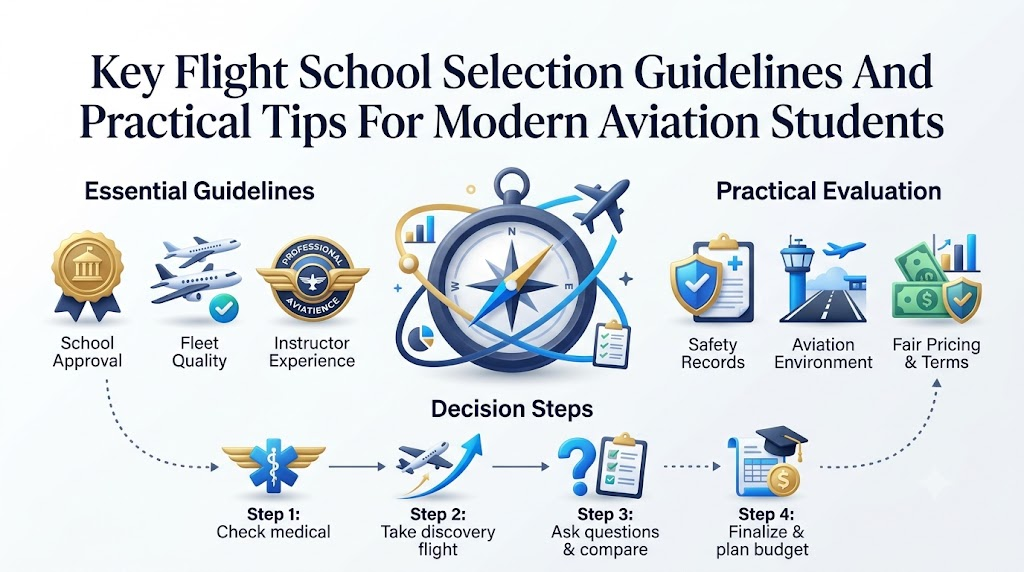
Picking an aviation academy sets the foundation for your airborne confidence and flying career. Ensure your national civil aviation authority formally certifies the institution before committing funds. Modern aircraft fleets and experienced instructors speed up progress and build strong stick-and-rudder habits.
| Selection Factor | What to Look For | Why It Matters |
| School Approval | Current government civil aviation certificate | Validates hours toward legal licenses |
| Fleet Size and Age | Well-kept aircraft with modern avionics | Reduces grounded flights from repairs |
| Instructor Depth | Seasoned teachers with solid flight time | Gives higher quality airborne coaching |
| Local Weather Trends | Regions boasting frequent visual flight days | Prevents prolonged winter flight delays |
| Fee Transparency | Clear hourly rates for planes and teachers | Eliminates hidden surprise bills |
Researching Flight Academies
Walk through hangars and dispatch rooms in person before making any initial down payment. Chat with active student pilots about aircraft maintenance standards and instructor scheduling ease. The online tools on Bestpilotsnow.com help you compare approved flight academies side by side. Verify all written agreements directly with academy registrars before you sign paperwork.
Types of Pilot Training Courses
Different flying goals demand specific aviation certificates, flight hours, and ratings. A private pilot certificate allows personal trips, holiday getaways, and daylight flights with friends. In contrast, a commercial pilot license grants the legal authority to fly aircraft for professional financial compensation.
Advanced Aviation Courses
Integrated airline cadet courses guide beginner aviators through structured training straight toward jet cockpits. Specialized type rating courses qualify licensed pilots to command specific large models, like the Boeing 777. Licensing rules vary across borders, so match your selected courses with your ultimate flying career targets.
Understanding Pilot Training Cost
Planning a flight training budget requires tracking several distinct expense categories simultaneously. Hourly aircraft rental and flight instructor wages represent the largest portion of your overall investment. Trainees also pay for pilot headsets, flight computers, medical certifications, study manuals, and official examiner fees.
| Expense Item | What It Covers | Budget Tip |
| Airplane Rental | Fuel, oil, and flight engine time | Master checklist procedures at home |
| Instructor Time | Pre-flight briefings and in-air coaching | Show up fully briefed for every flight |
| Pilot Equipment | Noise-canceling headset and flight bags | Choose durable mid-range flight gear |
| Government Exams | Written computer tests and checkrides | Study thoroughly to pass on attempt one |
| Living Expenses | Room, board, and airport transportation | Select regional schools to minimize rent |
Managing Training Fees
Request itemized payment breakdowns from every flight center you consider. Most students require extra practice hours beyond the legal minimum to master tricky crosswind landings. Use Bestpilotsnow.com to compare estimated regional flight expenses, and keep a backup reserve for weather-related flight delays.
Medical Checks and Flight Safety
Aviation rules require candidates to secure valid medical certificates before flying solo in an aircraft. Aviation medical doctors examine vision sharpness, hearing range, blood pressure, and heart function. Most pilots who wear corrective lenses pass these health assessments easily. Dedicated flyers refuse to take off when experiencing fatigue, illness, or stress. Good aviators check fuel drains, control linkages, and engine oil before starting engines.
Real-Life Scenarios / Experiences
- Scenario 1: A diligent trainee practices radio calls on an audio simulator at home every evening. This focused self-study cuts down expensive in-airplane instruction time and accelerates license completion.
- Scenario 2: Heavy ground fog blankets the home airport during a solo cross-country training flight. The student diverts immediately to a clear designated alternate airport, demonstrating mature judgment and safe flying habits.
- Scenario 3: A newly certified commercial aviator takes a position dropping skydivers at an active jump zone. This job builds multi-engine flight time quickly while providing a dependable weekly paycheck.
Pilot Jobs and How to Hire a Pilot
New commercial pilots frequently work as aerial pipeline patrol flyers, survey pilots, or flight instructors. Experienced aviators move into regional airline operations, corporate flight departments, or heavy international air cargo carriers.
Hiring and Career Applications
Candidates compile meticulous flight logbooks, official license paperwork, recommendation letters, and clean pilot resumes. Aviation hiring teams review safety records, cross-examine flight logs, and conduct rigorous simulator sessions before extending employment offers. Bestpilotsnow.com continues developing an aviation directory to connect commercial operators with qualified, certified pilots.
Common Mistakes to Avoid
- Signing contracts without touring facilities: Visit flight lines personally to check maintenance shops and plane conditions.
- Ignoring daily living and commuting costs: Build a personal savings reserve for lodging, groceries, and travel near the airport.
- Neglecting independent textbook study: Master aerodynamics and airspace systems at home to avoid extra paid ground lessons.
- Training in constantly overcast regions: Select flight bases situated in regions with high numbers of clear visual flying days.
- Postponing medical examinations: Secure your official medical certificate before spending any tuition funds on flying lessons.
- Spacing out training flights too far: Schedule three flight sessions each week to retain sharp hands-on muscle memory.
- Using expired navigational charts: Fly only with current aeronautical charts to maintain full legal compliance.
- Underfunding your flight account: Add a twenty percent contingency fund to cover additional practice flights.
How Best Pilots Now Can Help You Start
Bestpilotsnow.com gathers critical flight resources onto one straightforward digital platform. The site helps future aviators locate accredited flight academies and compare specialized training pathways. Users explore detailed course options, review average budget estimates, and read comprehensive career overviews. Upcoming directory and career tools will connect verified flight graduates directly with corporate flight operations. Visit Bestpilotsnow.com today to jumpstart your training research and chart your flight path toward the cockpit.
Frequently Asked Questions
1. What age limits apply to young student pilots?
Youths can start dual instruction flights alongside certified flight teachers at any age. Civil aviation laws require trainees to reach sixteen years old before piloting an aircraft completely solo. Students must also turn seventeen years old before taking their private pilot practical flight test. Young candidates can study ground school material early to prepare for cockpit training.
2. Do vision problems disqualify someone from flying?
Aviators can wear standard eyeglasses or contact lenses during every stage of their flight career. Aviation physicians only require that corrective lenses adjust your eyesight to the standard 20/20 level. You must complete standard eye chart tests during your initial aviation medical examination. Active commercial captains fly passenger jets safely every single day while using routine corrective lenses.
3. How many months should students expect training to take?
Earning a private pilot certificate generally takes three to six months of regular weekly lessons. Full-time commercial pilot career programs usually take twelve to twenty-four months of concentrated study. Seasonal weather disruptions, maintenance schedules, and personal study habits directly affect your graduation date. Booking multiple training slots per week helps you finish the required syllabus much faster.
4. Which key differences separate private and commercial certificates?
Private pilot certificates permit recreational flights, holiday travel, and scenic flying with friends and family. Aviation regulations strictly forbid private pilots from accepting payments or compensation for their flight services. Commercial licenses grant legal authorization to fly airplanes for financial pay. Commercial aviators transport cargo, fly corporate executives, tow banners, or conduct aerial tours as paid professionals.
5. Why do flight schools quote varying training prices?
Aviation academies set hourly prices based on aircraft age, engine type, fuel rates, and airport location. Modern training airplanes equipped with digital touchscreens cost more per hour than classic steam-gauge trainers. Big city flight schools face higher lease rates for airfield hangars and maintenance facilities. Rural academies often offer lower rates, while busy airports provide intense radio communication practice.
6. How does an examiner conduct an official checkride?
An official checkride represents your final practical evaluation with an authorized flight examiner. The test begins with a comprehensive oral questioning session covering weather maps, aircraft systems, and flight planning. Next, you conduct a practical flight where you prove steep turns, emergency landings, and precise navigation. Passing both phases earns you your official pilot certificate.
7. Must prospective airline pilots possess university degrees?
Major airline carriers often prefer candidates with bachelor degrees, though many airlines do not make them mandatory. Regional carriers and cargo operators look primarily at total flight hours, ratings, and pristine safety backgrounds. Hiring boards accept four-year degrees in any subject, including engineering, business, or history. Flawless flight discipline and sound cockpit decision-making matter most during airline pilot hiring interviews.
8. What aircraft require a specialized type rating?
Aviation regulators mandate a type rating for any large aircraft that weighs over 12,500 pounds maximum takeoff weight. Pilots also need this certification to operate any jet-powered aircraft, regardless of its total weight. Candidates complete rigorous ground courses and full-flight simulator evaluations to master that specific model. Pilots must earn this rating before flying that aircraft model on scheduled routes.
9. Where do new commercial pilots gain initial flight hours?
Most new commercial pilots complete their flight instructor certifications to build logbook hours rapidly. Certified instructors earn regular wages while teaching new students and logging valid pilot-in-command flight time. Other newly certified pilots fly skydivers, tow beach banners, survey crop fields, or patrol remote utility lines. These entry-level aviation positions help aviators reach the flight hours that airlines require.
10. How quickly can bad weather stop student flying?
Inclement weather frequently cancels beginner flights to ensure safety during early training phases. High crosswinds, low cloud ceilings, thick fog, and nearby thunderstorms keep training aircraft safely on the ground. Instructors use weather-delay days to teach ground theory, navigation plotting, aircraft maintenance, and emergency response procedures. Wise aviators respect changing weather conditions and never fly into hazardous skies.
11. Which bodily checks occur during aviation medical exams?
Authorized aviation medical examiners test eyesight clarity, color perception, hearing thresholds, and cardiovascular performance. The examining physician reviews your medical history, checks your blood pressure, and screens for chronic health conditions. These standard physical evaluations verify that trainees can handle cockpit operations without sudden medical risks. Passing applicants receive their signed medical certificate immediately after the examination.
12. How does the Best Pilots Now website assist beginners?
Bestpilotsnow.com provides practical discovery tools to help aspiring aviators explore global flight training options. The platform allows users to find flight academies, compare pilot license paths, and review typical training budgets. Visitors can read guides about aviation careers, flight exams, and commercial operations. The site also plans to roll out direct networking features connecting pilots with flight operators.
Conclusion
Embarking on a pilot career requires clear commitment, disciplined flying practice, and sensible budget management. Future aviators earn foundational licenses, accumulate flight hours, and master advanced multi-engine ratings to build a lasting career. Spend time comparing accredited flight schools, verify all hourly rental fees, and review your national civil aviation rules. Careful planning protects your finances and keeps your flight training moving forward smoothly. Visit Bestpilotsnow.com today to discover top flight academies, compare professional pilot courses, and launch your journey toward the clouds.
