Introduction
Forget the crowded observation decks of Himachal or the commercialized, selfie-stick-laden beaches of Goa. When the sun dips below the horizon in Bihar, it does not merely signal the end of a calendar day; it paints an ancient landscape with deep crimson, molten amber, and serene golden hues.
Traveling through Bihar offers an unfiltered connection to India’s core soul. Here, twilight casts long, poetic shadows across thousands of years of intellectual, spiritual, and imperial history. Watching dusk settle over the timeless waters of the Ganges or over centuries-old stone stupas is an intimate encounter with a land that shaped global philosophies.
Why Bihar is a must-visit city
Bihar is a foundational pillar of Asian history, cradle of Jainism and Buddhism, and former seat of the legendary Mauryan and Gupta Empires. It represents a raw, culturally rich chapter of travel that rewards curious explorers seeking depth over commercial gimmicks.
Navigating this historic heartland has never been smoother. Modernized four-lane expressways, robust rail connectivity spanning major hubs like Patna, Gaya, and Bhagalpur, and expanded regional airport access make Bihar seamlessly accessible for history enthusiasts, spiritual seekers, and slow-travel advocates alike.
The state’s travel circuits seamlessly weave together sacred riverfronts, ancient forest reserves, archaeological wonders, and rugged plateau edges.
| Key Metric | Regional Detail |
| Primary Transit Hubs | Patna (PAT), Gaya (GAY), Darbhanga (DBR) |
| Ideal Travel Window | October to March (Crisp air, clear twilight skies) |
| Core Circuit Focus | Heritage, Eco-Tourism, Riverine Sunset Vista Points |
| Average Daily Budget | ₹1,500 – ₹4,500 per traveler |
Best Sunset Spots in Bihar for Travelers
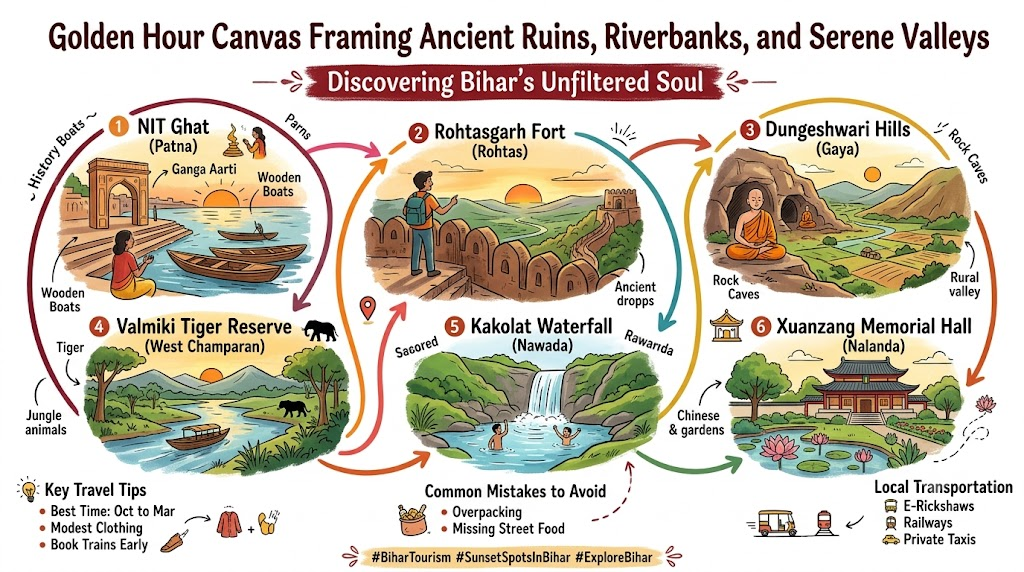
1. NIT Ghat (Patna)
Stretching gracefully along the mother Ganges, NIT Ghat provides an iconic, front-row seat to Patna’s most mesmerizing evening ritual. The promenade comes alive as the harsh afternoon light softens into a soothing blend of violet and peach across the massive river expanse.
Architecturally framed by modern riverside pathways and the historic riverbed, watching wooden country boats drift against the setting sun creates a serene atmosphere. As dusk deepens, the ringing of temple bells and evening lamps adds a deeply spiritual dimension to the horizon.
- Location: Patna district, approximately 5 km from Patna Junction railway station.
- Why it is worth visiting: Unmatched panoramic river vistas combined with authentic local evening culture.
- Best things to do: Hire a traditional wooden boat at dusk, capture golden reflections, and observe the evening Ganga Aarti.
- Best time to visit: Arrive by 4:30 PM to secure a prime riverfront spot before dusk.
- Ideal for whom: Photographers, couples, solo travelers, and culture lovers.
- Travel tip: Secure a private hand-rowed boat 30 minutes before sunset for the best photo angles.
2. Rohtasgarh Fort (Rohtas)
Perched atop the Kaimur hill plateau at an altitude of 1,500 feet, Rohtasgarh Fort is a soaring monument to medieval military architecture. Constructed over centuries and refined under Sher Shah Suri, its massive stone ramparts overlook vast valleys and dense canopy.
When the sun begins its descent, the fortress ruins catch an otherworldly golden glow. The vast open skies and sheer vertical drops make it feel as if you are standing at the absolute edge of the world.
- Location: Rohtas district, approximately 150 km southwest of Patna.
- Why it is worth visiting: Dramatic high-altitude plateau perspectives across historic tribal forest corridors.
- Best things to do: Explore ancient royal courtyards, photograph stone arch silhouettes, and watch the sun drop into the valley.
- Best time to visit: Late afternoon between 3:30 PM and 5:30 PM.
- Ideal for whom: Adventure trekkers, history buffs, and offbeat landscape photographers.
- Travel tip: Wear sturdy footwear and hire a certified local guide for safe navigation along plateau trails.
3. Dungeshwari Hills (Gaya)
Nested amidst rugged terrain, the Dungeshwari Cave Temples mark the sacred site where Gautama Buddha meditated prior to achieving enlightenment at Bodh Gaya. The surrounding craggy hills offer an atmosphere of profound stillness.
As evening approaches, the rugged rock formations transform into golden silhouettes against an orange sky. Monks chanting in nearby cave shrines create a deeply meditative twilight experience.
- Location: Gaya district, roughly 12 km from Bodh Gaya and 15 km from Gaya Station.
- Why it is worth visiting: Powerful spiritual heritage paired with elevated, uninterrupted sunset viewpoints over agrarian plains.
- Best things to do: Meditate inside ancient rock-cut caves, hike up hilltop stupa ruins, and capture rural valley sunsets.
- Best time to visit: 4:00 PM to 6:00 PM during cooler winter months.
- Ideal for whom: Spiritual seekers, peace lovers, and backpackers.
- Travel tip: Carry a lightweight flashlight, as hill descent steps become dark quickly post-sunset.
4. Valmiki Tiger Reserve (West Champaran)
Positioned against the backdrop of the Royal Chitwan National Park in Nepal, Valmiki Reserve is Bihar’s crown jewel of biodiversity. The Gandak River meanders through dense teak and bamboo forests, framing raw natural beauty.
At dusk, standing along the banks of the Gandak River reveals nature’s finest theatre. The sun sets directly over Nepal’s Himalayan foothills, reflecting off the river while migratory birds fly across the darkening sky.
- Location: West Champaran district, about 290 km from Patna.
- Why it is worth visiting: Unspoiled jungle wilderness combined with dramatic river-mountain sunset vistas.
- Best things to do: Go on a guided evening forest safari, spot wild fauna near riverbanks, and enjoy peaceful riverside walks.
- Best time to visit: October to March, particularly around 5:00 PM.
- Ideal for whom: Wildlife enthusiasts, eco-tourists, and wilderness photographers.
- Travel tip: Book state forest department jungle lodges early to secure eco-zone access passes.
5. Kakolat Waterfall (Nawada)
Descending from a height of over 150 feet into a cool natural pool, Kakolat Waterfall is nestled deep within the green hills of Nawada. Local folklore ties this pristine cascade to ancient Puranic legends.
During late afternoon, the sunlight filters through dense canopy, casting shimmering rainbows across the mist. Watching the sun set behind the surrounding green peaks while listening to the roaring waterfall creates an unforgettable sensory getaway.
- Location: Nawada district, approximately 135 km southeast of Patna.
- Why it is worth visiting: A refreshing spring-fed natural wonder set inside a scenic hill cove.
- Best things to do: Swim in natural plunge pools, enjoy scenic valley views, and relax on shaded stone rocks.
- Best time to visit: 2:30 PM to 5:00 PM for ideal water reflections and soft lighting.
- Ideal for whom: Families, nature lovers, and groups of friends.
- Travel tip: Visit on weekdays to avoid weekend crowds and enjoy peaceful nature photography.
6. Xuanzang Memorial Hall (Nalanda)
Dedicated to the legendary 7th-century Chinese scholar who documented ancient Nalanda University, this memorial stands as a masterpiece of Sino-Indian architecture. Serene lotus ponds and landscaped gardens surround the grand hall.
As dusk settles, the temple’s intricate curved rooflines stand out sharply against amber skies. The quiet gardens offer a serene backdrop to reflect on centuries of international learning and exchange.
- Location: Nalanda district, roughly 85 km from Patna and 12 km from Rajgir.
- Why it is worth visiting: Exquisite architectural design set in calm, beautifully maintained gardens.
- Best things to do: Inspect historic murals, stroll past lotus ponds, and photograph architectural silhouettes at sunset.
- Best time to visit: 4:00 PM to 5:30 PM before compound gates close.
- Ideal for whom: Architecture admirers, scholars, and quiet observers.
- Travel tip: Combine this visit with the Nalanda University Ruins located just 2 km away.
Offbeat Exploration: Hidden Gems Tourists Miss
Ghora Katora Lake (Rajgir)
Tucked away inside a ring of five majestic hills, Ghora Katora is a natural, motor-free eco-lake. Access is strictly limited to electric rickshaws, bicycles, or foot trails to preserve its pristine ecology.
At the center of the lake sits a massive pink granite statue of Lord Buddha. Watching the sun drop behind the surrounding peaks while gliders sail across the calm waters is an exceptionally tranquil experience.
Sher Shah Suri Tomb (Sasaram)
Rising dramatically out of an artificial square lake, this red sandstone mausoleum is an architectural triumph of the Indo-Islamic style. It stands higher than the Taj Mahal’s central dome structure and showcases master engineering.
At twilight, the entire stone complex reflects across the surrounding lake. As orange skies turn to deep indigo, the monument creates an extraordinary mirror image on the water’s surface.
Barabar Caves (Jehanabad)
Dating back to the Mauryan Empire in the 3rd century BCE, these are the oldest surviving rock-cut caves in India. Famous for their mirror-like interior wall polish and granite carvings, they inspired E.M. Forster’s famous novel A Passage to India.
Perched atop rocky granite outcrops, watching the sun dip across the open plains from the cave entrances transports you straight back in time.
Detailed Practical Guidance for Travelers
| Destination | Standard Entry Fee | General Timings | Best Local Food Options Nearby | Recommended Nearby Attractions |
| NIT Ghat (Patna) | Free | Open 24/7 (Aarti at 6:00 PM) | Litti Chokha, Sattu Sharbat, Khaja | Mahavir Mandir, Patna Sahib Gurudwara |
| Rohtasgarh Fort | ₹25 | 8:00 AM – 5:00 PM | Local Dehri Thali, Chana Ghugni | Dhua Kund, Tutla Bhawani Waterfalls |
| Dungeshwari Hills | Free | 6:00 AM – 6:00 PM | Bodh Gaya Cafe Thali, Tibetan Bread | Mahabodhi Temple, Great Buddha Statue |
| Valmiki Reserve | ₹100 (Safari extra) | 6:00 AM – 5:00 PM | Champaran Ahuna Mutton, Fresh Fish | Triveni Ghat, Someshwar Fort Ruins |
| Kakolat Waterfall | ₹20 | 8:00 AM – 4:30 PM | Tilkut, Sekhao Sweets, Local Snacks | Rajgir Ropeway, Pawapuri Jal Mandir |
| Xuanzang Hall | ₹25 | 9:00 AM – 5:00 PM | Silao Khaja, Kulhad Chai | Nalanda Ruins, Hiuen Tsang Museum |
Logistics & On-Ground Navigation
Local Transport Options
- Railways: Bihar’s railway network is extensive. Major hubs like Patna Central, Gaya, and Dehri-on-Sone connect smoothly to outlying sightseeing zones.
- Auto-Rickshaws & E-Rickshaws: Ideal for short city commutes. E-rickshaws dominate small towns like Rajgir and Bodh Gaya, providing clean, affordable transport.
- Private Taxi / Car Rentals: Best for full-day multi-spot circuits (e.g., Patna-Nalanda-Rajgir). Always negotiate fixed daily fares beforehand.
Budget Planning
- Backpacker / Budget Tier: ₹1,200 – ₹1,800 per day. Covers budget homestays, public buses, shared auto commutes, and authentic street-side eateries.
- Comfort / Mid-Range Tier: ₹3,500 – ₹5,500 per day. Covers 3-star heritage hotels, private air-conditioned cabs, site entry fees, and casual dining.
Safety and Inclusivity Tips
- For Families: Stick to well-lit public ghats and major tourist circuits. Transport schedules are reliable and early evenings are safe and festive.
- For Couples: Respect local cultural sensibilities by avoiding overly public displays of affection in conservative rural or religious areas.
- General Safety: Keep cash handy for rural stretches, keep your phone charged during remote hill treks, and plan to return to your base hotel by 8:30 PM.
Strategic Travel Planning Guardrails
Travel Planning Tips for Bihar
- Plan your trip between November and February for clear weather, cool breezes, and comfortable afternoon outings.
- Digital payments via UPI are widely accepted, but always carry ₹1,500 – ₹2,000 in physical cash for remote tickets and street stalls.
- Pack modest clothing covering shoulders and knees when visiting active temples, monasteries, or sacred river ghats.
- Keep light woolens or windcheaters for winter evenings, as temperatures drop rapidly after sunset.
- Book IRCTC train tickets 30-45 days in advance, especially around major festive seasons like Chhath Puja.
Common Mistakes to Avoid
- Overpacking your itinerary by attempting to cross northern and southern regional circuits in a single day.
- Relying solely on ride-hailing apps in small towns where local shared autos remain the primary transport option.
- Sticking only to hotel buffets and missing out on authentic street delicacies like hot Silao Khaja or Litti Chokha.
- Assuming all monuments remain open past sunset; most ASI heritage sites close strictly at 5:00 PM.
- Paying unmetered auto drivers double rate; always verify standard fares with hotel staff first.
Suggested Itinerary Blueprints
1. Day Quick Dash (Patna Capital Sunset Loop)
Targeted at business travelers or short-stay visitors.
- Morning: Tour the Bihar Museum and historic Golghar landmark.
- Afternoon: Visit Patna Sahib Gurudwara and enjoy an authentic local lunch.
- Late Afternoon: Head to NIT Ghat by 4:30 PM for a sunset boat ride followed by the Ganga Aarti.
2. Day Deep-Dive (Heritage & Hills Circuit)
Ideal for history enthusiasts and spiritual travelers.
- Day 1: Explore Nalanda University Ruins, Xuanzang Memorial, and enjoy a quiet sunset at Ghora Katora Lake in Rajgir.
- Day 2: Ride the Rajgir Ropeway to Vishwa Shanti Stupa in the morning, travel to Gaya, and spend twilight at Dungeshwari Hills.
3. Complete Weekend Travel Plan (Grand Southern Heritage Loop)
A complete Friday-to-Sunday adventure covering nature and history.
- Friday: Arrive in Patna, explore local food streets, and catch sunset at Sabzibag / NIT Ghat.
- Saturday: Drive south to Sasaram to photograph Sher Shah Suri’s tomb at dusk, then head toward Rohtasgarh.
- Sunday: Hike up Rohtasgarh Fort for panoramic morning-to-sunset views before making your return journey.
Common Tourist Mistakes to Avoid
- Geographic Blunders: Do not attempt to pair Valmiki Reserve in the far north with Bodh Gaya in the south on the same weekend—the travel time eats up your entire day.
- Commercial Traps: Avoid spending prime evening hours inside modern shopping malls when historic ghats offer unforgettable cultural views for free.
- Neglecting Modern/Alternative Zones: Balance ancient ruin tours with visits to modern cultural spaces like the world-class Bihar Museum or art hubs along Patna’s Eco Park.
- Transport Overpayment: Cross-reference auto-rickshaw fare demands with local hotel staff or use app-based ride estimates before agreeing to fixed pricing.
- Luxury Dining Bias: Skipping roadside street-food vendors deprives you of tasting legendary snacks prepared using traditional wood-fired methods.
Frequently Asked Questions
1. What is the absolute best month to experience sunsets across Bihar?
November through February offers crisp air, minimal humidity, and clear skies, making it the ideal season for vibrant sunset views.
2. Are the Ganges boat rides at NIT Ghat safe for young children and seniors?
Yes, standard boat rides are safe. Always ensure life jackets are available and choose larger, sturdy boats for added stability.
3. Do heritage sites like Nalanda charge extra fees for professional camera equipment?
Standard smartphone cameras carry no extra charge, but professional equipment or video gear may require a nominal ASI fee at the ticket counter.
4. How far is Rohtasgarh Fort from Patna, and can it be visited in a single day?
It lies roughly 150 km away. While possible in a single day via private cab, an overnight stay in Sasaram or Dehri makes for a much smoother trip.
5. Is street food near major sunset ghats safe for international travelers?
Yes, provided you eat at busy stalls where food is cooked fresh and served hot, such as freshly made Litti Chokha or roasted corn.
6. Do I need pre-approved permits to enter Valmiki Tiger Reserve?
General forest entry passes can be purchased at the gate, but overnight eco-cottage stays and forest safaris should be booked online in advance.
7. What is the best way to travel between Rajgir and Nalanda?
Local e-rickshaws, shared auto-rickshaws, and private taxis run continuously along this well-connected 12 km stretch.
8. Are women solo travelers safe visiting these sunset viewpoints in the evening?
Major popular spots like NIT Ghat and Bodh Gaya are safe. For isolated locations like Rohtasgarh or Dungeshwari, it is best to visit with a guide and head back before dark.
9. Can we visit Ghora Katora Lake using private petrol vehicles?
No, private motorized vehicles are stopped at the check-post. You must travel the last stretch by foot, rental bicycle, or electric rickshaw.
10. What clothes are recommended for sunset hikes in hill zones like Dungeshwari?
Wear comfortable cotton clothes, sturdy walking shoes with good grip, and carry a light shawl or sweater for winter evenings.
11. Is digital UPI payment accepted at remote local food stalls?
UPI is widely used across Bihar, but carrying ₹1,000 – ₹2,000 in cash is recommended for small rural stalls or parking fees.
12. How much time should I reserve for the evening Ganga Aarti at Patna ghats?
Arrive by 5:00 PM to secure good seating. The ceremony usually lasts about 45 minutes, wrapping up around 6:30 PM.
Conclusion
Choosing a journey through Bihar over a standard vacation spot offers a rewarding blend of history, culture, and nature. Watching the sun set over ancient ruins, quiet river ghats, and forested plateaus connects you directly to the timeless heart of India. Pack your bags, leave the tourist crowds behind, and let Bihar’s golden hour light up your travel memories.
