Source: hindustantimes.com
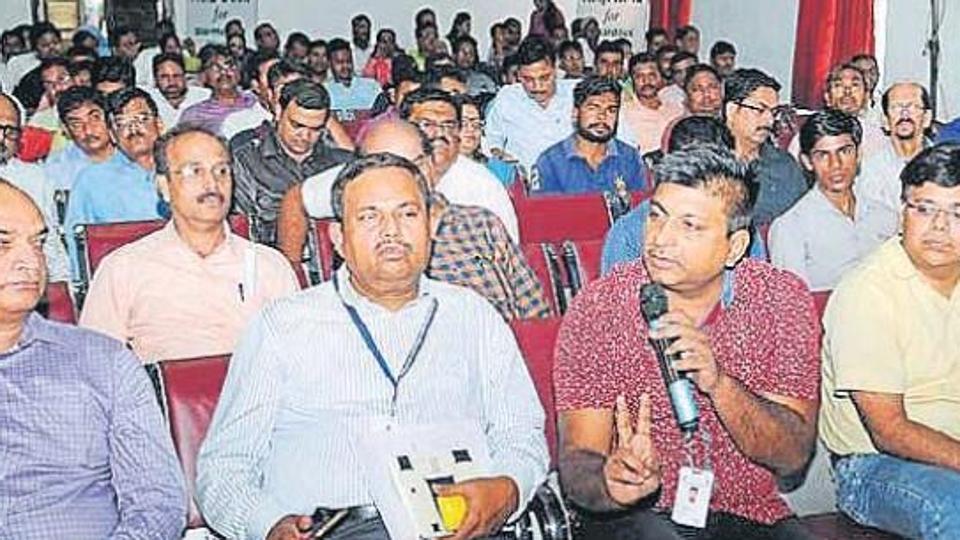
In a bid to deal with biomedical waste hazard in Jharkhand, the state pollution board on Tuesday held a meeting with the government authorities as well as private health service providers in Ranchi.
Jharkhand State Pollution Control Board (JSPCB) has come up with several offers to woo the hospitals, nursing homes and clinics to get their institutions registered with the board at the earliest.
The board has slashed fees for consent to establish (CTE), consent to operate (CTO) and authorisation by 50%, said JSPCB chairman AK Rastogi. “The offer is applicable for only two months. After August 31, the relaxation will be withdrawn,” he said.
For example, authorisation fee for the hospital having up to four beds is ?1,000 annually. If hospital takes authorisation by August 31, it will have to pay ?500.
Similarly, hospitals having bed capacity of more than 200 have to pay ?6,000 annually, while the actual fee is ?9,000 to ?11,000. JSPCB member secretary Rajiv Lochan Bakshi said that the board would prohibit the operation of individual or private incinerators and the wastes of hospitals in periphery of 70-km radius would be treated at a common bio-medication waste treatment facility (CBWTF).
Bakshi said that two CBWTFs, one at Ramgarh and another at Lohardaga, were functioning. The CBWTF of Saraikela-Kharswan would start functioning very soon, while three more CBWTs are proposed and will be coming up in Dhanbad (Sindri), Ramgarh and Santhal Paragana.
The hospitals have also been asked to establish sewage treatment plants and effluent treatment plants by December 2019.
The pollution board officials said if hospitals failed to get them registered with the board, they might have to face legal action. As per the provisions under Section 15 and Sub-section-1 and Sub-section-2b of the Environment Protection Act, 1986, the defaulter could face five-year jail term or ?1 lakh fine.
Jharkhand’s most hospitals, nursing homes and clinics are not registered with the board so the latter doesn’t have actual figure of bio-medical waste generation. As per the Bio-Medical Waste (Management and Handling) Rules, 2016, every health care centres, be it government or private, should be registered with the board.
Notably, the meeting was called a day after the report, highlighting the problems of bio-medical waste in Jharkhand, was published in HT on Monday.
As per a survey conducted by Delhi-based environmental group Toxics Link and Ranchibased NGO Lok Swar in 31 government and private hospitals of Ranchi, Jamshedpur, Dhanbad, Bokaro and Deoghar, found that these hospitals produce around 4,700 tonnes of bio-medical waste annually but 59%, around 2,700 tonnes, are left untreated and turns out to be harmful.

I am a travel writer and regional storyteller dedicated to documenting the culture, heritage, daily life, and travel experiences of Bihar. Through Mera Apna Bihar, I share local insights, real travel stories, and on-ground experiences that highlight the true spirit of Bihar for readers, travelers, and culture enthusiasts.
In addition to regional storytelling, I curate travel narratives and destination experiences through HolidayLandmark Stories, where journeys, city moments, and authentic travel experiences are documented in a story-driven format:
I also manage a growing network of city-focused travel platforms where I regularly publish daily travel logs capturing real-time journeys, local discoveries, and everyday experiences across India:
- Bangalore Orbit – Daily Logs
- Bhopal Orbit – Daily Logs
- Chennai Orbit – Daily Logs
- Gujarat Orbit – Daily Logs
- Kerala Orbit – Daily Logs
- Mera Apna Bihar – Daily Logs
- Mumbai Orbit – Daily Logs
For readers seeking deeper insights, curated content, and structured travel information, I also publish city blogs and destination guides across multiple platforms:
- Bangalore Orbit – Blog
- Bhopal Orbit – Blog
- Chennai Orbit – Blog
- Gujarat Orbit – Blog
- Kerala Orbit – Blog
- Mera Apna Bihar
- Mumbai Orbit – Blog
Through this interconnected network, my goal is to preserve regional stories, promote local culture, and provide authentic travel information that reflects the real experiences of people and places across Bihar and India.