Source: newsd.in
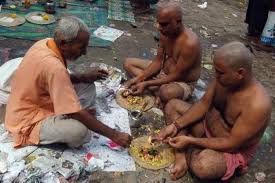
Gaya, Sep 15 (IANS) Want to perform the salvation rituals (pind-daan) for your ancestors in Bihar’s Gaya during Pitrupaksha (the Hindu month to remember the dead), but don’t know their name? Don’t worry. The priests (pandas) here can help you trace your ancestors back several generations, provided one of them has visited this town to perform the pind-daan of his forefathers.
The pandas keep a geneology record of all the people who come here to perform pind-daan. These ‘panda-pothis’ that go back 250 to 300 years are a reason why some times even foreigners of Indian origin and NRIs turn to these to trace their family history.
“The panda-pothis have a three-tier log system. Under the first, an alphabetical index of the village and region is maintained recording the address of people who visited Gaya from a village/region over more than 250 years and the date they performed the ritual,” said a panda.
The second is the ‘dastakhat’ log, which keeps a record of the signatures of visitors along with their name, their number and page number of the log which keeps other details. The third book contains information about the profession and the current work place of the visitors. This pothi also maintains updated information about where the visitors reside at present,” the panda added.
Gajadhar Lal Panda, President, Tirthvrat Sudharini Sabha told IANS that according to the villagers if details about a visitor’s ancestors are not available, then information is obtained from the current residence mentioned in the third pothi.
“The pothis are kept safe covered in chemical and wrapped in a red cloth. All the log books are kept in the sun before monsoon to keep them dry,” he said.
Representatives of the Gayapal or panda community have permanent set-ups in places around the Falgu river where people perform the pind-daan. They help people arriving in Gaya to perform pind-daan, track down descendants of the purohit who had helped their grandfather and great-grandfather perform the ritual for his forefathers.
Akhilesh Tiwari came from Rajwadih village in Jharkhand and met the descendants of the priest who helped his great-grandfather perform the pind-daan for his ancestors.

I am a travel writer and regional storyteller dedicated to documenting the culture, heritage, daily life, and travel experiences of Bihar. Through Mera Apna Bihar, I share local insights, real travel stories, and on-ground experiences that highlight the true spirit of Bihar for readers, travelers, and culture enthusiasts.
In addition to regional storytelling, I curate travel narratives and destination experiences through HolidayLandmark Stories, where journeys, city moments, and authentic travel experiences are documented in a story-driven format:
I also manage a growing network of city-focused travel platforms where I regularly publish daily travel logs capturing real-time journeys, local discoveries, and everyday experiences across India:
- Bangalore Orbit – Daily Logs
- Bhopal Orbit – Daily Logs
- Chennai Orbit – Daily Logs
- Gujarat Orbit – Daily Logs
- Kerala Orbit – Daily Logs
- Mera Apna Bihar – Daily Logs
- Mumbai Orbit – Daily Logs
For readers seeking deeper insights, curated content, and structured travel information, I also publish city blogs and destination guides across multiple platforms:
- Bangalore Orbit – Blog
- Bhopal Orbit – Blog
- Chennai Orbit – Blog
- Gujarat Orbit – Blog
- Kerala Orbit – Blog
- Mera Apna Bihar
- Mumbai Orbit – Blog
Through this interconnected network, my goal is to preserve regional stories, promote local culture, and provide authentic travel information that reflects the real experiences of people and places across Bihar and India.